The Transportation Security Administration (TSA) has sparked a significant public debate regarding airport etiquette and passenger comfort following a recent social media campaign encouraging travelers to bring hammocks to terminals. In a move that surprised both frequent flyers and industry analysts, the federal agency responsible for civil aviation security suggested that "napping apparatuses" could serve as a viable solution to the increasing "tension" associated with modern air travel. While the agency framed the suggestion as a lighthearted nod to "National Hammock Day," the recommendation has highlighted a growing disconnect between federal security guidelines, local airport regulations, and the physical realities of airport infrastructure.
The official statement from the TSA, released via its social media channels on July 22, 2026, advised passengers that there are no federal prohibitions against carrying a hammock through security checkpoints. The agency’s post stated, "Nobody said you couldn’t bring a hammock to the airport. To reduce tension, or to avoid having a falling out with the airport, check with them about where you can and can’t hang your napping apparatus." This directive, while intended to be helpful, has raised questions about the practicality of "camping" within high-security environments and the potential liabilities for both passengers and airport operators.
The Evolution of the Airport Napping Phenomenon
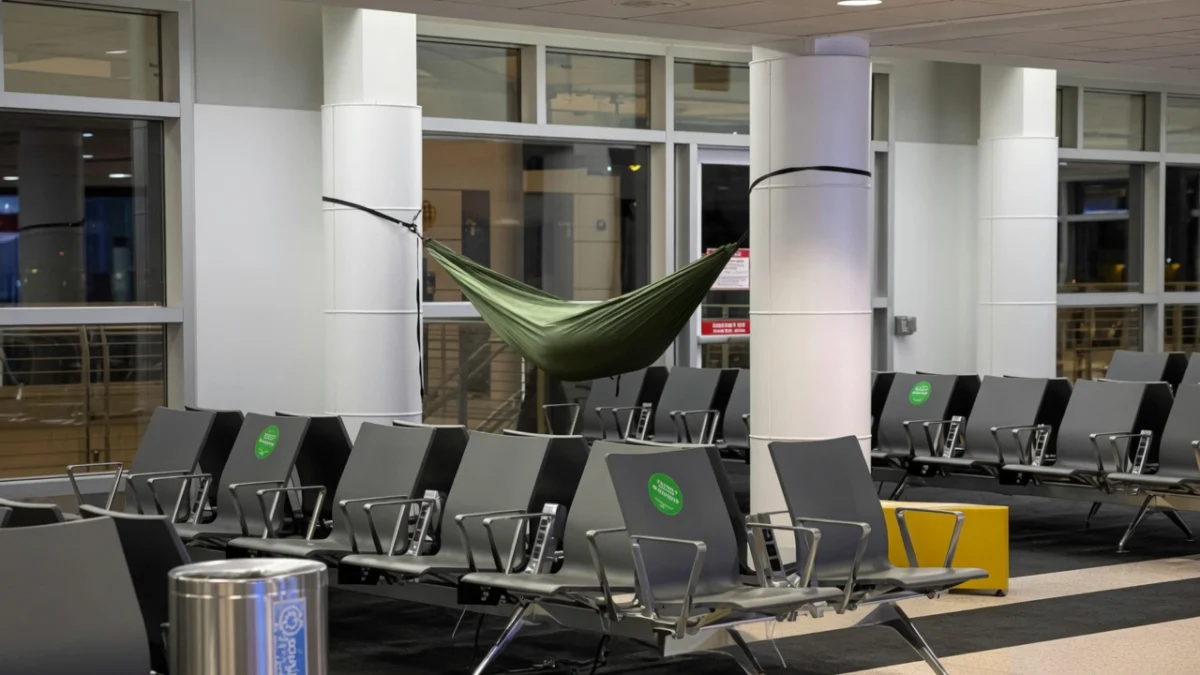
The TSA’s recommendation did not emerge in a vacuum. For years, social media has been a repository for images of stranded travelers finding creative, if unconventional, ways to rest during extended flight delays and cancellations. Documentation of this trend includes a notable incident at Phoenix Sky Harbor International Airport (PHX) in October 2022, where an American Airlines passenger was photographed suspended in a hammock between two structural columns following a delay exceeding four hours. Similarly, travelers at the Delta terminal in Minneapolis-Saint Paul International Airport (MSP) have been spotted utilizing similar setups.
In more extreme cases, the pursuit of comfort has moved beyond portable hammocks. At Orlando International Airport (MCO), travelers have been documented bringing full-sized mattresses into terminal areas to cope with overnight delays. While these instances were initially viewed as outliers or "travel hacks" shared among niche communities, the TSA’s formal acknowledgment of the practice suggests a shift in how federal agencies perceive the passenger experience during times of systemic transit disruption.
Structural and Safety Implications of Portable Hammocks
Despite the TSA’s endorsement from a security screening perspective, structural engineers and safety experts have expressed concerns regarding the physical impact of hammocks on airport infrastructure. Unlike outdoor trees or purpose-built hammock stands, airport columns and terminal fixtures are not designed to withstand the specific lateral forces generated by a suspended sleeper.
The physics of hammock suspension involves significant load-bearing calculations that often exceed the actual weight of the occupant. According to suspension force data, the angle of the hammock straps plays a critical role in the amount of tension applied to the anchor points. For instance, a 200-pound individual reclining in a hammock with a 15-degree suspension angle exerts approximately 386 pounds of force on the structural columns. At shallower angles, this force increases exponentially. Most airport interior columns are designed for vertical compression loads—supporting the weight of the roof and upper floors—rather than the horizontal shear force applied by a heavy-duty nylon strap.
Beyond structural integrity, safety officials point to "egress issues" as a primary concern. Airports are high-traffic environments governed by strict fire codes and accessibility requirements under the Americans with Disabilities Act (ADA). Hammocks strung across walkways or near boarding gates can create significant obstacles for emergency evacuations, impede maintenance crews, and block accessible routes for passengers with mobility impairments.
The Regulatory Conflict: Federal Advice vs. Local Ordinances
One of the most significant hurdles for travelers following the TSA’s advice is the discrepancy between federal security permissions and local airport authority rules. While the TSA may allow a hammock through the X-ray machine, the act of using it often violates local ordinances or airport-specific "conditions of use."
Many major hubs have explicit prohibitions against sleeping or lying down in public areas. For example, Newark Liberty International Airport (EWR) is governed by regulations such as N.J.A.C. 19:76-1.28, which restricts loitering and sleeping in certain terminal zones. These rules are often in place to prevent terminals from becoming de facto shelters and to ensure that seating remains available for active passengers.
The TSA’s suggestion that travelers "check with the airport" before deploying a hammock has been criticized by passenger advocacy groups as being practically impossible. In a large-scale delay event, airport management staff are rarely accessible to individual passengers to grant permission for "napping apparatus" setup. Front-line workers, such as gate agents or custodial staff, typically do not have the authority to waive safety regulations or building codes. Consequently, a passenger following the TSA’s advice may find themselves in a confrontation with airport police or security personnel, leading to potential fines or removal from the premises.
Public Reaction and the Irony of Security Friction
The public response to the TSA’s hammock campaign has been characterized by a mix of amusement and frustration. Many critics have pointed out the irony of a federal agency encouraging "camping" behaviors while maintaining rigorous and often invasive security protocols. A common sentiment among travelers is the perceived contradiction in being allowed to set up a tent-like structure or hammock while being prohibited from bringing a 4-ounce bottle of water through a checkpoint.
"So we have to get strip searched and demeaned by the staff, can’t bring a bottle of water into the airport, but we can set up tents and camp?" questioned one traveler in a viral response to the agency. This highlights a broader tension in the aviation industry: the struggle to balance the "security theater" required by federal law with the human need for dignity and comfort during the increasingly frequent "travel meltdowns" caused by weather, staffing shortages, and technical failures.
The Economics of Airport Comfort
The rise of the "airport hammock" can also be viewed as a symptom of the changing economics of air travel. As airlines have optimized their schedules for maximum efficiency, the system has become less resilient to disruptions. When flights are canceled en masse, local hotels often reach capacity instantly, leaving thousands of passengers stranded in terminals.
While some airports have invested in "nap pods" or high-end lounges, these are often prohibitively expensive or reserved for premium-class passengers. For the average economy traveler, the terminal floor or a row of chairs with armrests—specifically designed to prevent lying down—are the only options. In this context, the hammock represents a form of "guerrilla infrastructure," where passengers provide their own amenities that the airport and airlines have failed to supply.
Chronology of Modern Transit Sleeping Trends
- 2010–2015: Rise of "hostile architecture" in airports, including the installation of benches with middle armrests to prevent passengers from lying down.
- 2018–2021: Increased popularity of portable, lightweight camping gear among "digital nomads" and budget travelers.
- October 2022: Viral photos of hammock use at PHX Sky Harbor bring national attention to the practice during a period of heavy flight cancellations.
- December 2022: Reports of "mattress camping" at Orlando International Airport during holiday travel surges.
- July 22, 2026: TSA officially acknowledges the trend on National Hammock Day, suggesting passengers carry their own "napping apparatus."
Analysis of Implications for the Aviation Industry
The TSA’s endorsement of hammocks may be a calculated PR move to humanize the agency, but it carries long-term implications for airport design and management. If the federal government is acknowledging that terminals are places where people must sleep for extended periods, it may lead to increased pressure on the Federal Aviation Administration (FAA) and airport authorities to provide better-designated rest zones.
Furthermore, this trend may force a re-evaluation of the "Passenger Bill of Rights." Currently, airlines are not federally mandated to provide hotel accommodations for delays outside of their control (such as weather). If passengers are being encouraged to bring their own beds to the terminal, it signals a shift toward a "self-service" model of disaster recovery in transit.
In the immediate future, travelers should exercise caution. While the TSA may clear the hammock for flight, the local airport police are the final authority on terminal conduct. Until airports designate "hammock zones" with certified load-bearing anchors, the "napping apparatus" remains a high-risk solution to a systemic problem. Travelers are advised to prioritize safety and egress, ensuring that their quest for comfort does not compromise the security or mobility of their fellow passengers.