
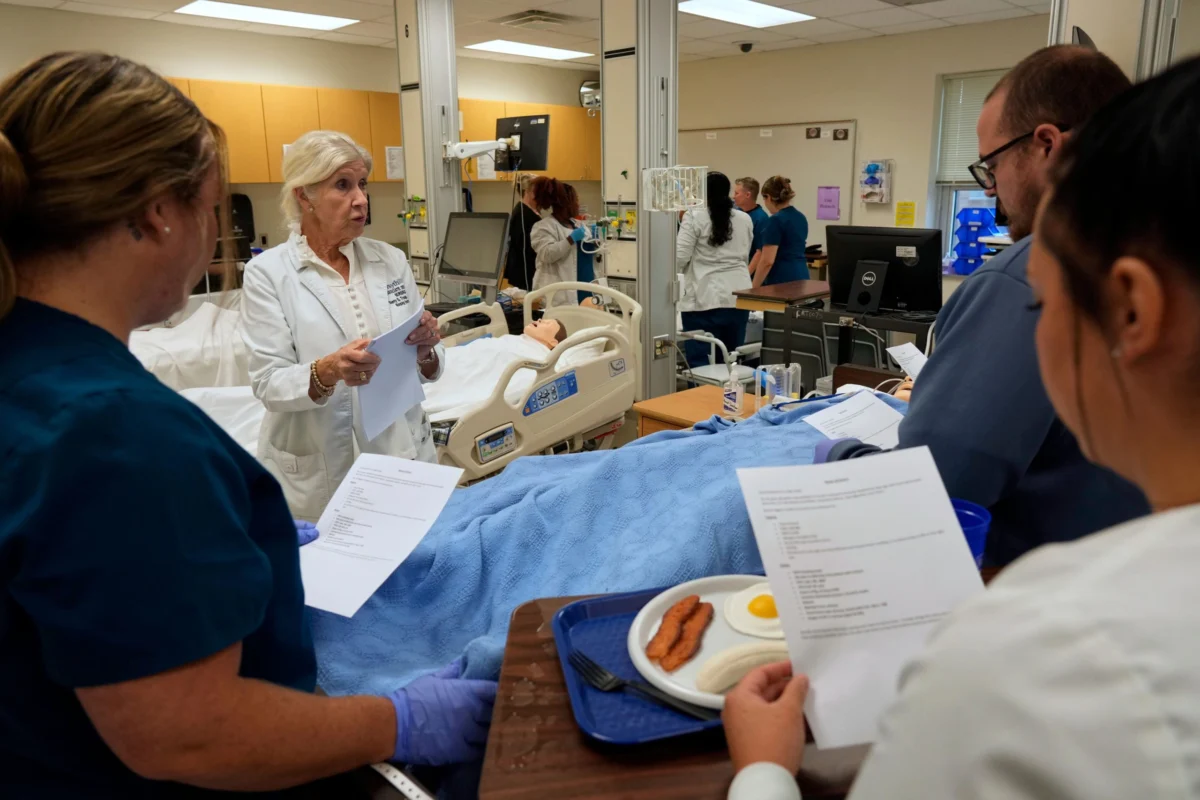
As the academic calendar advances, thousands of college seniors across the United States find themselves in a state of professional paralysis, unable to finalize their graduate school aspirations due to a sweeping and contentious shift in federal student loan policy. Mitzie Westgate, a 21-year-old exercise science major at the College of Charleston, represents a growing cohort of students whose career paths—specifically in essential health care fields—are being dictated by a legislative upheaval that has fundamentally altered the economics of advanced education. Westgate, who aims to pursue a doctorate in occupational therapy to establish a nonprofit for children with disabilities, now faces the prospect of abandoning her top-tier graduate program choices in favor of smaller, local institutions simply to avoid the looming financial cliff created by new federal borrowing caps.
A Legislative Pivot: The End of Grad PLUS
The current climate of confusion stems from a legislative reclassification enacted last year, which stripped dozens of graduate-level programs from the Department of Education’s list of "professional" degrees. This reclassification serves as the catalyst for the present crisis, as it effectively dismantled the Grad PLUS loan program, which historically permitted students to borrow up to the full cost of attendance. Under the new regulatory framework, which began implementation on July 1, federal borrowing is restricted to an annual limit of $20,500 and a lifetime cap of $100,000 for the majority of graduate programs. While a select group of 11 professional degrees maintains higher thresholds of $50,000 annually and $200,000 in total, the vast majority of health care, psychology, and social work programs have been relegated to the lower, more restrictive tiers.
This transition has not been seamless. A coalition of nursing organizations, health care associations, and educational advocacy groups successfully challenged the rule in court, leading to a temporary judicial injunction that has suspended the restrictive caps until at least December. While this reprieve offers a fleeting moment of relief for some, it has created a "policy vacuum" that has left university financial aid directors and prospective students in a state of perpetual anxiety. For applicants applying for the 2027-28 academic year, the lack of clarity regarding future borrowing capacity makes long-term financial planning nearly impossible.
The Shrinking Safety Net of Private Lending
As federal support wanes, many students are forced to look toward the private lending market to bridge the gap between their federal eligibility and the soaring costs of graduate tuition. However, this path is increasingly fraught with risk. Financial analysts and experts in student lending have noted that private lenders are adopting significantly more stringent underwriting standards. Unlike the federal government, private lenders prioritize the "earning potential" of a degree program.

According to research from the American Enterprise Institute (AEI), graduates of physical therapy, psychology, and social work programs are among the most vulnerable in this new environment. Because these fields often require high tuition but do not consistently yield the high, immediate salaries of medical or dental specialties, private lenders are viewing these students as "high-risk" borrowers. Mark Kantrowitz, a prominent authority on student financial aid, noted that current market trends indicate a move toward predatory targeting, where lenders focus on the most lucrative degrees while shunning those in essential but lower-paying public service sectors.
The implications for the broader economy are severe. The Project on Predatory Student Lending has raised alarms regarding the lack of federal guardrails in the current lending landscape. Without the protections previously afforded to borrowers, students may find themselves trapped by high-interest rates—sometimes reaching 16 percent—and forced arbitration clauses that strip them of their rights to pursue legal recourse in the event of disputes.
The Ripple Effect on Essential Services
The human cost of this policy shift is perhaps best exemplified by the looming crisis in the nursing profession. Kayce Cordray, a 44-year-old doctoral candidate at Oral Roberts University, observes that the new limits threaten the very pipeline of health care faculty required to combat the nation’s nursing shortage. For many graduate students, who are often mid-career professionals balancing family responsibilities, the risk of taking on private debt with immediate repayment schedules is an insurmountable barrier.
"We are facing a real nursing shortage and a real rural health care shortage," Cordray stated. "We’re not even going to be able to get registered nurses if we don’t have faculty. It’s a domino effect." The shift from federal loans, which generally allow for deferred repayment until after graduation, to private loans, which may require immediate monthly payments, changes the feasibility of pursuing advanced degrees for those already managing household budgets.
Market Responses and Institutional Inaction
In response to the fiscal instability, a divide has emerged among American universities. A minority of wealthy institutions have stepped in to offer bridge loans or internal scholarships to offset the loss of federal funding. Meanwhile, some observers, such as Preston Cooper of the AEI, suggest that the new federal limits may eventually force universities to lower tuition prices. By creating a hard cap on what the federal government will subsidize, the policy may render high-priced programs uncompetitive, forcing institutions like the University of Pennsylvania to compete more directly with lower-cost public alternatives.

However, many experts remain skeptical that this will lead to a broader systemic correction. Sarah Sattelmeyer of the think tank New America notes that there is currently little evidence of widespread tuition reduction. In many cases, universities remain silent on the matter, with large state systems, such as the California State University and the State University of New York, either declining to comment or failing to respond to inquiries regarding their strategy for managing the potential loss of student buying power.
Chronology of the Crisis
- Early 2026: Congress passes legislation reclassifying graduate degrees, removing many from the "professional" status that allowed for unlimited Grad PLUS borrowing.
- July 1, 2026: The new federal loan limits of $20,500 per year ($100,000 total) take effect for the majority of graduate programs.
- Late 2026: A lawsuit filed by nursing and health care associations triggers a federal injunction, suspending the restrictive caps until December.
- Fall 2026: Students applying for the 2027-28 academic year face severe uncertainty, as the final legal status of the loan caps remains undecided.
- Present: Students and financial aid administrators operate in a state of "whiplash," awaiting a definitive ruling that will determine the financial viability of advanced education for the next generation of professionals.
Conclusion: A System in Flux
The ongoing litigation regarding federal student loan limits is not merely a technical administrative dispute; it is a fundamental challenge to the accessibility of higher education in the United States. As students like Mitzie Westgate weigh the professional cost of their education against the risks of private debt, the nation faces a potential exodus from critical sectors such as mental health, social work, and specialized nursing.
The policy "vacuum" described by Megan Walter of the National Association of Student Financial Aid Administrators underscores a growing consensus: the current status quo is unsustainable. Until the legal battles are resolved and a long-term framework is established, the next generation of health care providers and educators remains caught in a cycle of hesitation, unable to commit to the very careers that society relies upon to function. Whether the ultimate result is a reduction in university tuition or a permanent barrier to entry for lower-income students remains to be seen, but the current period of instability is already leaving a lasting imprint on the educational landscape.








Leave a Reply