
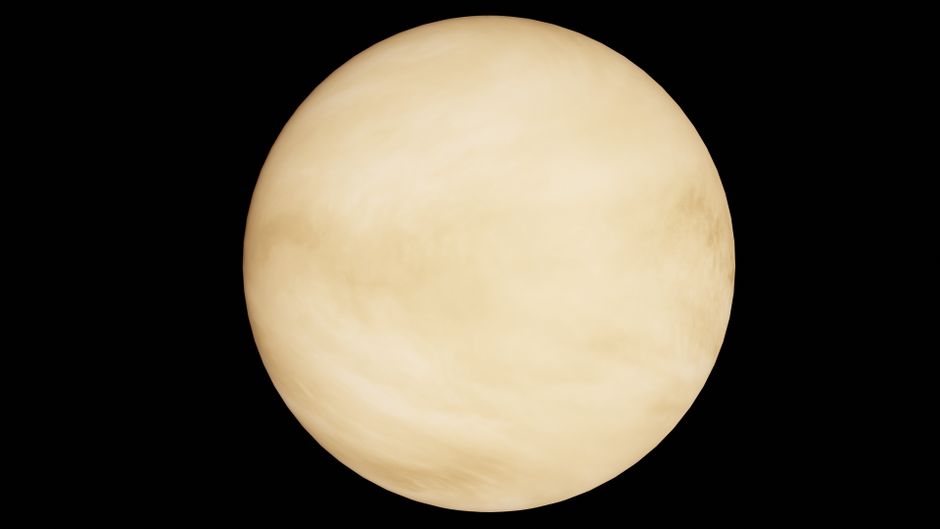
Venus: A Second Look – Rethinking the Inhospitable Inferno
The prevailing scientific consensus paints Venus as a planetary hellscape, a world scorched by runaway greenhouse effects, shrouded in sulfuric acid clouds, and subjected to crushing atmospheric pressure. This image, fueled by decades of atmospheric probes and telescopic observations, has cemented Venus as an almost impossibly inhospitable environment for life as we know it. However, a growing body of evidence and evolving scientific understanding suggests that the complete picture of Venus might be far more nuanced, and the possibility of life, or at least conditions conducive to it, might not be entirely extinguished. While the surface undoubtedly presents extreme challenges, focusing solely on this region might be overlooking potential havens in the planet’s less explored atmospheric layers.
The surface of Venus is characterized by temperatures averaging around 462 degrees Celsius (864 degrees Fahrenheit), hot enough to melt lead. This extreme heat is a direct consequence of a runaway greenhouse effect driven by an overwhelmingly carbon dioxide atmosphere. The atmospheric pressure at the surface is approximately 92 times that of Earth’s sea level, equivalent to being submerged nearly a kilometer underwater. Compounding these challenges are clouds composed of concentrated sulfuric acid, which would be highly corrosive to most known biological structures. The lack of a global magnetic field leaves Venus exposed to the solar wind, stripping away its atmosphere over geological timescales, though this process is less efficient with a denser atmosphere. These formidable conditions have led to the widespread conclusion that life, if it ever existed on Venus, would have been eradicated billions of years ago.
However, the focus on the surface as the sole arbiter of habitability is a potentially limiting perspective. As scientists delve deeper into atmospheric science and the resilience of extremophile organisms on Earth, alternative hypotheses for Venusian habitability emerge. The key lies in exploring the planet’s upper atmosphere, specifically at altitudes between 50 and 60 kilometers. At this altitude, the atmospheric pressure is remarkably similar to Earth’s sea-level pressure, around 0.5 to 1 bar. More significantly, temperatures in this layer are far more moderate, ranging from approximately 0 to 75 degrees Celsius (32 to 167 degrees Fahrenheit). These conditions are within the habitable range for many terrestrial life forms, including bacteria and archaea.
The presence of water, a fundamental requirement for life as we understand it, is another critical factor. While Venus’s surface is bone dry, trace amounts of water vapor have been detected in its atmosphere. More compellingly, models suggest that at the altitudes of interest, there could be sufficient water to support life, perhaps in the form of water vapor or even as droplets within sulfuric acid clouds. While the acidity of these clouds is a significant hurdle, Earth’s own extremophiles have demonstrated remarkable adaptations to highly acidic environments. For instance, Acidithiobacillus ferrooxidans thrives in acidic mine drainage with pH values as low as 0.5. If life could arise or persist on Venus, it would likely possess similar or even more robust mechanisms for dealing with high acidity.
The discovery of phosphine in the Venusian atmosphere in 2020, though subsequently debated and re-evaluated, ignited a significant surge of interest in Venusian habitability. Phosphine (PH3) is a gas that, on Earth, is primarily produced by anaerobic biological processes. While abiotic pathways for phosphine production exist, they are generally considered less efficient or require specific geological conditions that are not readily apparent on Venus. The detection, even if transient or requiring further confirmation, raised the tantalizing possibility of biosignatures – chemical indicators of life. The debate surrounding phosphine highlights the need for more sophisticated atmospheric analysis and a willingness to consider unconventional explanations.
Beyond phosphine, other atmospheric compounds could potentially serve as indicators or even facilitators of life. Sulfur compounds, abundant in Venus’s atmosphere, are utilized by many terrestrial chemotrophic organisms for energy. If life on Venus evolved to metabolize these sulfur compounds, it could create localized chemical imbalances that might be detectable. Furthermore, the possibility of airborne microbial ecosystems, or "aeroplankton," is a compelling area of research. These organisms would be suspended in the atmosphere, carried by winds, and potentially find niches within aerosolized water droplets or other microenvironments.
The resilience of life on Earth in extreme conditions provides a powerful precedent for considering Venusian habitability. Organisms known as "extremophiles" thrive in environments that would be instantly lethal to most terrestrial life. Psychrophiles flourish in sub-zero temperatures, thermophiles in boiling hot springs, halophiles in hypersaline waters, and radioresistant bacteria can withstand ionizing radiation far exceeding lethal doses. The discovery and study of these organisms have fundamentally broadened our understanding of the limits of life and the potential for its existence beyond Earth. Applying these lessons to Venus suggests that if life ever arose there, it could have evolved to adapt to the planet’s unique, albeit challenging, conditions.
Considering the historical evolution of Venus is also crucial. While current conditions are extreme, Venus may have been far more habitable in its early history. Early Venus might have possessed liquid water on its surface and a more clement atmosphere, potentially allowing for the emergence of life. The runaway greenhouse effect could be a more recent phenomenon, a consequence of geological or solar events. If life did arise during this earlier, more benign period, it might have found a way to persist by migrating to higher, more stable atmospheric layers as the surface conditions deteriorated. This evolutionary trajectory is not unprecedented; life on Earth has consistently adapted to changing planetary environments.
The challenges of exploring Venus’s atmosphere are significant but not insurmountable. Current and planned missions, such as NASA’s DAVINCI+ (Deep Atmosphere Venus Investigation of Noble Gases, Chemistry, and Imaging Plus) and VERITAS (Venus Emissivity, Radio Science, InSAR, Topography, and Spectroscopy), aim to provide unprecedented insights into Venus’s atmospheric composition and structure. Future missions could be designed with the specific goal of detecting biosignatures or even deploying atmospheric probes capable of sustained operation within the habitable altitude range. The development of specialized atmospheric balloons or airships could provide a platform for long-duration in-situ measurements, far exceeding the capabilities of short-lived descent probes.
The search for life on Venus is not merely an exercise in speculative fiction; it is a scientifically grounded endeavor driven by accumulating data and a willingness to challenge established paradigms. The notion of an "inhospitable inferno" is an accurate description of Venus’s surface, but it might be an incomplete picture of the planet as a whole. The possibility of life existing in the temperate layers of Venus’s atmosphere, or having existed in its past and adapted to atmospheric niches, remains a compelling scientific question. Further exploration and research are essential to definitively answer whether Venus, this enigmatic neighbor, harbors the potential for life, and if so, what form it might take. The implications of such a discovery would be profound, reshaping our understanding of life’s prevalence in the universe and our place within it. The scientific community’s ongoing re-evaluation of Venus’s habitability underscores the dynamic nature of scientific inquiry, where new evidence and innovative thinking can transform seemingly settled questions into exciting frontiers of discovery.



Leave a Reply