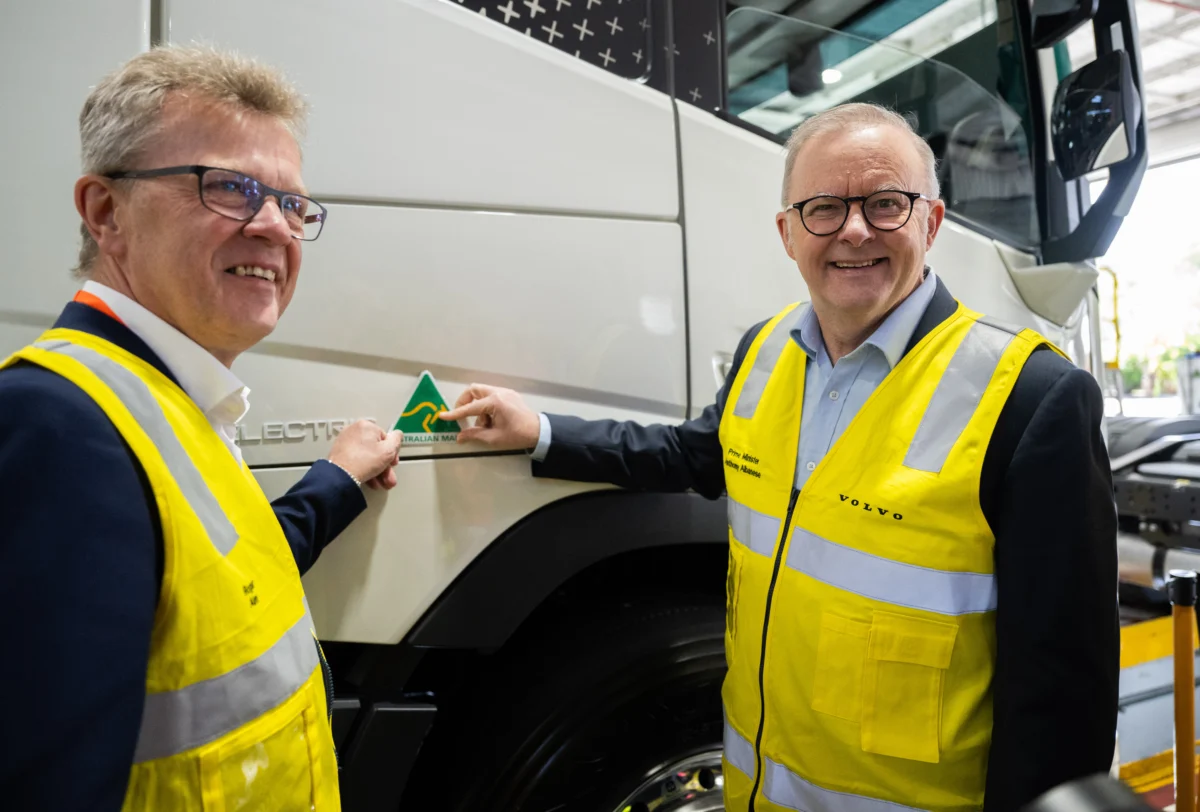
The transition toward zero-emission heavy transport in Australia reached a historic juncture this week as Volvo Group Australia officially commenced the local production of battery-electric heavy-duty trucks at its manufacturing facility in Wacol, Queensland. This development marks the first time an original equipment manufacturer (OEM) has produced electric heavy-duty vehicles on Australian soil, signaling a shift in the nation’s industrial capabilities and its approach to decarbonizing the logistics sector. The Wacol plant, which has been a cornerstone of Australian automotive manufacturing for over five decades, is now at the forefront of a technological pivot intended to align the domestic trucking industry with global sustainability trends.
A New Era for Australian Manufacturing
The rollout of the first Australian-made electric trucks represents more than just a product launch; it is a validation of local workforce expertise and manufacturing resilience. Volvo Group Australia has operated the Wacol facility for more than 50 years, tailoring diesel-powered trucks to the rigorous demands of the Australian environment. The integration of electric vehicle (EV) assembly into this existing infrastructure required significant investment in upskilling and facility upgrades.

To facilitate this transition, Volvo brought in international experts to train local technicians, ensuring that the Australian-built electric units meet the same rigorous global standards as those produced in Europe. The company has stated that the Wacol facility now possesses the capability to move up to 30% of its total production capacity to battery-electric vehicles (BEVs), provided market demand continues to scale. This move is seen as a strategic effort to establish "sovereign capability" in green technology, reducing reliance on fully imported electric heavy vehicles.
Technical Specifications and Performance Capabilities
The initial units rolling off the production line are categorized as first-generation electric heavy-duty trucks. These vehicles are primarily designed for metropolitan and intra-city distribution rather than long-haul interstate transit. Currently, the Australian-made electric lineup offers a range of approximately 300 kilometers on a single charge, with a Gross Combination Mass (GCM) of 45 tons.
While the 300-kilometer range is viewed as a starting point, Volvo has already signaled that more robust iterations are on the horizon. The company recently unveiled a next-generation lineup in international markets featuring a range of 470 kilometers and a GCM of 65 tons. Furthermore, a 700-kilometer variant has been launched in Europe. Volvo Group Australia expects to transition local serial production to these next-generation models within the next 18 months, effectively doubling the operational utility of the vehicles for Australian fleet operators.

The supply chain for these vehicles remains global in nature but includes significant local contributions. The primary drivetrain components and chassis elements are shipped from Sweden, while the battery cells—utilizing Lithium Nickel Cobalt Aluminum Oxide (NCA) chemistry—are sourced from Samsung and assembled into packs in Europe. However, local content is integrated through the manufacturing of cab trims and other specialized components, with the final assembly and rigorous testing performed entirely by the Queensland workforce.
The Role of Linfox and Early Adopters
Linfox, one of Australia’s largest logistics providers, has emerged as the primary launch partner for this initiative. The company has placed an order for 30 of the Australian-made electric trucks, which will be integrated into a massive fleet that currently operates approximately 2,500 diesel vehicles. Linfox’s commitment is part of a broader sustainability journey that began over a decade ago.
The deployment of these trucks by Linfox serves as a real-world pilot for the viability of electric heavy transport in Australian cities. While company executives acknowledge that the current range limitations prevent these trucks from crossing the Nullarbor Plain or handling remote regional routes, they are perfectly suited for high-frequency "metro runs" where regenerative braking and stop-start traffic can maximize efficiency. The presence of these trucks in Linfox’s fleet is expected to provide critical data on total cost of ownership (TCO) and charging infrastructure requirements.

Government Support and Economic Policy
The realization of locally produced electric trucks was heavily supported by federal policy and financial intervention. The Australian Government, through the Australian Renewable Energy Agency (ARENA), provided AU$70 million in funding to assist with the transition. This investment is aimed at bridging the significant price gap that currently exists between traditional diesel trucks and their battery-electric equivalents.
Prime Minister Anthony Albanese, who attended the launch at the Wacol facility, framed the project as a central pillar of the "Future Made in Australia" initiative. The Prime Minister emphasized that Australia possesses the raw mineral resources—such as lithium, nickel, and cobalt—necessary for the EV revolution and that domestic manufacturing is essential to capturing the economic value of these resources.
The federal government’s support contrasts with the more cautious approach of some state-level administrations. While the Queensland state government has commended Volvo’s long-term presence in the region, some observers note a tension between the state’s historical reliance on fossil fuel industries and the rapid push toward electrification. Nevertheless, the federal mandate for net-zero emissions by 2050 has created a policy environment where decarbonizing transport—a sector responsible for a significant portion of national carbon output—is no longer optional.

Comparative Analysis and Market Dynamics
Volvo is not alone in the race to electrify Australia’s heavy transport sector, but its local manufacturing presence gives it a unique market position. The Australian market currently sees competition from several fronts:
- Chinese Imports: Manufacturers such as BYD and Foton are increasingly exporting electric trucks to Australia, often at lower price points due to massive economies of scale in China.
- Retrofitting and Conversions: Companies like Janus Electric have gained attention for converting existing diesel prime movers into electric vehicles using swappable battery technology, offering a circular economy alternative to new vehicle purchases.
- Global Competitors: The Tesla Semi, while highly publicized, has seen limited deployment globally and has yet to establish a significant footprint in the Australian market.
Volvo’s strategy relies on the reliability of its established service network and the "Australian Made" brand. For many fleet managers, the ability to source vehicles that have been assembled locally and are backed by a decades-old maintenance infrastructure provides a level of security that imported brands may not yet offer.
Challenges to Widespread Adoption
Despite the celebratory nature of the Wacol launch, significant hurdles remain for the widespread adoption of electric heavy vehicles in Australia. The most prominent challenges include:

- Infrastructure: The national charging grid is currently insufficient for heavy-duty requirements. High-megawatt charging stations are needed to ensure that trucks can be recharged during mandatory driver rest periods.
- Regulatory Harmonization: Road weight rules vary across different Australian states. Because battery packs add significant weight to a vehicle, current regulations can sometimes penalize electric trucks by reducing their allowable payload. Volvo and other industry bodies are actively lobbying for a harmonization of these rules to accommodate the specific engineering of BEVs.
- Energy Costs: While the rising cost of diesel is a primary motivator for switching to electric, the volatility of electricity prices and the need for grid upgrades at logistics hubs remain concerns for bean counters and fleet strategists.
Chronology of Volvo’s Manufacturing in Australia
- 1972: Volvo Group Australia establishes the Wacol manufacturing facility near Brisbane.
- 1972–2022: The plant produces over 70,000 diesel trucks, becoming the largest heavy vehicle assembly plant in the country.
- 2021: Volvo Group announces global targets to have 50% of its truck sales be electric by 2030.
- 2023: Initial plans for local electric truck assembly are shared with stakeholders and government partners.
- July 2026: The first Australian-made electric heavy-duty trucks officially roll off the Wacol production line.
- 2027–2028 (Projected): Commencement of next-generation BEV production with extended range and higher GCM capabilities.
Broader Implications for the Transport Sector
The commencement of electric truck production in Wacol is a bellwether for the Australian transport industry. As transport emissions continue to rise relative to other sectors, the pressure on logistics companies to "green" their supply chains is intensifying. Major retailers and corporations are increasingly demanding zero-emission delivery options to meet their own ESG (Environmental, Social, and Governance) targets.
Industry experts suggest that while the current production volume is modest, the symbolic and technical foundation laid at Wacol is essential. The "slow drip" of these first units is expected to accelerate as charging networks improve and as the price of battery technology continues its downward trajectory.
For the Australian workforce, this milestone secures the relevance of the Wacol plant in a post-combustion economy. By upskilling workers now, Volvo Group Australia is ensuring that the local industry remains competitive in a global market that is rapidly moving away from fossil fuels. The success of this project will likely serve as a blueprint for other OEMs considering local assembly of high-tech, sustainable transport solutions in the Asia-Pacific region.

In conclusion, the first Australian-made Volvo electric trucks represent a convergence of industrial heritage and future-facing technology. With government backing, a committed first customer in Linfox, and a clear roadmap for technological evolution, the Wacol facility has positioned itself as the epicenter of Australia’s electric heavy transport revolution. The path forward will require continued investment in infrastructure and policy reform, but the arrival of these vehicles on Australian roads confirms that the transition to a cleaner, quieter, and more sustainable transport future is well underway.