
World Health Organization (WHO) Director-General Dr. Tedros Adhanom Ghebreyesus has concluded the first day of a high-profile, two-day state visit to the Hashemite Kingdom of Jordan. The visit serves to underscore the robust, long-standing partnership between the global health body and Amman, focusing heavily on universal health coverage (UHC), mental health integration, and crisis-driven humanitarian interventions across the Middle East.
The opening day of the mission was marked by high-level diplomatic engagements, field visits to specialized pediatric medical facilities, and crucial policy discussions regarding regional healthcare financing. The itinerary also brought prominent international advocates into the fold, notably Prince Harry and Meghan, the Duke and Duchess of Sussex, who participated in their capacities as founders of Archewell Philanthropies.
High-Level Encounters and Strategic Dialogues with King Abdullah II
A central pillar of the Director-General’s itinerary was a formal audience with His Majesty King Abdullah II. The meeting emphasized Jordan’s distinct regional and global leadership in positioning public health as a cornerstone of national security and international stability.
Discussions between Dr. Tedros and King Abdullah II centered on the pragmatic challenges of strengthening domestic health systems while managing extraordinary external shocks. Particular attention was devoted to sustaining emergency medical responses across the region, with deep dives into the care provided to Palestinian evacuees from Gaza and the millions of displaced individuals residing within Jordanian borders.
Dr. Tedros took the opportunity to formally commend the Jordanian monarch. “I wish to express my appreciation to His Majesty King Abdullah II for his commitment to advancing universal health coverage,” Dr. Tedros stated. “I also extend my thanks to His Majesty and the people of Jordan for their solidarity and generosity in providing health services to more than three million refugees, primarily from Gaza and Syria, who are living in the country.”
The WHO chief specifically highlighted the operational success of the kingdom’s humanitarian architecture, referencing the King’s Medical Corridor initiative. This specialized framework facilitates the secure transfer and treatment of critically ill and injured children from the beleaguered Gaza Strip into Jordanian medical facilities. Through such actions, Dr. Tedros noted, Jordan continues to demonstrate a clear model of putting health and humanity above geopolitical divides.
Field Inspections: Witnessing the Gaza Medical Evacuation Corridor
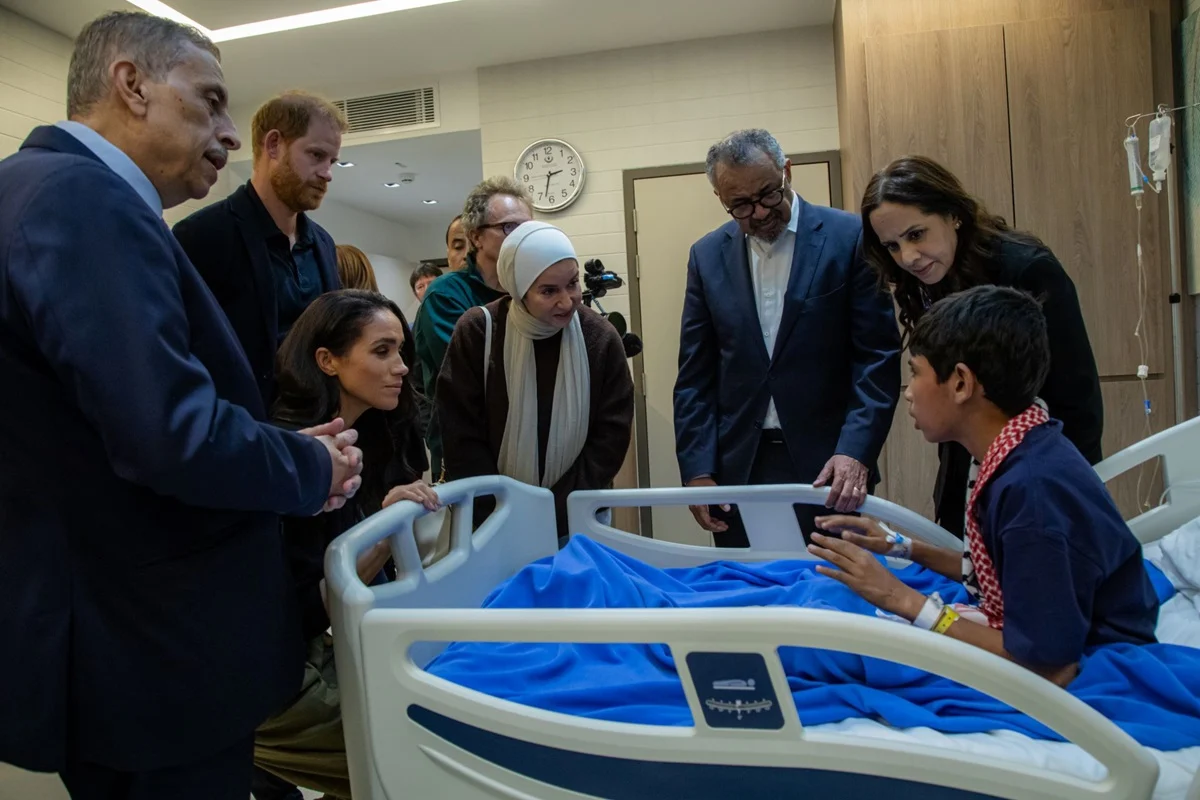
Moving beyond diplomatic chambers, Dr. Tedros transitioned from policy to practice by visiting a specialized, WHO-supported hospital in Amman dedicated to treating pediatric patients evacuated directly from Gaza.
During the hospital tour, the Director-General met directly with young patients, their families, and the frontline medical personnel who manage complex cases ranging from severe conflict-related trauma to pediatric oncology and other life-threatening conditions. The visit served to spotlight the logistical intricacies and absolute indispensability of the medical evacuation corridor operating through Jordan.
Public health analysts accompanying the delegation stressed that as regional healthcare infrastructure remains degraded or outright destroyed in various conflict zones, transit hubs like Jordan become literal lifelines. However, these facilities face mounting strain, necessitating sustained international financial backing and logistical coordination to ensure continuity of specialized care.
Following the hospital visit, Dr. Tedros convened a high-level roundtable with international donors, United Nations agency representatives, and philanthropic organizations. The closed-door session addressed immediate funding gaps for Jordan’s healthcare system, strategies for scaling up mental health infrastructure, and equitable burden-sharing for nations hosting disproportionately large refugee populations.
Bilateral Engagements on Universal Health Coverage and Mental Health
In addition to royal and philanthropic meetings, Dr. Tedros held extensive bilateral talks with Jordan’s Minister of Health. These discussions dissected the mechanics of advancing universal health coverage within a middle-income country facing high regional volatility.
Jordan has garnered international acclaim for its commitment to embedding a primary healthcare approach as the bedrock of UHC. Notably, the kingdom has made significant strides in integrating mental health services directly into routine primary care clinics—a strategy actively supported by the WHO Director-General’s Special Initiative for Mental Health. By decentralizing psychological support and training primary care physicians to manage common mental disorders, Jordan has significantly reduced treatment gaps and lowered the societal stigma traditionally associated with mental health care.
Archewell Philanthropies and International Advocacy
A notable dimension of the first day’s engagements was the presence of Prince Harry and Meghan, the Duke and Duchess of Sussex. Participating as founders of Archewell Philanthropies, the couple joined Dr. Tedros for several key events, building upon years of collaborative advocacy with the WHO on global health equity, vaccine distribution, and psychological resilience.
Prince Harry, speaking as a prominent advocate for global mental health initiatives, emphasized the critical need to prioritize psychological well-being within emergency response frameworks. He drew specific attention to the vulnerabilities faced by men, adolescents, and children caught in the crosshairs of modern conflicts.
“It is an honour to join the Director-General of the World Health Organization in Jordan, a country that is leading by example in compassion, resilience and innovation,” Prince Harry remarked. “Through our work with Archewell Philanthropies, my wife and I have seen first-hand the impact of WHO’s efforts to support mental health and deliver life-saving care in emergencies. We remain deeply committed to advancing awareness, reducing stigma and expanding access to mental health support for all those affected by conflict and crisis. Mental health is fundamental to recovery, dignity and long-term peace, and we are proud to stand with WHO and partners around the world to make it a global priority.”
Echoing these sentiments, Dr. Tedros lauded the sustained partnership with the Duke and Duchess of Sussex. “I want to thank our partners, including Prince Harry, Duke of Sussex and Meghan, Duchess of Sussex, whose commitment to mental health and humanitarian action has helped bring visibility, resources and hope to some of the world’s most vulnerable communities,” he said.
Background Context and Regional Humanitarian Landscape
To fully understand the weight of Dr. Tedros’s state visit, observers must contextualize Jordan’s unique socio-economic and geopolitical positioning. For decades, the Hashemite Kingdom has acted as a stabilizing anchor in a volatile neighborhood, absorbing successive waves of refugees from regional conflicts, including Iraq, Syria, and, most recently, the ongoing hostilities in the Palestinian territories.
Hosting over three million registered refugees places an immense, structural burden on Jordan’s public infrastructure, particularly its water, education, and healthcare systems. Despite these fiscal pressures, the Jordanian government has maintained an open-door policy regarding access to public healthcare services for refugees, setting a benchmark for humanitarian compliance under international law.
The WHO has consistently partnered with the Jordanian Ministry of Health to bolster disease surveillance, supply chain integrity, and specialized clinical training. This ongoing collaboration ensures that sudden influxes of patients—such as those processed through the Gaza medical evacuation pipeline—do not destabilize routine health service delivery for Jordanian citizens.
Looking Ahead: Day Two Itinerary and Analytical Implications
As the state visit transitions into its second and final day, the Director-General’s agenda remains dense. Dr. Tedros is scheduled to visit the National Center for Rehabilitation of Addicts, an institution supported by WHO that delivers comprehensive medical, psychological, and social rehabilitation services.
Further engagements will include dialogues with community leaders and women’s advocacy organizations, notably the Jordanian Hashemite Fund for Human Development (JOHUD), which plays a pivotal role in grassroots community empowerment and social welfare. The day will also feature a high-profile visit to the globally renowned King Hussein Cancer Center to evaluate advancements in specialized oncology care and explore avenues for enhanced regional medical collaboration.
Public health analysts analyzing the implications of this state visit point to three primary takeaways:
- Model Replication: Jordan’s integration of mental health into primary care serves as a scalable blueprint for other resource-constrained or conflict-adjacent nations.
- Burden-Sharing Urgency: The visit forcibly reminds the international community that refugee-hosting nations cannot shoulder protracted humanitarian crises indefinitely without predictable, multi-year multilateral financing.
- Corridor Resilience: The reliance on specialized medical corridors highlights the absolute necessity of maintaining neutral logistical channels for medical evacuations in active conflict zones.
The visit will formally conclude with closing discussions involving international aid partners and humanitarian operators, cementing Jordan’s standing as an indispensable hub for regional health resilience and emergency diplomacy.






Leave a Reply