The Hashemite Kingdom of Jordan has long stood as a pillar of regional stability and humanitarian resilience in the Middle East. Against the backdrop of protracted regional conflicts and mounting public health challenges, World Health Organization (WHO) Director-General Dr. Tedros Adhanom Ghebreyesus arrived in Amman to kick off a high-profile, two-day State visit. The visit is designed to evaluate, reinforce, and celebrate the deep-seated partnership between the WHO and the Jordanian government across several critical domains, including universal health coverage (UHC), the integration of comprehensive mental health services, and robust humanitarian health action.
The first day of the mission was defined by high-stakes diplomacy, on-the-ground medical site visits, high-level financing roundtables, and the inclusion of high-profile global philanthropic advocates. Dr. Tedros’s itinerary underscored not only Jordan’s impressive domestic healthcare achievements—particularly in primary healthcare and integrated mental health services—but also its extraordinary generosity in absorbing and treating millions of refugees and war-wounded civilians from neighboring crises, most notably Syria and Gaza.
Royal Audience and Strategic Health Priorities
A central pillar of the Director-General’s mission was an official audience with His Majesty King Abdullah II. This meeting served as a powerful testament to Jordan’s proactive stance in positioning health as both a fundamental human right and a cornerstone of national security and regional diplomacy.
Discussions between Dr. Tedros and King Abdullah II focused on a multi-pronged agenda: strengthening national health systems to withstand future shocks, expanding equitable access to specialized medical care, and cementing sustained, predictable international financial support for emergency healthcare responses in the region. Particular emphasis was placed on Jordan’s ongoing life-saving operations for the Palestinian people, specifically the reception and treatment of critically ill and injured patients evacuated directly from the Gaza Strip, alongside the millions of Syrian and regional refugees hosted on Jordanian soil for over a decade.
"I wish to express my appreciation to His Majesty King Abdullah II for his commitment to advancing universal health coverage," Dr. Tedros stated following the audience. "I also extend my thanks to His Majesty and the people of Jordan for their solidarity and generosity in providing health services to more than three million refugees, primarily from Gaza and Syria, who are living in the country."
Dr. Tedros further lauded Jordan’s broader geopolitical and humanitarian leadership, drawing specific attention to the King’s pioneering Medical Corridor initiative. This vital logistics and clinical pipeline facilitates the urgent transfer and comprehensive treatment of ill and injured children from Gaza who would otherwise face insurmountable barriers to care. Through these efforts, Jordan continues to demonstrate a global masterclass in prioritizing human life and dignity amidst profound geopolitical turmoil.
Direct Engagement on the Frontlines: Pediatric Care and Medical Evacuations
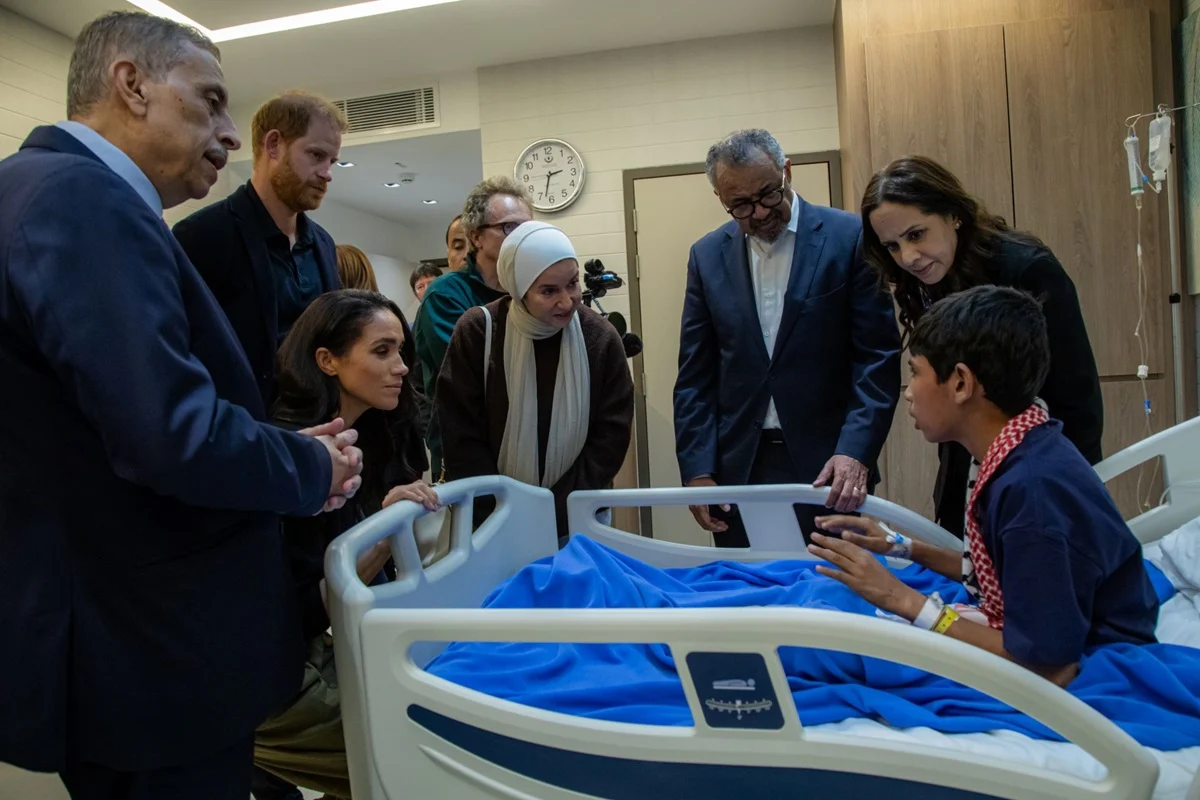
Following his discussions at the Royal Palace, Dr. Tedros transitioned from high-level diplomacy to direct humanitarian observation, visiting a specialized, WHO-supported hospital in Amman that serves as a primary treatment hub for pediatric patients evacuated from the Gaza Strip.
During the hospital tour, the WHO Director-General walked the wards to meet young patients, their families, and the multidisciplinary teams of frontline health workers. These medical professionals are tasked with delivering complex, life-saving interventions for severe traumatic injuries, advanced-stage oncological conditions, and other life-threatening medical ailments stemming from the collapse of healthcare infrastructure in conflict zones.
The visit starkly illuminated the logistical and clinical realities of the medical evacuation corridor established through Jordan. Public health experts note that while these corridors are critical lifelines, they rely heavily on fragile international supply chains, cross-border diplomatic permissions, and sustained donor funding. Dr. Tedros emphasized that the international community must step up its financial and logistical commitments to ensure that vulnerable children and other critical patients retain uninterrupted access to specialized tertiary care outside of active conflict zones.
High-Level Partner Roundtables and Financing Priorities
In addition to clinical site visits, Dr. Tedros convened a strategic, high-level consultation bringing together key health sector partners, donor nations, United Nations agencies, and prominent international philanthropies. The closed-door roundtable was dedicated to evaluating and restructuring financing priorities aimed at fortifying Jordan’s domestic health system.
Discussions at the roundtable centered on bridging funding gaps for ongoing humanitarian health operations. Participants addressed the acute financial pressures of scaling up mental health services in emergency settings and supporting nations that bear a disproportionate fiscal and social burden of hosting large refugee populations.
The WHO Director-General welcomed the robust collaboration demonstrated by international donors and partner organizations, urging them to view investments in Jordan’s health infrastructure not merely as short-term humanitarian aid, but as a long-term strategic investment in regional security and sustainable development.
Bilateral Talks on Primary Healthcare and Mental Health Integration
The first day also featured substantive bilateral discussions between Dr. Tedros and Jordan’s Minister of Health. The dialogue zeroed in on structural reforms required to fully realize universal health coverage nationwide.
Jordan has steadily built a reputation for global leadership by implementing a rigorous, community-based primary healthcare approach. Notably, the Hashemite Kingdom has successfully integrated mental health services into routine primary care clinics—a progressive model that ensures citizens and residents alike can access psychological support without the stigma historically attached to psychiatric care. This integration is actively supported by the Director-General’s Special Initiative for Mental Health, which aims to expand access to quality mental healthcare in underserved and crisis-affected countries.
The Role of Archewell Philanthropies and Global Advocacy
Adding a unique dimension to the state visit, Dr. Tedros was accompanied throughout several key engagements by Prince Harry, Duke of Sussex, and Meghan, Duchess of Sussex, in their capacities as founders of Archewell Philanthropies. The couple are long-standing, active supporters of the World Health Organization’s global health initiatives.
Archewell Philanthropies has previously lent its support to numerous WHO-led programs, ranging from advocacy campaigns promoting equitable access to COVID-19 vaccines in low-income nations to critical medical evacuation and mental health support structures. During the Jordan visit, Prince Harry participated actively as a leading global ally of the WHO’s mental health mandate, using his platform to underscore the urgent need for structural investments in psychological resilience across communities and emergency settings. Particular focus was placed on addressing the mental health crises experienced by men, young adults, and children navigating the psychological trauma of displacement and conflict.
Reflecting on the collaboration, Dr. Tedros remarked, "I want to thank our partners, including Prince Harry, Duke of Sussex, and Meghan, Duchess of Sussex, whose commitment to mental health and humanitarian action has helped bring visibility, resources, and hope to some of the world’s most vulnerable communities. Their collaboration is helping to advance WHO’s mission to ensure health for all."
Prince Harry echoed these sentiments during a joint briefing, emphasizing the vital intersection between mental healthcare and physical recovery in crisis zones. "It is an honour to join the Director-General of the World Health Organization in Jordan, a country that is leading by example in compassion, resilience, and innovation," Prince Harry stated.
"Through our work with Archewell Philanthropies, my wife and I have seen first-hand the impact of WHO’s efforts to support mental health and deliver life-saving care in emergencies," he continued. "We remain deeply committed to advancing awareness, reducing stigma, and expanding access to mental health support for all those affected by conflict and crisis. Mental health is fundamental to recovery, dignity, and long-term peace, and we are proud to stand with WHO and partners around the world to make it a global priority."
Chronology and Forward-Looking Itinerary for Day Two
As the first day of the high-level state visit drew to a close, organizers outlined an equally demanding and comprehensive itinerary for the second and final day of Dr. Tedros’s mission in Jordan.
The schedule for the second day includes:
- The National Center for Rehabilitation of Addicts: Dr. Tedros is slated to tour this specialized facility, which receives ongoing technical and material support from the WHO. The center is recognized for pioneering integrated medical, psychological, and social rehabilitation services for individuals struggling with substance use disorders.
- Community and Women’s Leadership Engagements: The Director-General will meet with grassroots community leaders and women-led organizations, including the Jordanian Hashemite Fund for Human Development (JOHUD), to discuss community resilience, women’s empowerment, and decentralized health delivery.
- The King Hussein Cancer Center (KHCC): Dr. Tedros will visit the internationally renowned cancer facility to review cutting-edge advancements in oncological care, research protocols, and avenues for expanding regional medical collaboration and specialized training.
- Final Humanitarian Partnerships Wrap-Up: The state visit will conclude with final strategic meetings involving international organizations and humanitarian operators, effectively cementing Jordan’s irreplaceable standing as an indispensable regional hub for medical evacuations, rapid emergency response, and health system resilience in the Middle East.
Broader Implications and Strategic Analysis
Public health analysts and geopolitical observers note that Dr. Tedros’s state visit to Jordan carries profound implications that extend far beyond the borders of the Hashemite Kingdom. By shining an international spotlight on Jordan’s dual commitment to internal health reform and external humanitarian solidarity, the WHO is actively reinforcing the importance of resilient primary healthcare systems in politically volatile regions.
Furthermore, the integration of high-profile philanthropies such as Archewell into official UN state missions highlights an evolving paradigm in modern global health diplomacy. Traditional state-to-state aid is increasingly augmented by multi-sectoral partnerships involving private foundations, celebrity advocacy, and public-private funding models designed to bypass bureaucratic bottlenecks and direct resources straight to the frontlines of humanitarian need.
As protracted conflicts continue to strain global health budgets and displace millions, Jordan’s model of inclusive refugee health integration—coupled with targeted specialized care corridors like the King’s Medical Corridor—offers a vital blueprint for the international community. The success of these programs, however, remains inextricably bound to predictable, long-term international burden-sharing. Through this visit, the WHO has issued a clear and urgent call to global leaders: supporting countries like Jordan is not merely a charitable gesture, but an absolute structural prerequisite for maintaining global health security, human dignity, and regional stability in an increasingly fractured world.