
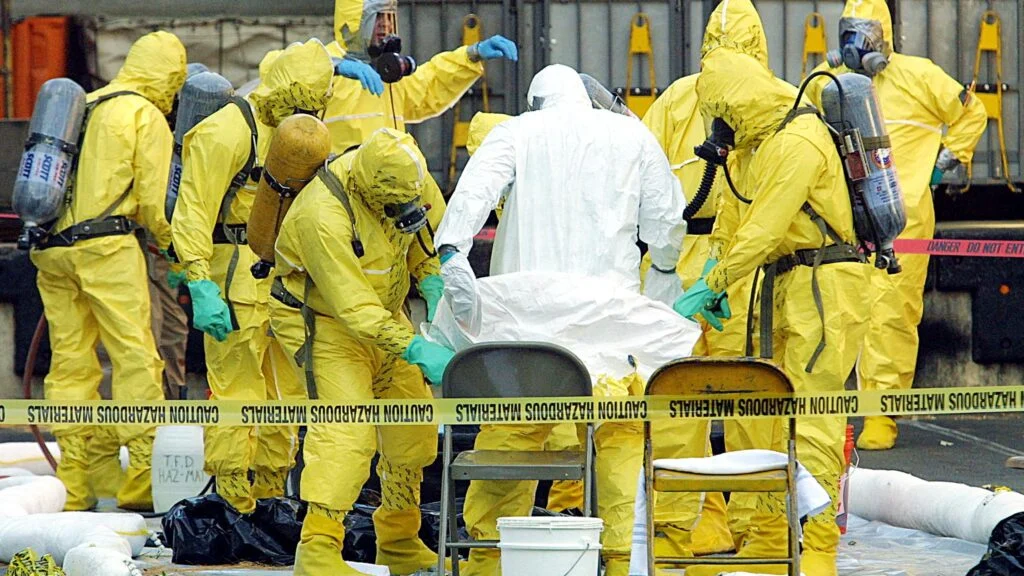
Two and a half decades have passed since the United States faced a domestic biological crisis that fundamentally altered the nation’s approach to public health and national security. In the autumn of 2001, just weeks after the trauma of the September 11 terrorist attacks, the U.S. postal system—a pillar of communication and commerce—was weaponized. Anthrax-laden envelopes were dispatched to media outlets and government offices, triggering a nationwide cascade of fear, 22 confirmed cases of anthrax disease, and five tragic deaths. As the nation reflects on this anniversary, the event remains a stark case study in the unpredictability of biological threats and the necessity of resilient, evidence-based public health infrastructure.
The Chronology of an Invisible Threat
The timeline of the 2001 anthrax attacks began in mid-September. The first mailing, postmarked September 18, 2001, in Trenton, New Jersey, contained a coarse, granular powder that would later be identified as Bacillus anthracis. This batch primarily reached media targets, including American Media Inc. (AMI) in Florida, where a photo editor became the first fatality. Initially, clinicians and public health officials struggled to identify the source of the infection, as cutaneous anthrax—a skin-based infection—was an unusual presentation that did not immediately suggest a coordinated bioterrorist act.
By early October, the nature of the threat shifted. A second, more lethal mailing, postmarked October 9, 2001, introduced a significantly more refined, "fine powder" formulation. This iteration was engineered for easy aerosolization, posing a grave inhalation risk. Unlike the first batch, this material bypassed intended targets to infect postal workers along the distribution chain, exposing critical weaknesses in the assumptions held by law enforcement and public health agencies at the time.
The investigation, led by the Centers for Disease Control and Prevention (CDC), necessitated the rapid establishment of an Emergency Operations Center (EOC). This makeshift command post served as the hub for the Epidemiology and Surveillance Team, which worked around the clock to track the dissemination of the pathogen. Molecular testing, a burgeoning technology at the time, eventually confirmed that the spores found in the letters and on the bodies of the victims were genetically indistinguishable, pointing to a singular, sophisticated source.
Scientific Implications and Epidemiological Findings
The clinical data collected during the 2001 investigation provided critical insights into the behavior of biological agents. Analysis revealed that the physical formulation of the anthrax played a decisive role in the clinical outcome. The "crunchy" or clumped anthrax from the September mailing resulted largely in cutaneous infections, while the "fine" powder from the October mailing was prone to aerosolization, leading to the highly fatal inhalational form of the disease.
These findings challenged existing medical literature, which had largely asserted that the risk of re-aerosolization—the process by which spores settle and are subsequently kicked back into the air—was minimal. This assumption was proven dangerous. As evidence accumulated, officials were forced to widen the scope of prophylaxis, eventually administering antimicrobial treatment to approximately 32,000 individuals. The success of this mass prophylaxis—which saw no additional cases among those who received treatment—highlighted the life-saving potential of rapid intervention, even when the scope of exposure is initially underestimated.
The Evolution of Biodefense and Detection
The post-2001 landscape saw a radical overhaul of the nation’s biological defense posture. The establishment of the Laboratory Response Network (LRN) was a direct response to the delays experienced during the initial identification of the pathogen. Today, the infrastructure is vastly different: mail is screened for biological agents at major processing centers, the volume of physical mail has declined due to digital transformation, and international "select agent" regulations have significantly tightened the oversight of laboratories handling high-consequence pathogens.
Despite these advancements, the current environment presents new, complex risks. The rise of synthetic biology and the rapid integration of artificial intelligence (AI) into scientific research have fundamentally altered the threat landscape. AI can now assist in the identification of genetic sequences and the optimization of pathogen virulence, potentially lowering the barrier to entry for non-state actors or rogue entities seeking to develop biological weapons. The Bipartisan Commission on Biodefense has noted that AI has the potential to transform the biological threat landscape, making it easier to generate pathogens that could evade traditional detection methods.
Current Vulnerabilities and Institutional Challenges
While technological capabilities have improved, the human and institutional pillars of biodefense face renewed strain. Reports from the Center for Strategic and International Studies (CSIS) have indicated that the U.S. is currently facing higher biological risks than at any point this century. These risks are exacerbated by a depletion of specialized scientific personnel and a loss of institutional memory.
Current workforce data suggests that the CDC is operating with a significantly reduced capacity compared to its staffing levels in recent years. This reduction in experienced subject matter experts, combined with delays in budgetary support for high-consequence pathogen research, creates a dangerous gap in preparedness. When public health agencies are hampered by administrative constraints or a culture that discourages internal scientific dissent, the ability to pivot rapidly in the face of an evolving threat is severely compromised.
Lessons for the Future
The 25-year retrospective of the anthrax attacks offers three fundamental lessons for modern biosecurity:
- Interpretation must follow detection: Early detection is meaningless without the capacity to interpret the signal and act decisively. Coordination between federal, state, and local governments is the cornerstone of an effective response. Any delay in inter-agency communication, or a political environment that undermines evidence-based decision-making, serves as a multiplier for the damage caused by a biological event.
- Challenge initial assumptions: The 2001 response proved that the first interpretation of an outbreak is rarely the complete picture. Preparedness requires a culture that embraces uncertainty and encourages ongoing re-evaluation. A refusal to entertain dissenting opinions or adjust strategies as new data emerges is a critical failure point in crisis management.
- Preparedness is a permanent requirement: Sophisticated technology is a tool, not a substitute for human expertise. Maintaining a robust network of trained professionals, deep institutional relationships, and a culture of scientific integrity is essential. Without the people to interpret the data and the institutions to execute defensible strategies, the nation remains vulnerable to both natural pandemics and intentional biological threats.
As the country navigates the challenges posed by recent outbreaks—ranging from hantavirus and Ebola to measles and cyclospora—the memory of the 2001 anthrax attacks serves as a necessary, if sobering, reminder. The strength of the nation’s response to any future biological crisis will not be determined solely by the sophistication of its laboratory equipment, but by the resilience of the institutions and the quality of the scientific leadership tasked with protecting the public. The specter of a deliberate biological release remains a possibility, and the lessons learned in the fall of 2001 remain as relevant today as they were a quarter-century ago.









Leave a Reply