The construction of an access road for the controversial Potássio Autazes mining project in Brazil’s Amazonas state has reportedly caused at least two sacred springs to dry up, triggering an intense outcry from the Indigenous Mura people. This development marks the latest escalation in a decade-long conflict surrounding the multi-million-dollar venture. The project, spearheaded by Potássio do Brasil—a subsidiary of Canada’s Brazil Potash Corp.—aims to establish an underground potash mine, processing plant, and port complex in the municipality of Autazes. While agricultural lobbyists and corporate proponents champion the venture as a vital step toward reducing Brazil’s reliance on foreign fertilizer imports, local Indigenous communities warn of an unfolding ecological and cultural catastrophe.
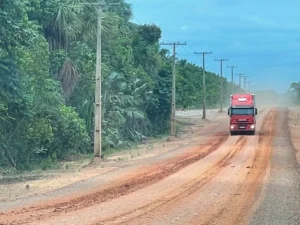
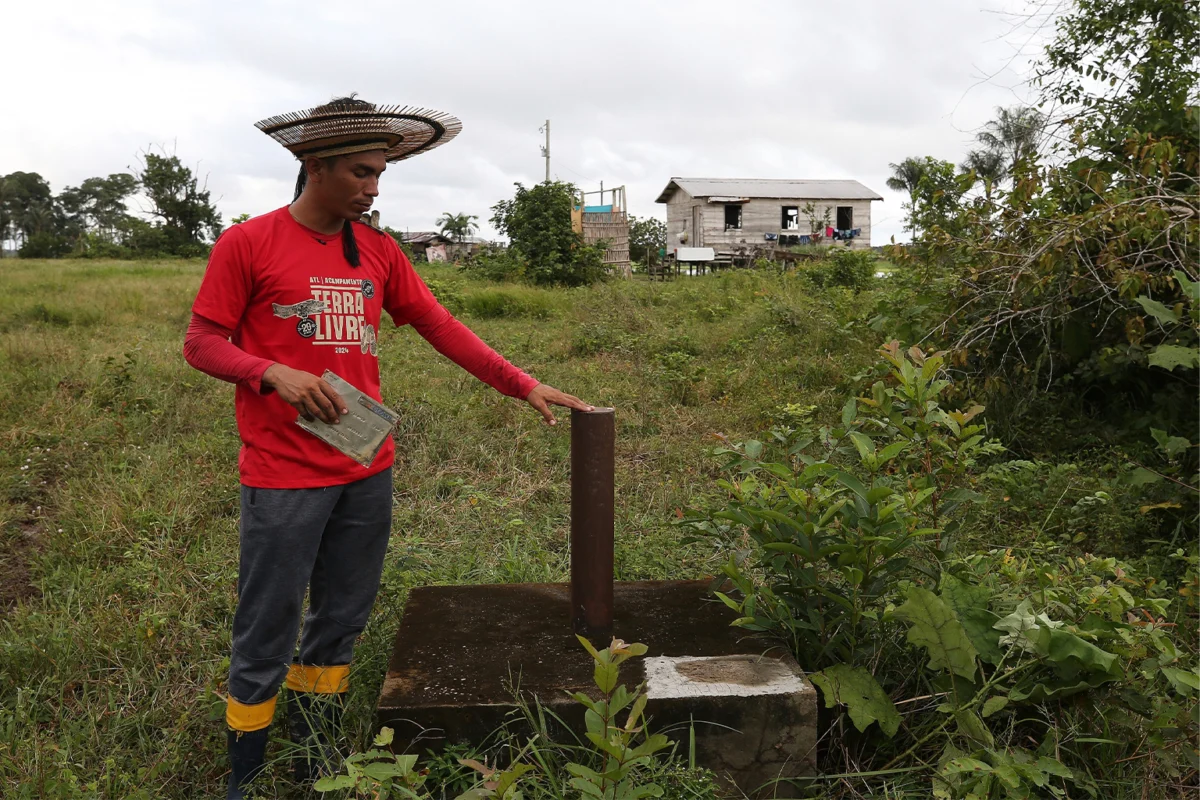
The immediate crisis centers on the construction of a 13.7-kilometer (8.5-mile) access road authorized by state-level environmental licenses. According to leaders of the Mura community, the heavy machinery and earth-moving activities associated with the roadwork have filled critical natural springs with earth. This disruption has cut off vital water flow to surrounding ecosystems, specifically targeting areas where native fish species spawn during the dry season. Indigenous representatives report that the resulting ecological degradation has led to massive fish kills, directly threatening the primary food source and daily subsistence of the Mura people.
Spiritual and Cultural Devastation

Beyond the physical and ecological impacts, the drying of the springs represents a profound spiritual crisis for the Mura. In traditional Mura cosmology, all natural water bodies, forests, and springs are inhabited by guardians or spiritual entities known as encantados. These entities are believed to protect the land and maintain the fertility of the soil and the abundance of wildlife.
Filipe Mura, chief of the affected Lago do Soares village, expressed a deep sense of irreversible loss, noting that the destruction of the landscape directly translates to the erosion of Mura culture, autonomy, and survival. Scholars and leaders from neighboring Indigenous territories, such as Willian Rodrigues Filgueira of the Mura Baixo Madeira territory, emphasize that the departure of a spring’s keeper strips the region of its ecological blessings and disrupts the delicate spiritual balance required to sustain life in the Amazon basin.
For the Mura, the territory is viewed not merely as a resource-rich environment, but as an extension of their collective body and identity. The degradation of their ancestral lands threatens the transmission of oral histories, traditional practices, and the sacred spaces where elders are laid to rest. Community leaders argue that as the forest and water suffer from industrial encroachment, the spiritual collective of the Mura people experiences a profound and shared suffering.
A Chronology of Controversy and Legal Battles

The roots of the Autazes conflict extend back roughly a decade, marked by a complex web of legal challenges, regulatory disputes, and shifting administrative approvals:
- Pre-2024: The Potássio Autazes project faces continuous resistance and legal suspensions over concerns regarding Indigenous rights, lack of prior consultation, and overlapping territorial claims.
- February 2024: Brazil’s Federal Regional Court of the 1st Region (TRF1) issues a pivotal decision allowing state-level environmental licensing to proceed, overturning prior judicial suspensions that had stalled the project.
- April 2024: The Amazonas Environmental Protection Institute (IPAAM) grants formal installation licenses to Potássio do Brasil, giving the company the green light to begin construction on the mine, processing facility, and port.
- May 2024: The Federal Public Prosecutor’s Office (MPF) files a sweeping lawsuit against the IPAAM licenses, arguing that the approvals violated Indigenous rights, bypassed adequate prior consultation, and suffered from critical legal irregularities.
- October 2026: Potássio do Brasil conducts a technical inspection following reports of the dried-up springs, concluding that no evidence links their road construction to altered water flows. Meanwhile, Mura leaders document extensive clear-cutting and newly cleared dirt roads slicing through the rainforest.
Geopolitical Context and Agribusiness Pressures
The push to develop the Potássio Autazes mine is heavily driven by Brazil’s powerful agribusiness sector. As one of the world’s leading agricultural exporters, Brazil requires vast quantities of fertilizers to maintain high crop yields for commodities such as soy and corn. Historically, the nation has relied heavily on foreign suppliers to meet its potash demands.
According to government data, Russia accounted for approximately 45% of Brazil’s total potash imports. In the wake of international supply chain disruptions and geopolitical tensions involving Russia, domestic agricultural lobbies have increasingly pressured policymakers to secure domestic sources of essential agricultural inputs. Proponents of the Autazes mine estimate that the underground deposit could eventually supply up to 20% of Brazil’s national potash demand, significantly trimming foreign dependency. However, critics and environmental advocates argue that pursuing national food security at the expense of Indigenous sovereignty and Amazonian biodiversity carries an unacceptably high price tag.

Institutional Pushback and Legal Arguments
The legality of the environmental licensing process remains a central battleground. The Federal Public Prosecutor’s Office (MPF) maintains that the environmental impact assessments submitted by Potássio do Brasil are fundamentally flawed and incomplete. Prosecutors argue that the studies failed to adequately evaluate severe environmental and social hazards, including the potential salinization of surface and groundwater from mining waste, unchecked deforestation, and the social ills frequently accompanying large-scale industrial projects in rural areas—such as increased crime, human influx, and threats to vulnerable populations.
Furthermore, federal prosecutors emphasize that the licensing process violated international standards. Under International Labour Organization (ILO) Convention 169, to which Brazil is a signatory, Indigenous populations have a legal right to free, prior, informed, and good-faith consultation regarding any industrial developments impacting their lands. The MPF asserts that the primary community directly affected, the Soares community, was excluded from meaningful decision-making processes while simultaneously being forced to bear the immediate consequences of construction.
Brazil’s official Indigenous Affairs Agency, Funai, has also intervened, formally requesting that IPAAM and Potássio do Brasil suspend the environmental licensing. Funai points out that the project footprint overlaps directly with Indigenous lands, including territories currently undergoing official demarcation processes. Legal experts note that as formal demarcation advances, any concurrent mineral exploration will face substantially stricter legal limitations under Brazilian constitutional law.

Corporate Response and Ongoing Monitoring
In response to the mounting allegations and local reports, Potássio do Brasil has defended its operational practices. The company stated that following community reports regarding the drying springs, its technical teams conducted an on-site inspection on October 8, 2026. Based on available records and the site visit, the company asserted that “no signs of the mentioned spring drying up were observed” and maintained there was no evidence suggesting that internal access road construction altered local hydrological flows.
Nevertheless, Potássio do Brasil indicated in communications with journalists that it will continue to monitor the local situation and perform additional technical verifications as construction activities proceed. Meanwhile, requests for comment directed to the Amazonas Environmental Protection Institute (IPAAM) went unanswered prior to publication.
Broader Implications for Amazonian Development

The unfolding situation in Autazes highlights a recurring tension in modern Brazilian development policy: the friction between industrial expansion for national economic gain and the constitutional protection of Indigenous rights and fragile rainforest ecosystems. As legal appeals from federal prosecutors remain pending in the courts, the Mura people continue to document the physical transformation of their ancestral homeland.
The outcome of the Potássio Autazes controversy is widely expected to establish a critical legal precedent for future resource extraction projects across the Brazilian Amazon. It will test the efficacy of environmental licensing agencies, the enforceability of Indigenous consultation rights under international law, and the judiciary’s willingness to prioritize ecological preservation and cultural survival over large-scale industrial imperatives.