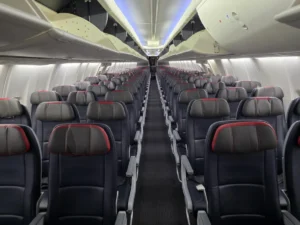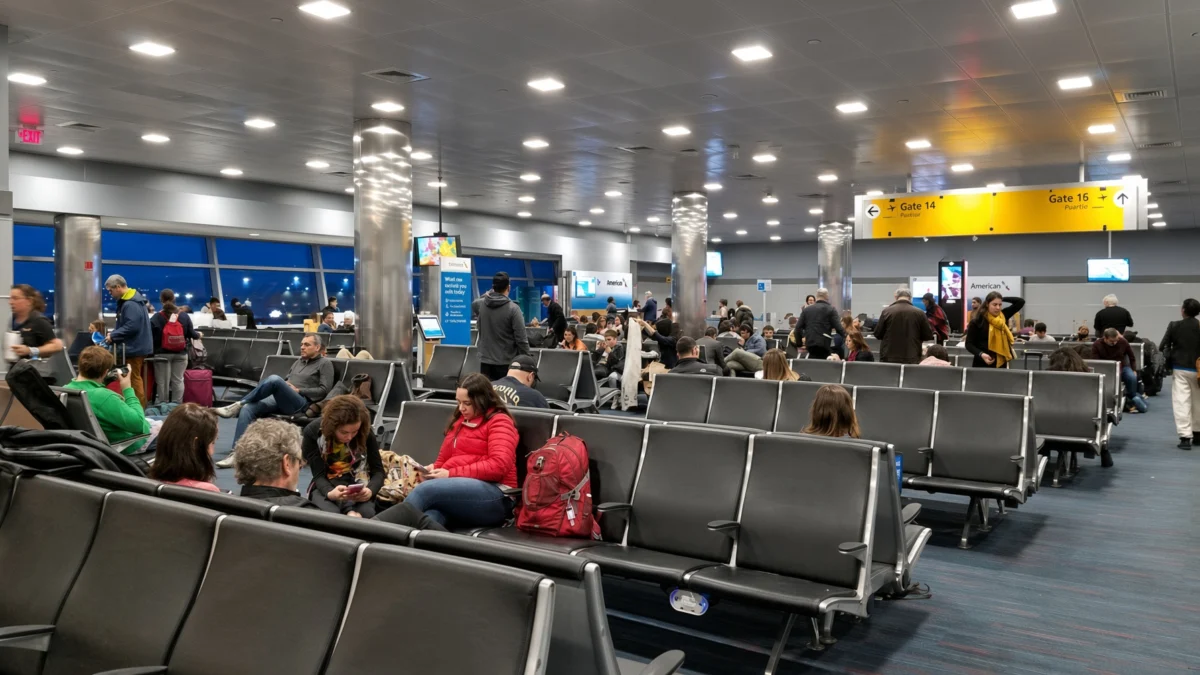
The modern air travel experience is increasingly defined by a persistent, frustrating irony: while thousands of passengers crowd into departure terminals, the seats meant to accommodate them are frequently occupied by luggage, jackets, or an aggressive desire for personal space. A recent viral social media post highlighting a traveler’s inability to find a seat at a Frontier Airlines gate has reignited a long-standing debate regarding airport design, passenger etiquette, and the underlying mathematical models that intentionally limit seating capacity in favor of retail revenue.
For many travelers, the scene is all too familiar. A passenger, exhausted and carrying the emotional weight of recent travel, arrives at a gate to find every available chair occupied—not by fellow travelers, but by carry-on suitcases and backpacks. While the instinct for many is to politely ask a neighbor to move their belongings, the reality of air travel often discourages such confrontations. For some, the social friction of asking a stranger to clear a seat is simply too much to bear, leading to a landscape where weary passengers are forced to occupy the floor, standing in crowded aisles, or wandering the terminal in search of a seat that may not exist.
The Mathematics of Intentional Scarcity
The lack of seating in airport gate areas is not merely an oversight of poor facility management; it is, in many cases, a deliberate architectural and operational strategy. According to Federal Aviation Administration (FAA) terminal planning guidance, gate areas are sized based on a complex series of assumptions that rarely prioritize 100% seating coverage.

Planning models, such as those utilized by airports like Springfield-Branson National Airport, often operate on an 80% aircraft load factor. Furthermore, these models assume that only 70% of those passengers will actually be present in the gate seating area at any given time, accounting for the reality that many travelers spend their pre-boarding time browsing duty-free shops, dining at terminal restaurants, or utilizing airport lounges. For a standard 172-seat Boeing 737, these calculations suggest that a gate area requires only 96 seats. When this capacity is split across paired gates—which are often allowed a 10% reduction in total area—the result is a terminal environment that is functionally designed to be "at capacity" long before the flight is fully boarded.
The economic incentive for this design is clear: airports generate significant revenue through concession agreements with retailers and restaurateurs. By limiting the number of chairs available at the gate, airports inadvertently—or intentionally—encourage passengers to migrate toward commercial areas. An empty chair represents lost potential foot traffic for a nearby coffee shop or bookstore. In the eyes of airport operators, the terminal is a commercial ecosystem where the passenger’s comfort is secondary to the optimization of real estate value.
A Chronology of Declining Comfort
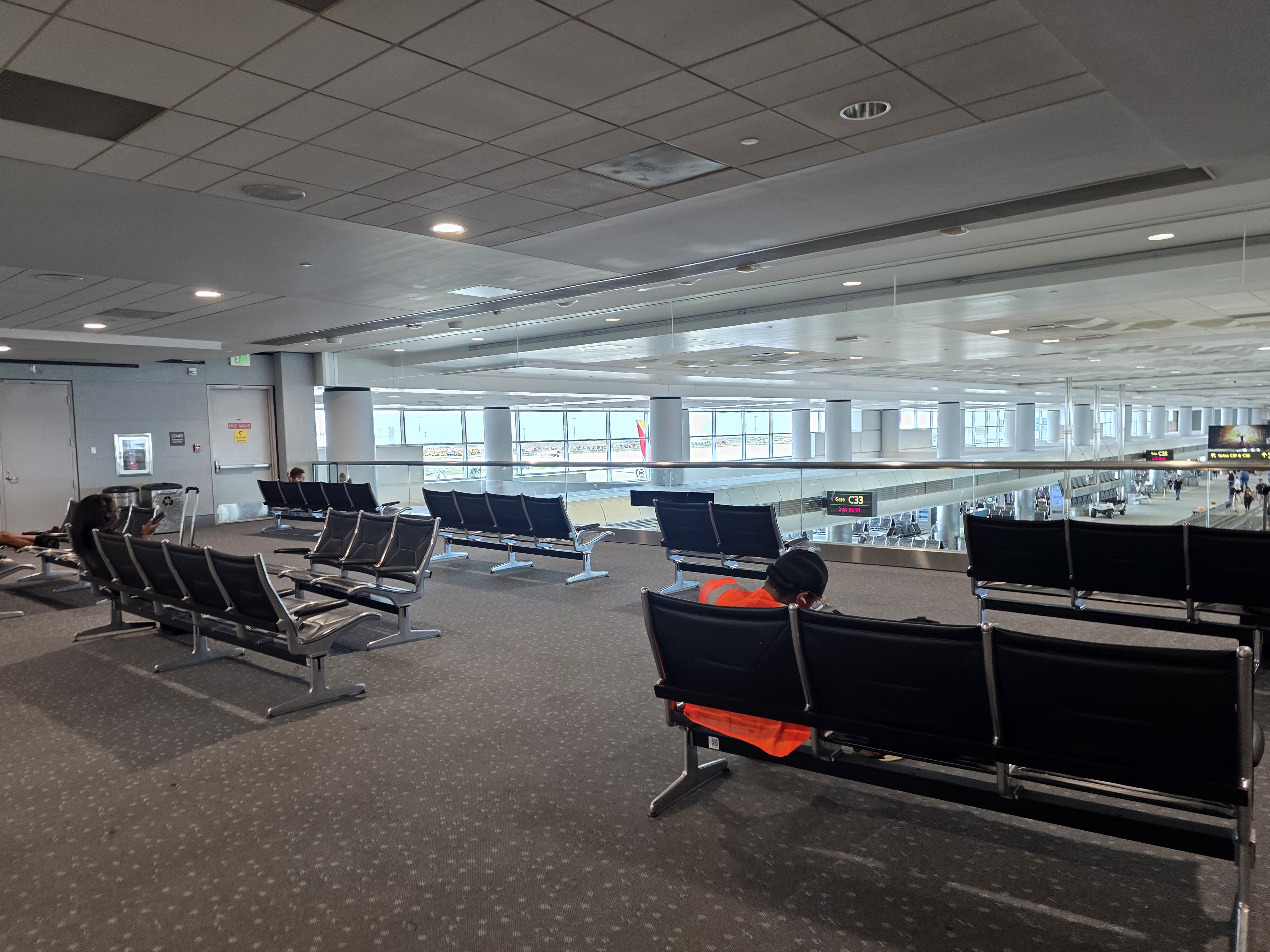
The evolution of airport seating tells a story of increasing industrialization. The ubiquitous black, metal-framed chairs found in most terminals are the descendants of the Eames Tandem Sling Seating, introduced in 1962. Designed by Charles and Ray Eames at the request of Eero Saarinen for Washington Dulles International Airport, the original intent was to provide durable, modular furniture that could withstand high-volume traffic.
Over the decades, this design has been refined to serve the needs of the airport operator rather than the passenger. Modern iterations emphasize ease of cleaning, fire resistance, and integrated power infrastructure. Crucially, the introduction of fixed, immovable armrests between seats has become an industry standard. While these features facilitate standardized rows and help manage maintenance, they also serve as a deterrent to travelers attempting to sleep or recline across multiple seats. This design choice effectively eliminates the possibility of "hobo-style" sleeping arrangements, ensuring that one seat equals one person, regardless of whether that person is currently utilizing the space or merely resting their feet.
The Psychology of Space and Social Norms
The struggle for seating is exacerbated by the "empty chair" phenomenon. Research conducted at Taipei’s Songshan Airport highlights the complex psychological factors that influence how passengers occupy space. The study found that travelers exhibit a strong preference for "territorial" seating—favoring aisle seats or front-row positions that offer a clear view of flight information displays.
When a passenger places a bag in an adjacent seat, they are often creating a buffer zone to manage social anxiety or ensure a sense of privacy in a crowded environment. This behavior is intensified by the proximity of strangers; the awkwardness of sitting between two people is a common deterrent, leading passengers to seek out isolated chairs even when other, less "private" seats remain empty.
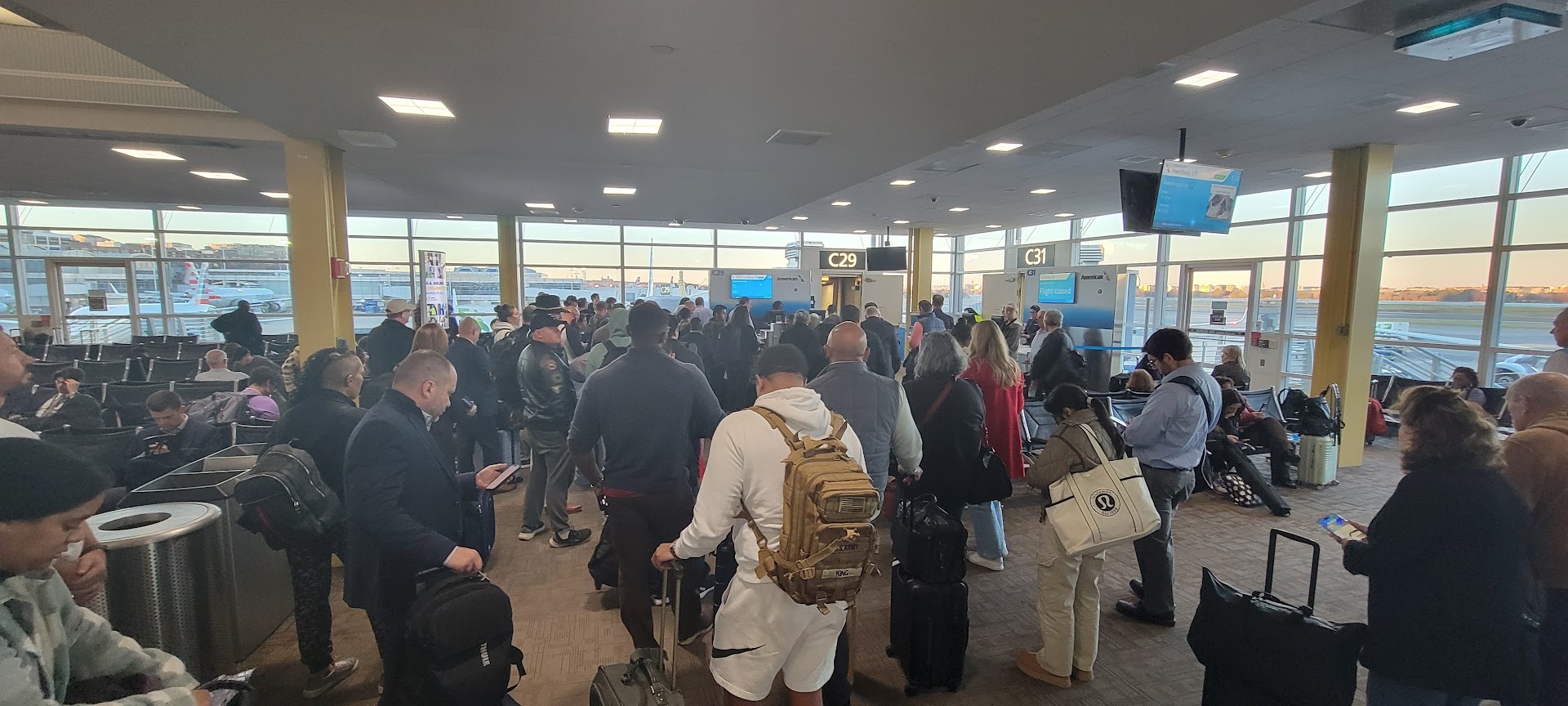
This behavior, while understandable, creates a "tragedy of the commons." When everyone attempts to claim a buffer zone for their luggage or personal comfort, the collective capacity of the gate area drops significantly below the already low design threshold. As seen in the recent discourse surrounding Delta Air Lines and American Airlines terminals, this leads to a situation where lines of standing passengers form in close proximity to empty chairs occupied by bags, creating a palpable tension between the individual’s desire for personal space and the collective’s need for infrastructure.
The New York Approach vs. The Silent Struggle
In the absence of clear regulations, the burden of managing terminal space falls on the passengers themselves. A prevailing sentiment among frequent travelers, particularly those from high-density transit environments like New York, is that public seating is a finite resource that should be allocated to humans first. The "New York approach"—a direct, assertive request for a passenger to move their bag—is often touted as the only effective solution to the problem.
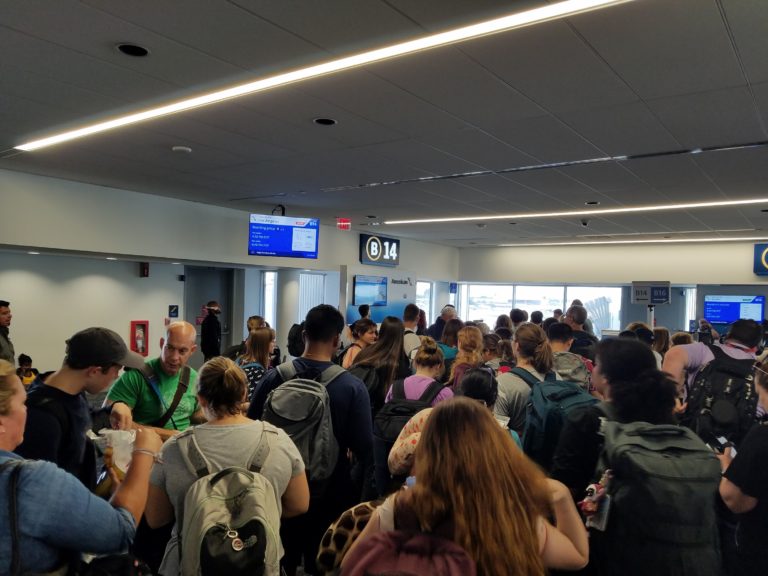
However, as evidenced by the recent viral complaint, this approach fails to account for the emotional and physical state of the traveler. Many passengers are managing high-stress scenarios: grief, medical emergencies, or the exhausting logistics of traveling with small children. For these individuals, the "social tax" of confronting a stranger is too high. The result is a divide in terminal behavior: those who feel empowered to reclaim public space and those who suffer in silence, standing on hard terminal floors for hours before their flight.
Institutional Responses and Modern Solutions
Some modern airport design initiatives have begun to acknowledge these flaws. Newer terminals, such as those featuring expanded gate areas and diverse seating configurations, are attempting to mitigate the problem. Facilities that incorporate specialized "family zones," high-top work counters with integrated power, and bag-storage hooks beneath seats are seeing a reduction in the "bag-on-chair" phenomenon.
Capital One’s airport lounge model has been cited as a positive example of effective spatial management. By implementing systems that reserve larger tables for larger parties and utilizing staff to manage seat assignments during peak hours, these facilities prove that it is possible to maintain a comfortable environment even during periods of high demand. However, applying these strategies to the open-access gate area remains a challenge due to the lack of staff presence at individual gates.
The Broader Impact on the Aviation Industry
The inability to provide adequate seating is not merely an inconvenience; it impacts the overall passenger experience and, by extension, brand loyalty. When a passenger’s final memory of an airport is standing for two hours due to poor design, that frustration is often projected onto the airline, regardless of whether the airline manages the terminal infrastructure.
As airports continue to face record-breaking passenger volumes, the pressure on gate areas will only increase. The reliance on legacy planning models that treat passengers as "marks" rather than customers is becoming increasingly unsustainable. The move toward more human-centric design—prioritizing comfortable, flexible seating that accounts for modern carry-on culture—is no longer a luxury but a functional requirement for the next generation of airport infrastructure.
Ultimately, the dispute over a single seat at a gate is a symptom of a larger disconnect between the utility of air travel and the comfort of the traveler. Until airport operators adjust their planning models to reflect the reality of modern luggage requirements and the basic human need for rest, the tension between the "bag-on-seat" culture and the weary traveler will remain a defining feature of the terminal experience. The industry must decide whether the terminal is a space for passengers to wait in dignity or a retail-focused staging area where the only guarantee is the availability of a place to stand.