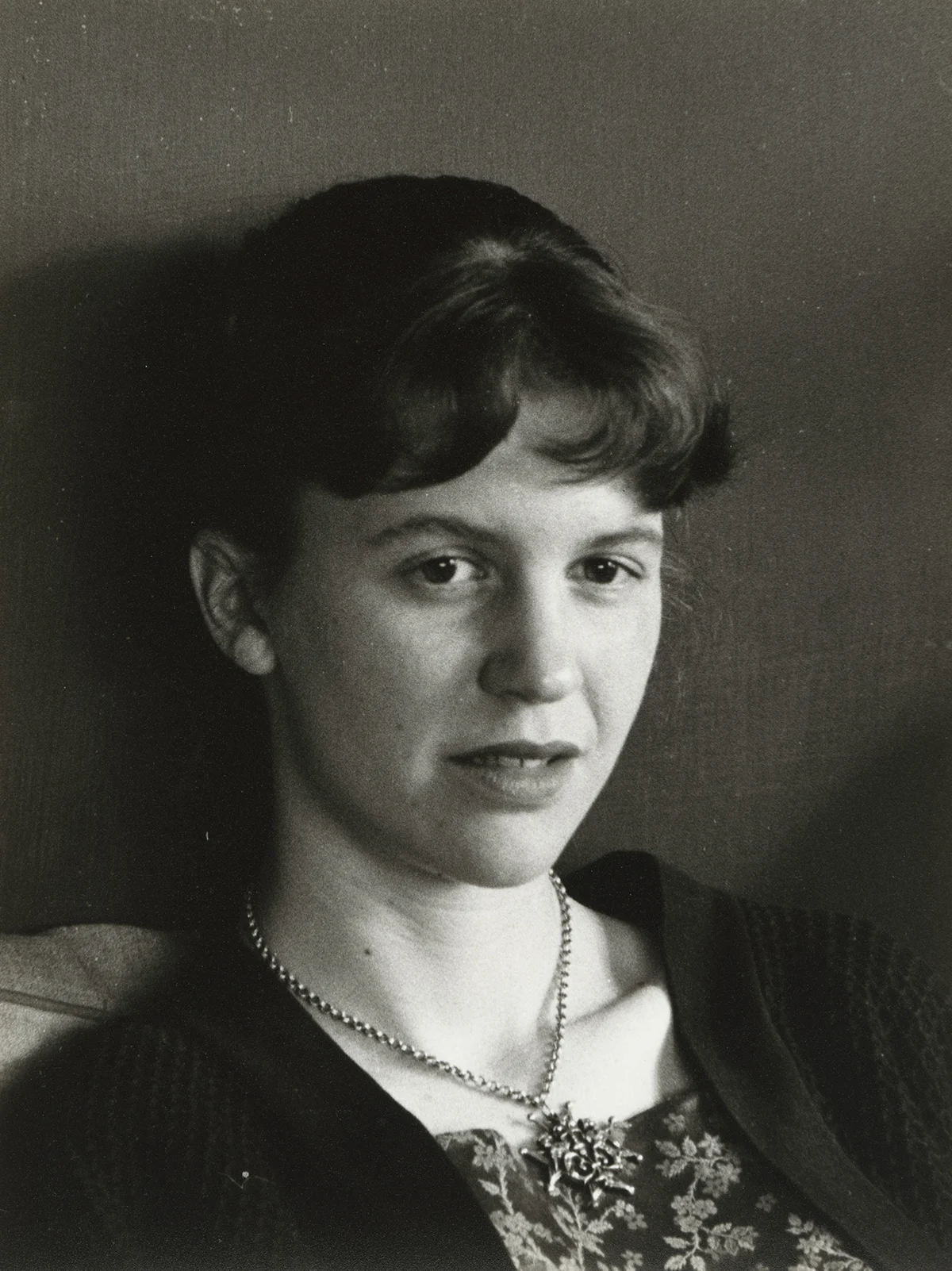
When twenty-two-year-old Sylvia Plath sat down to write to her mother on a bleak January day in the mid-1950s, she was navigating a psychological landscape that was, at the time, largely uncharted by medical science. This correspondence, later preserved in the posthumous collection Letters Home: Correspondence 1950–1963, offers more than a mere window into the life of a burgeoning literary icon; it serves as a historical document of the struggle to reconcile one’s personhood with the biological imperatives of the brain. During this era, neuroscience remained in its infancy, and the understanding of hereditary mental health was limited to speculative theories, far removed from the precise, data-driven diagnostics available in the 21st century.
The Scientific Context of Mid-Century Psychiatry
In the decade preceding Plath’s death in 1963, the scientific community was just beginning to peel back the layers of the "helix of heredity." The discovery of the structure of DNA in 1953 by James Watson and Francis Crick provided the first concrete evidence that human traits—including those governing psychological predispositions—could be encoded in biological material. However, the translation of this discovery into practical mental health treatment was decades away.
For an individual like Plath, the discourse surrounding mental health was dominated by psychoanalytic traditions, which often favored environmental or "nurture" explanations over the biological "nature" factors that modern science now recognizes as critical. The "darkness of the soul" that Plath described in her letters was, to many of her contemporaries, a moral or characterological failing rather than a quantifiable biochemical imbalance. This lack of diagnostic clarity meant that individuals suffering from what we now categorize as clinical depression or bipolar disorder were often left to treat their own conditions through philosophy, self-discipline, and, at times, inadequate medical interventions.

Chronology of a Literary Life
The trajectory of Sylvia Plath’s life was marked by a constant, oscillating effort to map her own consciousness. Her personal journals and correspondence reveal a woman deeply invested in the mechanics of her own mind:
- 1932: Sylvia Plath is born in Boston, Massachusetts, on October 27.
- 1950: Plath begins her studies at Smith College, a period marked by high academic achievement alongside deepening bouts of melancholy.
- 1953: Following a severe depressive episode, Plath attempts suicide and is subsequently hospitalized. This period serves as the primary inspiration for her semi-autobiographical novel, The Bell Jar.
- 1955: Plath earns a Fulbright Scholarship to attend Newnham College, Cambridge, where she meets the poet Ted Hughes.
- 1960–1962: Plath produces a prolific body of work, including The Colossus and Other Poems and the drafting of Ariel, the collection that would cement her legacy as a definitive voice in 20th-century literature.
- February 11, 1963: Plath dies by suicide in London at the age of 31.
The Burden of Self-Reflection
In her letter to her mother, Plath candidly addressed the tendency within her family to dwell on "stupidities"—the minor social transgressions or verbal lapses that often plague the self-critical mind. "I don’t know whether it is an hereditary characteristic, but our little family is altogether too prone to lie awake at nights hating ourselves for stupidities," she wrote. This passage highlights the recursive nature of depressive thinking, where a single, insignificant event is amplified through internal narrative until it creates physical symptoms, such as the "ulcer attacks" she mentioned.
However, the letter also reveals a sophisticated, if exhausting, coping mechanism. Plath recognized that the battle with one’s own mind could, if left unchecked, lead to total depletion. Her resolution—"to shut off that nagging part of the mind and go on without it with bravo and philosophy"—demonstrates a remarkable resilience. It is a testament to the cognitive labor she performed daily, attempting to manage a high-functioning intellect that was simultaneously prone to self-destructive feedback loops.
Statistical Reality and the Stigma of Mental Illness
The tragedy of Plath’s death has, for decades, colored the critical reception of her work. A persistent fallacy in public discourse is the notion that suicide represents a "failure" of the individual. Modern psychiatric data suggests that this perspective is not only inaccurate but harmful.

According to data from the National Institute of Mental Health (NIMH), mental illness—particularly when categorized under mood disorders—involves complex interactions between genetic markers, neurochemical fluctuations, and structural brain anomalies. When an individual suffers from severe, treatment-resistant depression, the brain’s ability to regulate the neurotransmitters responsible for pleasure and emotional stability (such as serotonin and dopamine) is fundamentally impaired. To judge the outcome of such a condition through the lens of moral "failure" ignores the physiological reality of the disease.
In the case of Plath, the "rare triumph of the spirit" is not that she died, but that she managed to produce a body of work defined by "staggering beauty" while enduring a mind that was, by her own account, in a constant state of internal war. Her poems, such as "Morning Song" and the pieces contained in Ariel, continue to resonate precisely because they offer an unvarnished view of the human experience—one that acknowledges both the capacity for artistic transcendence and the weight of deep, existential suffering.
The Evolution of Perspective
The retrospective analysis of Plath’s life has shifted significantly since the mid-20th century. Where earlier critics often focused on the "confessional" nature of her work, viewing it as a symptom of her pathology, contemporary scholars and mental health professionals increasingly view her writing as a heroic act of translation. By documenting the "disquieting muses" of her mind, Plath provided a language for others who suffer in silence.
The implications of her life and death remain relevant in contemporary discourse on mental health advocacy. The transition from viewing mental health through a purely moral or psychoanalytic lens to a medical and biopsychosocial one has empowered current generations to seek treatment without the heavy stigma that Plath faced. The "bravo and philosophy" she invoked in her letters is no longer the only recourse; it is now supplemented by a robust infrastructure of pharmacological, behavioral, and therapeutic support.

Legacy and Broader Impact
Sylvia Plath’s influence extends far beyond the literary canon. She remains a symbol of the struggle between the creative impulse and the vulnerabilities of the human brain. The Smithsonian’s archival efforts, which include her lesser-known paintings and personal correspondence, allow the public to see a multidimensional human being rather than a static icon of tragedy.
As society continues to refine its understanding of the brain as a physical organ susceptible to illness, the life of Sylvia Plath stands as a reminder of the fragility of that architecture. To acknowledge her work—and the sheer force of will required to create it—is to acknowledge the reality that mental resilience is often an act of daily, silent labor. Her life, though cut short, serves as an enduring call for empathy, reminding us that the depth of an individual’s struggle is rarely visible on the surface, and that the beauty left behind in their wake is often the product of an unseen, exhaustive battle.