The geopolitical landscape of Earth is rapidly expanding upward, transforming the pristine vacuum of space into an increasingly congested and contested operational theater. While nations have used satellites for communication, reconnaissance, and navigation for decades, recent advancements in counterspace technology, orbital inspection capabilities, and directed-energy weaponry have ushered in a tense new chapter of great power competition. Intelligence assessments, commercial aerospace innovations, and recent close-proximity maneuvers in low-Earth and geosynchronous orbits underscore a fundamental reality: the security architecture of the modern world now relies heavily on the precarious defense of assets hundreds and thousands of miles above our heads.
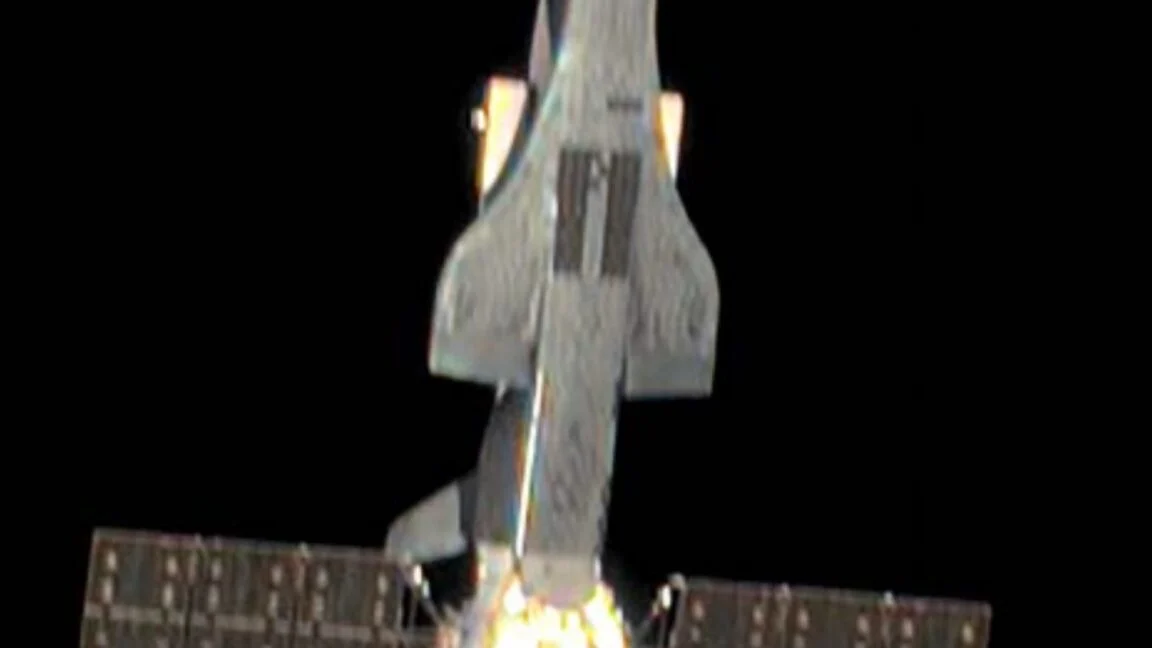
At the heart of this evolving paradigm is the stark divergence between commercial space situational awareness and active military counterspace maneuvers. Companies like Maxar and other commercial entities have increasingly demonstrated advanced non-Earth imaging (NEI) capabilities. These commercial operations typically rely on chance encounters—high-speed, serendipitous flybys where commercial remote-sensing satellites capture imagery of other space objects while moving at staggering velocities relative to one another.
This commercial capability stands in sharp contrast to deliberate military actions. Recent operations by adversarial states, such as Russia’s Kosmos 2612, illustrate a much more aggressive intent. In these instances, military spacecraft intentionally execute complex orbital maneuvers to close the distance on targeted foreign assets, such as US-registered radar imaging satellites, raising alarms within defense circles regarding espionage, intimidation, and pre-emptive targeting strategies.
The Growing Threat of Directed-Energy Weapons
As orbital real estate becomes more crowded, military planners are looking beyond traditional kinetic interceptors toward invisible, speed-of-light threats. According to recent updates from the Defense Intelligence Agency (DIA), China has made significant strides in the pursuit of anti-satellite technology, or counterspace weapons. Among these, the Chinese military reportedly views directed-energy weapons (DEWs) as ideal counterspace systems. Because lasers and other directed-energy applications can temporarily blind or permanently disable a satellite without leaving physical debris—which can cascade and threaten all spacecraft in a given orbit—they offer immense strategic utility.
One of the primary near-term applications for these systems in space is sensor blinding, often referred to in defense terminology as "dazzling." By projecting intense light beams into the optical sensors of an adversary’s reconnaissance satellite, an operator can effectively render the spacecraft blind, masking ground-based movements or strategic deployments.
The DIA has explicitly warned that China currently maintains multiple ground-based laser systems of varying power levels designed to disrupt, degrade, or damage satellites operating in low-Earth orbit (LEO). Looking ahead, the intelligence community projects that by the late 2020s, Beijing may field space-based directed-energy systems alongside higher-powered ground-based counterparts capable of projecting lethal or disruptive force into higher-altitude regimes, including medium-Earth orbit and geosynchronous orbit.
Beyond lasers, China’s counterspace portfolio includes the testing of ground-based anti-satellite missiles and unprecedented on-orbit feats. Last year, China demonstrated advanced satellite refueling capabilities in geosynchronous orbit—situated roughly 22,000 miles (36,000 kilometers) above the Earth’s equator—a technological milestone that no other nation had previously accomplished above LEO. Furthermore, Chinese programs have successfully tested robotic arms capable of physically grabbing and manipulating other spacecraft. Beijing also operates a growing constellation of mysterious satellites under the TJS designation, which routinely execute close approaches to foreign spacecraft, blurring the line between routine maintenance and active reconnaissance.
The Response from the United States and Allied Powers
Faced with mounting vulnerabilities, the United States has accelerated its own defensive and offensive space posture. The US Space Force maintains a dedicated constellation of inspector satellites in geosynchronous orbit, designed to monitor and evaluate potential threats to critical American infrastructure in space. Recently, the military has procured advanced inspector platforms equipped with refueling capabilities, successfully overcoming historical limitations regarding fuel reserves and maneuverability that previously hampered long-term orbital surveillance.
In a watershed moment for global defense transparency, Air Force Secretary Troy Meink revealed last month that the Pentagon has officially deployed weapons in orbit. This confirmation marks a historic policy shift, making the United States the first nation to publicly acknowledge the physical deployment of combat-ready weapons in space, shattering decades of unspoken norms surrounding the weaponization of the cosmos.
Simultaneously, the geopolitical friction involving Russia has intensified. US intelligence officials report that Moscow is aggressively pursuing its own robust orbital combat program, which includes long-term ambitions to deploy a nuclear weapon in space—a move that would fundamentally violate the foundational principles of the 1967 Outer Space Treaty.
More conventional Russian military programs are equally active. The Nivelir weapons system, for instance, is engineered to launch kinetic projectiles from a host satellite to physically smash into and destroy targeted adversary spacecraft. The Russian military famously simulated an attack using this system back in 2020.
The Stalker Satellite Incident and the Commercial Nexus
The friction between terrestrial conflicts and orbital realities was starkly highlighted earlier this year. In April, Russia launched a fleet of small satellites into an orbital path closely mirroring that of a commercial radar remote-sensing satellite owned by ICEYE, a firm providing vital reconnaissance imagery to Ukraine amid its ongoing conflict.
As the mission progressed, one of the Russian satellites—dubbed a "stalker" satellite by defense analysts—executed aggressive maneuvers, moving within tens of meters of the ICEYE satellite before eventually retreating. While Russian officials claimed the spacecraft was entirely peaceful in character, US defense and intelligence officials viewed the maneuver as a deliberate act of intimidation and an alarming test of targeting capabilities against commercial assets supporting allied nations.
Implications for Global Security and the Future of Space Law
The convergence of commercial space technology, aggressive military maneuvering, and the deployment of orbital weaponry creates a volatile security matrix. Several key implications emerge from this new phase of the space race:
-
The Blurring of Civilian and Military Lines: As commercial entities like Maxar, ICEYE, and others provide crucial data for military intelligence and defense operations, they are increasingly treated as legitimate targets by adversarial states. This challenges traditional interpretations of international law regarding neutrality and non-combatant status in warfare.
-
The Escalation Risk of Close-Proximity Operations: Without established international norms, rules of the road, or secure communication channels for orbital traffic, close-proximity approaches—such as the recent ICEYE incident—carry a catastrophic risk of miscalculation. A minor miscalculation or thruster failure could result in a high-speed collision, triggering a Kessler Syndrome that destroys billions of dollars in critical global infrastructure.
-
The Weaponization Taboo is Broken: With the United States acknowledging its deployment of orbital weapons and nations like China and Russia advancing kinetic, robotic, and directed-energy counterspace systems, the traditional deterrent framework of the Cold War is obsolete. Space is no longer a sanctuary reserved exclusively for science and communication.
As the international community grapples with these developments, diplomats and defense experts face an urgent imperative: establishing verifiable transparency, bilateral risk-reduction agreements, and modernized space governance frameworks. Without such measures, the quiet theater of the night sky risks becoming the next active battleground of human conflict, with consequences that would resonate catastrophically across every facet of modern civilization.