For 18-year-old Elijah Lee, the fight for environmental preservation has never been an abstract or academic debate. Raised in a predominantly Black, low-income community in Roanoke Rapids, North Carolina, Lee spent his formative years attending school directly adjacent to a local paper mill. The facility continuously blanketed the surrounding air with heavy industrial pollution, dominating both the skyline and the local economy. Growing up, Lee often wrestled with a troubling question: why did this environmental hazard appear to be the only viable employment option for generations of working-class families in his town?
Now a resident of Virginia—a state that has aggressively transformed into the data center capital of the United States—Lee finds himself confronting a familiar anxiety. As massive digital infrastructure projects rapidly expand across the region, he fears that the grand political promises of economic growth and high-paying jobs driven by the technology sector will once again bypass him and his generation. Instead, he sees a future defined by surging utility bills, strained local grids, and unchecked corporate pollution.
As Lee prepares to vote in his first midterm election cycle, climate policy and environmental health rank among his chief personal concerns. Yet, he harbors no illusions about why many of his neighbors, struggling daily to keep up with basic living expenses, fail to put environmentalism at the top of their political priority lists. When household survival is a daily hurdle, long-term ecological forecasts often take a backseat.
This tension between systemic environmental threats and immediate financial survival is far from isolated. Recent comprehensive polling across several swing states reveals a nuanced and complex reality: while Black voters may not routinely list abstract "climate change" as their single most pressing ballot-box issue, they overwhelmingly demand that elected officials take decisive, aggressive action to address it. Furthermore, they are increasingly drawing direct lines between corporate industrial expansion—such as the nationwide boom in data centers—and the skyrocketing cost of living in their communities.
Kitchen Table Politics: Bridging the Gap Between Environment and Economy
A multi-state survey conducted by HIT Strategies on behalf of the Climate Equity Action Fund and the League of Conservation Voters highlights this complex political landscape. Surveying 2,000 Black and Latino registered voters across seven major swing states ahead of the November midterms—specifically Arizona, Georgia, Michigan, Nevada, North Carolina, Ohio, and Pennsylvania—the poll uncovered a striking divergence between broad public anxieties and traditional issue-ranking metrics.
When asked to rank their top three voting motivations, only 9 percent of Black registered voters placed climate change at the very top of their list. In stark contrast, 74 percent cited the soaring cost of living as a primary driver for their vote.
However, when the questioning shifted from abstract terminology to concrete, daily realities, public sentiment flipped dramatically. Across the board, 89 percent of respondents emphasized that it was crucial for political candidates to prioritize lowering soaring energy costs. An equally formidable 86 percent stressed the urgent need to reduce local air and water pollution, while 82 percent stated that candidates must make addressing climate change a top legislative priority. Notably, this demand for action crossed traditional partisan boundaries: even among Black Republicans surveyed, 79 percent asserted that candidates must prioritize climate and environmental issues.
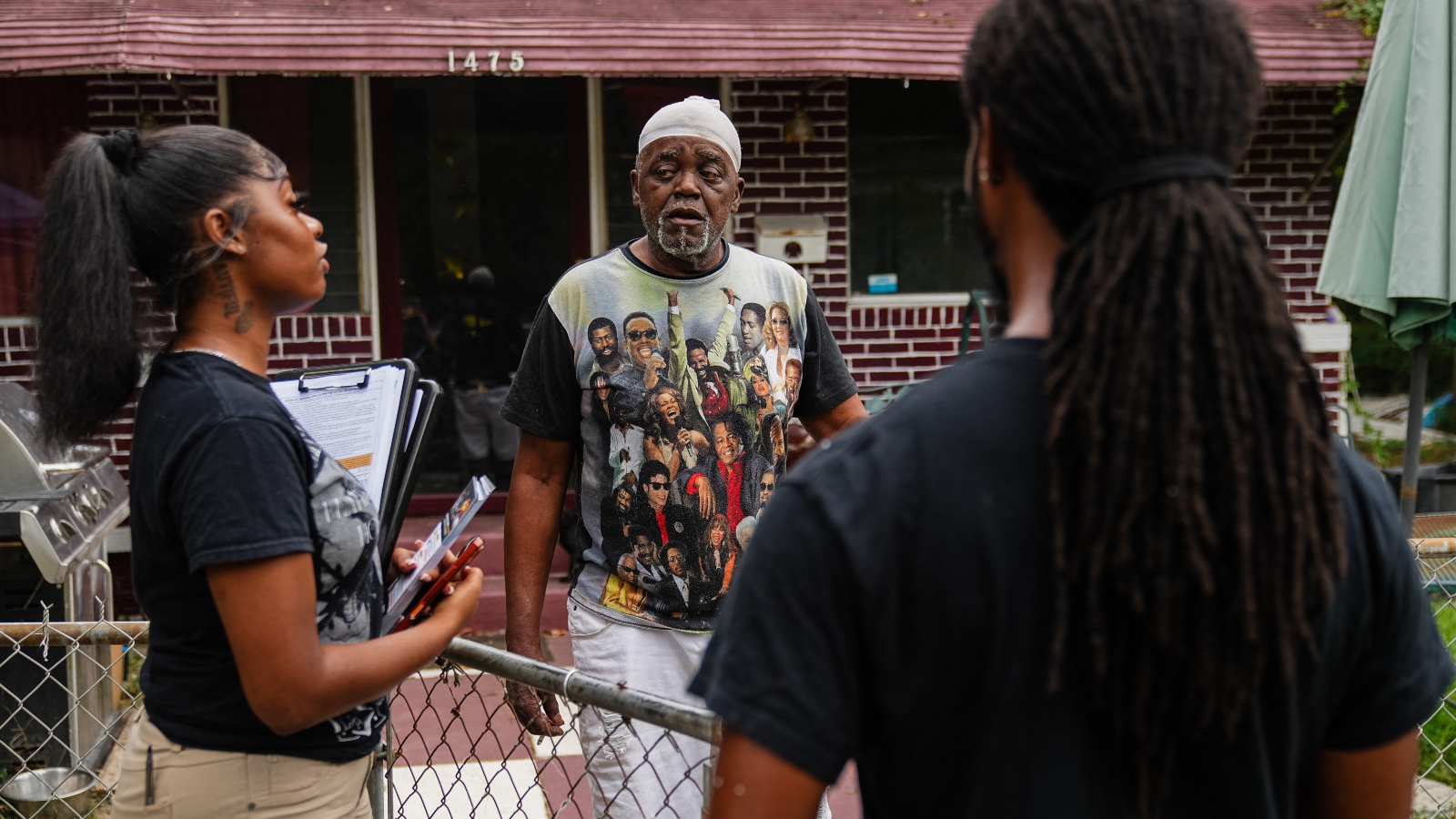
Erica Tebbs, a senior analyst at HIT Strategies, notes that this polling gap is fundamentally a crisis of institutional trust rather than a lack of environmental awareness.
"The proof that is needed is that their concerns will be addressed and responded to by elected officials and that a vote will result in a real impact in their community," Tebbs explained. "That’s where the doubts lie."
Tebbs points out that while the phrase "climate change" can often feel distant, theoretical, or politicized, the lived experiences of high electric bills, unsafe drinking water, and localized industrial pollution are intensely personal. For decades, low-income communities of color have shouldered a disproportionate burden of toxic industrial development. Consequently, the skepticism among Black voters is rooted in a history of unfulfilled political promises and environmental injustice.
The Data Center Boom and the Threat to Household Budgets
One of the most rapidly accelerating catalysts bringing environmental and economic concerns together is the unprecedented national surge in data center development. Driven by the explosive growth of artificial intelligence, cloud computing, and digital infrastructure, technology corporations are rushing to build massive server farms. These facilities require staggering amounts of electricity and water to operate and cool continuously, placing immense strain on local electrical grids.
Bill Hairston, the national field director for the League of Conservation Voters, has observed firsthand how data center expansion has transformed community organizing around energy policy. Hairston grew up in Charleston, West Virginia, in a low-income Black neighborhood where his grandparents’ home was flanked by heavy industrial traffic. He vividly recalls that the grass surrounding their home was never green; it was permanently coated in a heavy layer of dark industrial soot.
Growing up, Hairston admits he did not fully comprehend the systemic political and regulatory decisions that permitted those environmental conditions to persist. Today, however, he views modern resistance to data centers as a vital opportunity for residents to connect corporate industrial footprints with questions of public health, housing costs, gentrification, and utility affordability.
"I think it’s actually just putting the two and two together," Hairston said.
Communities across the country are discovering that the arrival of a massive data center does not automatically translate into broad prosperity for local residents. Instead, it frequently results in localized burdens. A central point of contention is the cost of electricity. While Congress has weighed legislative measures—such as proposals introduced in late 2026—requiring technology corporations building data centers to directly shoulder the immense energy costs they generate rather than passing expenses onto residential ratepayers, public skepticism remains profound.
According to the HIT Strategies poll, 52 percent of Black voters surveyed expressed deep skepticism that these protective policies would actually shield everyday Americans from rising utility bills. Even when informed of proposed federal safeguards, a majority anticipated that the corporate data center boom would ultimately inflate their monthly electricity costs.
"They don’t necessarily trust that this type of policy will really protect the public from taking on these costs," Tebbs noted.
Andrea Cristina Mercado, executive director of the Climate Equity Action Fund, argues that these findings underscore a systemic failure of past environmental and economic policies. For Mercado, the rapid emergence of grassroots, community-led opposition movements against data centers is a direct manifestation of working-class people demanding that climate and energy policies center their immediate economic survival.
"We actually believe that climate policy has to address the needs of working people," Mercado said, noting that this intersection of affordability and environmental protection is fueling a massive, organic movement across the nation.
Environmental Justice Across Party Lines
While political polarization often dominates national media narratives, the polling data reveals a striking bipartisan consensus among Black voters regarding the necessity of environmental protection. The urgency felt by Black voters transcended party identification to a significantly higher degree than observed among other demographic groups.
For instance, while 79 percent of Black Republicans stated that candidates must prioritize addressing climate change, only 59 percent of Latino Republicans expressed the same view. Analysts attribute this high level of cross-partisan concern among Black voters to shared, systemic lived experiences. Decades of targeted zoning decisions, historical redlining, and proximity to heavy industrial polluters have left Black communities nationwide disproportionately vulnerable to environmental hazards and climate-driven disasters, such as severe urban flooding and extreme heat waves.
Despite this shared recognition of environmental threats, political disillusionment remains a formidable barrier to civic engagement. Nearly half of all survey respondents expressed a cynical view of the political system, stating their belief that powerful corporate interests and wealthy entities will always successfully block meaningful efforts to curb climate harm, regardless of grassroots activism. Furthermore, a significant share of respondents voiced resignation, expressing the belief that it is already too late to reverse existing environmental damage.
Yet, counterbalancing this despair is a resilient spirit of collective action. Approximately 45 percent of Black voters firmly maintained that ordinary people working in solidarity—through voting, community organizing, petitions, and economic boycotts—retain the power to hold both government regulators and major corporations accountable.

A Generation Inheriting the Crisis
For younger generations, who stand to inherit the long-term consequences of current energy and climate policies, this tension between systemic despair and hopeful activism is particularly acute.
Elijah Lee points to youth-led movements across the country as proof that his generation is refusing to remain passive spectators. He highlights recent organizing efforts by high school and college students—such as student-led opposition campaigns against proposed data center developments in places like Spartanburg County, South Carolina—as powerful examples of young people demanding a meaningful voice in shaping their local economies and environments.
Lee urges older generations and political leaders not to misinterpret young people’s digital fluency or familiarity with technology as an unconditional endorsement of every infrastructure project proposed in the name of innovation.
"We know that this is the future that we’re inheriting, the markets that we’re inheriting, the housing that we’re inheriting, the food prices that we’re inheriting," Lee reflected. "And so I think more than anything, I’m being driven by deep concerns, but also by a deep hope that we can turn this around."
As swing-state voters head to the polls, the message from Black communities is unequivocal. Environmental policy is no longer viewed as a peripheral issue or a luxury concern separate from the economy. Instead, for millions of working-class families navigating the high costs of modern life, clean air, affordable electricity, and protection from corporate exploitation are foundational pillars of survival, justice, and self-determination.