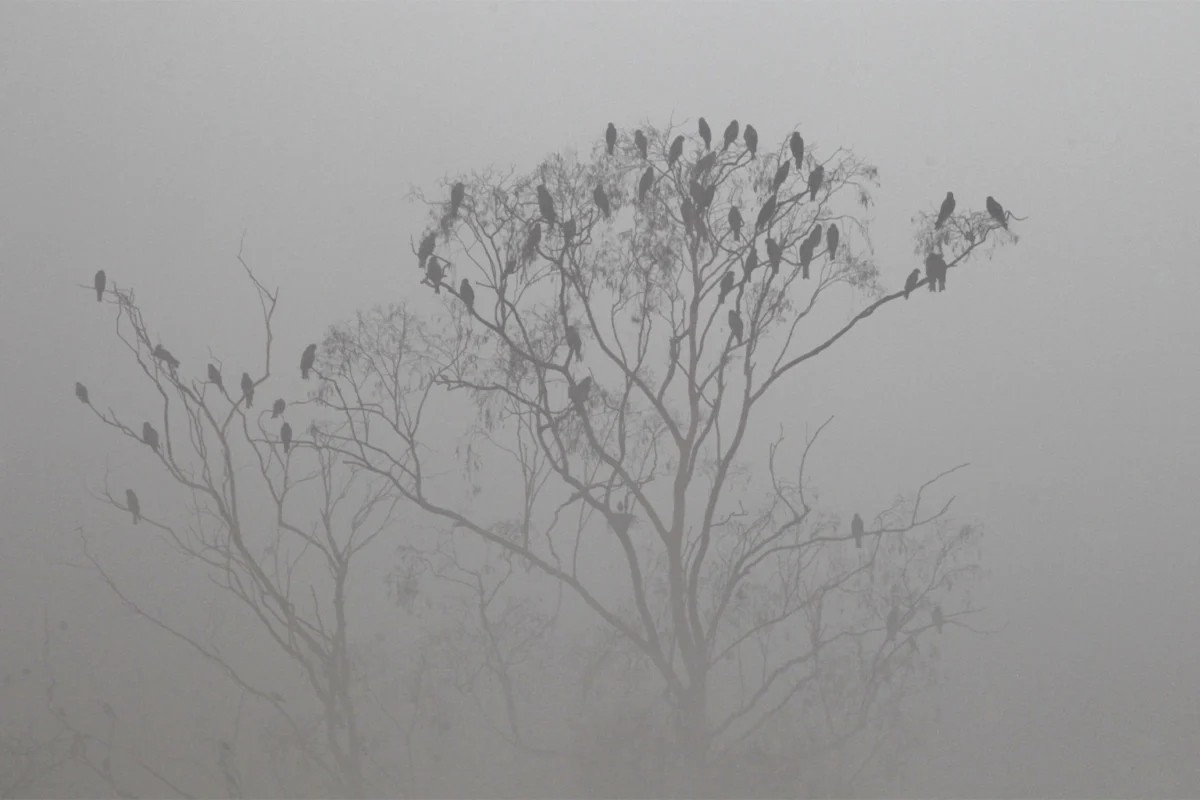
Each November, a suffocating, grey canopy descends upon Pakistan’s Punjab province, trapping more than 20 million residents beneath a toxic blanket of particulate matter. While public health emergencies in major urban centers like Lahore rightfully dominate international and domestic headlines, an equally devastating, yet largely silent, crisis unfolds across the region’s agricultural fields, fragmented urban green spaces, and dwindling wetlands. As visibility plummets and air quality indices routinely shatter safety thresholds, wild mammals, resident birds, and vulnerable migratory species are left to endure hazardous atmospheric conditions completely devoid of systematic oversight.
While scientists and agricultural authorities meticulously track the physiological toll of air pollution on human populations and economically vital livestock assets, wild fauna remain trapped in a massive data void. This glaring disparity in environmental monitoring leaves conservationists flying blind, unable to quantify the full ecological devastation unfolding across South Asia’s most densely populated and heavily polluted agricultural heartland.
The Anatomy of a Seasonal Catastrophe
To understand the immense pressure facing Punjab’s wildlife, one must examine the potent cocktail of year-round emissions and volatile seasonal meteorology that triggers the annual winter smog crisis. Throughout the year, the region’s air quality is severely degraded by dense vehicular traffic, unregulated industrial manufacturing, and thousands of traditional brick kilns that churn out particulate matter with minimal environmental oversight. This baseline pollution load experiences a massive, catastrophic spike every November as millions of smallholder farmers resort to open-air crop residue burning to rapidly clear their fields for the upcoming winter planting season.

As agricultural smoke and urban exhaust fill the lower atmosphere, regional weather patterns shift dramatically. A meteorological phenomenon known as a “temperature inversion” takes hold, wherein a layer of cold air becomes rigidly trapped near the earth’s surface by an overlying layer of warmer air. Coupled with stagnant winter wind speeds, this thermal cap acts as an impenetrable barrier, preventing ground-level emissions from dispersing into the upper atmosphere. The toxic haze remains locked precisely where local wildlife lives, forages, and breathes.
The empirical metrics of this crisis are staggering. In January 2026, Lahore’s Air Quality Index (AQI) spiked past 500, plunging deep into the "hazardous" category and temporarily crowning the city as the second-most polluted major urban area on the planet, according to real-time tracking platform IQAir. Furthermore, comprehensive regional data revealed that Pakistan’s average concentration of fine particulate matter ($PM_2.5$) exceeded World Health Organization (WHO) annual safety guidelines by an astonishing 13 times during the preceding year, cementing the nation’s status as a global epicenter of poor air quality.
The Physiological Toll on Wild Fauna
While public discourse understandably focuses on human respiratory hospitalizations, academic reviews and veterinary case studies outline a grim, parallel physiological reality for animals. Fine particulates and ground-level ozone readily bypass the defensive barriers of wildlife respiratory tracts, embedding deep into lung tissues to trigger chronic inflammation, drastically restrict oxygen intake, and cause irreversible cellular damage.
Beyond immediate breathing difficulties, the chemical composition of winter smog—frequently laden with heavy metals, polycyclic aromatic hydrocarbons, and volatile organic compounds—functions as a potent endocrine-disrupting cocktail. Scientific literature indicates that these airborne toxins can systematically hijack mammalian and avian reproductive systems, resulting in severely depressed fertility rates, altered hormone profiles, and developmental deformities in wildlife embryos.

At the veterinary level, theoretical academic concerns manifest as everyday medical emergencies. Practitioners at urban veterinary facilities across Lahore report sharp surges in seasonal caseloads during the smog months. Domestic pets, captive zoo animals, and rescued wildlife routinely present with acute respiratory and ocular irritation, characterized by persistent sneezing, thick nasal discharge, extreme lethargy, and labored breathing. For animals burdened with pre-existing respiratory vulnerabilities, the winter haze frequently pushes delicate physiological systems to the brink of failure.
Furthermore, the physical density of the smog fundamentally alters how animals interact with their fragile ecosystems. The severe reduction in ambient visibility hampers the predatory efficiency of carnivores attempting to hunt, while simultaneously restricting herbivores’ ability to safely locate adequate forage.
The Sensory Blindness of Migratory Birds
Perhaps no ecological subset is more vulnerable to atmospheric degradation than avian populations, particularly species navigating the historic Indus Flyway—a major global migration corridor intersecting Pakistan. A growing body of conservation science warns that the gaseous pollutants and heavy metals saturating Punjab’s winter air act as sensory deterrents.
Migratory birds heavily rely on precise visual cues, such as star constellations, alongside olfactory and magnetic senses to navigate thousands of miles along their ancient flyways. Nitrogen oxides and heavy particulates in smog disrupt these navigational mechanisms, effectively blinding birds and throwing them completely off course. While recent field reports from conservation organizations like WWF-Pakistan underscore a steep, alarming decline in visiting migratory bird populations due to overarching environmental pressures, researchers emphasize that a critical data gap prevents science from isolating the exact percentage of population loss directly attributable to winter smog versus broader habitat destruction.

The Institutional Monitoring Void and Budgetary Constraints
The fundamental barrier to addressing this ecological crisis lies in the profound lack of institutional funding and political prioritization. Sidra Safdar, an associate professor of Wildlife and Ecology at the University of Veterinary and Animal Sciences (UVAS) in Pakistan and co-author of a 2023 baseline study tracking pollutants inside livestock sheds in the Lahore and Kasur districts, points directly to resource scarcity.
"One reason for a massive data gap in wildlife monitoring associated with poor air quality is the lack of suitable resources and specialized equipment," Safdar explains, underscoring that accurate, real-time air quality tracking demands expensive macro-scale monitoring stations and costly annual equipment calibrations. While isolated micro-scale tracking initiatives occur sporadically—such as localized air monitoring at the Lahore Zoo—obtaining a comprehensive regional assessment requires significant capital investment and sustained maintenance budgets. At the governmental policy level, Safdar notes, animal welfare and ecological biomonitoring remain distinctly absent from top-tier political agendas when confronting urban air pollution.
Government agencies, however, reject the notion that wildlife is intentionally neglected. Representing the Punjab Wildlife and Parks Department, Muhammad Ramzan, deputy chief wildlife ranger for publicity, asserts that ignoring wildlife is "absolutely not the case." While detailing neither specific budgetary allocations nor dedicated air-quality sensor deployments for wild habitats, Ramzan highlights ongoing efforts, including the deployment of monitoring teams to key seasonal wetlands and rigorous veterinary oversight for captive animals. Regarding unmonitored wild populations, Ramzan suggests that native species "generally possess a certain degree of natural adaptability and resilience, enabling them to withstand seasonal variations and environmental stresses to some extent."
Conservationists counter this perspective by warning against misplaced complacency. Muhammad Jamshed Iqbal Chaudhry, an ornithologist and researcher with WWF-Pakistan, stresses that the absence of localized bird-health data must not be interpreted as proof of safety. While exact mortality figures remain unquantified, the established scientific literature clearly demonstrates credible, multi-tiered pathways of harm for the region’s avian life.

Embracing a One Health Paradigm
As South Asia grapples with increasingly hostile environmental conditions, global conservation scientists increasingly advocate for the adoption of the "One Health" framework—an interdisciplinary model recognizing that human, animal, and ecosystem health are inextricably bound together and must be researched and managed in tandem. When toxic airborne particulates settle onto local vegetation and infiltrate regional water tables, they bioaccumulate throughout the foundational food web, ensuring that the damaging legacy of the winter smog outlasts the colder months.
Without coordinated, multi-year biomonitoring programs funded and deployed across Punjab’s protected areas, wetlands, and agricultural fringes, policymakers will continue to measure only a fraction of the region’s unfolding environmental tragedy.
"The responsible response is not complacency but precaution," Chaudhry emphasizes. "Reduce emissions while urgently building the monitoring needed to discover which species, habitats, and life stages are most at risk."