In a discovery that has sent shockwaves through the global scientific community, an international team of researchers has identified remarkably preserved traces of dinosaur blood sequestered within the fossilized remains of a 115-million-year-old theropod. The findings, published in the Proceedings of the National Academy of Sciences, provide the first definitive chemical confirmation of heme-derived molecules—components of the hemoglobin that once carried oxygen through the circulatory system of a meat-eating dinosaur. This breakthrough not only dismantles the long-held assumption that delicate biological molecules inevitably decay over geological timescales but also provides a new roadmap for the study of ancient physiology and the search for extraterrestrial life.
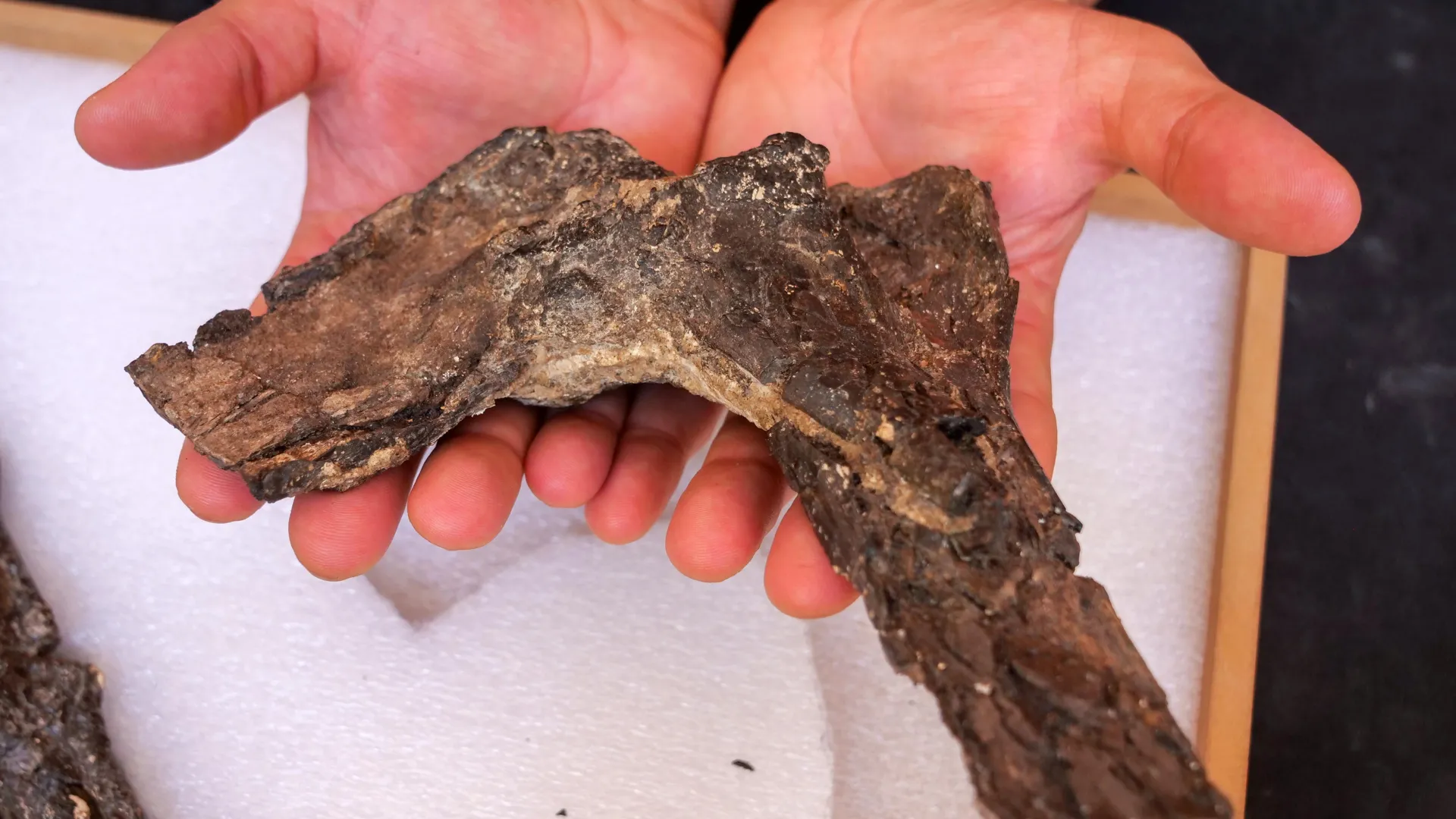
The specimen in question belongs to Aratasaurus museunacionali, a theropod unearthed in the Santana Formation of northeastern Brazil. This geological region is world-renowned for its "Lagerstätte"—sedimentary deposits that exhibit extraordinary fossil preservation. By utilizing advanced spectroscopic techniques, researchers led by Curtin University identified mineralized red blood cells nestled deep within the vascular canals of the dinosaur’s limb bones. The chemical signature of these cells, specifically the presence of heme-derived molecules and amino acids associated with collagen, confirms that remnants of the animal’s original biological material have survived since the Early Cretaceous period.
A Chronology of Discovery and Analytical Rigor
The path to this discovery began with the initial excavation of the Aratasaurus specimen, which has been the subject of intensive study by a multi-institutional team including Curtin University, the Japan Agency for Marine-Earth Science and Technology, the Brazilian National Museum, the Regional University of Cariri, and Johns Hopkins University.
For decades, the field of paleontology operated under the "molecular clock" hypothesis, which posited that proteins and cellular structures possess a finite lifespan. In most fossilization processes, organic matter is replaced by minerals, leaving behind only the shape of the creature rather than its biological chemistry. However, the 2021 launch of a research initiative supported by an Australian Research Council Laureate Fellowship—awarded to Professor Kliti Grice—sought to test the boundaries of this assumption.
Throughout 2022 and 2023, the team employed state-of-the-art analytical tools, including mass spectrometry and synchrotron-based X-ray techniques, to peer into the microscopic vascular canals of the theropod’s bones. Unlike previous studies that identified structures merely resembling blood cells, this investigation provided the definitive chemical "fingerprint" of heme, proving that these were indeed the biological remains of the animal rather than microbial contamination or mineral artifacts.
The Mechanism of Deep-Time Preservation
The central question facing the researchers was how such fragile biological material could withstand 115 million years of heat, pressure, and chemical degradation. The answer, according to the study, lies in a unique mineralogical "time capsule" created by hausmannite.
Hausmannite, a manganese oxide mineral, appears to have acted as a stabilizing agent. In the specific environment of the Santana Formation, the dinosaur was likely buried rapidly in sediment characterized by low oxygen levels and high microbial activity. This anaerobic environment prevented the immediate decomposition of the soft tissues. Over the ensuing eons, the hausmannite permeated the vascular canals, essentially "locking" the red blood cells in a mineralized matrix. This prevented the oxidation and hydrolysis that would typically destroy hemoglobin molecules.
Professor Kliti Grice, founding director of Curtin University’s WA-Organic and Isotope Geochemistry Centre, describes the preservation as an extraordinary stroke of geological fortune. "To detect intact heme-derived molecules in 115-million-year-old red blood cells is astonishing," Grice noted. "This discovery extends the known fossil record of blood and provides a direct molecular window into the physiology of a creature that has been extinct for over a century of millions of years."
Challenging the Limits of Paleontological Science
The implications of this discovery are profound for the field of evolutionary biology. For generations, paleontologists have been forced to rely exclusively on bone morphology—the shape, size, and density of skeletal structures—to infer the metabolism and activity levels of dinosaurs. While this has allowed for significant advancements in understanding dinosaur biomechanics, it has left critical gaps regarding their internal physiology.
With the ability to analyze molecular remnants, scientists can now potentially investigate the evolution of blood chemistry itself. Researchers can examine how hemoglobin has changed over time to adapt to different environmental pressures, providing insight into how dinosaurs transitioned from cold-blooded to warm-blooded (endothermic) states.
"These findings challenge longstanding assumptions that certain biomolecules such as hemoglobin cannot survive deep time," Professor Grice explained. "It opens exciting new avenues for molecular-level paleontology, allowing us to investigate the evolution of blood, metabolism, and even activity levels in ancient animals in ways that were previously considered impossible."
The Astrobiological Connection
Perhaps the most surprising aspect of the research is its potential application to the field of astrobiology. Professor Martin Van Kranendonk, head of Curtin University’s School of Earth and Planetary Sciences, suggests that the criteria for identifying life on other planets must now be updated.
If complex biological molecules can remain detectable for over 100 million years on Earth under the right geochemical conditions, then the search for life on Mars or the icy moons of Jupiter and Saturn should be recalibrated. Scientists often look for "biosignatures"—chemical evidence of past life. This study proves that such signatures can be far more resilient than once thought, provided they are shielded by specific mineral environments.
"These results are changing how researchers understand the preservation of molecular structures over vast timescales and under harsh conditions," Professor Van Kranendonk said. "It means we must reconsider where and how we look for evidence of ancient organisms. If we are looking for signs of life on another planet, we now have a better understanding of the types of mineral environments that might harbor the most promising evidence."
Future Research and Scientific Impact
The international research effort is already planning subsequent phases of the project. By comparing the molecular composition of the Aratasaurus remains with other fossils found in similar geological contexts, the team hopes to develop a "preservation index." This tool could help paleontologists prioritize which fossils are most likely to yield molecular data, potentially unlocking a hidden library of genetic and physiological information from the Mesozoic Era.
The study has also drawn praise from external observers who note that the integration of geochemistry and paleontology is the new frontier of the life sciences. By treating a fossil not just as a rock, but as a chemical repository, the researchers have turned the fossil record into a high-resolution data set.
As the scientific community digests these findings, the broader impact on museum collections and future excavations is clear: fossils are no longer just skeletal displays. They are, potentially, molecular archives. The work of Professor Grice and her colleagues serves as a reminder that the history of life on Earth is far more accessible than we once believed, provided we have the tools to look closely enough.
The research was supported by the Australian Research Council and reflects a global commitment to cross-disciplinary collaboration. As the study titled "Heme signatures in mineralized red blood cells within vascular canals of a 115-million-year-old dinosaur bone" continues to be cited and analyzed, it is expected to influence not only the next generation of paleontological field guides but also the protocols used by space agencies in their search for life beyond our atmosphere. Through the lens of this tiny theropod’s red blood cells, we are seeing the ancient past—and the potential future of our exploration—in a remarkably new light.