The evolution of Advanced Driver Assistance Systems (ADAS) has reached a critical juncture in the automotive industry, as real-world applications of Tesla’s Full Self-Driving (FSD) Supervised software increasingly demonstrate potential utility for individuals with temporary or permanent physical limitations. While the technology remains categorized under SAE Level 2 automation—meaning the human driver must remain attentive and ready to intervene at all times—users are reporting success in utilizing the system to navigate complex driving environments during periods when physical impairment might otherwise preclude them from operating a vehicle safely.
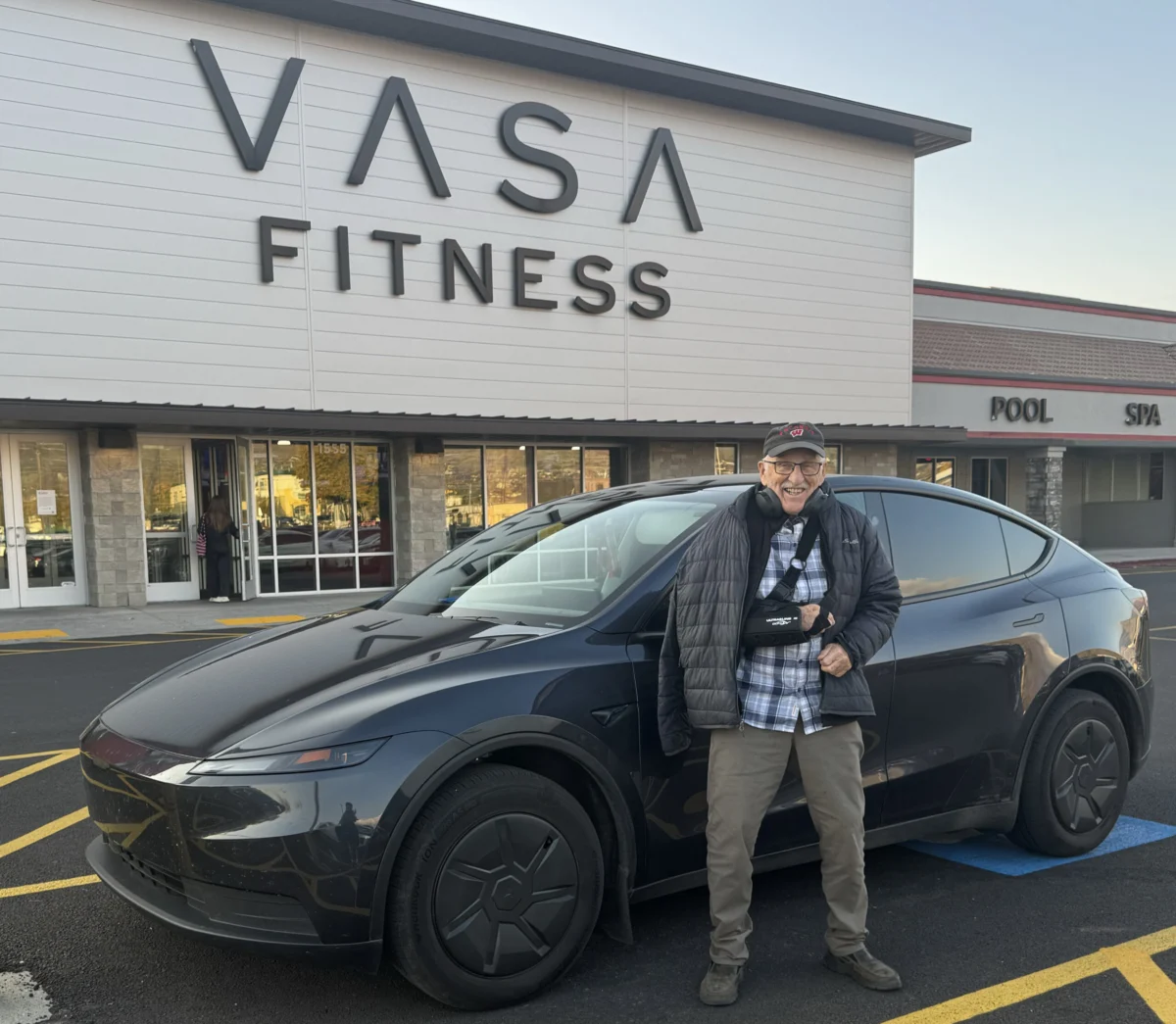
A primary example of this usage occurred in Orem, Utah, on November 6, 2026, when a user operating a 2026 Tesla Model Y successfully navigated from their residence to a fitness center while recovering from shoulder replacement surgery. With their right arm immobilized in a sling, the driver reported that the vehicle’s FSD V14 software managed the entire journey—including egress from a residential garage, transit through local traffic, and final parking—without manual intervention on the steering, brakes, or accelerator. This case highlights a burgeoning debate regarding the intersection of accessibility and automation technology, as proponents argue that such systems provide necessary independence, while critics caution against the cognitive and physical demands of monitoring an autonomous system.

The Debate Over Supervisory Responsibility
The implementation of FSD Supervised raises significant questions regarding the threshold of "driver readiness." Editorial perspectives within the industry, including those voiced by observers at CleanTechnica, emphasize that the cognitive load required to monitor an automated system during an emergency can, in some instances, exceed the effort required to drive manually. If a driver is physically incapable of performing a sudden, complex evasive maneuver, the reliance on automated systems remains a point of contention among safety advocates.
Tesla’s official position, reflected in its user manuals and safety disclosures, maintains that FSD is not a fully autonomous system. The company asserts that the driver is the ultimate operator of the vehicle. For individuals with temporary disabilities, the reliance on the system requires a nuanced risk assessment: can the driver physically intervene if the system encounters an edge case, such as an unmapped construction zone or an unpredictable pedestrian interaction? As of late 2026, the industry consensus remains that while FSD is a sophisticated tool, it is not a substitute for a fully capable, unimpaired human operator.
Technological Landscape: Tesla vs. Alternatives
The market for advanced driving automation is currently bifurcated between pure-vision systems and sensor-fusion architectures. Tesla has maintained a steadfast commitment to a vision-only approach, utilizing high-resolution cameras and neural networks to interpret environmental data. This strategy is predicated on the theory that if a human can navigate a complex environment using only eyes, a sufficiently trained artificial intelligence can replicate that performance with cameras.

Conversely, manufacturers such as Rivian have adopted a more hardware-intensive philosophy. Current Rivian models utilize a sensor suite comprising 11 cameras and five radar sensors. This redundancy is intended to provide superior performance in adverse weather conditions—such as heavy rain, fog, or snow—where visual data alone may be obscured. While Tesla’s system currently offers more advanced point-to-point navigation capabilities in urban environments, the inclusion of radar in competitor vehicles offers a potential path toward higher-level autonomy in low-visibility scenarios.
Historical Context and Market Evolution
The journey toward widespread ADAS adoption has been marked by rapid iteration. Since the release of early Autopilot features, Tesla has moved through multiple iterations of its software stack, transitioning from heuristic-based programming to end-to-end neural networks. The transition to Hardware 4 (HW4), which began in mid-2023, introduced more powerful processing capabilities and higher-resolution cameras, which have been fundamental to the performance improvements seen in versions 12 and 14 of the FSD software.
Simultaneously, the broader electric vehicle (EV) market has seen a shift in infrastructure integration. The standardization of the North American Charging Standard (NACS) has allowed non-Tesla vehicles, such as those from Rivian, to utilize the extensive Tesla Supercharger network. This cross-brand compatibility has altered the value proposition for EV buyers, as the "range anxiety" that historically hindered non-Tesla manufacturers is being mitigated by a shared, robust charging infrastructure.

Economic and Corporate Dynamics
The perception of Tesla’s leadership, specifically regarding CEO Elon Musk, has become a factor in consumer purchasing decisions. Recent fiscal quarters have seen fluctuations in Tesla’s stock valuation, which some market analysts attribute to the company’s polarizing political and social positioning. For many consumers, the decision to purchase a vehicle is now influenced by both the technological superiority of the product and the corporate values of the manufacturer.
For those hesitant to support Tesla due to corporate leadership, the market currently offers few alternatives that match the depth of Tesla’s software integration. While legacy automakers and startups like Rivian are closing the gap, Tesla’s "fleet learning" model—which uses data from millions of vehicles to train its models—continues to provide a competitive advantage in the race to solve the challenges of urban driving autonomy.
Implications for Future Mobility
The potential for FSD-enabled vehicles to serve aging populations or individuals with disabilities is profound. According to projections by the National Highway Traffic Safety Administration (NHTSA) and various independent research groups, the widespread adoption of advanced safety features could significantly reduce traffic fatalities. Musk has frequently cited a figure suggesting that 90% of traffic deaths could be prevented by the adoption of fully autonomous driving systems. While these figures remain theoretical and are subject to rigorous peer-reviewed validation, the trend toward increased automation is undeniable.

However, the transition period remains fraught with challenges. Legislative bodies are currently grappling with how to regulate systems that are "supervised" but not "autonomous." Liability remains the primary hurdle: in the event of an accident involving FSD, the legal burden rests with the human driver, even if the system was actively engaged at the time of the incident.
Conclusion: A Measured Outlook
The experience of drivers using Tesla FSD to overcome physical limitations offers a glimpse into a future where personal mobility is more accessible. Yet, the current state of technology demands that users remain acutely aware of the system’s limitations. Until such time as Level 4 or Level 5 autonomy is achieved—where the vehicle can operate without any human intervention—the responsibility for safety remains with the operator.
For the present, the market dictates that those seeking the most advanced automation must weigh the benefits of Tesla’s software against the existing hardware alternatives. As sensor technology improves and regulatory frameworks catch up to the pace of innovation, the promise of a safer, more inclusive transportation network may move closer to reality. For now, the integration of human judgment with machine precision remains the safest, and only legal, path forward for drivers navigating the road.