Archaeologists working in the rugged terrain of the Texas Panhandle have uncovered an exceptionally rare and remarkably preserved "bison jump," fundamentally altering our geographical understanding of prehistoric Indigenous hunting practices in North America. The site, detailed in a peer-reviewed study published in the journal American Antiquity, reveals that ancient hunters utilized a sophisticated natural geological trap to harvest North America’s largest land mammal over a staggering span of 3,000 years.
For generations, mainstream archaeological consensus held that bison jumping—a high-stakes, cooperative hunting method where hunters stampeded herds of massive herbivores off steep cliffs—was a technique exclusive to the northern Plains, such as Montana, Wyoming, and Alberta, Canada. This new discovery at a site dubbed the Nighthawk Bison Jump shatters that paradigm, proving that southern Indigenous communities possessed the organizational complexity, ecological knowledge, and environmental coordination required to execute massive, cliff-side stampedes far further south than previously documented.
The findings offer a profound window into the resource-management strategies of Late Holocene hunter-gatherers, highlighting a continuity of survival techniques that persisted across millennia in the American Southwest and Southern Plains.
Anatomy of a Prehistoric Trap: The Mechanics of the Bison Jump
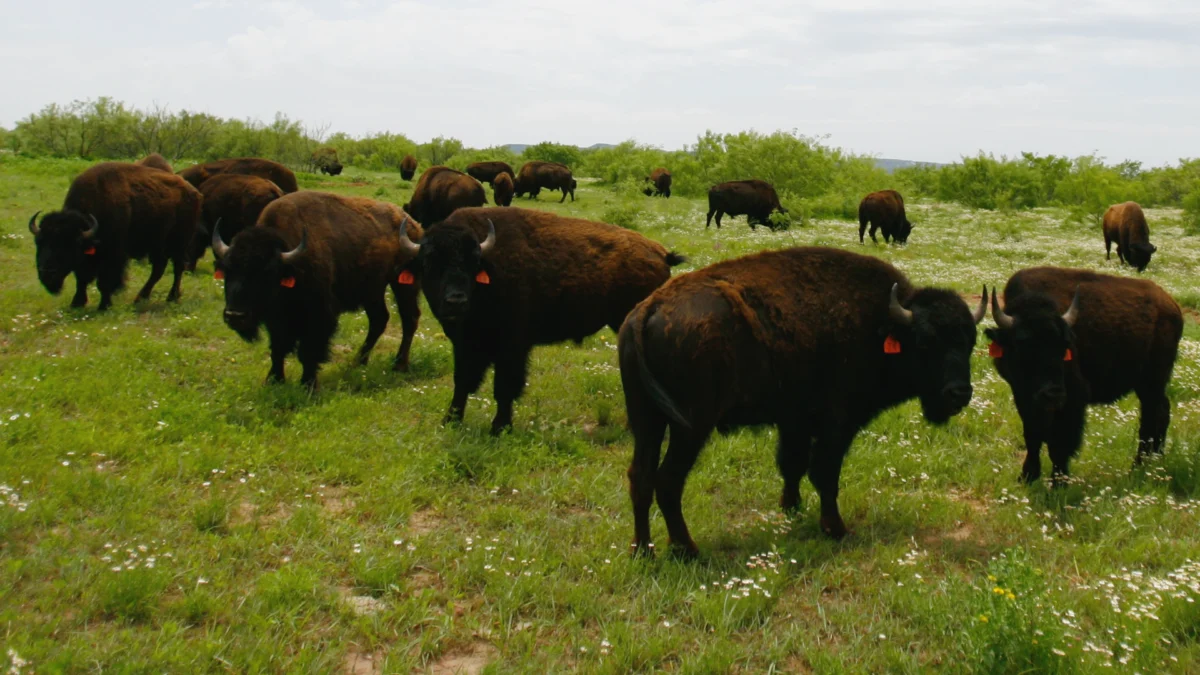
To understand the magnitude of the Nighthawk discovery, one must understand the sheer logistical complexity of a bison jump. Bison are formidable animals; an adult bull can weigh up to 2,000 pounds, stand six feet tall at the shoulder, and reach running speeds of up to 35 miles per hour. Confronting them head-on with primitive weaponry presented lethal risks to ancient hunters.
Instead of direct confrontation, Indigenous groups engineered landscape-scale death traps. The process began long before the actual stampede. Hunters would meticulously study herd movement, prevailing wind patterns, and local topography. They constructed long "drive lanes"—funnel-like structures made of rock cairns, brush piles, and dirt mounds known as "deadmen"—stretching for miles across the plains.
Disguised in animal skins and wielding fire, vocalizations, and banners, hunters would slowly edge a grazing herd into the wide end of the funnel. Once the bison entered the narrowing V-shaped corridor and realized they were trapped, panic would set in. Driven by collective momentum and fear, the lead animals would be forced forward until they reached the precipice, plunging off the cliff face to their deaths or severe injury below, where secondary hunting parties waited to dispatch survivors.
Archaeologically, these sites are identified not just by the presence of bone beds, but by the subtle, enduring alterations made to the landscape, the scatter of specialized butchering tools, and the geological match of sheer-walled arroyo drops or canyon rims.
Chronology of the Nighthawk Site: Three Millennia of Continuous Use
Radiocarbon dating and stratigraphic analysis of the artifacts recovered from the Texas Panhandle site indicate an astonishing longevity. The Nighthawk Bison Jump was not a one-off desperate attempt to secure food; it was a deeply ingrained, systematically maintained cultural tradition utilized repeatedly over a 3,000-year window during the Late Holocene epoch.
During this vast expanse of time, environmental conditions across the Southern Plains fluctuated wildly, cycling through severe droughts, periods of extreme aridity, and intervals of grassland expansion. The fact that Indigenous populations returned to the Nighthawk site century after century speaks volumes about the reliability of the location and the transmission of traditional ecological knowledge across countless generations.
Researchers analyzing the projectile points, scrapers, and butchering tools unearthed at the base of the drop zone note a visible evolution in stone-tool technology matching the chronological layers. Earlier strata reveal distinct dart points associated with at-latl (spear-thrower) technology, while later upper layers transition into smaller arrow points, marking the regional adoption of the bow and arrow around 1,500 years ago. Despite the shift in weaponry used for secondary dispatching, the core architectural strategy of the jump remained unchanged.
Data and Archaeological Significance
The publication in American Antiquity underscores the rigorous peer-reviewed methodology applied to the site. Excavations revealed dense bone beds comprised primarily of Bison bison, alongside secondary faunal remains that help reconstruct the paleoenvironment of the Southern Plains during the Holocene.
Key data points highlighted in the study include:
- Geographic Expansion: Extends the known southern boundary of the North American bison jump phenomenon by hundreds of miles.
- Temporal Depth: Demonstrates a 3,000-year continuity of cooperative hunting strategies in a region previously thought to rely exclusively on individual or small-group stalking and arroyo-trap ambushes.
- Faunal Density: High volume of fragmented and processed bone, indicating high-yield communal processing events that likely involved multiple extended family groups or entire clans working in concert.
- Technological Continuity: Presence of stratified cultural deposits showing seamless adaptation as hunting technology evolved from the at-latl to the bow and arrow.
"Bison jumping is an iconic, uniquely North American hunting technique that yielded some of the most productive food-getting events in the history of human hunting," the study’s authors wrote, emphasizing the sheer caloric and material bounty a successful jump provided. A single mass-kill event could supply a community with thousands of pounds of meat, hides for clothing and shelter, bone for tools, and fat—vital for making pemmican—to survive harsh winter months.
Broader Implications and Expert Analysis
The discovery of the Nighthawk Bison Jump forces historians and anthropologists to reevaluate the social organization of prehistoric societies in the Southern Plains. Executing a successful bison jump required far more than just geographic luck; it demanded advanced social coordination, institutional leadership, spiritual authority, and detailed logistical planning.
Anthropologists note that such labor-intensive communal hunts typically coincided with seasonal gatherings, serving as vital focal points for trade, marriage alliances, storytelling, and the reinforcement of cultural identity among disparate bands.
Furthermore, the site provides critical data for contemporary ecologists and conservationists. By analyzing the size, demographics, and pathological stress markers of the bison bones recovered from the strata, scientists can reconstruct historical bison population dynamics, disease prevalence, and responses to past climate change in Texas. This deep-time ecological baseline offers valuable context for modern bison restoration and grassland management initiatives in North America.
Preserving the Past for Future Research
As news of the discovery circulates within the academic community, state and federal heritage agencies, alongside local landowners, are moving quickly to ensure the long-term protection of the Nighthawk site. Because prehistoric archaeological sites in the American Southwest face continuous threats from natural erosion, agricultural development, and unauthorized artifact looting, maintaining the confidentiality of the exact geographic coordinates remains a priority for the research team.
Future phases of the project will employ non-invasive ground-penetrating radar, micro-botanical residue analysis of stone tools, and advanced protein mass spectrometry (ZooMS) to extract even finer details about how ancient Texans utilized every single part of the animals they harvested.
The unearthing of the Nighthawk Bison Jump serves as a powerful reminder that the North American landscape is a palimpsest of deep human history. What looks like a barren Texas canyon today was once the stage for one of humanity’s most ingenious, cooperative, and enduring relationships with the natural world—a legacy written in bone, stone, and earth across three thousand years.