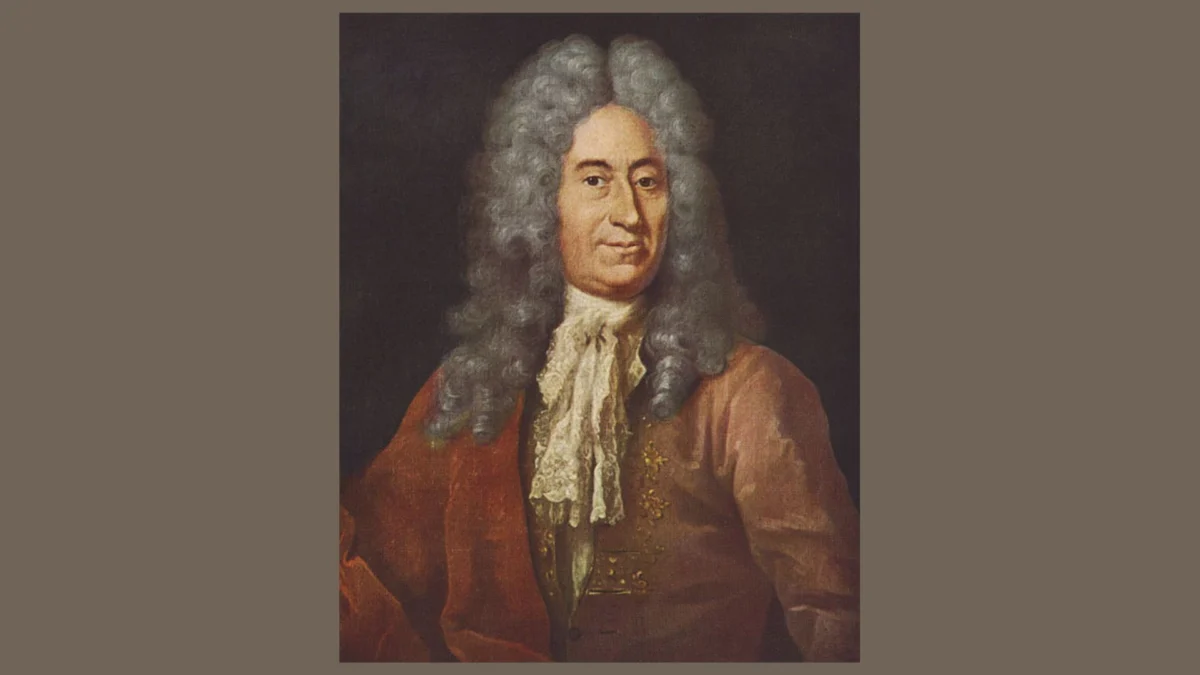
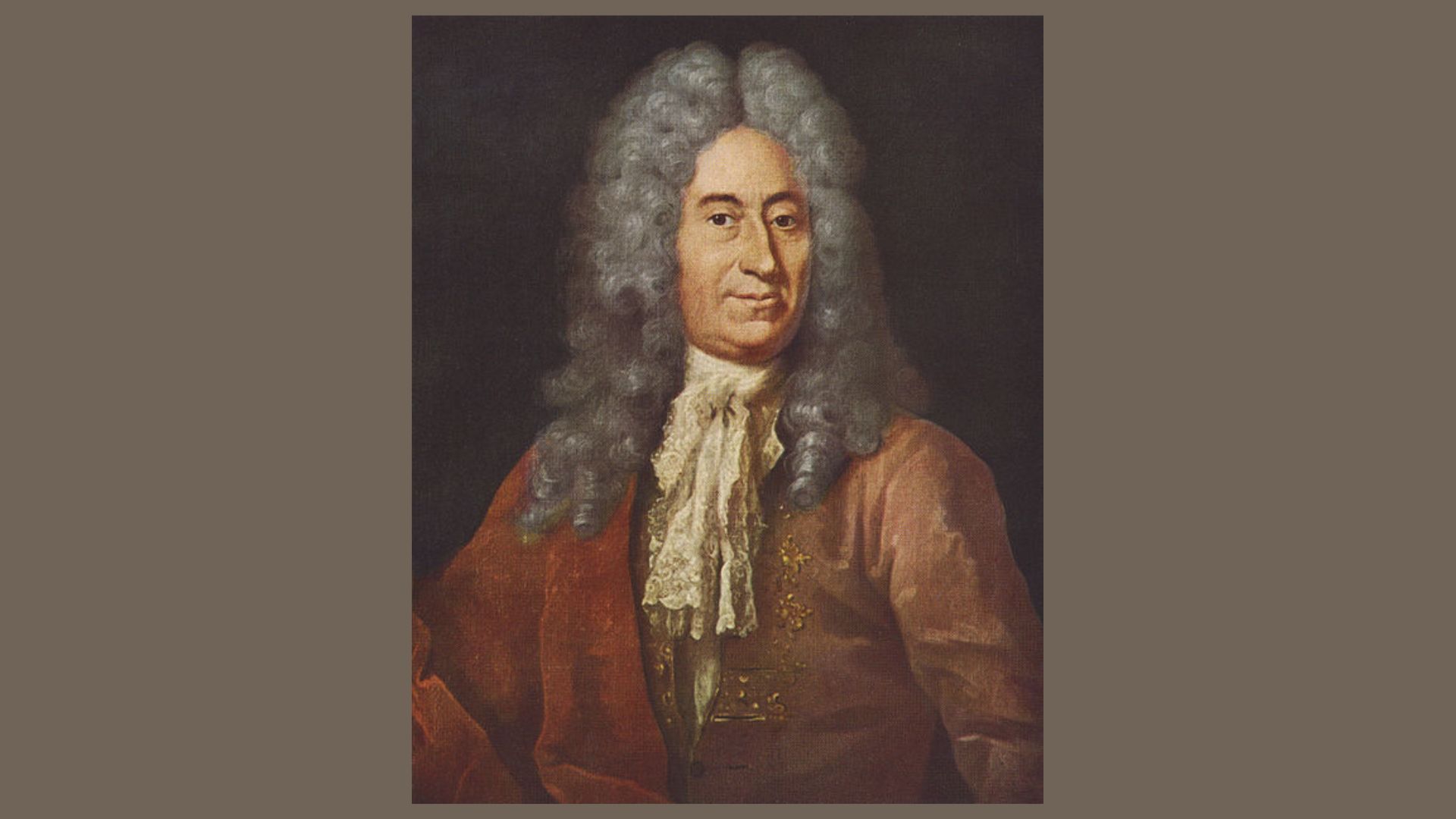
On November 21, 1676, Danish astronomer Ole Rømer fundamentally altered the trajectory of modern physics by presenting his findings to the Royal Academy of Sciences in Paris, confirming that light possesses a finite, measurable velocity. Before this watershed moment, the scientific consensus—influenced by the philosophies of Aristotle and later reinforced by René Descartes—held that light traveled instantaneously across any distance. Rømer’s realization not only debunked this long-standing assumption but also provided the first quantitative evidence that the universe operates under strict physical laws that transcend immediate perception.
The Observational Genesis: Jupiter’s Celestial Clock
In the 17th century, the pursuit of a reliable method to determine longitude at sea drove much of the astronomical research of the era. Precise timekeeping was essential for navigation, and the Jovian system, specifically the orbital timing of the moon Io, was viewed by many as a potential "celestial clock."
Rømer, working under the guidance of Giovanni Domenico Cassini at the Paris Observatory, spent years meticulously tracking the eclipses of Io. As Io passed into the shadow of Jupiter, it vanished from view; as it emerged, it reappeared. Because these events occurred with consistent frequency—roughly every 42.5 hours—astronomers expected the timing to remain perfectly periodic.
However, Rømer observed a persistent anomaly. As Earth moved along its orbit, its distance from Jupiter fluctuated. When Earth was closest to Jupiter (at opposition), the observed eclipses of Io occurred slightly earlier than predicted. Conversely, as Earth moved to the opposite side of its orbit, effectively distancing itself from the gas giant, the eclipses lagged behind the projected schedule.
Chronology of the Discovery
The path to Rømer’s breakthrough was marked by rigorous data collection and the courage to challenge established dogma:
- 1671–1675: Rømer collaborates with Cassini at the Paris Observatory, amassing a significant dataset regarding the orbital periods of Jupiter’s Galilean moons.
- 1675: Rømer notices that the timing discrepancies of Io’s eclipses correlate specifically with the relative positions of Earth and Jupiter.
- September 1676: Rømer calculates that if the light from Io took a finite amount of time to travel, the delay in the eclipses must be due to the additional distance the light had to traverse as Earth retreated from Jupiter.
- November 9, 1676: Rømer publicly predicts that the next eclipse of Io will occur ten minutes later than the conventional tables suggested, based on his theory of light’s travel time.
- November 21, 1676: The prediction is validated by observation. Rømer formally presents his conclusion to the Royal Academy of Sciences, asserting that light requires time to travel through the void of space.
Quantitative Analysis and Scientific Reception
Rømer did not immediately provide a precise numerical value for the speed of light in modern units, as the exact diameter of Earth’s orbit—the Astronomical Unit (AU)—was not accurately known at the time. However, he estimated that it would take approximately 22 minutes for light to cross the entire diameter of Earth’s orbit.
When later combined with improved measurements of the solar system’s scale, Rømer’s work yielded a value remarkably close to the modern figure of approximately 299,792 kilometers per second (about 186,282 miles per second).
The reception within the scientific community was mixed. Cassini, Rømer’s mentor, remained skeptical for years, suggesting that other factors might be influencing the timing of the moons. It was not until the work of English astronomer James Bradley in 1728, who discovered the aberration of starlight, that Rømer’s hypothesis of a finite light speed gained universal acceptance. Bradley’s independent confirmation provided the final piece of the puzzle, proving that light’s speed was indeed constant and finite.
Broader Implications for Modern Physics
The realization that light is not instantaneous served as the foundational bedrock for several pillars of modern science. By establishing a "universal speed limit," Rømer unwittingly paved the way for future theoretical breakthroughs that would define the 20th century.
The Relativity Connection
Albert Einstein’s Special Theory of Relativity is built entirely upon the postulate that the speed of light in a vacuum ($c$) is constant for all inertial observers. If light were instantaneous, the concepts of simultaneity and time dilation would lose their physical basis. Because light has a finite speed, it creates a "causal horizon"—an limit to how quickly information can travel through space. This ensures that cause must always precede effect, a principle known as causality.
Mapping the Cosmos
Understanding the speed of light allowed astronomers to transition from merely observing the positions of stars to measuring their distances. By observing the "light echoes" or the delay in signals from distant objects, scientists could finally begin to map the scale of the galaxy and, eventually, the universe. Today, light-years—the distance light travels in a vacuum in one Julian year—serve as the standard yardstick for extragalactic distances.

Technological Applications
The finite speed of light is not merely a theoretical constraint; it is a practical consideration in modern engineering. Global Positioning Systems (GPS), for example, rely on high-precision timing signals. Because these signals travel at the speed of light, engineers must account for the finite duration of transmission between satellites and receivers. Without the fundamental work initiated by Rømer, the synchronization required for modern telecommunications, satellite navigation, and internet infrastructure would be impossible.
Analysis: The Legacy of a Scientific Skeptic
Ole Rømer’s discovery represents a critical paradigm shift. He demonstrated that the universe is not an intuitive space where observations are always immediate. Instead, he revealed a cosmos defined by delay and distance.
The reaction of the Royal Academy of Sciences and his contemporaries highlights the tension between established, intuitive physics and the counter-intuitive nature of the natural world. Rømer’s success was not a result of superior instrumentation, but rather of a superior analytical framework. By treating the Jovian system as a laboratory rather than a mere curiosity, he transformed astronomy from a descriptive science into a predictive, analytical one.
Today, Rømer is remembered not only for the number he helped define but for the scientific rigor he championed. His work reminds contemporary researchers that the most significant discoveries often lie in the anomalies—the "11-minute delays" that contradict our expectations. As we continue to explore the deep cosmos, peering back through time as we observe light from the early universe, we do so using the same fundamental truth that Rømer uncovered in the autumn of 1676: that light is the messenger of the universe, and its speed is the ultimate arbiter of physical reality.
The transition from viewing light as an instantaneous phenomenon to a finite, measurable wave-particle entity was the first step toward the modern era of physics. From the clocks of the 17th century to the quantum computers of the 21st, the speed of light remains the essential constant that binds our understanding of space and time together.