
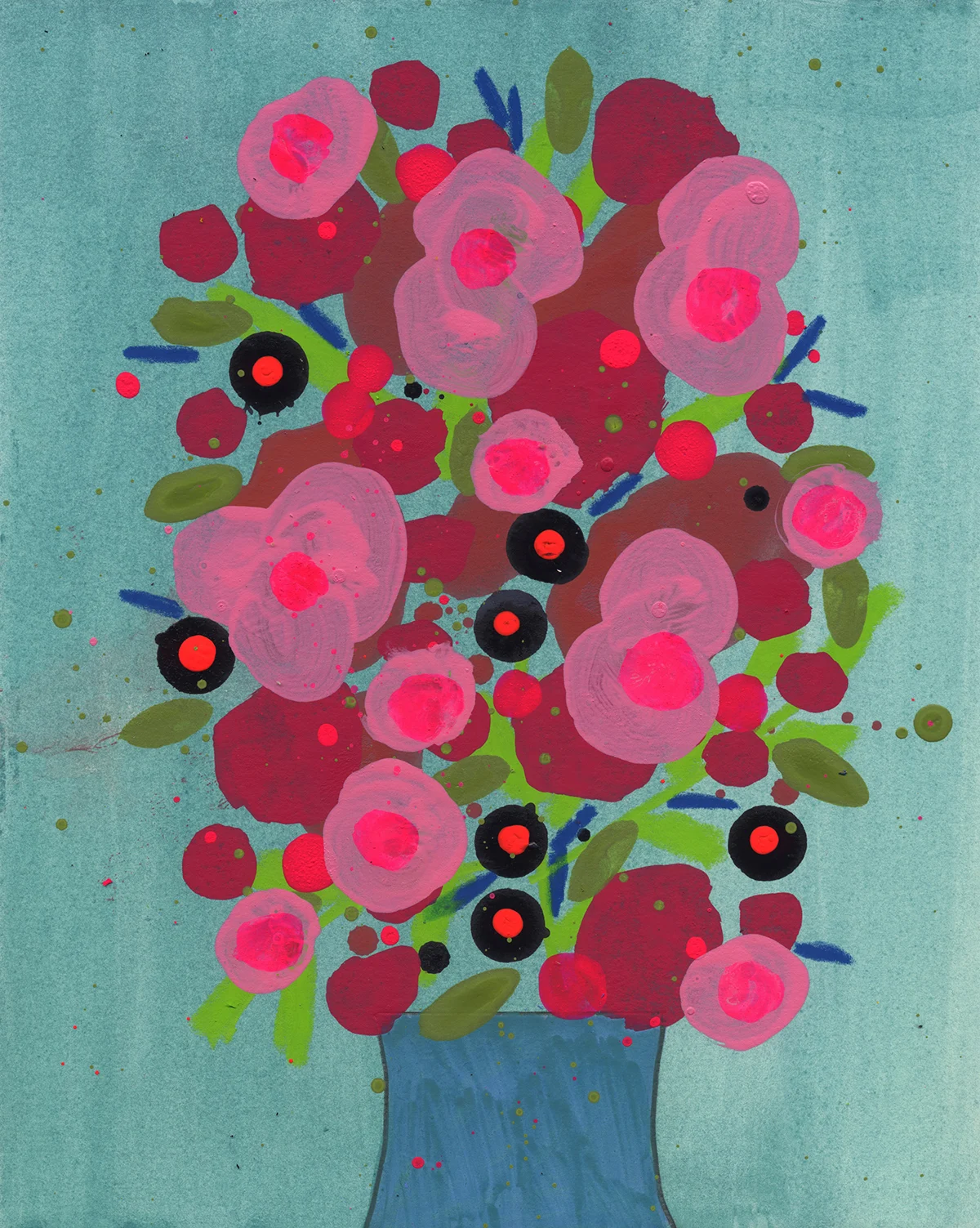
The publication of artist Tucker Nichols’ latest work marks a significant addition to the contemporary intersection of botanical art and emotional literacy. Released by Chronicle Books, this "painted lexicon" serves as a visual response to the limitations of human language, particularly during periods of profound grief, illness, and social isolation. The project, which evolved from a grassroots community initiative during the global pandemic into a comprehensive hardbound collection, utilizes the tradition of floriography—the language of flowers—to address modern psychological complexities that often escape verbal definition.

The Convergence of Art and Ineffable Emotion
At the core of Nichols’ work is the recognition of a "semantic gap": the persistent distance between the depth of human feeling and the capacity of the English language to articulate it. While words often falter under the weight of trauma or extreme empathy, visual symbols have historically filled the void. Nichols’ paintings do not aim for botanical realism; instead, they utilize loose, bright, and often amorphous shapes to mirror the fluidity of interior experiences.

The book functions as a spiritual successor to historical botanical works, yet it pivots away from the scientific classification of the Enlightenment. Instead, it moves toward a "lexicon of consolation." By pairing specific, often idiosyncratic captions with vibrant floral arrangements, Nichols creates a bridge for those navigating "things they don’t know how to say." This includes experiences ranging from the specific—such as "Flowers for the nurses who tell you what’s actually happening"—to the universal, such as "Flowers for anyone in despair."

Historical Context: The Evolution of Floral Symbolism
The use of flowers as a coded language is not a modern invention, but rather a practice with deep historical roots that Nichols modernizes. To understand the significance of Flowers for Things I Don’t Know How to Say, one must look to the 19th-century peak of floriography.

During the Victorian era, social etiquette often prohibited the direct expression of emotions, leading to the popularization of floral dictionaries. This movement was influenced by Erasmus Darwin’s "The Botanic Garden" (1791), which introduced a romanticized view of botany, and later by works like Rebecca Hey’s The Moral of Flowers (1833). Perhaps the most notable practitioner of this "secret language" was the poet Emily Dickinson. From her teenage years, Dickinson maintained an extensive herbarium, pressing over 400 wildflower specimens into a leather-bound album. For Dickinson, flowers were not merely aesthetic objects but a sophisticated code used to navigate the "secret chambers of the heart."

Nichols’ work also draws comparisons to other major artistic movements that utilized the floral form to channel the divine or the deeply personal. This includes Georgia O’Keeffe’s large-scale lilies, which explored the "divine feminine," and the symbolic use of white hyacinths in the correspondence between Rachel Carson and Dorothy Freeman to signify a rare and enduring bond. Nichols continues this lineage, tasking the flower with the "profound responsibility" described by Dickinson—the duty to carry the weight of human connection.

Chronology of the Project: From Personal Crisis to Global Solidarity
The genesis of this collection can be traced back over two decades to a pivotal moment in the artist’s life. In his late twenties, Tucker Nichols was hospitalized in a strange city with a diagnosis that confounded medical professionals. This period of uncertainty highlighted the "clumsiness" of language; friends and family often struggled to find words that were neither platitudinous nor overly clinical. This experience of being "saved" by silent gestures of solidarity formed the psychological foundation for his later work.

The project reached its definitive form during the COVID-19 pandemic. As the world entered a state of collective trauma and physical distancing, Nichols revisited his previous insights on the power of the non-verbal. The timeline of the project’s development reflects a rapid scaling of empathy:

- Early 2020: Nichols begins the "Flowers for Sick People" project from his studio. He offers to paint and mail small floral works to individuals suffering from COVID-19 or other illnesses on behalf of their loved ones.
- Mid-2020: Supported by his wife and daughter, who assisted with the logistical demands of mailing original art, the project expands. Nichols begins receiving requests from strangers across the globe.
- 2021-2022: As the pandemic’s toll shifts from acute illness to chronic grief and "languishing," Nichols’ subject matter broadens. He begins painting for categories of people—the lonely, the "spectacular failures," and those experiencing "the kind of crying where tears stream straight down without a sound."
- 2023-2024: The accumulated works are curated into the current volume, providing a permanent record of this period of "communal consolation."
Supporting Data: The Efficacy of Art in Healthcare
The release of Nichols’ book coincides with a growing body of research regarding the "Arts in Health" movement. According to a 2019 report by the World Health Organization (WHO), engaging with the arts can significantly improve health outcomes by providing emotional regulation and reducing social isolation.

Data from the American Art Therapy Association suggests that visual expression can bypass the Broca’s area of the brain—the region responsible for speech—which is often inhibited during periods of high stress or trauma. This scientific context supports Nichols’ premise: when the brain cannot find the words to process a "terrible predicament," the visual processing of color and form can provide a "hammock" for the psyche.

Furthermore, studies in "biophilia"—a term popularized by E.O. Wilson—indicate that even the representation of nature, such as floral paintings, can lower cortisol levels and improve the recovery rates of hospital patients. Nichols’ project, while artistic in nature, functions as a practical application of these psychological principles.

Analysis of Implications: A Dictionary for the Modern Soul
Nichols’ work has been frequently compared to John Koenig’s The Dictionary of Obscure Sorrows, a project that coined new words for complex emotions. However, where Koenig seeks to expand the dictionary, Nichols seeks to transcend it entirely. The "floral counterpart" provided in this book suggests that some human experiences are inherently pre-verbal or post-verbal.

One of the most striking aspects of the collection is its inclusivity of the "ordinary." By including flowers for "the sound of my beloved chewing in the other room" alongside "flowers for anyone in despair," Nichols de-stigmatizes profound suffering by placing it on the same spectrum as quiet, domestic joys. This "garden variety" approach to emotion reinforces the idea that no feeling is truly singular or isolated.

From a journalistic perspective, the book reflects a broader cultural shift toward emotional vulnerability. In an era dominated by digital communication, which often favors brevity and "reacts" over nuanced expression, Nichols’ hand-painted, mailed-out, and now printed works represent a return to slow, deliberate connection.

Broader Impact and Conclusion
The impact of Flowers for Things I Don’t Know How to Say extends beyond the art world into the realms of palliative care, mental health advocacy, and social justice. By including categories such as "Flowers for anyone sleeping in a tent on the sidewalk again tonight," Nichols utilizes the floral medium to bear witness to systemic failures and marginalized experiences.

The book ultimately serves as a reminder of the "golden threads" that bind individuals together in times of uncertainty. By providing a template for consolation, Nichols offers a tool for those who find themselves in the "strange hospital rooms" of life—whether physical or metaphorical. As society continues to navigate the long-term psychological effects of the pandemic and the anxieties of the 21st century, the need for a non-verbal lexicon of connection has never been more apparent.

In the tradition of Walt Whitman, who visited Civil War hospitals to write letters for the wounded, Tucker Nichols has used his craft to act as a surrogate for the silenced. His paintings stand as a testament to the fact that while words may break under the weight of human immensity, art remains a resilient vessel for the soul’s cry for mercy and connection.







Leave a Reply