
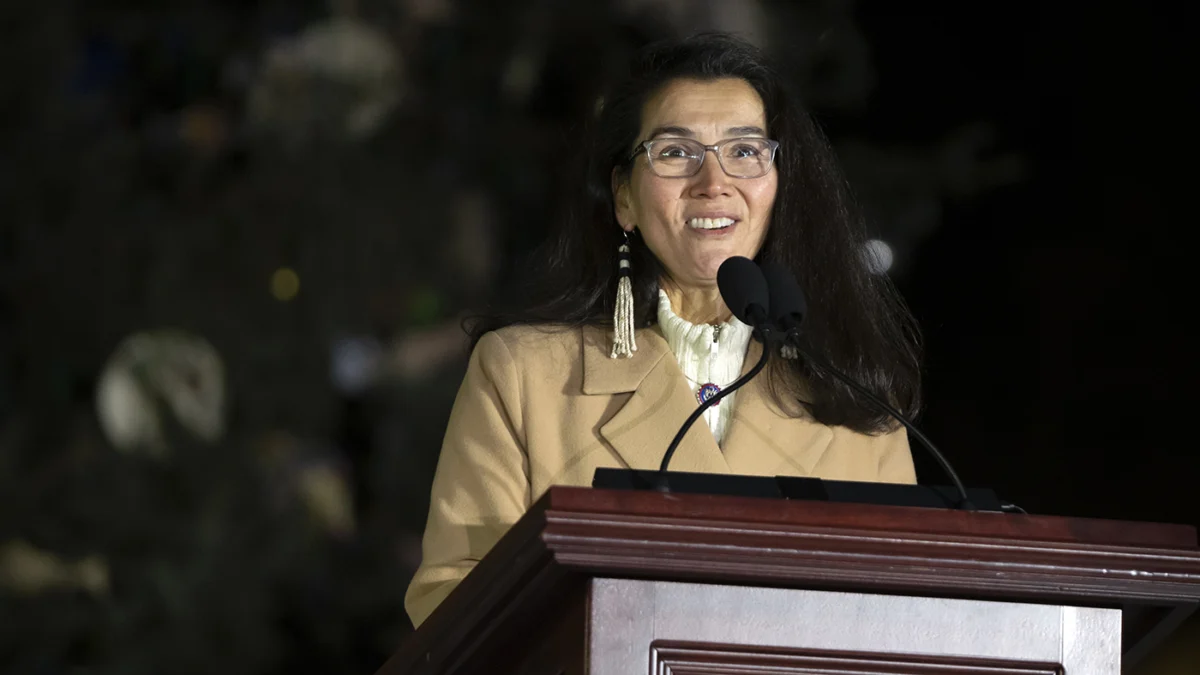
Former Representative Mary Peltola (D-Alaska) has announced an unprecedented fundraising haul of $8.9 million in the first three months of the year, marking the largest first-quarter raise for any Senate candidate in Alaska’s history. This significant financial boost positions Peltola as a formidable challenger to incumbent Republican Senator Dan Sullivan in the upcoming 2026 midterm elections, intensifying the national spotlight on a race that could prove crucial in the broader battle for Senate control. The announcement, made this week by her campaign, underscores a groundswell of support, particularly notable for its grassroots nature, with over 95 percent of contributions totaling $100 or less.
The Road to 2026: A High-Stakes Senate Bid
Peltola’s decision to seek a Senate seat comes after her loss of Alaska’s at-large House seat in the 2024 general election to Republican Nick Begich III. Despite this recent setback, her robust fundraising figures signal strong momentum and a deep well of support, both within Alaska and from national Democratic donors eager to flip a Senate seat in a state traditionally considered a Republican stronghold. Her campaign’s ability to mobilize small-dollar donors suggests a broad base of enthusiasm, which can be a powerful indicator of voter engagement and sustained campaign energy. The Democratic Party views Peltola’s candidacy as a prime opportunity to expand its narrow Senate majority, or at least prevent a Republican takeover, in a political climate that is increasingly polarized and competitive.
Peltola’s Political Ascent and Recent Setback
Mary Peltola’s political journey has been marked by historic firsts and a rapid rise to national prominence. A Yup’ik Eskimo, she made history in August 2022 when she won a special election to fill the remainder of the late Don Young’s term, becoming the first Alaska Native to serve in Congress. She then successfully defended her seat in the November 2022 general election, outpacing both Begich and former Governor Sarah Palin under Alaska’s unique ranked-choice voting system. During her tenure in the House, Peltola carved out a reputation as a pragmatic, bipartisan lawmaker focused on issues critical to Alaskans, including fisheries management, food security, and indigenous rights. Her legislative efforts often highlighted her deep connection to Alaska’s rural communities and traditional ways of life.
However, her re-election bid in 2024 proved unsuccessful, with Nick Begich III ultimately prevailing. The dynamics of that race, including voter turnout, evolving political sentiments, and the continued adaptation to ranked-choice voting, undoubtedly offer valuable lessons for her current Senate campaign. Her ability to connect with a diverse electorate, including moderate Republicans and independents, was a hallmark of her previous victories, and her campaign will likely seek to replicate that broad appeal in the statewide Senate contest. Her messaging often emphasizes unity and common ground, a strategy that could resonate in a state known for its independent streak.
Incumbent’s Position: Senator Dan Sullivan’s Record and Resources
Challenging Peltola for the Senate seat is incumbent Republican Senator Dan Sullivan, who is seeking his third term. First elected in 2014, Sullivan has established himself as a reliable conservative voice in the Senate, focusing on issues such as national security, energy independence, and economic development for Alaska. He currently serves on key committees, including the Armed Services Committee, the Commerce, Science, and Transportation Committee, and the Environment and Public Works Committee, leveraging these positions to advocate for Alaska’s interests, particularly in military installations, resource extraction, and infrastructure.
Sullivan’s campaign announced a first-quarter fundraising total of $2.1 million. While a substantial sum in its own right and indicative of strong support from traditional Republican donor networks and political action committees, it pales in comparison to Peltola’s record-breaking $8.9 million. This significant disparity in early fundraising could signal a more challenging re-election campaign for Sullivan than his previous contests, forcing his team to recalibrate their financial strategy and messaging earlier in the cycle. Despite the fundraising gap, Sullivan benefits from the advantages of incumbency, including name recognition, a proven track record, and established campaign infrastructure. His campaign will undoubtedly highlight his experience, his work on behalf of Alaska in Washington D.C., and his alignment with conservative values that resonate with a significant portion of the Alaskan electorate.
The Power of the Grassroots: Unpacking Peltola’s Fundraising Success
The most striking aspect of Peltola’s fundraising achievement is the source of her contributions. The campaign proudly reported that more than 95 percent of donations were $100 or less, a clear indicator of robust grassroots support. This type of small-dollar donor base is often seen as a significant strength for modern political campaigns. It suggests a widespread, organic enthusiasm that is less susceptible to the fluctuations of large donor interests and can be sustained over the long term through digital outreach and direct mail campaigns.
Such a broad base of support also provides a campaign with a degree of financial independence, allowing it to invest in voter contact programs, field operations, and digital advertising without relying heavily on super PACs or large corporate donors. For Democrats, who have increasingly relied on small-dollar donations since the advent of online fundraising platforms, Peltola’s success is a testament to the effectiveness of this strategy and a potential model for other competitive races. This grassroots energy could translate into volunteer mobilization and voter turnout, which are critical in a geographically vast state like Alaska. It also suggests that her appeal transcends specific demographic groups, drawing support from a wide cross-section of the Alaskan populace, from urban centers to remote villages.
Alaska’s Shifting Political Landscape: A Historically Red State in Flux
Alaska has long been considered a reliably Republican state in presidential elections, consistently siding with Republican candidates. Former President Donald Trump, for instance, carried Alaska in all three of his presidential bids (2016, 2020, and 2024), underscoring the state’s conservative leanings at the top of the ticket. Historically, electing a Democrat to the Senate has been a rare occurrence. The last Democrat to win a Senate seat in Alaska was Mike Gravel, who served from 1969 to 1981. This history underscores the uphill battle any Democratic candidate faces in a statewide contest.
However, recent electoral trends suggest a more nuanced and potentially shifting political landscape. Peltola’s historic win in the 2022 House special election, followed by her victory in the regular election, demonstrated that a well-positioned Democrat can win statewide office in Alaska. These victories were largely attributed to her moderate stance, focus on local issues, and ability to appeal to a broad coalition of voters, including independents and some Republicans. The state’s unique demographics, including a significant Alaska Native population that tends to vote Democratic, and a strong independent streak among voters, contribute to a less predictable political environment than in some other traditionally red states. The electorate’s focus on issues like resource management, fishing rights, and environmental protection often transcends traditional party lines.
The Ranked-Choice Factor: How Alaska’s Unique System Could Shape the Race
Alaska’s adoption of ranked-choice voting (RCV) for its general elections adds another layer of complexity and unpredictability to the Senate race. Under RCV, voters rank candidates in order of preference rather than choosing just one. If no candidate receives more than 50% of the first-choice votes, the candidate with the fewest votes is eliminated, and their votes are redistributed to the voters’ second choices. This process continues until one candidate achieves a majority.
Peltola’s previous victories in 2022 were widely seen as a testament to her ability to consolidate second- and third-choice votes from voters whose preferred candidates (often independents or moderate Republicans) were eliminated. This system often rewards candidates who can build broad appeal and avoid alienating significant segments of the electorate. For the 2026 Senate race, RCV could again play a pivotal role. It might encourage Peltola to maintain her moderate image and seek cross-party support, while Sullivan might need to broaden his appeal beyond his conservative base to secure enough second-choice votes from voters who initially support other Republican or third-party candidates. The primary election, scheduled for mid-August, will also utilize an open primary system where the top four vote-getters, regardless of party affiliation, advance to the general election. This structure further emphasizes the importance of broad appeal and careful coalition-building from the outset.
Early Indicators: Polls and Political Ratings
Early assessments of the race highlight its competitive nature. The non-partisan Cook Political Report currently rates the Alaska Senate race as "lean Republican," indicating that while Sullivan holds an advantage, the race is far from a safe bet for the GOP. This rating is just one step away from being considered a "toss-up," signaling that the contest is highly competitive and could shift with evolving political dynamics.
Adding to the competitive outlook, a March poll conducted by Alaska Survey Research showed Mary Peltola leading Senator Dan Sullivan by 5 points in a hypothetical general election showdown. While early polls should always be viewed with caution, especially with an election still over a year and a half away, this finding is significant. It suggests that Peltola’s name recognition and appeal, even after her 2024 House loss, remain strong, and that a path to victory for a Democrat in a statewide race against an incumbent Republican is plausible. The poll’s methodology, sample size, and margin of error would need to be scrutinized for a full assessment, but it undeniably provides a morale boost for the Peltola campaign and national Democrats.
Statements and Strategic Outlooks
Mary Peltola’s statement accompanying her Q1 fundraising announcement underscored her gratitude and optimism: “I’m so grateful for the support we’ve received from every single borough and census area across our state, and it’s that support that will bring us to victory this November.” This emphasizes her campaign’s statewide reach and commitment to representing all Alaskans, a key theme she has consistently articulated.
From the Sullivan campaign’s perspective, while they acknowledge Peltola’s fundraising, they are likely to emphasize their own strong financial position, Sullivan’s proven leadership in the Senate, and his deep roots in Alaska. A campaign spokesperson for Senator Sullivan might highlight his legislative achievements, his constituent services, and his ability to deliver for the state, contrasting this with Peltola’s shorter tenure in Congress. They would likely express confidence in Sullivan’s ability to win re-election based on his record and Alaska’s historical voting patterns.
Democratic Party strategists, both nationally and in Alaska, are expected to express cautious optimism. They will likely point to Peltola’s fundraising as evidence of her viability and the increasing competitiveness of the state. They will emphasize the potential for a Democratic pickup in Alaska to bolster the party’s chances of retaining or expanding its Senate majority, pouring resources into the state as the election draws closer. Republican strategists, while acknowledging the challenge, will likely double down on Sullivan’s conservative credentials and his alignment with the state’s dominant political ideology, drawing parallels to Trump’s continued popularity in Alaska. They will frame the race as a critical defense of a Republican seat in the broader effort to regain Senate control.
Key Issues on the Horizon: Campaign Themes and Voter Concerns
As the 2026 Senate race unfolds, several key issues are expected to dominate the campaign discourse and resonate with Alaskan voters. The economy, including inflation, energy prices, and job growth, will undoubtedly be central. Alaska’s unique economy, heavily reliant on resource extraction (oil, gas, minerals) and fishing, means that energy policy and environmental regulations will be intensely debated. Peltola has historically championed sustainable fishing practices and local food security, while Sullivan has been a strong advocate for responsible resource development and energy independence.
Healthcare access and affordability, particularly in rural and remote communities, will also be a significant concern. Indigenous rights, land management, veterans’ affairs, and infrastructure development will also feature prominently, given their direct impact on Alaskan communities. Both candidates will seek to demonstrate their understanding of these complex issues and propose solutions that align with the interests of their constituents. The candidates’ positions on national issues, such as foreign policy and national security, will also be scrutinized, particularly given Alaska’s strategic geopolitical importance.
The Broader Picture: National Control of the Senate
The Alaska Senate race transcends state boundaries, carrying significant implications for the national political landscape. With the Senate often finely balanced, every seat becomes critical in determining which party controls the chamber. A Democratic victory in Alaska would be a major coup, potentially offsetting losses elsewhere or providing a crucial buffer in a closely divided Senate. Conversely, a Republican hold would be essential for their efforts to regain a majority.
National party committees, outside spending groups, and prominent political figures will undoubtedly funnel substantial resources into Alaska, transforming it into one of the most expensive and closely watched Senate races in the country. The outcome will not only determine Alaska’s representation in Washington but also influence the legislative agenda, judicial appointments, and overall political direction of the nation for the latter half of the decade.
Conclusion: A Battle for Alaska’s Future and Senate Dominance
Mary Peltola’s record-setting fundraising quarter has unequivocally signaled her serious intent and viability in the 2026 Alaska Senate race. Her ability to mobilize grassroots support and present a formidable financial challenge to an established incumbent like Dan Sullivan sets the stage for a highly competitive and closely watched contest. As Alaska’s unique political dynamics, including ranked-choice voting and a blend of conservative traditions with independent streaks, continue to evolve, the battle for this Senate seat will be a compelling narrative of state identity, national political ambitions, and the enduring power of voter engagement. The road to November 2026 promises to be a rigorous and closely contested journey, with the future of Alaska’s representation and potentially the balance of power in the U.S. Senate hanging in the balance.










Leave a Reply