The global shipping industry, the lifeblood of international trade, finds itself at a critical juncture as delegates from 176 nations gather at the International Maritime Organization (IMO) headquarters in London this week. The meeting occurs against a backdrop of unprecedented maritime instability and a widening diplomatic rift over how to address the sector’s substantial carbon footprint. For the first time in modern history, the world’s two most vital maritime corridors—the Strait of Hormuz and the Red Sea—have faced simultaneous, effective closures and severe disruptions. These geopolitical shocks, combined with a sudden shift in United States foreign policy, have placed the ambitious "Net-Zero Framework" for global shipping in jeopardy, threatening to derail years of delicate climate negotiations.
A Maritime Chokepoint Under Siege
The current crisis began to escalate in early March when a confluence of regional conflicts transformed the Middle East’s waterways into a high-risk combat zone. In response to ongoing U.S.-Israel military operations, Iran and Houthi rebels in Yemen intensified their campaign against commercial shipping. The Red Sea, a vital artery connecting the Indian Ocean to the Mediterranean via the Suez Canal, has seen a barrage of missile and drone attacks, forcing major carriers like Maersk and Hapag-Lloyd to divert vessels.
Simultaneously, the Strait of Hormuz—a narrow passage through which approximately 21 million barrels of oil flow daily, representing 20 percent of the world’s total consumption—has been subject to repeated seizures by Iranian forces. Over the past weekend, Iran once again restricted passage through the Strait, effectively marooning more than 150 ships.
The economic consequences of these blockades have been immediate and severe. Crude oil prices have surged, and maritime fuel costs have spiked to such a degree that the price premium for certain biofuels has turned negative, making them momentarily cheaper than traditional heavy fuel oil. However, the logistical burden remains the primary concern. Ships forced to bypass the Suez Canal and the Strait of Hormuz are undertaking massive detours around the southern tip of Africa, known as the Cape of Good Hope. This detour adds roughly 3,500 nautical miles and 10 to 14 days of travel time to a typical voyage between Asia and Northern Europe, resulting in millions of dollars in additional fuel and labor costs per trip.
The IMO Net-Zero Framework: A Decarbonization Blueprint
It is within this volatile environment that the IMO, a United Nations agency, is attempting to finalize a historic climate policy. The shipping industry is currently responsible for approximately 3 percent of global greenhouse gas emissions—a figure that, if left unregulated, could rise significantly as global trade expands. For three years, member states have been refining a "net-zero framework" designed to align the industry with the goals of the Paris Agreement.
The cornerstone of this framework is a global carbon levy: a mandatory fee for every ton of greenhouse gas emitted by a vessel above a predetermined threshold. This economic mechanism is intended to serve two primary purposes. First, it would create a financial incentive for shipowners to transition from fossil fuels to cleaner alternatives such as green ammonia, methanol, or hydrogen. Second, the revenue generated—estimated by some analysts to reach $12 billion annually by 2030—would be funneled into a global fund. This fund would support the research and development of zero-emission technologies and provide financial assistance to lower-income, climate-vulnerable nations to ensure a "just and equitable transition."
Chronology of a Diplomatic Stalemate
The momentum toward a global shipping tax reached its zenith last summer, with a majority of IMO member states signaling their readiness to adopt the framework. However, the political landscape shifted abruptly during the latter half of the year.
July 2023: IMO member states agree on an "Initial Strategy" to reach net-zero emissions "by or around, i.e., close to 2050." Technical work begins on the "basket of measures," including the carbon levy.
October 2023: Tensions in the Middle East begin to impact shipping routes. Simultaneously, the U.S. administration begins to voice stronger domestic concerns regarding the inflationary impact of international carbon pricing.
Early 2024: Secretary of State Marco Rubio and other high-ranking U.S. officials issue a stark warning to the international community. The U.S. signals that a vote in favor of the carbon levy would be viewed as an unfriendly act, potentially triggering punitive measures including visa restrictions, additional tariffs, and increased port fees for participating nations.
March 2024: Under intense pressure from the U.S. and amid the escalating Red Sea crisis, the IMO consensus fractures. At a pivotal meeting, the decision to adopt the framework is officially delayed by at least one year.
Current Week: The IMO convenes in London to review technical progress, but the political atmosphere is described by observers as "toxic" and "fragmented."
A Fractured Global Consensus: Divergent Proposals
The current week’s negotiations are characterized by a proliferation of competing proposals, as nations seek to navigate the space between environmental necessity and economic protectionism.
- The United States Position: The Trump administration has formally proposed scrapping the Net-Zero Framework entirely. Washington argues that the levy is a "carbon tax" that would disproportionately increase costs for American consumers and businesses. Their proposal calls for a system that does not penalize carbon-intensive fuels and lacks any "economic element" or revenue-collection mechanism.
- The Middle Ground (Japan): Seeking to preserve the spirit of the agreement while appeasing those opposed to a tax, Japan has proposed a carbon trading system. Under this model, ships that exceed emission limits could purchase "credits" from companies that operate below the threshold. This avoids a centralized tax but maintains a market-based incentive for efficiency.
- The Minimalists (Liberia, Argentina, and Panama): These nations, representing significant portions of the global shipping registry, have proposed a framework that removes the fee structure entirely. Critics argue this removes the "teeth" of the policy, as it relies on voluntary compliance without financial penalties for polluters.
- The Petrostates: A coalition of oil-exporting nations has called for the complete cancellation of the framework, citing the current energy crisis and the need to maintain low-cost maritime transport for fossil fuels.
- The High-Ambition Coalition (Island States): Small island developing states (SIDS), which face existential threats from rising sea levels, continue to advocate for the original framework or an even more aggressive carbon levy. They argue that without a significant financial mechanism, they will be left to bear the costs of climate change without the resources to adapt.
Economic Implications and Industry Reactions
The uncertainty surrounding the IMO’s decision-making process has created a climate of anxiety within the shipping industry itself. Paradoxically, many of the world’s largest shipping companies and trade associations, such as the International Chamber of Shipping (ICS), remain supportive of a unified global carbon levy.
The industry’s primary fear is "regulatory fragmentation." In the absence of a global IMO standard, individual regions are beginning to implement their own rules. The European Union has already integrated shipping into its Emissions Trading System (EU ETS), meaning ships docking at European ports must pay for their emissions. If China, the U.S., and other major economies implement different, conflicting carbon pricing mechanisms, the logistical complexity and administrative costs for international carriers would become staggering.
"Nothing can replace an economic element in terms of the value it brings for leveraging investment and creating certainty," said Em Fenton, a senior director at Opportunity Green. "The industry needs a clear signal that green fuels will be competitive. Without a levy, the price gap between dirty bunker fuel and clean alternatives will remain too wide to bridge."
Analysis of Potential Outcomes
The meeting this week is unlikely to result in a final vote, but it will serve as a bellwether for the future of maritime climate policy. Analysts suggest three potential scenarios:
- Scenario A: The "Zombie" Framework. Negotiations continue on a technical level, but the political core—the carbon levy—is continuously delayed or watered down until it loses its effectiveness. This would likely lead to a surge in regional regulations as the EU and others move ahead independently.
- Scenario B: The Trade-Based Compromise. The IMO pivots toward a Japanese-style trading system. While less direct than a tax, it could provide enough of a market signal to satisfy environmentalists while avoiding the "tax" label that has drawn U.S. ire.
- Scenario C: Total Collapse. If the U.S. follows through on threats of punitive action and petrostates remain firm, the IMO could see a mass exodus of support for the net-zero goal. This would effectively return the industry to a "business as usual" trajectory, likely resulting in the 2050 climate targets being missed by a wide margin.
The High Stakes of the London Negotiations
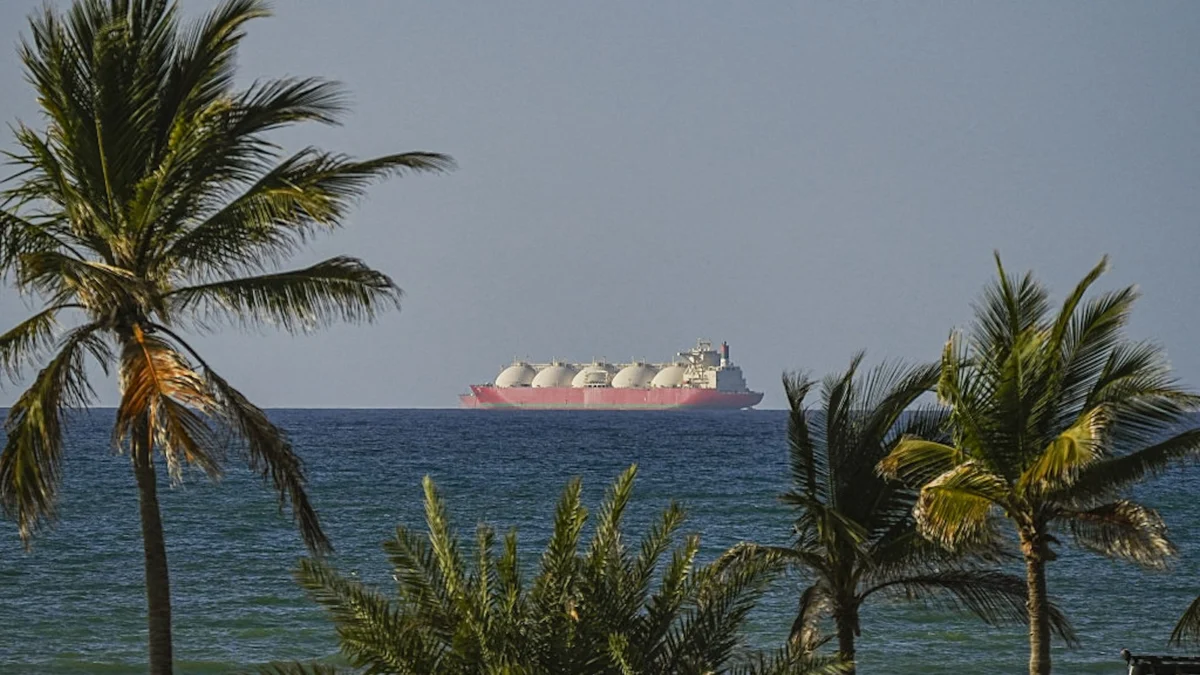
As Evelyne Williams of Columbia University’s Center on Global Energy Policy noted, the U.S. holds significant leverage, particularly through its dominance in the Liquefied Natural Gas (LNG) market. By threatening the energy security of nations dependent on American exports, the U.S. has successfully cooled the enthusiasm for a global maritime tax.
However, the physical reality of the climate crisis and the immediate disruption of global trade routes serve as a reminder that the status quo is increasingly untenable. The ships currently diverted around Africa are burning more fuel and emitting more CO2 than ever before, exacerbating the very problem the IMO is meeting to solve.
The proceedings in London this week will demonstrate whether the international community can still find common ground in an era of heightened nationalism and geopolitical conflict. For the shipping industry, which relies on the predictability of the seas and the stability of international law, the stakes could not be higher. As the meeting progresses, the world will watch to see if the IMO can salvage a "just transition" from the wreckage of current geopolitical tensions, or if the dream of a net-zero maritime industry will be another casualty of global instability.