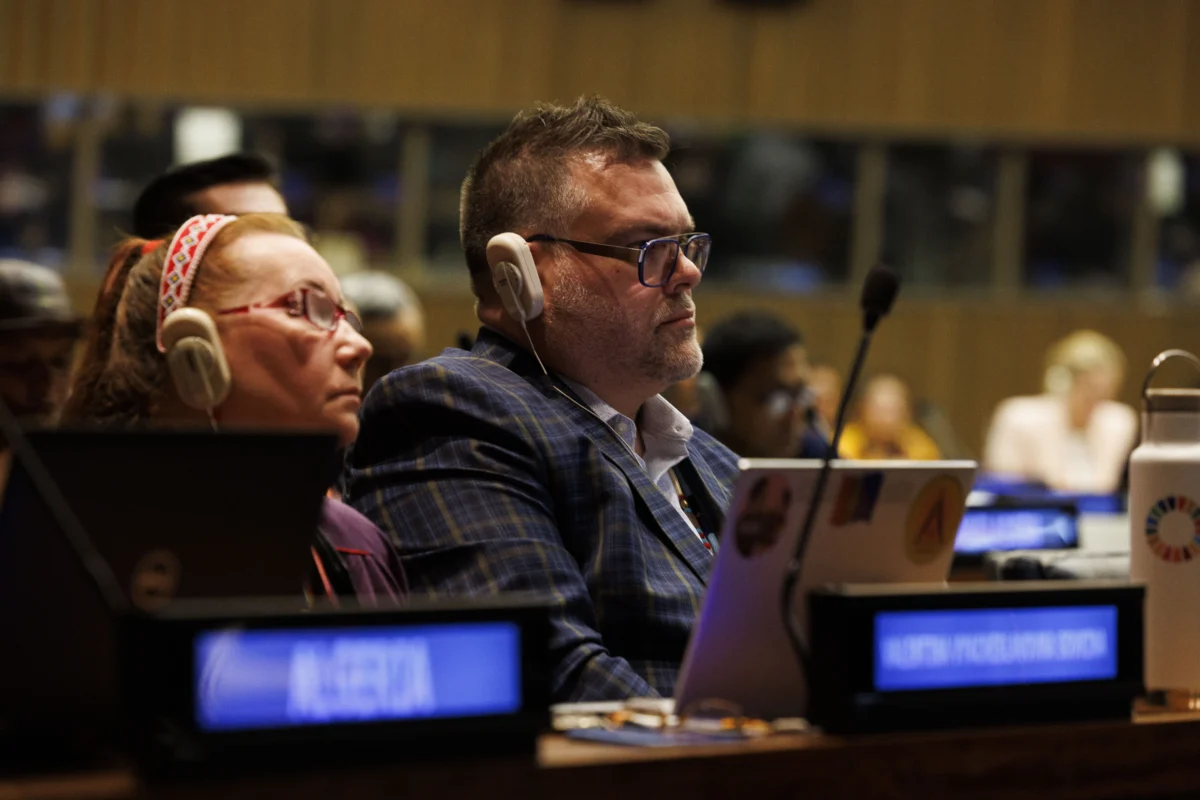
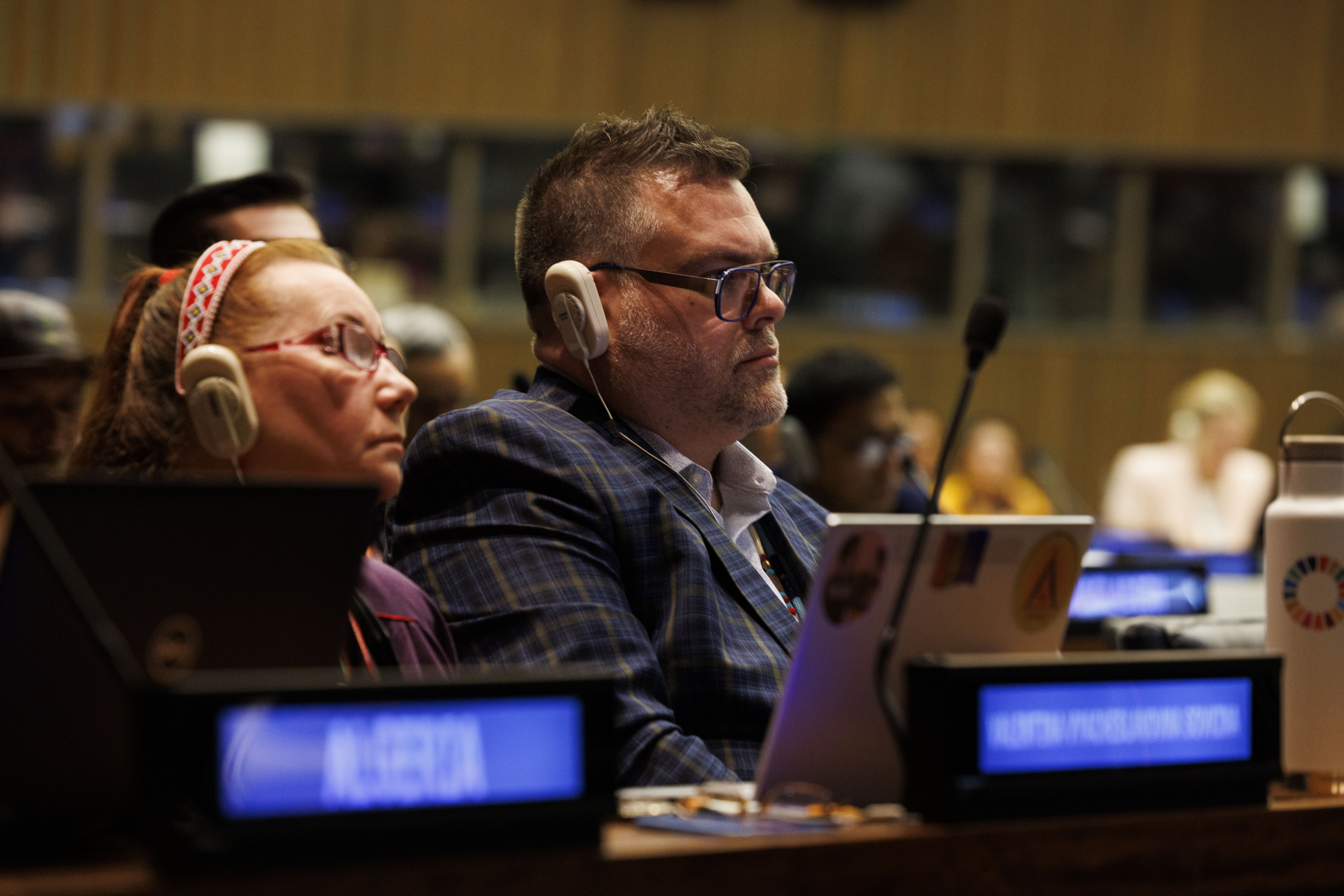
Hundreds of delegates representing the world’s approximately 476 million Indigenous people are convening at the United Nations Headquarters in New York this week for the 23rd session of the Permanent Forum on Indigenous Issues (UNPFII). While the gathering remains the most significant global platform for Indigenous self-determination, the atmosphere this year is underscored by a profound sense of urgency. Delegates arrive to find themselves at the intersection of a rapidly evolving technological landscape, a global shift toward green energy that often mimics colonial extraction, and a geopolitical environment that has become increasingly restrictive toward representatives from the Global South.
The official theme for this year’s forum, "Ensuring Indigenous peoples’ health, including in the context of conflict," addresses a grim reality: the intersection of militarization and ancestral land rights. Experts and leaders at the forum argue that for Indigenous communities, health cannot be isolated from the state of their environment, the security of their land tenure, or the preservation of their sovereignty. As global conflicts proliferate and the climate crisis intensifies, the forum serves as a critical, albeit embattled, venue for asserting that Indigenous survival is inextricably linked to the health of the planet itself.
The Geopolitics of Exclusion: Visa Barriers and Hostility
Before the diplomatic sessions could commence, many delegates faced significant hurdles in even reaching the United States. Advocacy groups report that the "practical barrier" of visa restrictions—many of which stem from policies enacted during the Trump administration and maintained through subsequent bureaucratic inertia—has disproportionately affected delegates from Africa, Asia, and South America. Mariana Kiimi Ortiz Flores, a Na Ñuu Savi advocate from Mexico and staff member at Cultural Survival, noted that the process of securing entry has become a gauntlet of rejection.
According to Flores, multiple Indigenous representatives from Africa were denied visas last year, and the trend has continued into 2024 with the denial of a South American staff member’s application. Beyond the administrative challenges, there is a growing concern regarding the social climate in the host country. Flores highlighted a "general climate of insecurity and hate speech" directed at Indigenous and Latin American peoples, which makes the journey to New York feel increasingly precarious. This exclusion is not merely a matter of logistics; it represents a systemic silencing of the voices most impacted by the very issues the United Nations seeks to address.

The hostility is not limited to border crossings. Last year, a delegation of Indigenous leaders from Bolivia, who attended the forum to protest mining operations on their traditional lands, reported being harassed by a Bolivian political leader within the international arena. The psychological and physical toll of such encounters, combined with the exhaustion of defending land against state-backed industries, has led some leaders to abandon the forum entirely, citing a belief that member states still hold disproportionate power over the lives and futures of Indigenous peoples.
Redefining Indigenous Health: A Holistic Framework
Central to this year’s discussions is a landmark report by Geoffrey Roth, a descendant of the Standing Rock Sioux and board chair of the Indigenous Determinants of Health Alliance. Roth’s work challenges the Western medical model, which often silences the spiritual and environmental components of well-being. He argues that Indigenous health is a "holistic perspective" that encompasses land, culture, language, and food systems.
The report outlines the "Indigenous determinants of health," a framework that identifies land dispossession and exclusion from decision-making as primary risk factors for illness and mortality. Conversely, strong land tenure and governance authority are cited as key indicators of community well-being. Roth’s analysis suggests that the United Nations and individual state governments often "silo" health into clinical discussions, failing to recognize how state-sanctioned language erasure or the destruction of biodiversity directly contributes to mental health crises and physical ailments.
One successful implementation of this holistic approach can be found in the Coquille Indian Tribe in Oregon. The tribe recently adopted an ordinance incorporating these determinants of health into their governance. By recognizing that activities such as monthly fishing trips for elders are essential health interventions—providing traditional nutrition while fostering behavioral and spiritual health—the tribe has created a model for how Indigenous sovereignty can improve public health outcomes. Roth also emphasized the importance of traditional midwifery, which has historically been suppressed by Western institutions. He noted that forcing Indigenous women into conventional healthcare systems often results in "obstetric violence" and procedures performed without informed consent, further alienating communities from necessary care.
The Digital Frontier: AI and Data Sovereignty
As the world grapples with the artificial intelligence boom, Indigenous leaders are sounding the alarm on a new form of exploitation: digital extractivism. Hindou Oumarou Ibrahim, an Indigenous Mbororo leader from Chad and former chair of the UNPFII, presented a report warning that AI is a "double-edged sword." While technology offers tools for monitoring ancestral territories and revitalizing endangered languages, it also facilitates the unauthorized scraping of medicinal knowledge, traditional stories, and genetic data.
Lydia Jennings, an assistant professor at Dartmouth College and citizen of the Pascua Yaqui Tribe and Huichol people, shared a troubling instance where a mining company utilized Indigenous cultural information from an environmental impact statement to promote its project online. This incident underscores the movement for "Indigenous data sovereignty"—the right of communities to control how their data is collected, stored, and utilized.
The infrastructure required for the AI boom also poses direct physical threats. Massive data centers require immense amounts of water for cooling and electricity for operation, often drawing these resources from tribal lands or competing with Indigenous water rights. Jennings raised a fundamental question that resonates throughout the forum: "Who has the power, and how do we redistribute that power?" The challenge lies in ensuring that AI becomes a tool for empowerment rather than a sophisticated instrument for further dispossession.
The Green Transition and the Myth of "Fortress Conservation"
The global shift toward renewable energy, while necessary for climate mitigation, has introduced a new wave of threats to Indigenous territories. The demand for critical minerals—lithium, cobalt, and copper—is driving new extractive projects on ancestral lands, often without the "free, prior, and informed consent" required by international law. Delegates at the forum are calling for climate financing to be made directly available to Indigenous communities, bypassing state intermediaries that often redirect funds or use them to greenwash human rights violations.
Furthermore, a February report presented to the forum highlighted the plight of nomadic and pastoralist peoples. Experts warned that "fortress conservation" models—where land is cordoned off from human activity to "protect" biodiversity—are curbing the traditional mobility of hunter-gatherers and seafarers. This approach ignores the fact that mobility is a knowledge-based climate adaptation strategy.
In Kenya, where 60 percent of the land is communal, Indigenous Maasai leader Samante Anne reported that land is increasingly being subdivided for commercial development or claimed for carbon offset projects. These initiatives often restrict the movement of pastoralists, directly threatening their food security and livelihoods. "Mobility has everything to do with us adapting to climate change," Anne stated, echoing the sentiment that top-down environmental policies often exacerbate the vulnerabilities of the very people they claim to protect.
The "IPLC" Debate: Rights Holders vs. Stakeholders
A persistent point of contention within the UN system is the use of the acronym "IPLC," which groups Indigenous Peoples and Local Communities together. While the term is intended to be inclusive, Indigenous leaders argue it dilutes their distinct legal status. Under international law, Indigenous peoples are "rights holders" with specific protections regarding self-determination and land tenure, whereas "local communities" are often considered "stakeholders" without the same legal standing.
Geoffrey Roth recounted an instance at the World Health Organization where an Indigenous initiative was categorized merely as an "equity" issue rather than a rights-based one. "Conflating us with other populations really diminishes our rights," Roth said. In 2023, the three primary UN Indigenous rights bodies issued a joint statement demanding an end to the use of the IPLC acronym in environmental treaties, arguing that it creates a "diluted" voice for Indigenous peoples in global mechanisms.
Historical Context and the Path Forward
The UNPFII was established in 2000 as an advisory body to the Economic and Social Council (ECOSOC), following decades of activism by Indigenous leaders who demanded a seat at the table. Since its first session in 2002, the forum has been instrumental in the adoption of the United Nations Declaration on the Rights of Indigenous Peoples (UNDRIP) in 2007. However, the declaration is non-binding, and its implementation remains inconsistent across member states.
As the 2024 session continues, the sense of disillusionment with the UN system is palpable. Mariana Kiimi Ortiz Flores noted that the institution appears to be losing influence as member states increasingly disregard international norms. Yet, despite the bureaucratic hurdles and the hostile global climate, the determination to attend remains. The forum represents one of the few spaces where the "lived realities" of Indigenous peoples can be translated into the language of international policy.
The implications of this year’s forum are clear: the survival of Indigenous peoples is not a niche concern but a barometer for the health of global democracy and ecology. If the international community fails to protect the rights of those who steward 80 percent of the world’s remaining biodiversity, the broader goals of climate stability and global peace will remain out of reach. As Flores concluded, "If we as Indigenous peoples don’t do it, no one else will speak for us and defend us."