
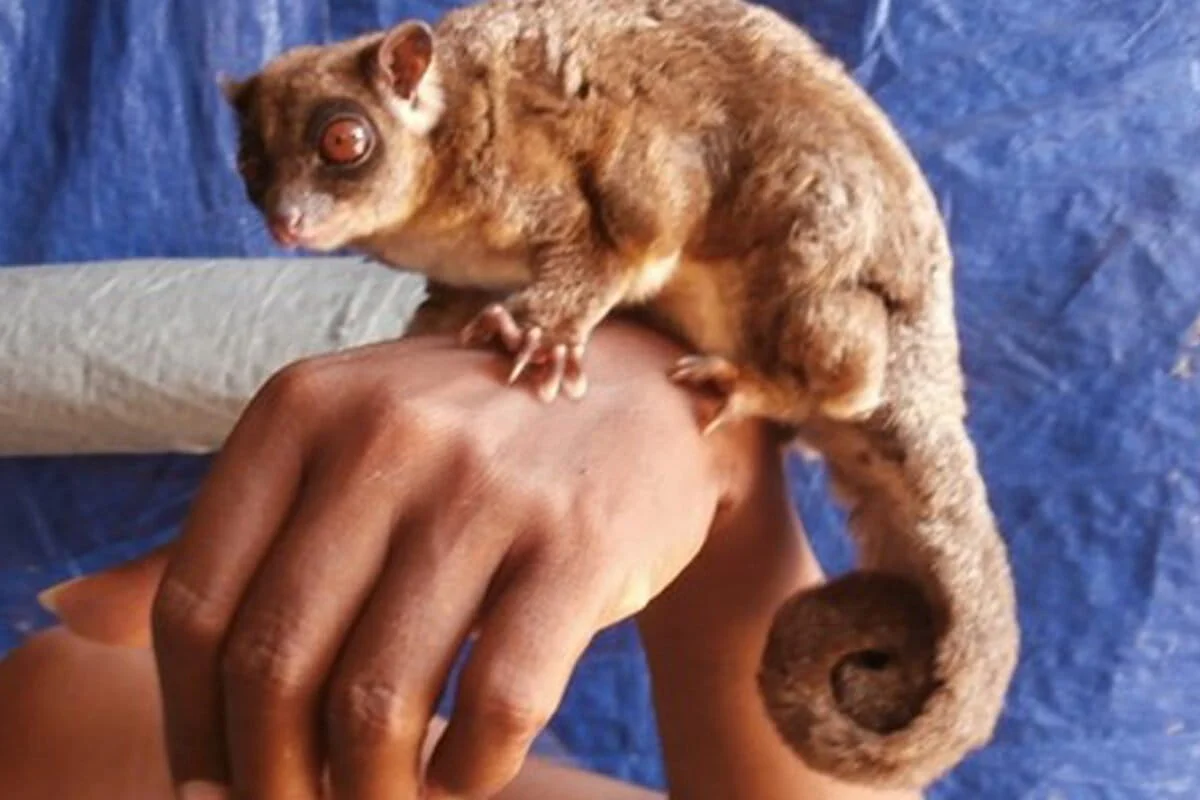
On a remote peninsula in the Tambrauw Regency of Indonesian Papua, a species long classified by the international scientific community as potentially extinct or "data deficient" has been confirmed to be very much alive. The ring-tailed glider (Tous ayamaruensis), a small, elusive marsupial endemic to the Bird’s Head Peninsula, has been formally documented following a unique collaborative effort that prioritized the oral histories and traditional knowledge of local Indigenous communities over conventional Western survey methods. This confirmation, while a breakthrough for global conservation biology, serves as a poignant reminder that the concept of "extinction" is often a reflection of a lack of scientific access rather than a biological reality on the ground.
The ring-tailed glider’s reappearance was not the result of a high-tech expedition or satellite tracking. Instead, it began with a series of deep-listening sessions between researchers and Tambrauw elders. These elders provided vivid descriptions of a forest-dwelling glider they had known for generations, describing its habitat, nocturnal behaviors, and distinct physical markers. By synthesizing these accounts with historical photographs and recent opportunistic sightings by local residents, researchers were able to verify the continued existence of a species that had avoided scientific detection for decades.
The Biological Context of Tous ayamaruensis
The ring-tailed glider is a member of the Pseudocheiridae family, a group of arboreal marsupials found primarily in Australia and New Guinea. The species is characterized by its prehensile tail, which it uses to navigate the dense, multi-layered canopies of Papua’s primary rainforests. Historically, the species was known to inhabit the Ayamaru Lakes region and the surrounding karst landscapes of the Bird’s Head (Vogelkop) Peninsula.
Until this recent confirmation, scientific data regarding the ring-tailed glider was remarkably sparse. Most museum specimens dated back to the early 20th century, and subsequent attempts to locate the animal in the wild had largely failed. This led to its classification as a species of extreme concern, with many fearing that habitat loss or localized climate shifts had driven it to the brink. However, the rugged topography of Tambrauw—characterized by steep limestone cliffs and near-impenetrable jungle—has served as a natural fortress, protecting the glider from the rapid developmental pressures seen in other parts of Indonesia.
A Chronology of Scientific Absence and Indigenous Presence
The timeline of the ring-tailed glider’s "disappearance" reveals a significant gap in the way global biodiversity is monitored. From a scientific perspective, the animal effectively vanished in the mid-1900s. For the following 70 years, it existed only in the footnotes of zoological journals and on "most wanted" lists for conservationists.
In contrast, for the Tambrauw people, there was no such gap. The glider remained a constant, albeit secretive, neighbor. The chronology of its "rediscovery" can be traced through three distinct phases:

- The Era of Historical Documentation (1890s–1950s): Early naturalists collected a limited number of specimens, establishing the species’ presence in the Ayamaru and Tambrauw regions. These records formed the "baseline" for Western science.
- The Period of Scientific Silence (1960s–2010s): Political instability, geographical isolation, and the sheer difficulty of conducting fieldwork in West Papua led to a cessation of formal surveys. During this time, the species was presumed lost by the outside world.
- The Collaborative Re-emergence (2020–Present): Recent fieldwork led by organizations such as Fauna & Flora International (FFI) and local researchers began to shift the methodology. Instead of relying solely on camera traps and transect walks, they engaged in ethnobiological surveys. In 2024 and 2026, these efforts culminated in the verification of the glider’s presence through a combination of community-sourced photographs and expert taxonomic review.
The Cultural Dimensions of Conservation
One of the most significant revelations of this discovery is the role of cultural taboo and sacred knowledge in species protection. The ring-tailed glider is not merely a biological entity to the Tambrauw; it is a creature of deep cultural significance. It plays a central role in traditional initiation practices and is woven into the oral traditions that govern the relationship between the people and the forest.
Because the glider is considered sacred, it was not an animal that was openly discussed with outsiders. In many Indigenous cultures in Papua, certain animals are "guarded" knowledge, shared only with those who have reached a specific status within the community. This cultural protection explains why previous scientific expeditions, which often arrived with little prior relationship-building, failed to hear about the animal’s existence. The glider was not "lost" to the people; it was protected by them.
This dynamic highlights a critical lesson for modern conservation: the success of biodiversity surveys is often predicated on the level of trust between scientists and local communities. Without mutual respect and a shared understanding of the animal’s cultural value, vital ecological data remains inaccessible to the scientific community.
Supporting Data: A Pattern of Rediscovery in Papua
The ring-tailed glider is not an isolated case. In recent years, the island of New Guinea has become a hotspot for the "rediscovery" of species through Indigenous collaboration.
- Attenborough’s Long-beaked Echidna (Zaglossus attenboroughi): Thought to be extinct since 1961, this "living fossil" was rediscovered in the Cyclops Mountains in 2023. The breakthrough came after researchers spent years working with local villagers who provided clues about the echidna’s distinctive "nose pokes" in the soil.
- The Long-fingered Possum (Dactylopsila palpator): Similar to the glider, this species was confirmed in areas where it was scientifically unrecorded, largely through the guidance of hunters who recognized its unique foraging patterns.
- Bird Community Shifts: A global study involving 80 years of Indigenous memory revealed that local observers have documented a shift toward smaller-bodied bird species in tropical forests. This data aligns with ecological "downsizing" theories but provides a much longer and more detailed timeline than any existing scientific dataset.
These examples underscore a broader statistical reality: while formal scientific monitoring covers less than 10% of the world’s most biodiverse regions, Indigenous lands encompass roughly 80% of the planet’s remaining biodiversity. The knowledge held by these communities is not just anecdotal; it is a systematic, cumulative record of ecological change.
The Science of Indigenous Memory and "Shifting Baselines"
The verification of the ring-tailed glider provides a powerful counter-narrative to "Shifting Baseline Syndrome." This psychological and ecological phenomenon occurs when each new generation accepts the degraded state of the environment as the "normal" baseline, gradually losing the memory of what was once there.
Indigenous knowledge systems are uniquely equipped to combat this syndrome. Because observations are passed down through oral tradition and integrated into daily survival—such as hunting, farming, and medicinal gathering—the "memory" of the landscape remains intact over centuries. A Tambrauw elder does not just know what the forest looks like today; they carry the collective memory of what the forest looked like in their grandfather’s time.

However, researchers warn that this archive is fragile. As younger generations move toward urban centers or shift away from traditional lifestyles, the transmission of this knowledge can weaken. The "rediscovery" of the ring-tailed glider occurred just in time, capturing the insights of an aging generation of elders before their specific ecological literacy could be lost.
Analysis of Implications for Conservation Policy
The confirmation of the ring-tailed glider’s survival has immediate implications for conservation policy in Indonesia and beyond. First, it necessitates a re-evaluation of the "Data Deficient" and "Extinct" categories on the IUCN Red List. Many species currently listed as extinct may simply be "scientifically hidden," residing in regions where Indigenous knowledge has not yet been integrated into formal assessments.
Second, this event strengthens the argument for Indigenous land rights as a primary conservation strategy. If the Tambrauw people have successfully stewarded the ring-tailed glider for decades without external intervention, their traditional management systems are demonstrably effective. Protecting the glider, therefore, requires protecting the rights of the people who hold the knowledge of its existence.
Finally, there is a technical implication for how biodiversity funding is allocated. Traditionally, large-scale grants are funneled into technological solutions like AI-driven camera traps or genomic sequencing. While these tools are valuable, the Tambrauw case suggests that "social infrastructure"—the building of long-term relationships with local communities—is a more cost-effective and accurate way to document rare species in remote areas.
Future Outlook: A New Paradigm for Field Research
The story of the ring-tailed glider in Papua marks a shift toward a more inclusive and effective form of biology. The future of conservation in the 21st century will likely depend on this "braided" approach: using Western scientific methods to provide verification and global comparability, while relying on Indigenous knowledge for continuity, context, and long-term observation.
As the Indonesian government and international NGOs look toward expanding protected areas in West Papua, the ring-tailed glider stands as a symbol of what remains to be found. In the dense forests of the Tambrauw peninsula, the glider continues its nocturnal movements, a silent witness to the fact that scientific absence does not mean non-existence. The challenge for the global community is no longer just to "find" these species, but to listen to the people who never lost them in the first place.
This rediscovery serves as a call to action for the scientific community to humble its approach and recognize that the most sophisticated sensor in the forest is often the human memory of those who call it home. Through this synergy of tradition and science, the full picture of Earth’s biodiversity may finally begin to emerge, revealing a world that is far more resilient—and far more inhabited—than we once believed.










Leave a Reply