
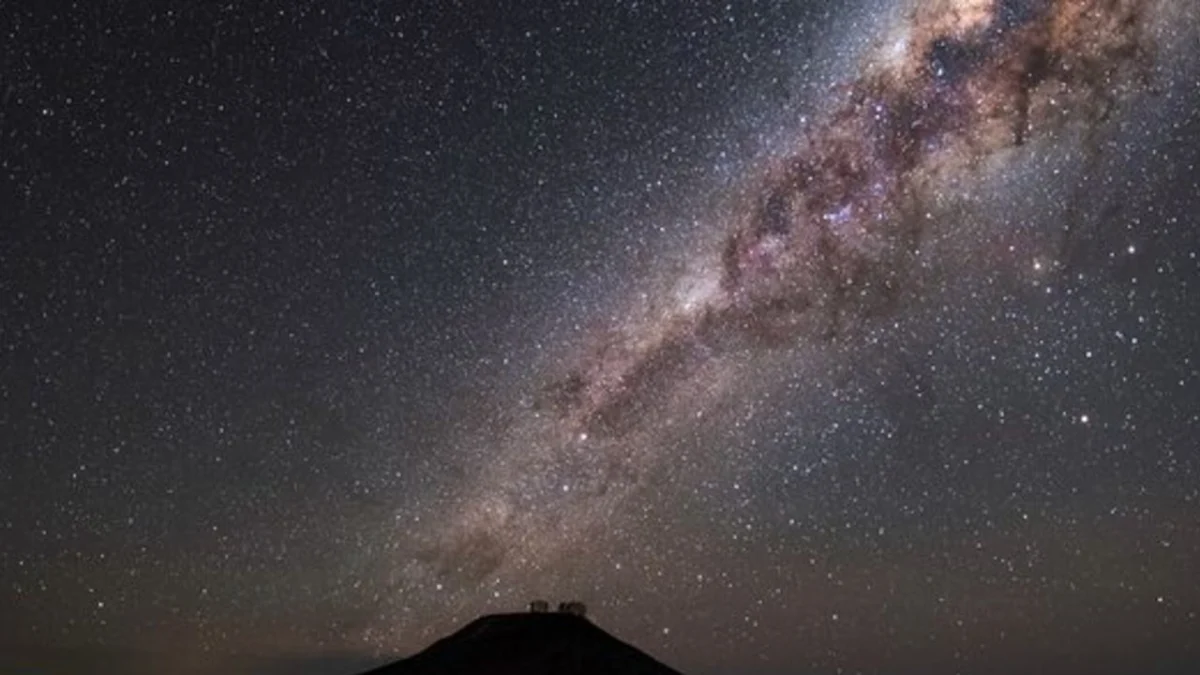
Astronomers have precisely mapped the outer edge of star formation within our own Milky Way galaxy, revealing a surprisingly defined boundary that extends approximately 40,000 light-years from the galactic center. This landmark discovery, achieved through an international collaboration utilizing cutting-edge astronomical data and sophisticated simulations, not only redefines our understanding of our galactic home but also sheds light on the fundamental processes that govern galaxy evolution.
Unveiling the Galactic Nursery
For decades, scientists have grappled with understanding the intricate processes that sculpt galaxies. The Milky Way, a barred spiral galaxy estimated to span over 100,000 light-years in diameter, is a complex cosmic entity where stars are born, live, and die. While it was understood that star formation isn’t uniformly distributed across its vast expanse, pinpointing the exact outer limit of this stellar nursery has been a persistent challenge. This new research, published in the esteemed journal Astronomy & Astrophysics, provides the most definitive answer to date.
The study, led by Dr. Valerio Fiteni of the University of Geneva, leveraged a colossal dataset of over 100,000 luminous giant stars. These stars, meticulously analyzed for their spectral properties, provided crucial information about their temperatures and ages. The data was primarily sourced from two powerful ground-based observatories: the LAMOST (Large Sky Area Multi-Object Fiber Spectroscopic Telescope) in China and the Apache Point Observatory Galactic Evolution Experiment (APOGEE), part of the Sloan Digital Sky Survey in the United States. Crucially, this information was augmented by precise positional and motion data from the European Space Agency’s (ESA) Gaia mission, a spacecraft dedicated to creating the most accurate 3D map of the Milky Way.
"Gaia is delivering on its promise: by combining its data with ground-based spectroscopy and galaxy simulations, it allows us to decipher the formation history of our galaxy," stated Laurent Eyer, a co-author of the study from the University of Geneva. This synergistic approach, combining observational data with theoretical modeling, proved instrumental in unraveling the galaxy’s complex stellar population.
A U-Shaped Age Distribution: The Galactic Clue
A fundamental principle in galactic evolution is that galaxies generally grow from the inside out. This means that, on average, older stars are found closer to the galactic center, while younger stars are more prevalent in the outer regions. The research team observed this trend in the Milky Way, noting a decrease in the average age of stars as they moved further from the galactic core.
However, their findings revealed a more nuanced picture. The average age of stars reached a minimum at a radius of approximately 40,000 light-years. Beyond this point, the trend reversed: stars began to steadily increase in age again. This peculiar "U-shaped" distribution of stellar ages, with the oldest stars found both near the galactic center and at the outermost edges of the disk, has been observed in other galaxies and hints at complex evolutionary processes at play.
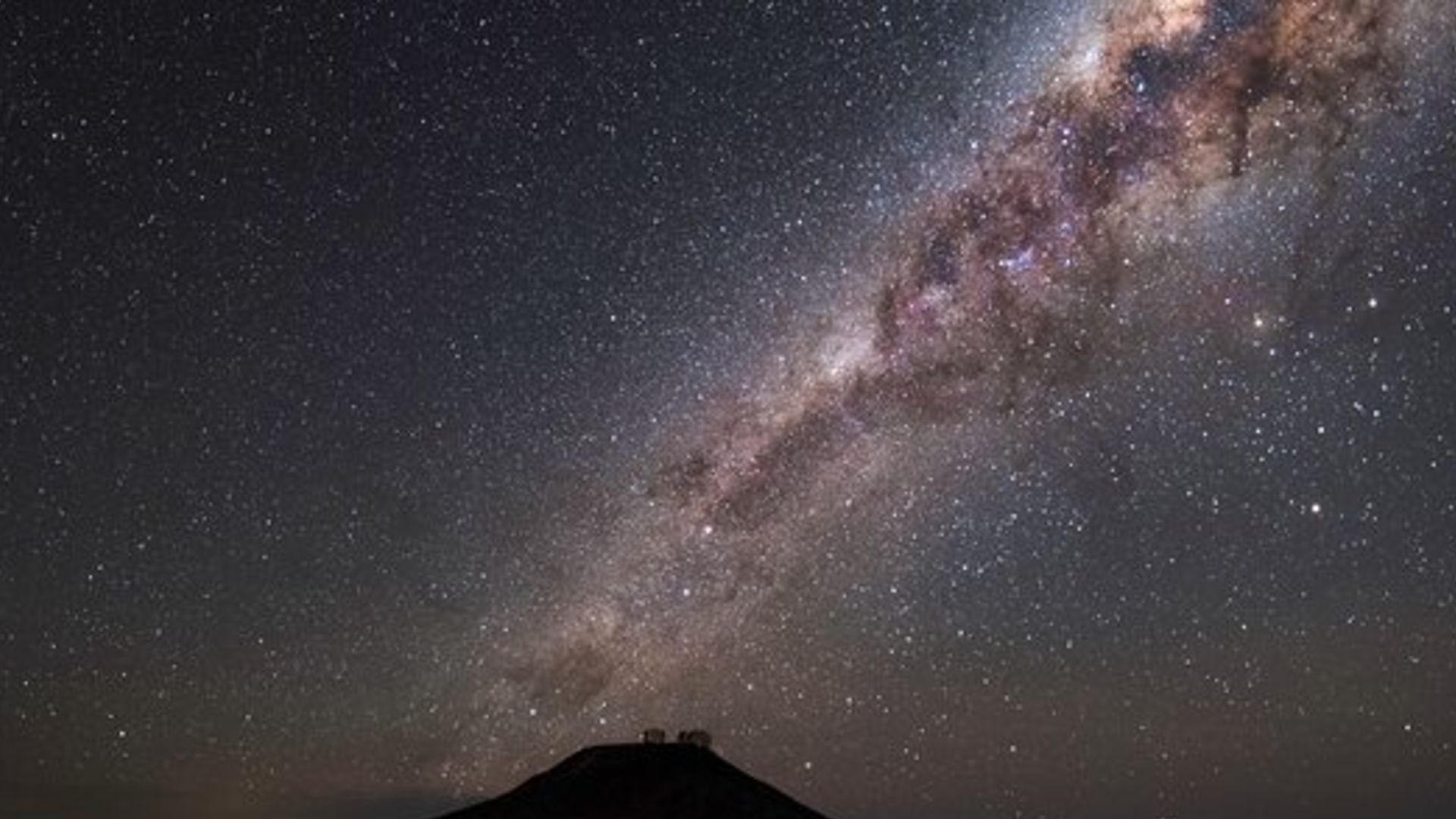
For context, our own Sun resides about 26,000 light-years from the galactic center, comfortably within the region of active star formation. The newly identified boundary at 40,000 light-years suggests that the processes that fuel the birth of new stars become significantly less efficient beyond this distance.
Decoding the U-Shape: The Role of Stellar Migration
To understand the underlying cause of this U-shaped age distribution, the international team employed sophisticated computer simulations. These simulations, run on powerful supercomputers, allow astrophysicists to test various hypotheses and identify the physical mechanisms responsible for observed galactic structures.
"In astrophysics, we use simulations run on supercomputers to identify the physical mechanisms responsible for the features we observe in galaxies," explained Dr. João S. Amarante from Shanghai Jiao Tong University in China, a key contributor to the simulation aspect of the study. "They allowed us to demonstrate how stellar migration shapes the age profile of the disk and to identify where the star-forming region ends."
The simulations provided a compelling explanation: radial migration. This phenomenon is akin to stars "surfing" on density waves within the galaxy, particularly the prominent spiral arms. As these waves propagate, they can transport stars, along with the gas and dust from which they form, to greater distances from the galactic center. This outward movement means that stars observed at the very edge of the Milky Way’s disk, potentially 50,000 light-years or more from the center, may have originated closer in but have since migrated outwards. This explains the presence of older stars at these distant radii, as they have had more time to travel from their birthplaces.
The simulations further indicated that at approximately 40,000 light-years from the galactic center, there is a distinct and sudden drop in the efficiency of star formation. This point, therefore, marks the effective boundary of the Milky Way’s disk-shaped stellar nursery.
Beyond Collisions: The Dynamics of Radial Migration
The presence of stars beyond the 40,000 light-year star-forming boundary might initially suggest external influences, such as collisions or mergers with other galaxies. However, the research team’s analysis of the orbital characteristics of these outer stars provides a crucial counterpoint.
"A key point about the stars in the outer disk is that they are on close to circular orbits, meaning that they had to have formed in the disk," emphasized Dr. Victor Debattista from the University of Lancashire in England, another member of the research team. "These are not stars that have been scattered to large radii by an infalling satellite galaxy."
The fact that these stars maintain nearly circular orbits strongly indicates that they formed within the disk itself and subsequently migrated outwards. If they had been violently scattered by a galactic collision, their orbits would likely be more eccentric and chaotic. Therefore, radial migration, driven by the dynamic processes within the Milky Way, appears to be the primary driver for the distribution of older stars in the outer reaches of our galaxy.
The Mystery of the Stagnant Outer Reaches
While radial migration explains the presence of older stars at the galaxy’s edge, the question remains: why does star formation effectively cease at the 40,000 light-year mark? The researchers propose several compelling hypotheses, rooted in the complex structure of the Milky Way.
One possibility centers on the influence of the galaxy’s central bar. This elongated structure, thought to extend between 11,000 and 15,000 light-years from the galactic center, can significantly influence the flow of gas. It’s conceivable that the bar’s gravitational pull channels gas inward, but its influence diminishes beyond a certain radius, leading to a depletion of the raw materials necessary for star formation.
Another potential factor is the observed "warp" in the Milky Way’s spiral disk. This warp, a bending of the disk plane, has been attributed to gravitational interactions with nearby dwarf galaxies. Such a disruption could create turbulent conditions in the outer regions, hindering the collapse of gas clouds and thus suppressing star formation beyond the 40,000 light-year threshold.
Implications for Galactic Evolution
The precise mapping of the Milky Way’s star-forming boundary has significant implications for our understanding of how galaxies like ours form and evolve over cosmic timescales. It provides a crucial observational constraint for theoretical models of galaxy formation, helping refine our understanding of the interplay between gas dynamics, stellar feedback, and gravitational influences.
"This research provides a vital piece of the puzzle in understanding our galactic neighborhood," commented Dr. Fiteni. "By pinpointing where stars stop forming, we gain deeper insights into the processes that shaped the Milky Way and, by extension, countless other galaxies throughout the universe."
The study highlights the power of combining vast astronomical datasets, like those from Gaia, with sophisticated ground-based observations and advanced computational simulations. This multi-faceted approach is proving to be indispensable in unraveling the universe’s most profound mysteries. As astronomical instruments continue to advance and our computational power grows, future research promises to further illuminate the intricate dance of stars and gas that defines our cosmic home.









Leave a Reply