
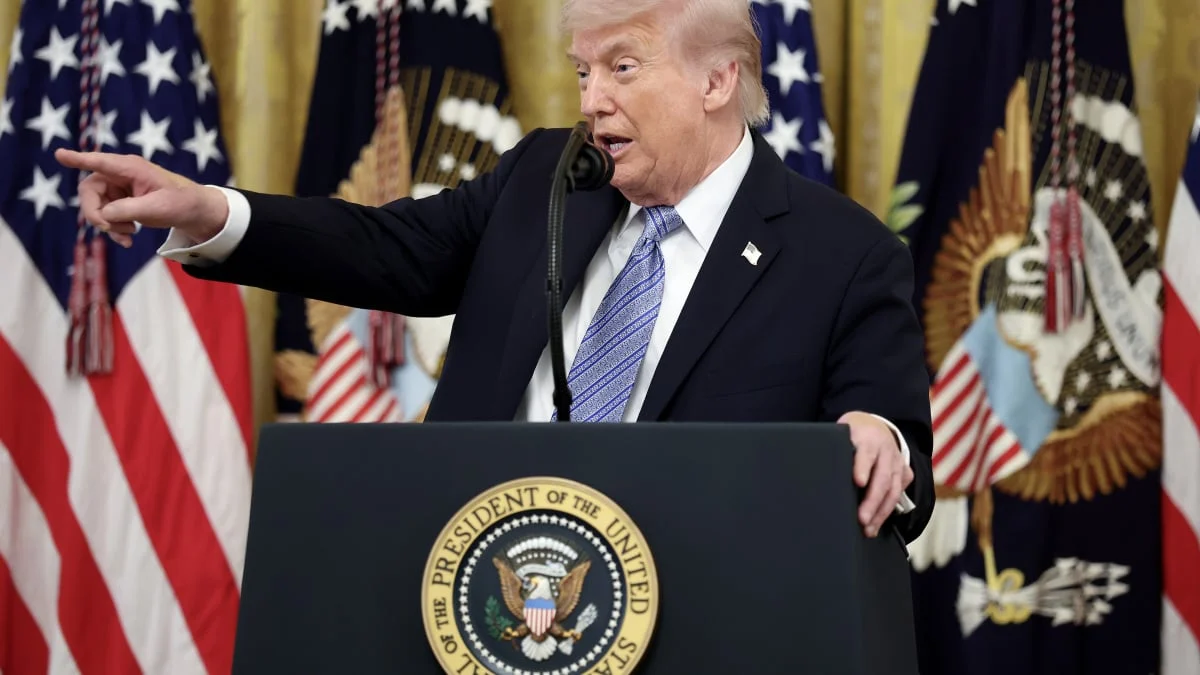
In a notable shift from its previously espoused light-touch approach, officials within the White House are actively investigating the establishment of official government oversight mechanisms for nascent artificial intelligence (AI) models, a development reported by the New York Times. This exploration signals a potentially significant recalibration of the Trump administration’s stance on AI regulation, moving towards a more structured federal involvement in a rapidly evolving technological domain. The discussions underscore a growing recognition of the profound societal and economic implications of advanced AI, prompting a re-evaluation of prior policy frameworks that largely favored industry self-regulation and innovation acceleration over stringent governmental controls.
The Genesis of a Working Group: Crafting Future AI Governance
At the heart of these emerging efforts is the proposed formation of a dedicated AI working group, meticulously designed to bridge the gap between technological innovation and public policy. Anonymous U.S. officials, privy to the internal deliberations, informed the Times that this group would comprise a diverse array of stakeholders, including prominent leaders from the technology sector and seasoned government representatives. The primary mandate of this high-level assembly would be to delineate comprehensive oversight procedures applicable to new AI models as they prepare for market launch. These procedures are expected to encompass formal review processes, a critical step towards ensuring accountability and safety in AI deployment.
The initial discussions surrounding these proposed regulatory plans took place during a pivotal White House meeting held last week. This gathering brought together key industry players, with representatives from leading AI development firms such as Anthropic, Google, and OpenAI in attendance. Their participation underscores the collaborative, albeit complex, nature of developing effective AI governance, requiring input from both the creators of the technology and the policymakers tasked with managing its broader impact. The presence of these tech giants at such a meeting indicates a mutual understanding of the necessity for a dialogue on responsible AI development, even as the specifics of regulatory frameworks remain under negotiation.
A Shifting Stance: From Deregulation to Deliberation
The Trump administration’s current exploration of AI oversight marks a significant departure from its previously articulated policy positions. For much of its tenure, the administration championed a strategy that prioritized rapid innovation and minimized regulatory burdens on technology companies. This philosophy was encapsulated in a federal AI action plan, unveiled in the not-so-distant past, which explicitly aimed to scale back regulation of tech firms. Furthermore, this plan controversially threatened to reduce federal funding for states that might impede AI infrastructure development through their own regulatory initiatives.
A more direct manifestation of this deregulation-centric approach was embedded within Trump’s "One Big Beautiful Bill," a legislative proposal that sought to impose limits on state governments’ ability to regulate AI. This bill originally put forth a bold proposition: a 10-year moratorium on state-level AI regulation, explicitly favoring federal oversight as the sole avenue for governance. Such a moratorium would have effectively sidelined state efforts, centralizing regulatory authority at the federal level but with a stated intent to keep that federal oversight as light as possible. This historical context provides a stark contrast to the current discussions, where the emphasis has shifted from preventing regulation to actively crafting it.
Adding to this legacy, Brendan Carr, a Trump appointee and current chairman of the Federal Communications Commission (FCC), has consistently advocated for a "light-touch" approach to AI regulation. His perspective has been influential in shaping the administration’s initial stance, emphasizing the potential for over-regulation to stifle innovation and impede American competitiveness in the global AI race. The recent White House meetings, therefore, signal a potential recalibration not only within the broader administration but possibly even within the views of key officials, recognizing that a completely hands-off approach might no longer be tenable given the rapid advancements and growing concerns surrounding AI.
Domestic and International Precedents: Guiding the Regulatory Path
The potential regulatory processes now being considered by the White House appear to be, at least in part, influenced by frameworks announced by international counterparts. Notably, the United Kingdom’s regulatory approach, which delegates AI oversight responsibilities to existing, relevant government bodies rather than establishing a new, overarching AI regulator, seems to be a model under consideration. This "sectoral" approach aims to leverage the specialized expertise of agencies already familiar with the specific risks and applications of AI within their respective domains (e.g., healthcare regulators for medical AI, financial regulators for AI in banking).
The working group’s critical task would also involve determining precisely which U.S. agencies would be entrusted with these oversight responsibilities. Several federal entities have been suggested as potential candidates to lead or contribute to AI governance. Some officials have put forward the National Security Agency (NSA) as a primary contender, given its deep expertise in cybersecurity, intelligence gathering, and national security implications of advanced technologies. The White House Office of the National Cyber Director (ONCD), established to coordinate national cybersecurity policy, is another logical choice, especially concerning AI’s role in critical infrastructure and cyber defense. The Director of National Intelligence (DNI), overseeing the entire U.S. Intelligence Community, also emerges as a strong candidate, particularly for AI applications that touch upon national security and foreign policy.
Beyond these security-focused agencies, there have also been suggestions to revitalize the Biden-era Center for A.I. Standards and Innovation (CAISI). Established under the National Institute of Standards and Technology (NIST), CAISI was designed to foster the development of AI standards, benchmarks, and best practices. Its revival and potential expansion could provide a more civilian-focused, technical, and collaborative platform for AI governance, complementing the security-oriented mandates of other agencies. The debate over which agencies should lead reflects the multifaceted nature of AI, impacting everything from national defense to consumer protection and economic competitiveness, necessitating a coordinated, inter-agency approach.
The Imperative for Oversight: Addressing AI’s Risks and Challenges
The pivot towards greater AI oversight is not merely a political whim but a response to the escalating pace of AI development and the increasingly apparent risks associated with its widespread deployment. Large language models (LLMs) and generative AI, in particular, have demonstrated capabilities that, while revolutionary, also present significant challenges. Concerns range from the propagation of misinformation and disinformation at unprecedented scales, the potential for deepfakes to erode trust in media and democratic processes, and the amplification of societal biases embedded within training data.
Beyond these societal impacts, AI poses tangible national security risks. Autonomous weapons systems, if not properly regulated, could lead to unforeseen conflicts or escalate existing ones. The use of AI in cyber warfare presents new vectors for attack and defense. The dual-use nature of many AI technologies—beneficial in civilian applications but potentially destructive in malicious hands—compounds the regulatory challenge. Furthermore, the economic implications, including potential job displacement across various sectors, necessitate proactive policy responses to manage transitions and ensure a just future of work.
The technical complexities of AI also make regulation uniquely challenging. The "black box" nature of many advanced AI models, where their decision-making processes are opaque even to their creators, complicates auditing, accountability, and the identification of errors or biases. The rapid iteration cycle of AI development means that regulatory frameworks can quickly become outdated, requiring agile and adaptive governance mechanisms. These inherent challenges underscore why a carefully considered, multi-stakeholder approach is essential, balancing the need to mitigate risks with the desire to foster innovation.
Industry Perspectives and the Innovation Dilemma
The involvement of major AI companies like Anthropic, Google, and OpenAI in these White House discussions highlights a complex dynamic within the tech industry. While many tech companies historically advocate for minimal regulation to accelerate innovation and maintain competitive advantage, there is a growing recognition within the industry that some form of governance is inevitable and, perhaps, even desirable. Responsible AI development and deployment are increasingly seen as critical for building public trust, which is essential for the long-term adoption and success of AI technologies.
However, the industry’s preferred mode of regulation often leans towards voluntary standards, industry-led best practices, and agile, non-prescriptive frameworks that avoid stifling research and development. The challenge for policymakers is to craft regulations that are robust enough to address risks without inadvertently hindering the very innovation that drives economic growth and technological progress. Overly burdensome regulations could shift AI development to less regulated jurisdictions, potentially undermining U.S. leadership in the field. This delicate balance between fostering innovation and ensuring safety will be a central tension for the proposed working group.
Statements from tech leaders often emphasize the importance of collaboration between government, industry, and academia. They typically advocate for a risk-based approach, where regulatory intensity is proportional to the potential harm posed by an AI system. This contrasts with a blanket regulatory approach that might treat all AI applications uniformly, regardless of their impact. The ongoing dialogue between the White House and these tech giants will likely involve intricate negotiations to find common ground that satisfies both public safety concerns and industry’s innovation imperative.
Broader Implications for National Security and Economic Competitiveness
The decision by the White House to explore formal AI oversight carries profound implications for both national security and global economic competitiveness. From a national security perspective, robust AI governance can help ensure that AI technologies developed and deployed within the U.S. are secure, resilient, and aligned with democratic values. It can also help prevent malicious actors from exploiting AI vulnerabilities. The involvement of agencies like the NSA and DNI signals a clear recognition of AI as a critical component of modern defense and intelligence capabilities, necessitating careful strategic management.
Economically, the establishment of clear regulatory guidelines, even if initially perceived as a burden, can ultimately foster greater investment and consumer trust. A predictable regulatory environment can reduce uncertainty for businesses, encouraging long-term planning and investment in AI research, development, and deployment. Conversely, a chaotic or absent regulatory landscape could lead to public distrust, market fragmentation, and a loss of competitive edge if other nations develop more coherent and trusted AI ecosystems. The U.S. position as a global leader in AI innovation hinges not just on technological breakthroughs but also on its ability to govern these powerful tools responsibly.
The global race for AI supremacy, involving major players like China and the European Union, adds another layer of complexity. China has already implemented some of the world’s most comprehensive AI regulations, particularly concerning content generation and algorithmic recommendations, reflecting its unique state-centric approach to data governance and technological control. The EU’s AI Act, nearing full implementation, represents a groundbreaking legislative effort to categorize and regulate AI based on risk levels. The U.S. regulatory response will inevitably be benchmarked against these international efforts, influencing its standing in the global AI landscape and its ability to shape international norms and standards for AI.
Looking Ahead: The Path to Comprehensive AI Governance
The formation of an AI working group and the exploration of formal government oversight represent a critical juncture in the U.S.’s approach to artificial intelligence. This marks a potential maturation of policy, moving from an initial phase of rapid encouragement to a more nuanced understanding of the need for responsible stewardship. The path forward will be fraught with challenges, requiring careful navigation of technical complexities, diverse stakeholder interests, and geopolitical considerations.
Success will depend on the working group’s ability to forge consensus on key principles, develop adaptive regulatory frameworks, and foster ongoing collaboration between government, industry, academia, and civil society. The outcome of these deliberations will not only shape the future of AI in the United States but will also have significant ripple effects on global AI governance, influencing how this transformative technology is developed, deployed, and managed worldwide. As AI continues to advance at an exponential rate, the call for proactive, comprehensive, and adaptive governance has become not just a recommendation but an imperative for safeguarding the future.










Leave a Reply