
The technology world was recently abuzz with news of a "Notepad++ for Mac" port making rounds across tech media and user forums. This development, however, was swiftly met with a strong rebuttal from Don Ho, the original creator and primary maintainer of the venerable Notepad++ text editor. Ho unequivocally stated that the macOS version was not an official release and accused its developer, Andrey Letov, of trademark infringement, sparking a significant debate over intellectual property, community contributions, and the emerging role of AI in software development.
The Enduring Legacy of Notepad++
Notepad++, launched in 2003, carved out a formidable niche for itself as a powerful, free, and open-source text and source code editor for Windows operating systems. Conceived by Don Ho as an enhanced alternative to the basic Windows Notepad, it quickly gained widespread acclaim for its robust feature set, which includes syntax highlighting, line numbering, code folding, tabbed document interface, and extensive plugin support. Built on the Scintilla editing component and written in C++ with the Win32 API, Notepad++ is known for its efficiency, low resource consumption, and speed, making it a favorite among developers, system administrators, and power users alike.
Throughout its more than two-decade existence, Notepad++ has remained a Windows-exclusive application, officially supporting versions from Windows 7 all the way back to Windows 95 for older releases. Its commitment to the Windows platform has been a core part of its identity, fostering a dedicated user base that appreciates its native performance and deep integration with the Windows environment. The project’s open-source nature, governed by the GNU General Public License, has also allowed for a vibrant community, though official development and branding have always been tightly controlled by Ho. The absence of an official macOS version has long been a point of longing for Mac users who admired its capabilities and sought a similar lightweight, yet powerful, text editor for their platform. This long-standing desire for a Mac port created fertile ground for potential confusion when an unofficial version surfaced.
The Unofficial Port’s Arrival and Initial Reception
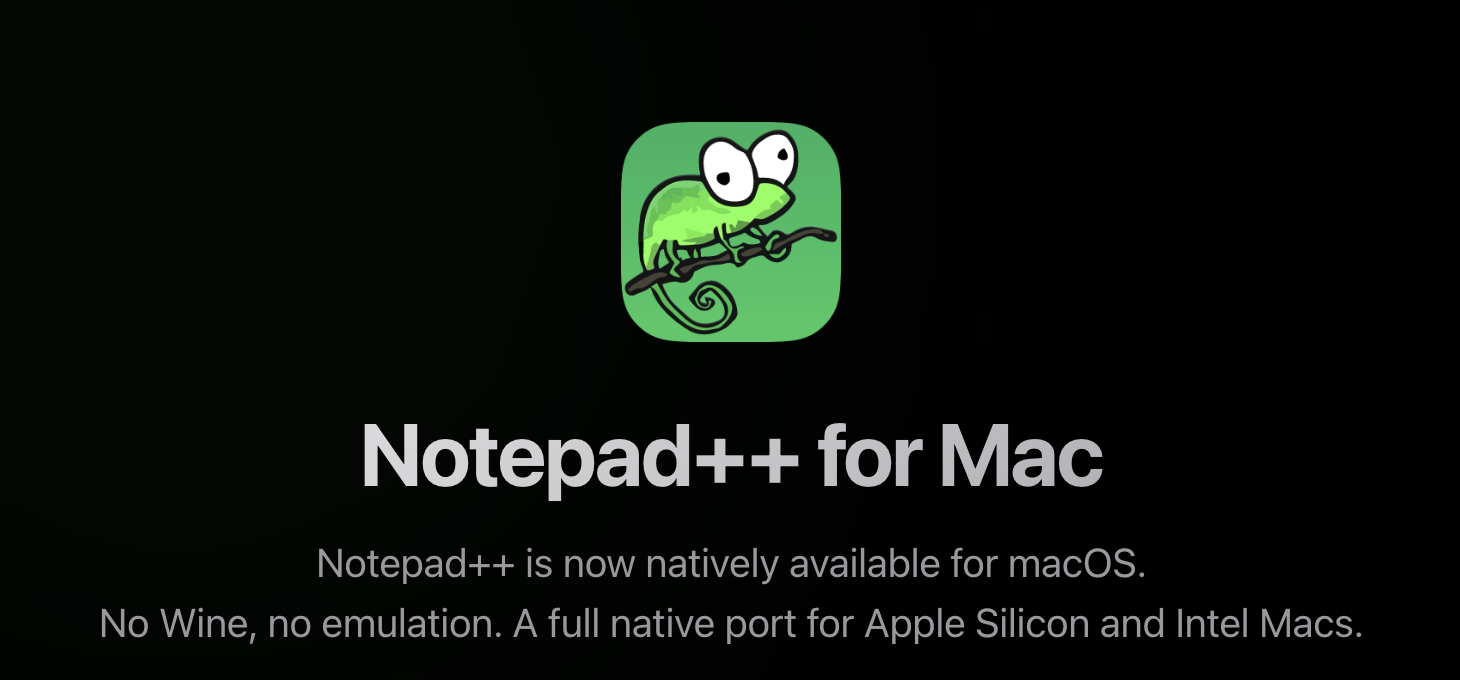
News of a "Notepad++ for Mac" began circulating widely in the last week of April, initially generating considerable excitement. Major tech publications, including MacRumors, reported on the availability of this new port, often implying or being interpreted as an official extension of the Notepad++ brand. The unofficial port, developed by Andrey Letov, presented itself with the familiar Notepad++ name and a strikingly similar lizard icon, reinforcing the perception that it was either an official release or at least officially endorsed.
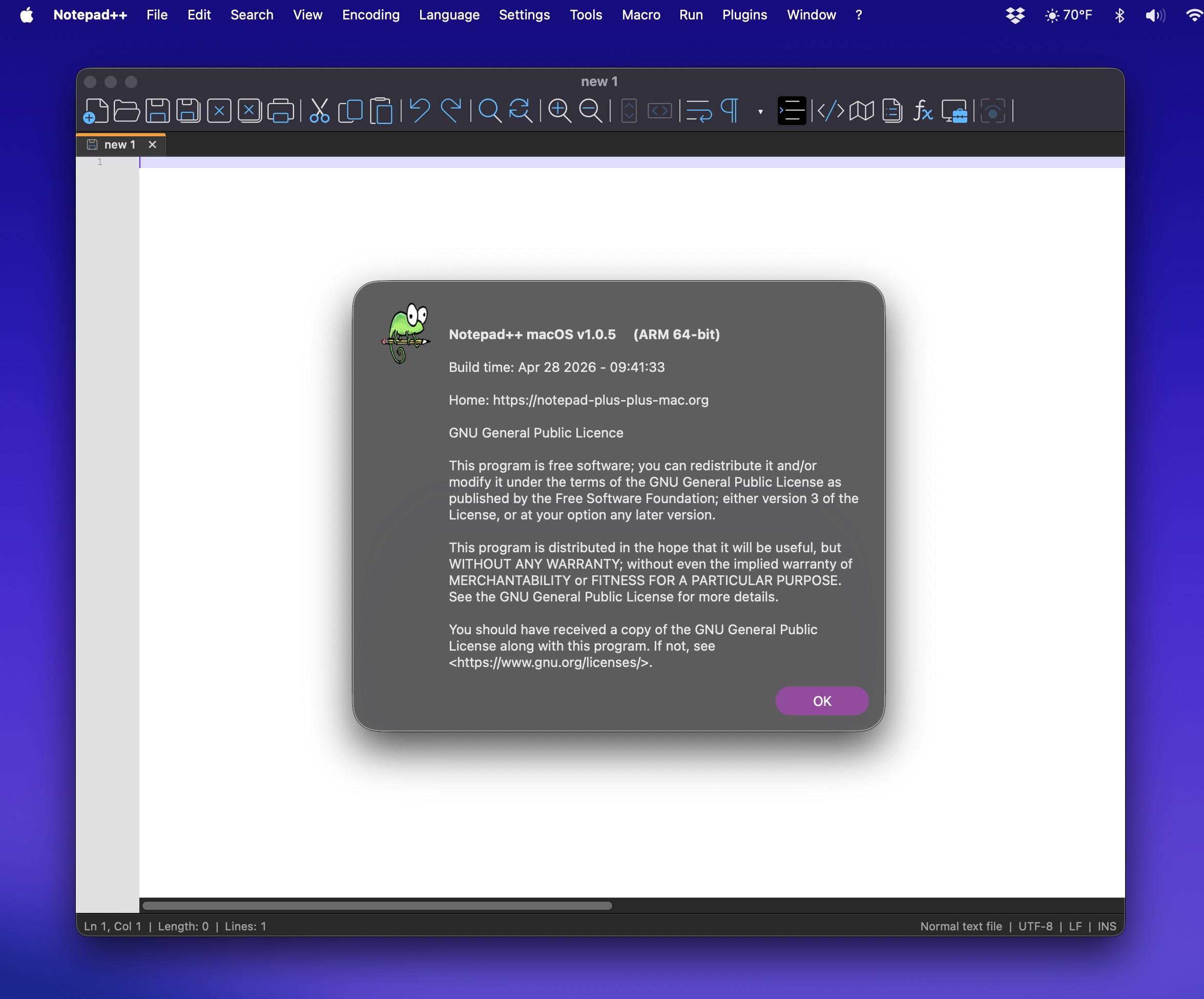
The application itself, at a glance, appeared to be a remarkably thoughtful effort for an independent community project. It boasted compatibility with macOS versions dating back to 11.0 Big Sur, supporting both Intel and Apple Silicon processors. Crucially, it was developed as a native macOS application with a Cocoa user interface, a significant departure from simply wrapping the original Win32 interface in an emulation layer like Wine. This approach promised a more integrated and performant user experience on macOS. Furthermore, the app was properly notarized by Apple, a security measure that allows users to download and launch it with relative ease, a detail often overlooked by smaller, independent projects. These technical merits initially suggested a high-quality, dedicated port, fueling the early enthusiasm. However, the perceived official nature of the port quickly unraveled as Don Ho became aware of its existence.
A Chronology of Conflict: Trademark Infringement Claims
Don Ho’s reaction to the "Notepad++ for Mac" was swift and unequivocal. On the official Notepad++ website, he published a news post titled "NPP Trademark Infringement," explicitly stating, "To be crystal clear: Notepad++ has never released a macOS version. Anyone claiming otherwise is simply riding on the Notepad++ name." Ho accused Andrey Letov of using the Notepad++ trademark (both the name and the logo) without permission, calling the act "misleading, inappropriate, and frankly disrespectful to both the project and its users." He highlighted that this unauthorized use had already deceived "people—including tech media—into believing this is an official release."
The dispute escalated into a public back-and-forth, primarily unfolding in a GitHub thread initiated by Ho. Ho revealed that Letov had contacted him prior to the launch of the Mac app, but he hadn’t had time to respond. In an email to Letov, which Ho later reposted to GitHub, he articulated his core concern: "The problem is that using the official name Notepad++ and its logo gives the impression that your project is an official macOS version maintained or endorsed by the Notepad++ team, which is not the case. This create [sic] confusion for users and exposes both you and the project to trademark issues."
Letov responded two days later, attempting to clarify his intentions. He claimed he hadn’t meant to insinuate Ho’s involvement and argued that his port "actually expands notepad++ brand to mac," expressing hope that Ho would permit continued use of the name. This explanation, however, did little to appease Ho, who reiterated his demand for Letov to cease using the Notepad++ name and logo and to modify the project’s URL to prevent further user confusion and misdirected support inquiries to the official Notepad++ team.
Letov then indicated a willingness to comply, stating, "I will prep for the site and some naming changes. Give me a couple of weeks. My intention was to expand your brand. I really hope that at some point in the future you change your mind and see this as a positive growth for your brand." This request for a "couple of weeks" of continued trademark infringement, however, marked a turning point in Ho’s patience. He quickly escalated his actions, reporting the unauthorized use of the Notepad++ trademark to Cloudflare, the Content Delivery Network (CDN) hosting the "Notepad++ for Mac" website. Ho’s message to Letov became even more forceful: "Every day that website remains active, you are in further violation of the law. I cannot authorize a ‘week or two’ of continued trademark infringement."
Under this increasing pressure, Letov began implementing changes to the website and application. However, even these changes were initially contentious. Letov claimed he was making these alterations "in coordination with Don Ho," a statement that drew immediate and strong accusations from other GitHub users of continuing to misrepresent his relationship with the original project. Eventually, the application was rebranded as "NextPad++," an homage to the NeXT Computer, and its iconic lizard logo was replaced with a frog. Despite these public changes, older versions of the app with the original branding remained available for download, and the project’s URL initially persisted, continuing to blur the lines between official and unofficial. Internet Archive snapshots confirmed the original branding and even an "authors page" that listed Ho beneath Letov, further demonstrating the initial attempts to associate with the official project. Letov announced that the name change would be reflected in version 1.0.6, while version 1.0.5, with the Notepad++ logo and branding, was still downloadable.
The AI Factor: A Low-Effort Port?
Beyond the trademark dispute, another intriguing and potentially concerning aspect of the "Notepad++ for Mac" project came to light: its reliance on Artificial Intelligence for development. The initial assessment of the port as "exceptionally thoughtful" began to shift when a closer look at Andrey Letov’s "About page" revealed mentions of being "deep in multi-agent AI" and an unusual flurry of GitHub commits occurring exclusively within March and April of 2026.
Upon inquiry, Letov confirmed to Ars Technica that both the "Notepad++ for Mac" app and its accompanying website were created at least partially using AI tools, specifically Anthropic’s Claude CLI, along with the Codex plugin for VSS and Beads. Letov detailed his development process: "I primarily use Claude CLI with some customizations to run multiple agents and also Codex plugin for VSS. I also use Beads. Website is also partly managed using Claude CLI plus some manual work on graphics." When pressed on the extent of human oversight, he added, "I run some agents that scan for Issues and general issues reported, list/create options to implement features and fixes. I usually review most and decide on the path. Also UIs are not as easily tested by AI as backend code and some things have to be thought through and build iteratively."
While AI coding tools are becoming increasingly prevalent in software development, their extensive use in an "independent community port" introduces several layers of concern. The combination of an unofficial status and AI-generated code amplifies existing worries about long-term support, the developer’s capacity to address complex bug reports, and the ability to seamlessly merge upstream code from the original Notepad++ project (if such a thing were ever desired or possible). The novelty of AI-generated code, especially when the human developer might not have an intimate, line-by-line understanding of every piece of the codebase, could pose significant challenges for maintenance and evolution.
Broader Implications and The Future of Software Development
This incident illuminates several critical issues at the intersection of open-source communities, intellectual property law, and the rapidly evolving landscape of AI-assisted development.

Trademark Protection in Open Source: Don Ho’s firm stance underscores the paramount importance of trademark protection, even for free and open-source projects. A project’s name and logo are its brand identity, representing years of development, community building, and user trust. Unauthorized use can dilute the brand, create confusion, and undermine the original developer’s control over their creation. This case serves as a stark reminder that "open source" does not equate to "free to use brand." Developers who wish to create ports or forks of existing projects must respect trademark boundaries and seek permission, or create entirely new branding to avoid such conflicts. The legal ramifications, as evidenced by Ho’s contact with Cloudflare, can be significant.
User Trust and Security Concerns: The potential for user confusion is perhaps the most immediate and dangerous implication. Users, eager for a beloved tool on a new platform, might not scrutinize the source of a download. This vulnerability can lead to unknowingly installing unofficial software that lacks the security vetting of an official release. Don Ho’s history with Notepad++ includes a past incident where the Notepad++ updater was compromised in a supply chain attack, highlighting his acute awareness of security risks. His concern about unverified code and binaries in Letov’s port is therefore entirely justified. Downloading unvetted, unofficial software, especially one claiming to be a popular brand, significantly increases the risk of malware or other security vulnerabilities, potentially exposing users to data theft or system compromise.
AI-Generated Code: Opportunities and Challenges: The extensive use of AI in developing "NextPad++" introduces a new dimension to software development ethics and reliability. While AI coding tools like GitHub Copilot, Claude CLI, and others offer tremendous potential for accelerating development, generating boilerplate code, and assisting with debugging, their application in creating entire "independent community ports" raises specific questions:
- Maintainability and Debugging: How effectively can a developer maintain and debug a complex application largely generated by AI, especially if they lack a deep, foundational understanding of every code segment? Bugs in AI-generated code might be harder to diagnose and fix.
- Security Vulnerabilities: Can AI tools inadvertently introduce subtle security flaws or vulnerabilities that are difficult for human review to detect? The sheer volume of AI-generated code could obscure malicious or poorly written components.
- Licensing and Provenance: While not explicitly a core issue in this article, the broader question of licensing for AI-generated code (especially when AI is trained on vast datasets of existing code) is an ongoing debate in the open-source community.
- Long-Term Viability: Will an AI-assisted independent port garner the same community support and commitment as a project primarily driven by human passion and expertise? The concern that such a project might "fade away or vanish entirely as soon as its creator gets bored and/or moves on" is amplified if the core development relies more on automated processes than deep human engagement.
Developer Ethics and Community Spirit: Letov’s assertion that his port "expands Notepad++ brand" speaks to a common sentiment in open-source communities: the desire to contribute and extend beloved projects. However, this desire must be balanced with respect for intellectual property and the original author’s wishes. The initial misrepresentation, even if unintentional, and the subsequent delay in fully complying with trademark demands, created unnecessary friction and eroded trust. This incident serves as a cautionary tale for aspiring developers looking to build upon established open-source projects, emphasizing the importance of clear communication, explicit permission, and a commitment to distinct branding if official endorsement is not secured.
In conclusion, the "Notepad++ for Mac" saga highlights the complex interplay of technology, law, and community in the digital age. It underscores the critical need for clear boundaries in intellectual property, the dangers of user confusion in an increasingly fragmented software landscape, and the emerging challenges and opportunities presented by AI in the development process. While the dream of a genuine Notepad++ experience on macOS remains for many, this incident serves as a powerful reminder that official channels, brand integrity, and transparent development practices are paramount in fostering a healthy and trustworthy software ecosystem. The rebranded "NextPad++" will now have to forge its own identity, untethered from the established legacy it initially sought to leverage.









Leave a Reply