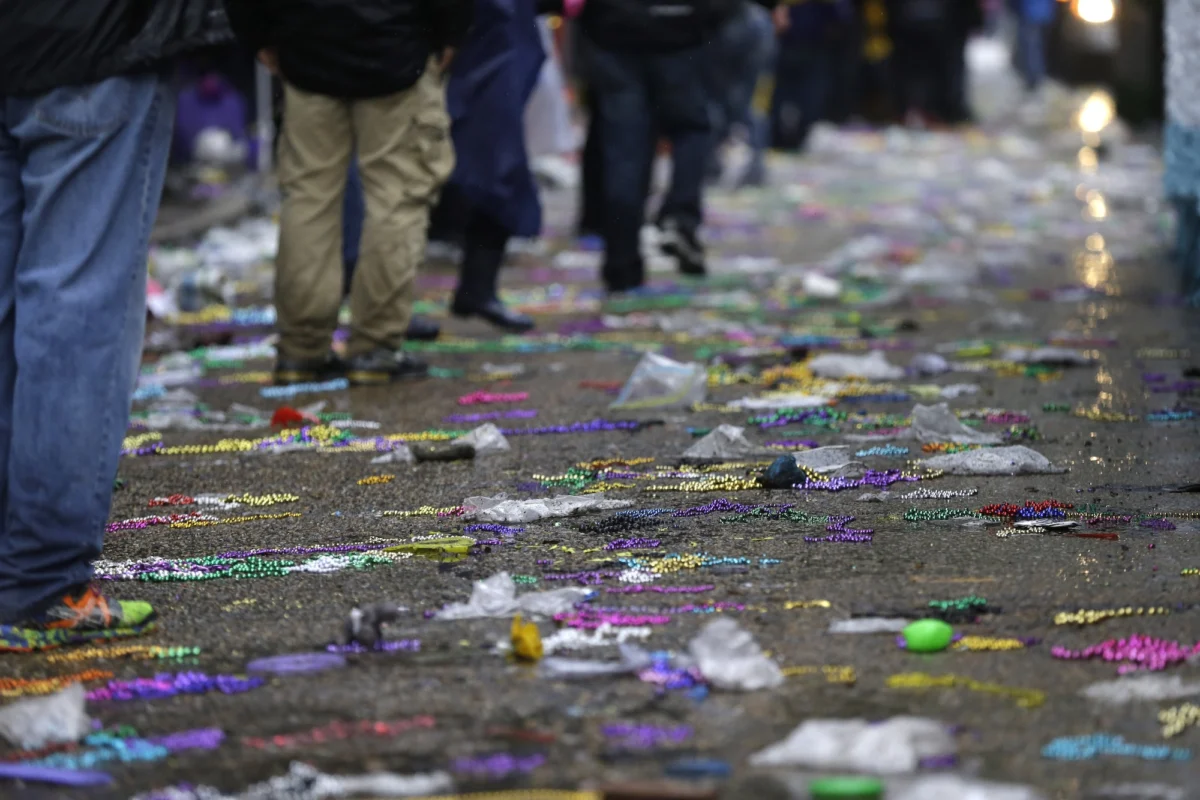
When cleaning crews performed a deep-scale maintenance operation on the drainage system of New Orleans in 2018, the discovery was as much a shock as it was an indictment of the city’s signature celebration. From the depths of the clogged arteries that keep the flood-prone city dry, workers extracted 46 tons of Mardi Gras beads, intertwined with leaves and mud. The revelation sparked a citywide conversation regarding the environmental sustainability of Carnival, leading then-Public Works director Dani Galloway to declare that the city had to "do better." However, nearly a decade after that high-profile cleanup, data indicates that the waste problem has not only persisted but has escalated to unprecedented levels.
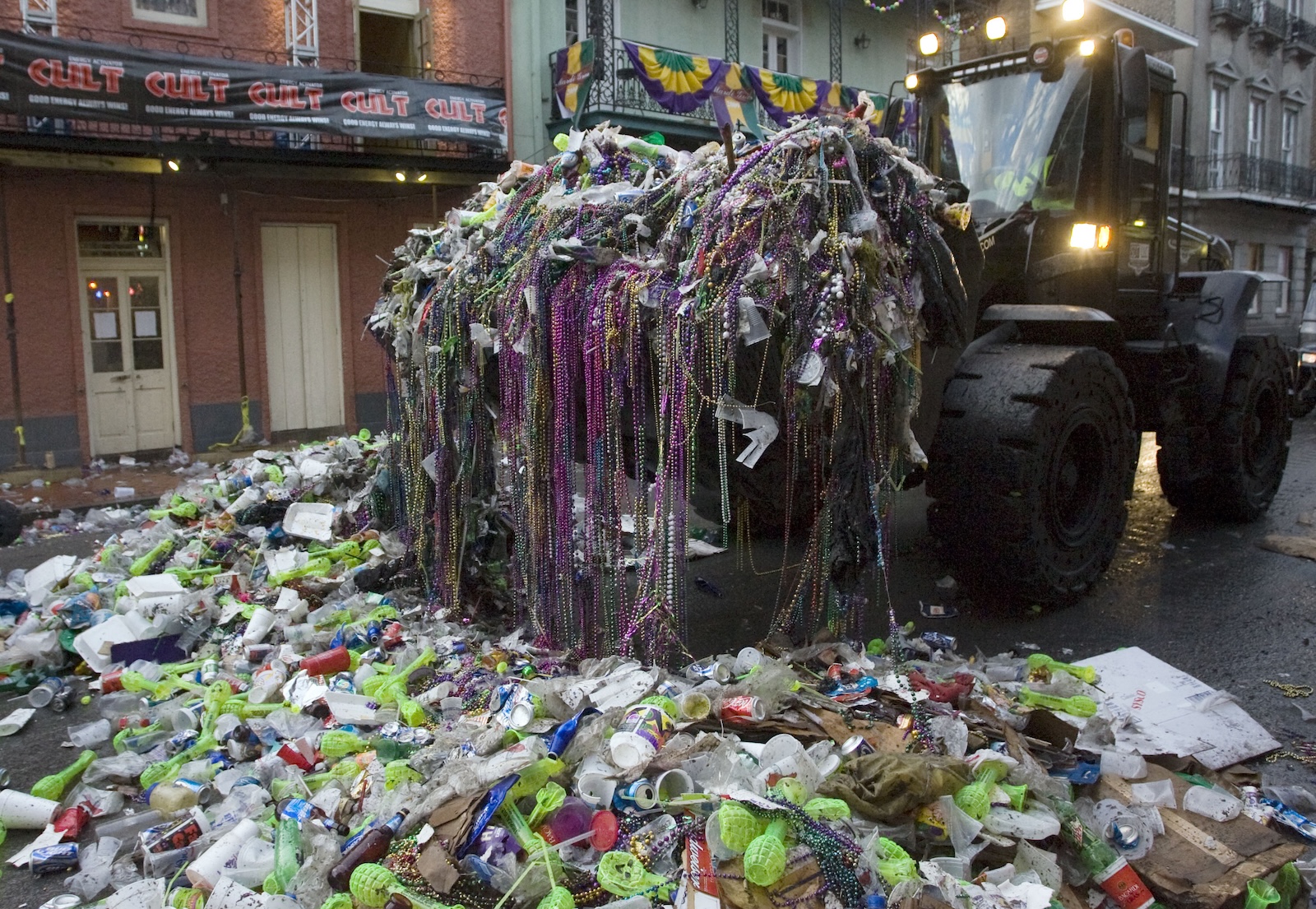
During the roughly five-week span of the 2026 Carnival season, sanitation crews collected a staggering 1,363 tons of refuse along the city’s primary parade routes. This figure represents a 24 percent increase from the previous year and stands as the highest total on record since the city began tracking these metrics. To put the magnitude of this waste into perspective, the tonnage is equivalent to approximately 741 mid-sized cars, the total weight of the historic Steamboat Natchez, or more than one million traditional king cakes. For environmental advocates and city planners, the record-breaking volume of trash signals a growing disconnect between the city’s sustainability goals and the reality of its most famous cultural event.
The Evolution of Carnival Waste and the Attendance Myth
For over a century, the tradition of "throws"—items tossed from parade floats to the crowds below—has been central to the Mardi Gras experience. While the tradition once involved simple trinkets, it evolved over the 20th century into a massive influx of cheap, plastic beaded necklaces and toys. Brett Davis, the founder of Grounds Krewe, a nonprofit organization dedicated to waste reduction in New Orleans, described the recent spike in trash as "absurd." Despite various efforts to modernize the celebration with sustainable materials, the volume of discarded plastic remains a primary concern for the city’s infrastructure.
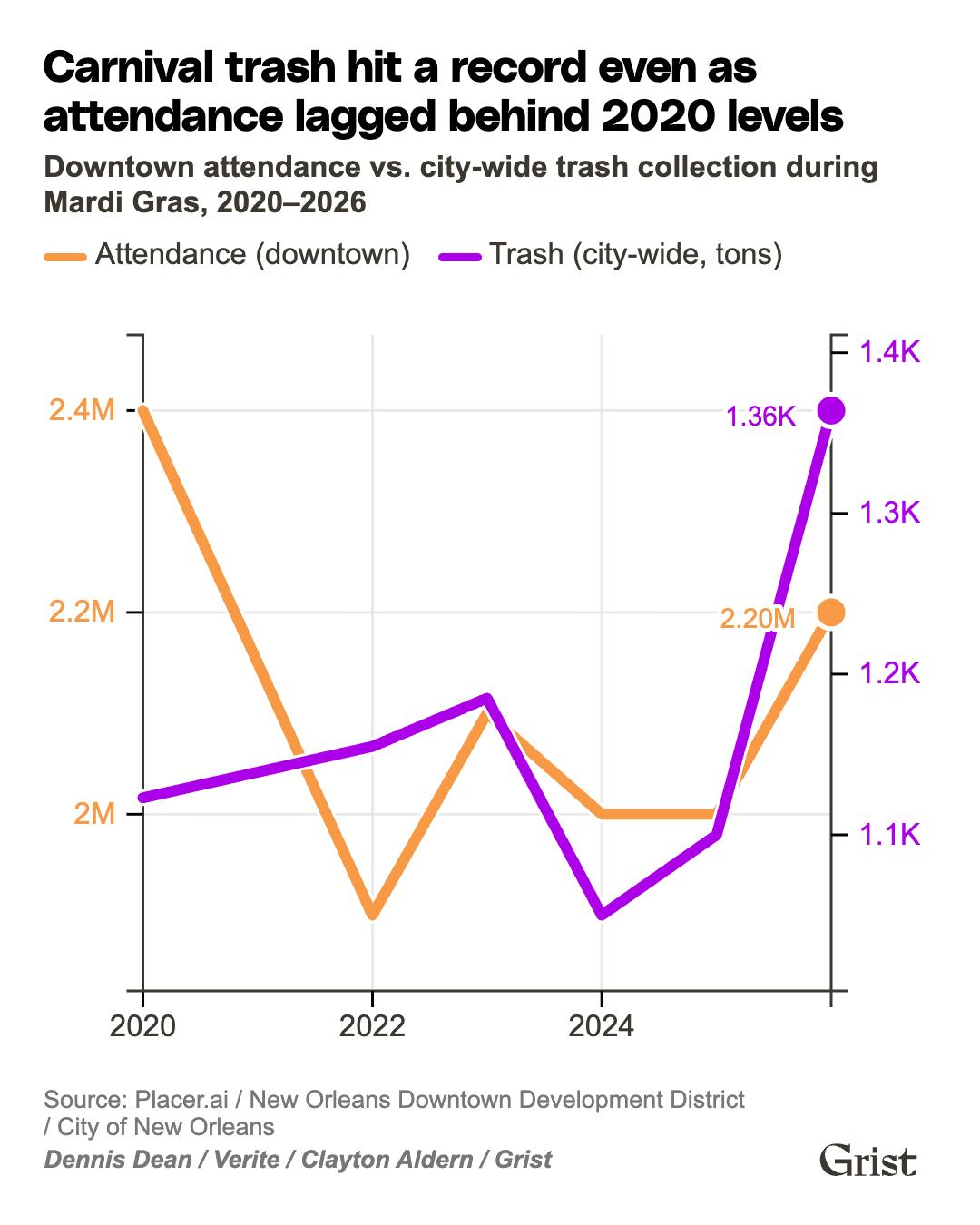
City officials initially attempted to attribute the 2026 trash surge to an increase in tourism and local participation. The 2026 season, which ran from January 6 to February 17, featured more than 30 major float parades and drew an estimated 2.2 million visitors to the downtown area. According to data from the Downtown Development District and location analytics firm Placer.ai, this was a 10 percent increase in attendance compared to 2025. Sanitation Director Matt Torri informed the City Council in March that the rise in rubbish was "directly associated with the larger crowds," suggesting that higher attendance naturally correlates with higher waste.
However, an analysis of annual attendance and city cleanup records conducted by Verite News suggests that the relationship between crowd size and trash tonnage is not linear. Historical data shows that Mardi Gras waste has trended upward over the last decade regardless of year-to-year fluctuations in visitor numbers. For example, the 2020 Carnival season saw a higher attendance of approximately 2.4 million people but produced 241 fewer tons of garbage than the 2026 season. In the early 2010s, trash levels generally hovered around 880 tons. A significant spike occurred in 2017, when totals first surpassed 1,320 tons, and the figure has rarely dipped below the 1,000-ton mark since, with the notable exception of 2021 when the COVID-19 pandemic forced the cancellation of most festivities.
The Environmental and Infrastructure Toll
The environmental impact of Mardi Gras extends beyond the sheer volume of landfill-bound trash. The majority of traditional "throws" are plastic trinkets manufactured overseas, many of which have been found to contain toxic chemicals. Research by the Ecology Center has previously identified unsafe levels of lead and other heavy metals in plastic beads. When these items are dropped and crushed under the feet of millions of revelers, they break down into microplastics that eventually find their way into the city’s drainage system.
Despite the installation of "gutter buddies"—temporary filtration screens placed over catch basins—trash continues to enter the city’s canals. These blockages are particularly dangerous for a city situated below sea level, where efficient drainage is the only defense against catastrophic flooding during heavy rains. Conservation groups have documented that even with these preventative measures, the outfalls during Carnival season continue to spew significant amounts of litter into Lake Pontchartrain, threatening local ecosystems and water quality.
The "Krewe of Chad" and the Shift in Reveler Behavior
If the number of people is not the sole driver of the trash crisis, the behavior of those people appears to be a significant factor. Brett Davis and various city leaders have observed a shift in how attendees experience parades. Rather than simply standing on the sidewalk, many revelers now treat parade routes as semi-permanent encampments. This phenomenon has led to the rise of the "Krewe of Chad," a satirical term for parade-goers who aggressively claim public space.
These attendees often arrive days in advance, setting up elaborate setups that include folding chairs, canopy tents, grills, and wagonloads of food. In more extreme cases, residents have reported the installation of scaffolding, portable toilets, generators, and even full-sized sofas on the "neutral grounds"—the local term for grassy street medians. When the season ends, many of these large-scale items are abandoned. A single discarded sofa can weigh up to 300 pounds, representing a massive increase in tonnage compared to a bag of plastic beads.
City Council President JP Morrell has been vocal about the "abject entitlement" associated with these abandoned items. He noted that many people have no intention of hauling their gear home, viewing the city’s sanitation department as a personal disposal service for their disposable lifestyle. This shift toward "heavy" waste—furniture and large appliances—has placed an immense burden on cleanup crews, who must work around the clock to clear the streets for regular traffic.
Budgetary Constraints and the Enforcement Gap
The city’s ability to manage this growing waste crisis is currently hamstrung by a significant fiscal deficit. New Orleans is currently navigating a $220 million budget shortfall, which has led to layoffs and the scaling back of various city services. This financial strain has directly impacted the enforcement of parade-route rules. While the city has laws prohibiting the setup of encampments more than four hours before a parade, and has banned items like viewing platforms and tarps, enforcement has been described as "spotty" at best.
In 2024, a brief crackdown involving the seizure of unauthorized gear showed promise in changing behavior. However, that momentum was lost in 2025 and 2026. Following a tragic incident on New Year’s Day 2025, where a terror attack in the French Quarter resulted in 14 fatalities, the city shifted its primary focus and resources toward security and counter-terrorism. This shift, combined with the budget crisis, meant that sanitation and encampment enforcement were deprioritized.
Council President Morrell admitted in social media communications that the city was "hard up for cash," and while police and sanitation workers were doing their best, the enforcement of public space rules was not as robust as it could be. Sanitation Director Matt Torri echoed these concerns, noting that his department only had the capacity to perform one major sweep for large items before the final cleanup on Fat Tuesday. The result is a cycle where revelers feel emboldened to leave heavy debris behind, knowing that the likelihood of being fined or having their property seized is low.
The Struggle for Sustainability and Future Outlook
Amidst the record-breaking trash totals, there are signs of a burgeoning movement toward a more sustainable Mardi Gras. Many of the city’s krewes—the social organizations that host the parades—have begun to pivot away from cheap plastic beads. In their place, krewes are throwing higher-quality, functional items such as branded socks, baseball caps, wooden spoons, and metal cups. The hope is that these items are more likely to be kept and reused rather than discarded on the street.
Economic factors have also played a role in this shift. Rising inflation and tariffs on imports from China have increased the cost of traditional beads, leading some krewes to reduce the quantity of their throws. However, as the 2026 data shows, these reductions have not yet been enough to offset the increase in heavy waste from parade-route encampments.
Recycling efforts, led by organizations like Grounds Krewe, managed to divert approximately 28 tons of waste from landfills in 2026. While this is a significant achievement for a volunteer-led effort, it represents only a small fraction of the total 1,363 tons collected. Furthermore, the city government was forced to withdraw $200,000 in earmarked recycling funds due to the budget crisis, leaving nonprofits to shoulder the burden of sustainability.
The future of Mardi Gras in New Orleans depends on a delicate balance between preserving a century-old cultural tradition and addressing the modern realities of environmental impact and urban management. As Brett Davis noted, the trend toward better throws is a positive step, but it cannot solve the problem alone. Without consistent enforcement of public space regulations and a cultural shift among revelers regarding what they bring to—and leave at—the parade route, the weight of Carnival’s waste may eventually become too heavy for the city to carry. The record-breaking tonnage of 2026 serves as a stark reminder that while the party is central to New Orleans’ identity, the cleanup is an increasingly unsustainable cost of doing business.