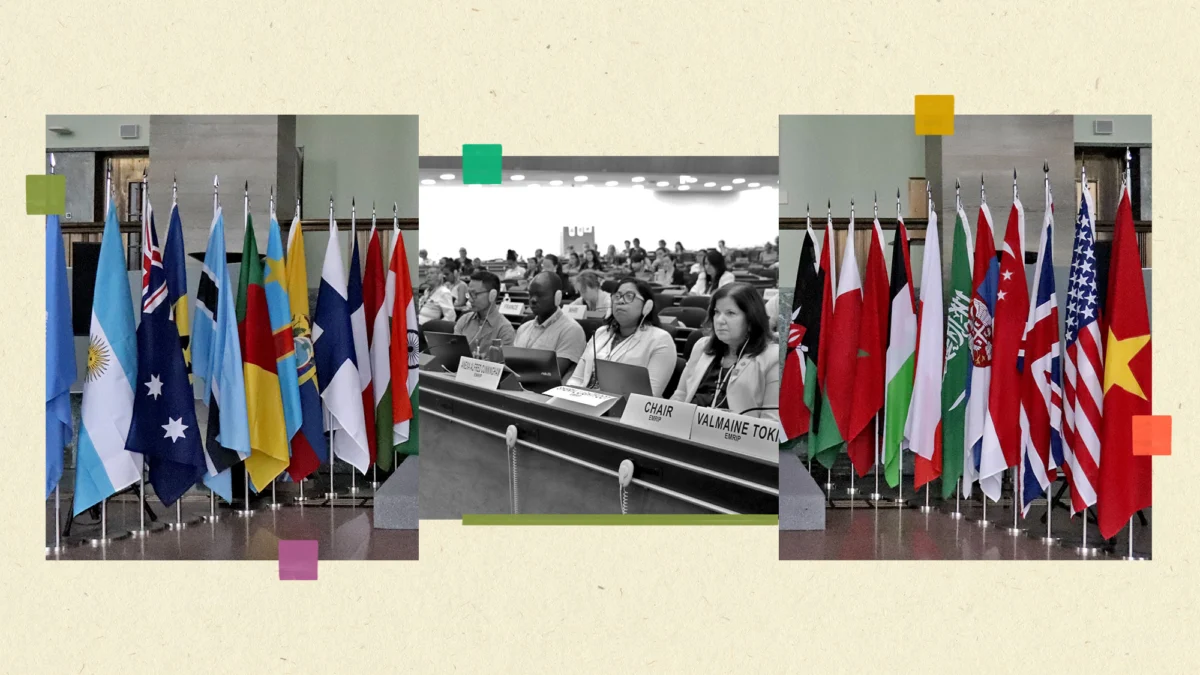
Indigenous leaders and representatives from across the globe have finalized a comprehensive 12-point proposal submitted to the United Nations, demanding immediate and sweeping reforms to protect the lands, lives, and sovereignty of Indigenous peoples. The proposal, developed by the United Nations Expert Mechanism on the Rights of Indigenous Peoples (EMRIP), comes at a critical juncture as these communities face a convergence of existential threats, including the escalating climate crisis, systemic violence, and the emerging risks posed by unregulated artificial intelligence. Presented to the U.N. Human Rights Council, the document serves as both a roadmap for international policy and a stark warning that the window for meaningful intervention is closing.
The urgency of the proposal is underscored by what experts describe as a global "regression" in Indigenous rights. While the international community adopted the U.S. Declaration on the Rights of Indigenous Peoples (UNDRIP) in 2007, delegates at the recent EMRIP session in Geneva argued that the implementation of these standards has not only stalled but is being actively undermined by several member states. The 12-point plan is intended to bridge the gap between rhetorical support for Indigenous rights and the practical, legal protections required on the ground.
A Comprehensive Framework for Survival: The 12 Recommendations
The finalized proposal covers a broad spectrum of human rights, environmental protections, and institutional reforms. At its core, the plan calls for the U.N. and its member states to recognize Indigenous rights as distinct and inherent, rather than merely a subset of broader human rights frameworks. This distinction is vital for protecting the collective ownership of land and the right to self-determination.
One of the most pressing recommendations concerns the protection of Indigenous peoples living in voluntary isolation or initial contact. These groups, located primarily in the Amazon basin and parts of Asia and Africa, are among the most vulnerable populations on Earth. The EMRIP proposal demands that states establish "no-go zones" to prevent the encroachment of illegal mining, logging, and agribusiness, which bring not only environmental destruction but also diseases and violence to which isolated communities have no defense.
Furthermore, the proposal addresses the digital frontier, emphasizing the need for "data sovereignty." As artificial intelligence and large-scale data collection become central to global governance and commerce, Indigenous leaders are concerned about the exploitation of their traditional knowledge and genetic resources. The 12-point plan advocates for legal frameworks that ensure Indigenous communities retain ownership and control over their cultural heritage and data, preventing it from being commodified by tech corporations without informed consent.
Cultural preservation also remains a high priority. The recommendations call for increased international support for the preservation of Indigenous languages, many of which are at risk of extinction. This aligns with the goals of the International Decade of Indigenous Languages (2022–2032), but the EMRIP delegates insist that linguistic rights must be tied to land rights, as languages are inextricably linked to the territories where they evolved.
Stagnation and Regression: The Global Political Climate
The presentation of these recommendations occurs against a backdrop of increasing hostility toward Indigenous autonomy in several regions. Albert Barume, the U.N. Special Rapporteur on the Rights of Indigenous Peoples and former EMRIP chairperson, provided a sobering assessment of the current landscape. He noted that the "stagnation and regression" of human rights has become a global trend, with very few states taking proactive measures to strengthen Indigenous protections in recent years.
According to Barume, some states that previously had robust legal frameworks for Indigenous rights are now actively dismantling them to prioritize resource extraction or national security interests. This regression is visible in various forms, from the rollback of land titles to the criminalization of Indigenous environmental defenders.
The situation in Aotearoa New Zealand was highlighted as a specific point of concern. Macy Duxfield, representing the Ngaa Rauru, Te Ātihaunui-a-Pāpārangi, and Ngāi Tahu nations, noted that recent policy shifts in the country have been viewed by many Māori leaders as a step backward. She emphasized that the struggle for rights is an intergenerational responsibility. "We exist in this moment," Duxfield stated, "we’ve inherited the work from our ancestors, and we pass it on to our descendants." This sentiment reflects a broader Indigenous philosophy that views human rights not as a static achievement but as a continuous effort to maintain balance with the state and the environment.
The Financial Crisis Facing Indigenous Advocacy
Perhaps the most immediate threat to the implementation of the 12-point plan is the financial instability of the U.N.’s own Indigenous-focused bodies. EMRIP is one of three primary mechanisms dedicated to Indigenous issues, alongside the Permanent Forum on Indigenous Issues and the Special Rapporteur. All three are currently operating under the shadow of a severe liquidity crisis within the United Nations.
The U.N. Voluntary Fund for Indigenous Peoples, which provides financial assistance to help Indigenous representatives travel to Geneva and New York to participate in international sessions, is dangerously underfunded. Currently, only eight countries contribute to this fund, which has an annual budget of less than $2 million. This amount is insufficient to cover the travel and logistics for the hundreds of Indigenous nations that require a seat at the table.
Furthermore, only three countries have contributed to the U.N. Trust Fund for Indigenous Peoples. Notably, the United States, despite its significant Indigenous population and stated commitment to international human rights, does not contribute to either fund. Marjolaine Étienne, an Innu representative from Quebec, warned that without a stable financial base, Indigenous voices would be effectively sidelined from the international stage. "The liquidity crisis must not be used as an excuse to limit the mandate of EMRIP," added Cora McGuire-Cyrette of the Ontario Native Women’s Association.
Gender-Based Violence and the Role of Indigenous Women
A central pillar of the 12-point plan is the protection and empowerment of Indigenous women and girls. In many parts of the world, Indigenous women face disproportionately high rates of violence, human trafficking, and murder—a crisis often referred to in North America as the Missing and Murdered Indigenous Women and Girls (MMIWG) epidemic.
Cora McGuire-Cyrette argued that the 12-point plan must be implemented with a gender-sensitive lens. The proposal recommends that Indigenous women be included in all levels of decision-making that impact their families and nations. Leaders argue that because Indigenous women are often the primary keepers of traditional knowledge and the first to experience the impacts of environmental degradation, their leadership is essential for the success of any climate or human rights initiative.
The demand for autonomy for women is not just a social issue but a political one. By ensuring women have a seat in international forums, Indigenous nations aim to challenge the patriarchal structures often imposed by colonial legal systems, which have historically excluded women from land ownership and tribal governance.
Institutional Reform and the UN80 Initiative
The future of EMRIP and other Indigenous bodies is also tied to the "UN80" reform effort. As the United Nations approaches its 80th anniversary, Secretary-General António Guterres has initiated a process to streamline the organization’s agencies to improve efficiency and responsiveness. While reform is generally seen as necessary, Indigenous leaders are wary that "efficiency" could become a euphemism for the consolidation or elimination of specialized bodies.
Sheryl Lightfoot, the EMRIP expert for North America, acknowledged the uncertainty surrounding these reforms. She noted that while EMRIP is preparing for various scenarios, there are "a lot of unanswered questions" regarding how Indigenous-specific mechanisms will fit into a restructured U.N. The concern is that if these mechanisms are folded into broader human rights offices, the specific and unique legal status of Indigenous peoples—as sovereign entities rather than just minority groups—might be diluted.
Analysis: The Path Forward
The 12-point plan presented by EMRIP represents a sophisticated attempt to modernize the international Indigenous rights framework for the 21st century. However, its success depends entirely on the political will of member states and the financial health of the U.N.
The "stagnation" described by Albert Barume suggests that many governments are currently more focused on economic recovery and geopolitical competition than on fulfilling human rights obligations. In this environment, Indigenous lands are often viewed as assets to be exploited for "green energy" minerals or carbon offsets, sometimes without the free, prior, and informed consent of the inhabitants.
To move from proposal to practice, the U.N. Human Rights Council will need to address the funding gap and hold member states accountable for the "regression" of domestic policies. The 12-point plan serves as a benchmark for this accountability. As Indigenous leaders return to their respective nations, the focus turns to local mobilization and international pressure to ensure that these recommendations do not simply become another set of unfulfilled promises in the U.N. archives.
The stakes are high. As climate change continues to impact the planet, Indigenous territories—which contain an estimated 80% of the world’s remaining biodiversity—are the front lines of global survival. Protecting the rights of those who steward these lands is increasingly seen not just as a matter of justice for Indigenous peoples, but as a necessity for global environmental stability.