
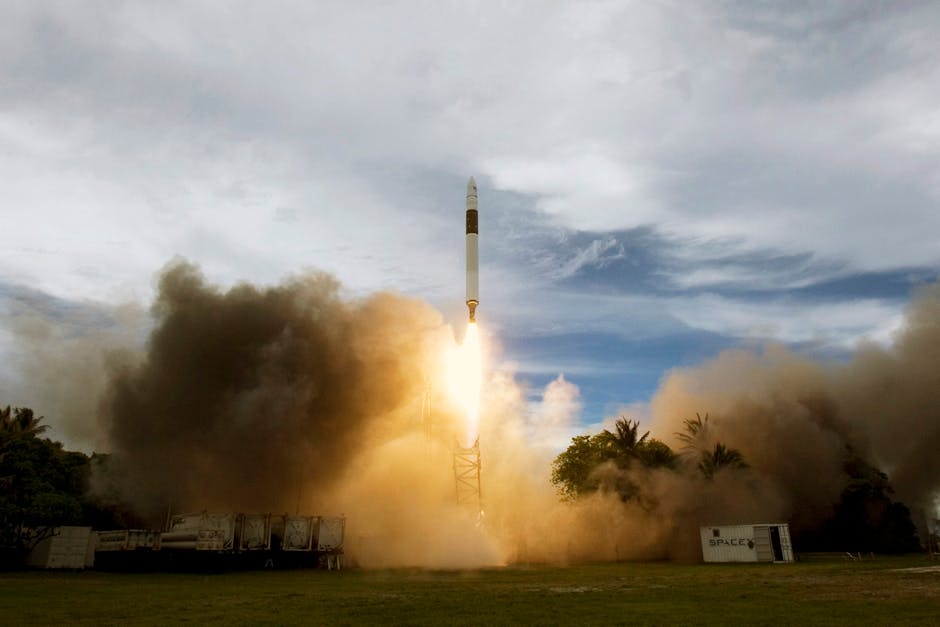
Toyota Explores Rocketry: A Strategic Diversification into Space Technology
Toyota, a titan of the automotive industry, is quietly but decisively venturing into the realm of rocket technology. This strategic pivot, largely unheralded outside of niche engineering circles and recent TechCrunch reporting, signifies a profound diversification for the Japanese manufacturer, extending its engineering prowess and manufacturing expertise beyond terrestrial transportation. While Toyota’s core identity remains firmly rooted in producing reliable and efficient vehicles, this exploration into the demanding and highly specialized field of rocketry suggests a long-term vision that embraces the burgeoning opportunities in space exploration and commercialization. The move is not about immediate profit generation in the aerospace sector, but rather a calculated investment in future technologies, a testbed for advanced materials and propulsion systems, and a strategic hedge against the evolving landscape of mobility.
The initial public discussion of Toyota’s involvement in rocketry largely stemmed from reports detailing their collaboration with or investment in companies like ispace, a Japanese lunar exploration startup. ispace, notably, aims to facilitate robotic lunar missions and is a key player in NASA’s Artemis program. Toyota’s contribution is not that of a rocket manufacturer in the traditional sense, but rather as a provider of critical components, engineering expertise, and a shared commitment to precision manufacturing. This indirect yet crucial role allows Toyota to gain invaluable insights into the extreme conditions and stringent quality requirements of space-bound hardware without the prohibitive upfront investment of developing entire launch vehicles from scratch. Their involvement is often characterized by the application of their renowned lean manufacturing principles and their deep understanding of creating robust, reliable systems that can withstand immense stress and operate flawlessly in hostile environments.
Furthermore, Toyota’s interest in rocketry can be viewed through the lens of their ongoing commitment to innovation and their pursuit of advanced materials and propulsion solutions. The development of lighter, stronger alloys, more efficient combustion processes, and sophisticated control systems are all areas where advancements in rocket technology can have significant spillover effects into the automotive sector. Consider the development of advanced composites for lighter and more fuel-efficient car bodies, or breakthroughs in battery technology for electric vehicles that could be accelerated by the high-energy demands of spacecraft. Toyota’s long-standing investment in research and development, coupled with their financial wherewithal, positions them to explore these cutting-edge frontiers where the demands of space necessitate pushing the boundaries of existing science and engineering.
The specific technologies Toyota is reportedly exploring within the rocketry domain are diverse and indicative of a broad strategic interest. This includes, but is not limited to, advancements in lightweight structural components, advanced battery technologies for spacecraft power, and potentially even novel propulsion systems. Their expertise in high-volume, precision manufacturing is a significant asset. Producing aerospace-grade components requires an unparalleled level of quality control and consistency, something Toyota has honed over decades. Imagine applying their meticulous production lines to the manufacturing of rocket engine parts or satellite structures. The potential for cost reduction and increased reliability through such applications is substantial.
Another compelling aspect of Toyota’s foray into rocketry is the potential for cross-pollination of ideas and talent. The rigorous engineering discipline required for space missions demands a level of problem-solving and innovation that can inspire new approaches within their automotive divisions. Engineers working on the challenges of lunar rovers or orbital mechanics might bring fresh perspectives to designing autonomous driving systems or advanced suspension technologies. Conversely, Toyota’s established automotive engineering talent can offer invaluable experience in areas like mass production, cost optimization, and long-term durability, which are often significant hurdles for nascent aerospace companies. This symbiotic relationship is a testament to Toyota’s strategic thinking, aiming to leverage its existing strengths while acquiring new capabilities.
The connection to lunar exploration, particularly through partners like ispace, is a significant indicator of Toyota’s ambitions. The moon is increasingly viewed not just as a scientific outpost but as a potential resource hub and a staging ground for further space exploration. Toyota’s involvement in this nascent lunar economy, whether through providing components for lunar rovers or supporting infrastructure development, positions them to be an early mover in a potentially lucrative future market. Their brand recognition and reputation for reliability could also play a crucial role in building public trust and support for lunar ventures, further solidifying their strategic positioning.
The TechCrunch reports have also highlighted Toyota’s commitment to investing in research and development that transcends immediate commercial returns. This long-term perspective is a hallmark of successful industrial giants. By investing in areas like advanced materials science, robotics, and artificial intelligence, Toyota is not just chasing the next big market but actively shaping the technological landscape of the future. Rocketry, with its inherent complexities and demands for extreme performance, serves as an ideal crucible for testing and refining these advanced technologies. The data generated from such applications will be invaluable for improving not only space-faring hardware but also terrestrial products.
The economic implications of this diversification are also noteworthy. While the automotive industry faces disruptions from electrification and autonomous driving, the aerospace sector, particularly commercial spaceflight and lunar development, represents a significant growth frontier. Toyota’s exploration into rocketry is a strategic move to tap into this expanding market and to future-proof its business against the cyclical nature of the automotive industry. The long-term potential for revenue generation from space-related ventures, even if indirect, is substantial. Furthermore, by investing in space technologies, Toyota is also contributing to the broader advancement of human endeavor and scientific discovery, a factor that can enhance brand reputation and attract top talent.
The manufacturing processes employed by Toyota are also highly relevant to the aerospace industry. Their renowned Toyota Production System (TPS), with its emphasis on efficiency, waste reduction, and continuous improvement (Kaizen), is directly applicable to the high-stakes environment of rocket manufacturing. The precision, quality control, and traceability required for aerospace components are areas where Toyota has established world-class expertise. This is not just about building rockets; it’s about building them reliably, cost-effectively, and at scale, a challenge that many emerging aerospace companies still grapple with.
Beyond direct component supply, Toyota’s involvement could extend to developing specialized vehicles for lunar or Martian environments. Imagine a future where Toyota’s engineering expertise is applied to designing rugged, self-sufficient rovers capable of navigating extraterrestrial terrain, powered by advanced battery systems and guided by sophisticated AI. Such ventures would not only showcase their technological capabilities but also create new product lines and revenue streams, further diversifying their business model. The brand equity of Toyota, associated with durability and reliability, would be a significant asset in establishing trust for such ambitious projects.
The public perception of Toyota exploring rocketry, though still nascent, is likely to be met with a mix of curiosity and admiration. Their history of innovation, from the Prius hybrid to their advancements in fuel cell technology, has demonstrated their ability to successfully enter and disrupt new markets. This foray into rocketry, while seemingly a departure, is in many ways a logical extension of their core values: engineering excellence, a commitment to quality, and a forward-thinking approach to problem-solving. The challenges of space exploration are immense, but so too are the potential rewards, both scientifically and commercially.
In conclusion, Toyota’s exploration into rocket technology, as highlighted by recent TechCrunch reports, represents a significant and strategic diversification for the automotive giant. This move is not a sudden, impulsive decision but a calculated investment in future technologies, leveraging their core strengths in manufacturing, engineering, and innovation. By collaborating with, investing in, and applying their renowned production principles to the demanding field of rocketry, Toyota is positioning itself to benefit from the burgeoning opportunities in space exploration and commercialization, while simultaneously pushing the boundaries of what is possible in both terrestrial and extraterrestrial mobility. The implications for advanced materials, propulsion systems, and future vehicle design are profound, marking a new and exciting chapter in Toyota’s long history of automotive and technological leadership.





Leave a Reply