
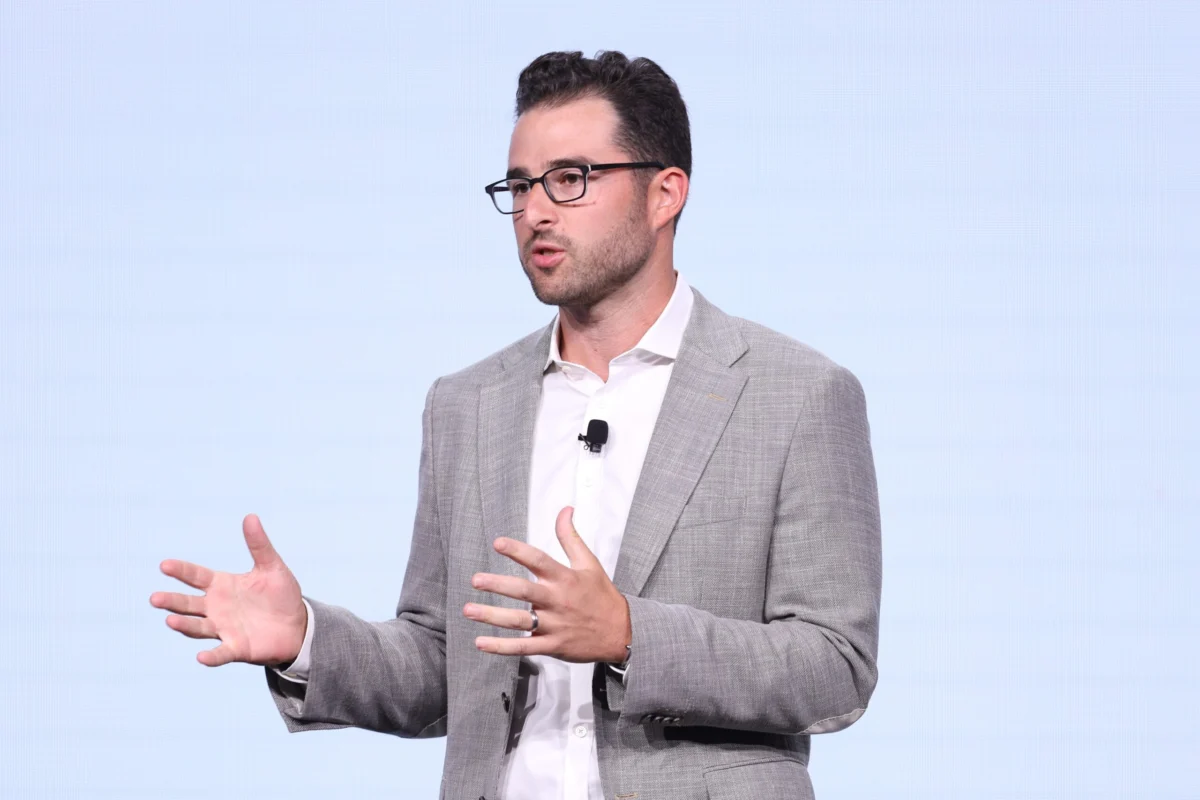
The period of preparation is officially over for Jay Askinasi. As Paramount Skydance’s newly installed chief revenue officer, he is stepping into the public arena this week, spearheading a series of upfront meetings with advertising agencies and clients. This move marks a pivotal moment for the media conglomerate as it navigates the complex and evolving world of advertising sales, particularly in the face of declining traditional television revenue and the burgeoning potential of streaming. Unlike many of its rivals who traditionally unveil their programming slates in grand, collective showcases in mid-May, Paramount has opted for a more staggered and less ostentatious approach in recent years, a strategy Askinasi is now tasked with optimizing.
A New Era of Ad Sales Under Askinasi
Madison Avenue is keenly observing Askinasi’s leadership at Paramount Skydance, a company deeply rooted in traditional media. While its legacy assets, including the venerable CBS broadcast network and cable channels like Nickelodeon and Comedy Central, continue to be significant drivers of revenue and operating profit, the media landscape is undeniably shifting. Like its competitors, Paramount is actively seeking new avenues for growth, with a particular focus on the streaming sector.
Askinasi’s mandate appears to be the dissolution of the artificial barriers between linear and digital advertising. His strategic vision, informed by his extensive experience on the "buy side" of advertising, centers on understanding and addressing client challenges directly. "I think about this every single day," Askinasi stated in a recent interview. "Having spent a long time on the buy side: What do customers need to do to solve their own challenges? How can we help them do that? I think if you take that approach, you make it somewhat easy to understand and streamlined, then I think you’ll be in a good place. And we’re streamlining our organization. We’re simplifying the approach. We’re thinking about the portfolio and the platform, not the individual brands." This philosophy signals a move towards a more integrated and client-centric advertising offering.
Bridging the Gap: Streaming and Linear Advertising
A core objective for Paramount under Askinasi is to imbue advertisers with the confidence that their investments in streaming platforms will yield the same level of audience recognition and impact traditionally associated with broadcast and cable television. To achieve this, Paramount is actively promoting a new concept termed a "streaming fixed unit." This innovative approach aims to offer sponsors consistent and prominent placement within streaming content, a departure from the often algorithmically driven and fragmented ad breaks common in many streaming environments.
Currently, many streaming services utilize programmatic buying, where advertisements are inserted based on complex algorithms factoring in demographics and geographic data. While efficient, this can result in a randomized assortment of ads within each commercial break. The "streaming fixed unit" concept, however, promises to provide a specific advertiser with a coveted position—such as the very first ad slot in a break—for a defined period, particularly during the crucial initial seven days following the debut of a new episode. This strategic move is designed to offer advertisers a sense of exclusivity and heightened visibility, mirroring the perceived value of premium ad placements in traditional television.
Furthermore, Paramount has been actively exploring new monetization strategies for its high-demand live sports inventory. The company has begun to open up these events to programmatic advertising insertions, a move that broadens the accessibility of its top-tier sports content to a wider range of advertisers. This diversification of ad sales channels is crucial for maximizing revenue from valuable assets and adapting to evolving advertiser preferences.
The Economic Headwinds and Paramount’s Strategic Imperative
The urgency behind Paramount’s strategic pivot is underscored by challenging financial trends. While advertising revenue from streaming platforms like Paramount+ and Pluto is showing positive momentum, the company’s long-standing television networks have been steadily losing advertising dollars to a multitude of emerging media channels. Research from MoffettNathanson indicates that approximately 27% of Paramount’s overall revenue is derived from ad sales, highlighting the significant reliance on this income stream. The company has already projected further declines in its traditional TV operations for the first quarter of 2026, following a reported 10% drop in TV advertising revenue during the fourth quarter of 2025.
Beyond internal dynamics, Paramount, like all media companies, must contend with a precarious global economic climate. Recent stock market volatility serves as a stark reminder of economic uncertainties. Reports from industry analysts, such as a recent research note from MoffettNathanson, have pointed to potential disruptions: "The world economy is shaky, as recent fluctuations in the stock market underscore. Any deterioration in the U.S. conflict with Iran could spur a meaningful deterioration in consumer spending or a broader demand shock. Under such circumstances, we would expect advertisers to pull back. But the signal we are hearing today does not support that scenario." This highlights the delicate balance advertisers must strike between investing in marketing and safeguarding against unforeseen economic downturns.
Navigating Uncertainty with Confidence and Experience
Despite the macroeconomic headwinds, executives at Paramount express a degree of optimism regarding the advertising market. Askinasi asserts, "Executives at Paramount feel strongly about the market." He points to the industry’s resilience in the past, having successfully navigated threats such as tariffs and other challenging economic signals. "These are known unknowns for everybody," he commented, emphasizing the company’s proactive approach. "And we’re focused in trying to be ready to focus on the pain points in every advertiser’s business." This suggests a strategic focus on demonstrating tangible value and problem-solving for clients, regardless of external economic pressures.
Askinasi’s background provides him with a unique perspective on the advertising ecosystem. While new to the intricacies of selling traditional cable and broadcast television advertising, his previous roles have equipped him with invaluable insights into advertiser needs. He served as a senior buying executive at Publicis Groupe, a global leader in marketing and communications, and prior to joining Paramount, he spearheaded ad sales for Roku, a prominent streaming platform. "Are there nuances that I’m learning? Certainly," Askinasi acknowledged. "Is it very different than what I was doing a long time ago? Not as different as you may think." This statement suggests a fundamental understanding of advertising principles that transcend specific media formats.
A notable recent move that has garnered significant attention was Askinasi’s recruitment of Danielle Carney to lead all U.S. ad sales for Paramount. Carney, a highly regarded executive who previously headed sports ad sales for Amazon’s Prime Video, brings a wealth of experience from the competitive streaming and digital advertising arena. This high-profile hire signals Paramount’s commitment to strengthening its ad sales leadership with top talent from across the industry.
The Evolving Upfront Model
As Paramount’s upfront meetings commence, the company appears committed to its current, more personalized approach to engaging advertisers, eschewing any notion of returning to the grand, theatrical presentations of the past, such as CBS’s former flagship events at Carnegie Hall. Askinasi views these individual meetings as a strategic advantage. "They’ve worked well," he remarked regarding the upfront sessions. "I think they’re unique in the sense that you get to have one-to-one dialogue for people. They are still big and talent driven and content driven like the big sort of on-to-many approaches, but in a more intimate environment. So I think that that’s an advantage for us. We know that the customers really enjoy them." This preference for intimate engagement underscores a shift towards relationship-building and tailored solutions in the upfront sales process, aiming to foster deeper partnerships with advertisers in an increasingly fragmented media landscape.
The strategy under Jay Askinasi at Paramount Skydance is poised to be one of integration and client-centricity. By aiming to blur the lines between traditional and digital advertising, introducing innovative streaming ad products, and leveraging experienced leadership, the company is making a concerted effort to adapt to the seismic shifts in media consumption and advertising, striving to secure its financial future in a dynamic and competitive marketplace. The success of this strategy will hinge on its ability to deliver measurable results for advertisers while navigating the inherent complexities of the global economic environment.










Leave a Reply