The foundational research that underpins the modern "science of reading"—a movement that has fundamentally reshaped how literacy is taught in American classrooms—was not the result of a single study or a brief period of inquiry. Instead, it was constructed over nearly half a century through a rigorous, federally supported framework spanning cognitive science, neuroscience, psychology, linguistics, and long-term classroom observations. Today, that very framework of evidence-based policy is at the center of a heated national debate as education research organizations warn that a sweeping 100-page overhaul of federal grant rules could jeopardize the future of scientific inquiry in the United States.
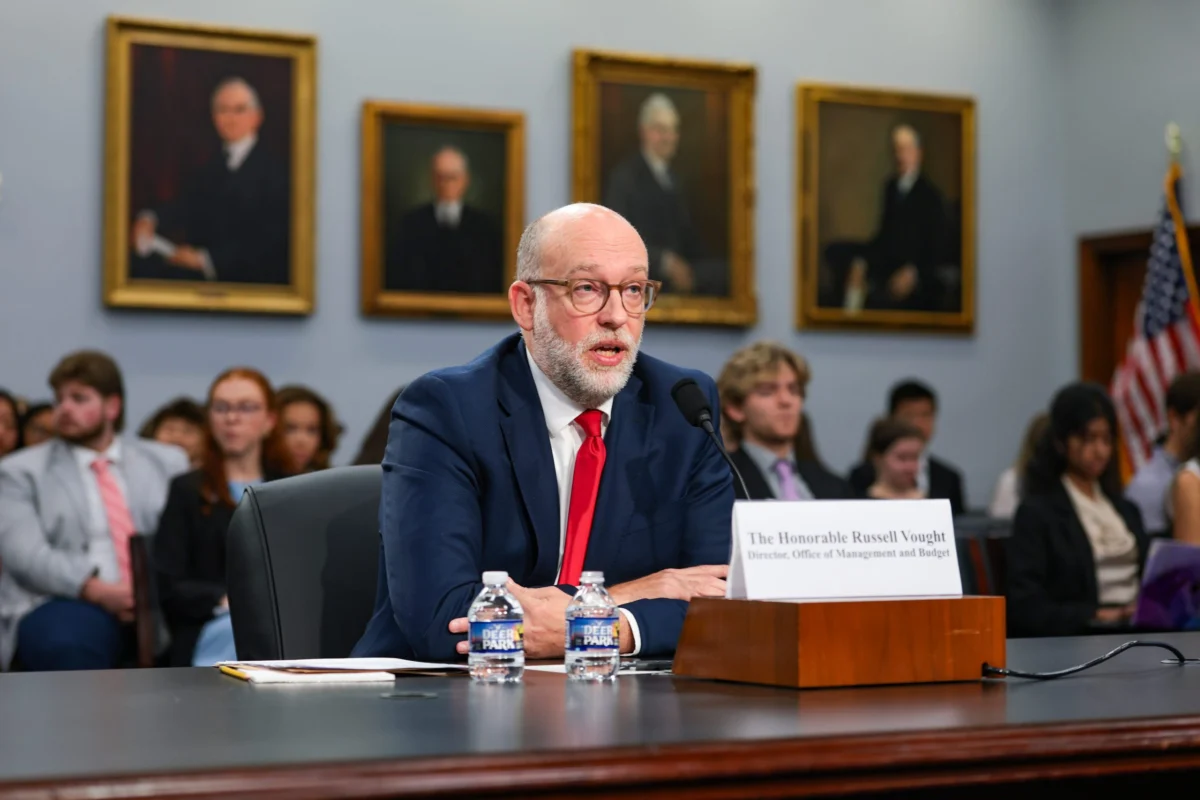
The proposal, issued by the federal Office of Management and Budget (OMB) on May 29, seeks to revise the regulations governing how taxpayer-funded grants are issued, managed, and overseen. While the OMB maintains that the changes are designed to strengthen accountability and transparency, the education research community has responded with a wave of formal objections. These organizations argue that the new rules would introduce unprecedented political influence into the scientific process, restrict the ability of researchers to study student inequities, and disrupt critical long-term studies already in progress.
The Scope of the OMB Proposal
The OMB’s proposal represents a significant shift in how the federal government interacts with the scientific community. The Department of Education and the National Science Foundation (NSF)—the two primary engines of education research funding in the U.S.—would be subject to these revised rules. According to the OMB, the final rule is intended to take effect by October 1, marking a rapid transition for an administrative change of this magnitude.
At the heart of the proposal is a move toward what the administration calls "gold standard science" and a focus on "national interest." However, the document leaves these terms largely undefined, leading to concerns that they could be used to favor specific methodologies or political agendas over others. Furthermore, the proposal mandates that all grants undergo a review by political appointees before being finalized, a step that researchers claim undermines the long-standing tradition of independent, non-partisan peer review.
A Conflict over "Disparate Impact" and Equity Research
One of the most contentious aspects of the proposed rule is its restriction on research related to diversity, equity, and inclusion (DEI). The proposal would prohibit federal funds from supporting what the administration labels "unlawful DEI activities" and would specifically limit funding for "disparate impact studies."
In the context of education, disparate impact studies are essential for determining whether policies that appear neutral on the surface—such as school discipline codes, gifted and talented enrollment criteria, or standardized testing—produce significantly different outcomes for different groups of students. The National Academy of Education, joined by 19 other scientific and education organizations, warned in a July 13 letter that these restrictions could effectively ban the study of racial and ethnic achievement gaps.
The organizations argued that understanding why a reading intervention might work for English language learners but not for native speakers, or why certain discipline policies disproportionately affect students of color, are not "fringe" interests. Rather, they are the central questions of modern education policy. Critics also pointed out a potential legal paradox: existing laws, such as Title I of the Elementary and Secondary Education Act, actually require states and districts to analyze student outcomes by race, income, and disability status. The roughly $17 billion Title I program relies on this data to identify schools in need of support. By restricting research into these very areas, the OMB could create a direct conflict with federal statutes.
The Rise of Political Oversight in Scientific Review
For decades, the awarding of federal research grants has relied on a system of merit-based peer review. In this system, panels of subject-matter experts evaluate proposals based on their scientific rigor, the feasibility of the research design, and the potential for the study to contribute to the field.
The OMB proposal seeks to alter this by requiring agencies to consider "alignment with federal priorities" and the "national interest." Because federal priorities change with every presidential administration, researchers fear that the focus of American science will become tethered to the four-year cycles of the White House rather than the long-term needs of the public.
The American Educational Research Association (AERA) and the Knowledge Alliance, which represents 20 research organizations, have expressed deep concern over the requirement for political appointee review. They argue that this layer of bureaucracy could allow partisan officials to veto scientifically sound projects that do not align with a specific political narrative. This shift, they contend, would diminish the role of independent experts and discourage researchers from pursuing controversial or complex topics that are nonetheless vital to the national interest.
Financial Constraints and Regulatory Hurdles
Beyond the ideological shifts, the OMB proposal introduces several practical and financial hurdles that could disadvantage large research institutions and individual scholars alike.

- Overhead Cost Preferences: The proposal suggests that agencies should give preference to grant applications with low overhead (indirect) costs. This move is seen as a direct hit to large research universities, which maintain the complex infrastructure—laboratories, libraries, and administrative support—necessary to manage large-scale federal projects.
- Restrictions on Dissemination: The rule would cut federal funding for attending academic conferences and covering publication costs unless specifically approved. Researchers argue that sharing findings with the broader community is a fundamental part of the scientific process. Without this funding, the reach and impact of taxpayer-funded research would be significantly diminished.
- Increased Paperwork: The proposal requires written justification for every individual request to receive grant funds, adding a significant administrative burden to researchers who are already navigating complex regulatory environments.
The Knowledge Alliance, in its response, highlighted that these changes would likely discourage researchers from pursuing the kind of long-term, foundational questions that led to the "science of reading." Breakthroughs in education, they noted, require patience and the accumulation of evidence over many years—often spanning multiple administrations.
Chronology of the Rulemaking Process and Resistance
The timeline for this overhaul has moved swiftly, triggering a massive coordinated response from the scientific community.
- May 29: The OMB officially releases the proposal for a 100-page overhaul of federal grant rules.
- June – Early July: Major scientific societies, including the AERA and the National Academy of Education, mobilize their members to review the technical language of the proposal.
- July 13: The deadline for public comment. Education research groups submit detailed letters outlining the potential "unintended and harmful consequences" of the rule.
- July 14: Reports surface that the OMB has been "flooded" with comments. By the deadline, nearly 500,000 comments (496,775) were submitted, a staggering number for a technical regulatory change.
- October 1 (Target): The date the OMB intends for the final rule to take effect.
The strategy of "flooding" the OMB with comments is a calculated move by research organizations. By raising thousands of specific technical and legal objections, they force the OMB to respond to each point in the final rulemaking process. This not only slows down the implementation but also builds a comprehensive "administrative record" that can be used as evidence in future lawsuits to challenge the rule in federal court.
Risks to Longitudinal Studies and Student Services
One of the most immediate fears shared by researchers is the potential for the abrupt termination of existing grants. Education research frequently involves longitudinal studies that track students over several years, or even decades, to see how early interventions affect long-term life outcomes like college enrollment or career earnings.
The National Academy of Education warned that even a temporary interruption in funding could permanently damage the integrity of these studies. If a researcher loses a year of data collection because a grant was suspended for political review, the continuity of the data is broken, often rendering the entire multi-year project useless.
The consequences of such interruptions are not merely academic. Federal research grants often fund direct partnerships with local school districts. These partnerships provide professional development for teachers and specialized interventions for students. A historical precedent cited by researchers occurred in 2025, when the Department of Education terminated dozens of research studies, resulting in 1,600 high school students with disabilities losing essential services. The OMB proposal, critics say, makes such abrupt terminations more likely.
Broader Implications for Global Competitiveness
The opposition to the OMB proposal is not limited to domestic concerns. Researchers have raised alarms about the impact on international collaborations. The proposed rules include broad limits on foreign partnerships, which could hinder U.S. participation in international assessments such as the Programme for International Student Assessment (PISA) and the Trends in International Mathematics and Science Study (TIMSS).
These assessments are the primary tools used by U.S. policymakers to compare the performance of American students with their peers in countries like China, Singapore, and Finland. Restricting the ability of American researchers to engage in these global studies could leave the U.S. "flying blind" regarding its standing in the global economy and its ability to compete in science and technology.
Fact-Based Analysis of the Path Forward
The OMB’s proposal sits at the intersection of a broader debate over the role of the executive branch in overseeing scientific inquiry. From the perspective of the administration, these changes represent a necessary reassertion of taxpayer control over how billions of dollars are spent. They argue that "national interest" should be the guiding star of federal spending.
However, the consensus among the education research community—from the American Educational Research Association to the Knowledge Alliance—is that science cannot function effectively under the threat of political veto. The strength of the "science of reading" and similar educational breakthroughs lies in their ability to withstand political shifts and remain grounded in verifiable, empirical data.
As the October 1 deadline approaches, the OMB faces a monumental task in addressing the nearly half a million comments submitted by the public. Whether the administration will move forward with the proposal as written, or provide the exemptions and clarifications requested by the scientific community, remains to be seen. What is certain is that the outcome of this regulatory battle will shape the landscape of American education research for decades to come, determining not only what questions researchers are allowed to ask, but also which students benefit from the answers.