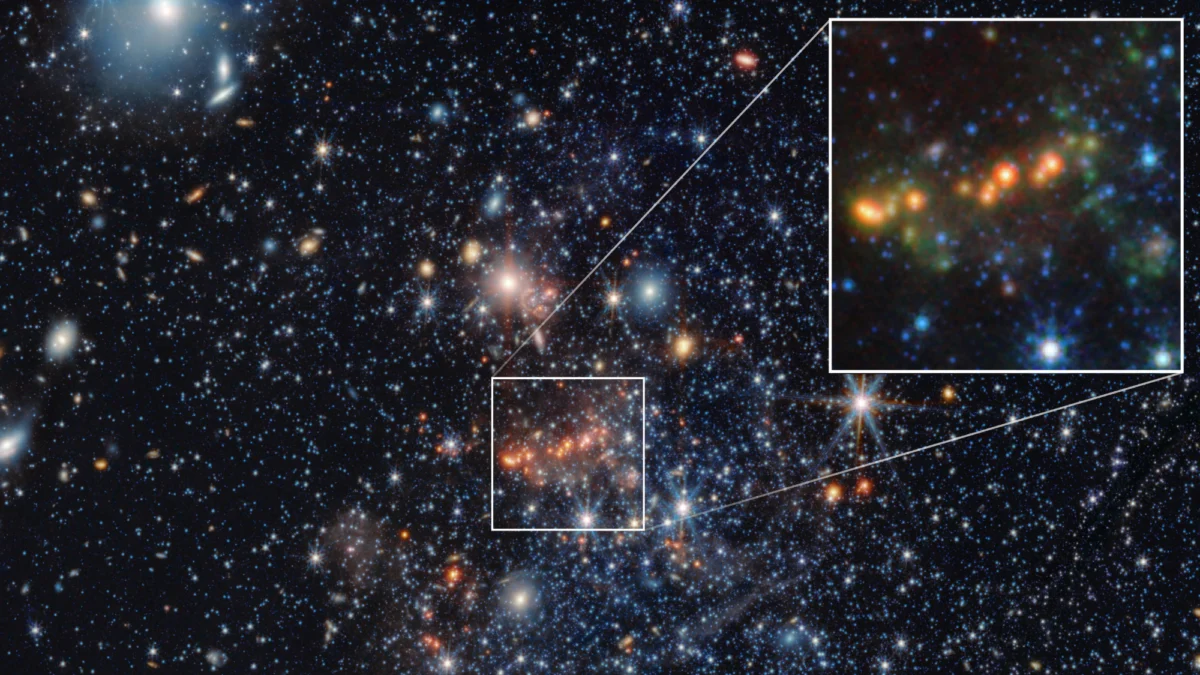
Astronomers utilizing the unparalleled capabilities of the James Webb Space Telescope (JWST) have peered into the enigmatic dwarf galaxy Sextans A, uncovering crucial insights into the processes that seeded the nascent cosmos with the essential building blocks for stars and galaxies. While JWST’s power allows it to detect the faint light from the universe’s earliest galaxies, directly dissecting their internal workings remains a formidable challenge. To circumvent this limitation, researchers focused their attention on Sextans A, a relatively close celestial neighbor that remarkably mirrors the chemical composition and evolutionary stages of these primordial galaxies. This strategic approach offers a tangible proxy for understanding the complex chemical enrichment that occurred in the universe’s infancy, a process vital for the formation of heavier elements, or "metals" as astronomers refer to elements beyond hydrogen and helium.
The early universe, a stark contrast to the chemically rich cosmos we observe today, was predominantly composed of hydrogen and helium, with only trace amounts of heavier elements. The very first stars, known as Population III stars, were thus born into a metal-poor environment. These pioneering stars, however, were the universe’s first alchemists. Through nuclear fusion within their cores, they forged heavier elements from hydrogen and helium. When these massive stars reached the end of their lifecycles, they exploded as supernovae, scattering these newly synthesized metals into the vast interstellar medium – the cosmic clouds of gas and dust that permeate space. This stellar debris then became the raw material for subsequent generations of stars.
The research, spearheaded by Claudio Gavetti of the National Institute for Astrophysics (INAF), leveraged JWST’s advanced infrared instruments, specifically the Near-InfraRed Camera (NIRCam) and the Mid-Infrared Instrument (MIRI). These instruments provided high-resolution observations of Sextans A, enabling the team to map its stellar population during a critical evolutionary phase known as the "asymptotic red giant branch" (AGB). This phase is characterized by stars larger than our Sun exhausting helium in their cores, leading to the formation of an inert carbon core. Meanwhile, nuclear fusion continues in alternating helium- and hydrogen-burning shells around this core. This process causes the stars to expand dramatically, puffing out their outer layers and increasing their brightness by as much as a thousandfold.
Sextans A: A Window into the Primordial Universe
Sextans A, located approximately 4.6 million light-years away, presents an exceptional case study due to its significantly low metallicity. It is estimated to contain only between 1% and 7% of the heavy elements found in our Sun, placing it firmly in the category of metal-poor galaxies. This characteristic makes it an invaluable analogue for studying the conditions of the universe’s first galaxies, which were similarly depleted of heavy elements. "Directly studying the galaxies that populated the early universe is still very difficult, which is why observing a nearby galaxy like Sextans A, which presents similar chemical conditions, offers us a precious opportunity to understand how the first generations of stars evolved and what role they played in transforming the interstellar medium," stated Gavetti.
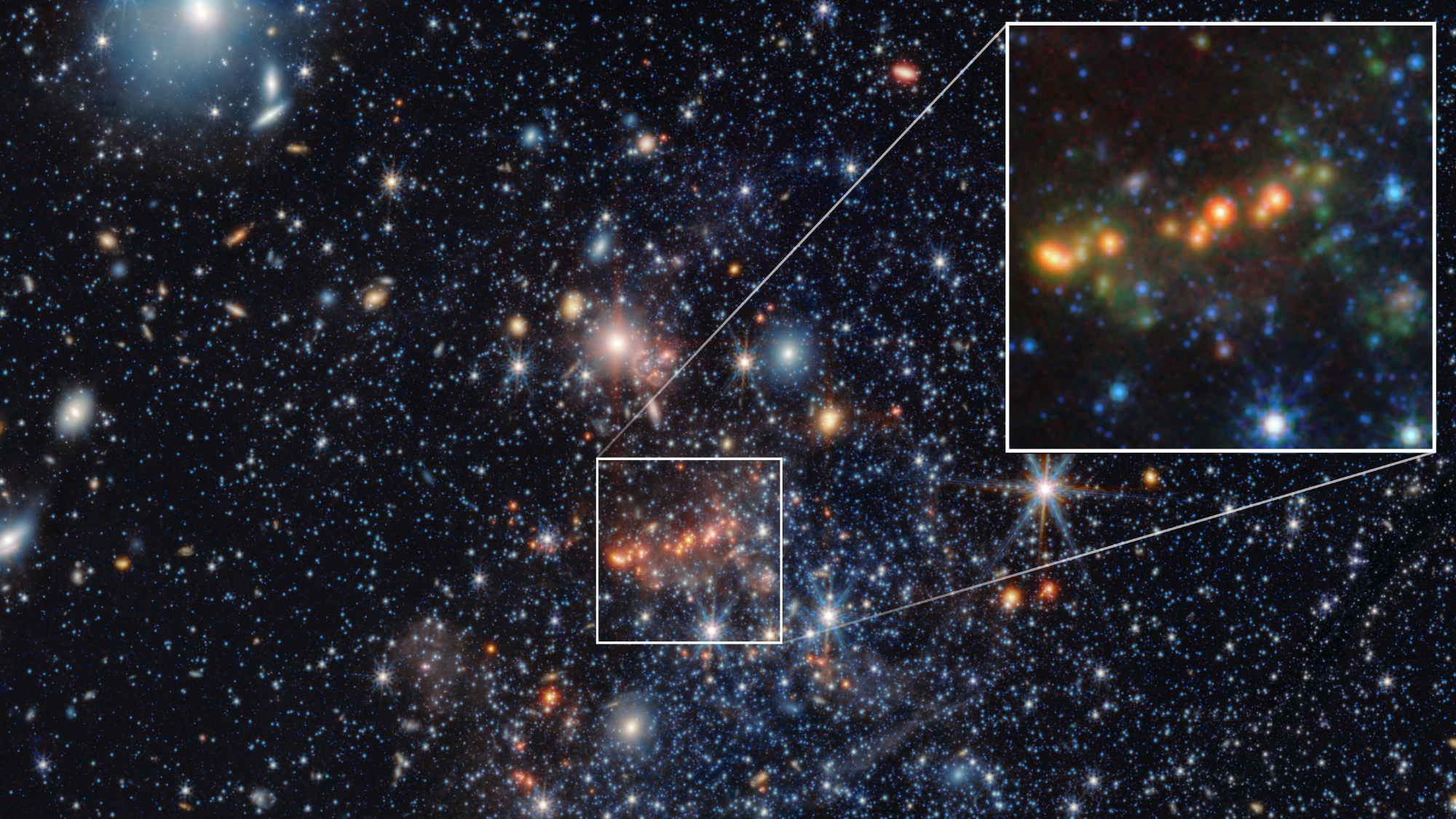
The study of Sextans A’s AGB stars revealed a fascinating distribution of dust. The observations indicated that approximately 90% of these stars were not enveloped in dust. However, a significant subset, around 20 stars, were found to be embedded within dense dust shells. These specific stars have been identified as the "dust factories" of Sextans A, responsible for producing the heavy elements that enrich the interstellar medium. The research suggests that these dust-producing stars formed between 2 billion and 3 billion years ago and had an initial mass approximately 1.5 times that of our Sun.
The Cosmic Cycle of Star Formation and Enrichment
The discovery sheds light on a fundamental cycle in cosmic evolution. The first stars (Population III) were metal-free. Their explosive deaths seeded the universe with the first heavy elements. The next generation of stars (Population II) formed from this enriched gas and dust, and were therefore metal-richer. Our Sun, classified as a Population I star, is even more metal-rich, a testament to billions of years of cosmic recycling.
While many modern galaxies are highly enriched with metals, dwarf galaxies like Sextans A, even those on the periphery of galactic clusters like the "Local Group," often retain lower metallicity. This makes them crucial observational targets for understanding the early stages of galactic chemical evolution. The JWST’s ability to observe in the infrared spectrum is critical for this research, as dust grains absorb visible light but re-emit it in the infrared. This allows astronomers to probe dusty regions that would otherwise be obscured.
The detailed analysis of Sextans A’s dust production provides a tangible link between stellar evolution and galactic enrichment. The specific types of stars that generate dust, their masses, and their formation epochs are now better understood thanks to this study. This knowledge is crucial for refining theoretical models of galaxy formation and evolution, particularly during the universe’s formative epochs.
JWST’s Transformative Power
The scientists involved in this research emphasized the groundbreaking nature of their findings, attributing their success to the unprecedented capabilities of the James Webb Space Telescope. "The JWST allows us to observe in unprecedented detail environments that until a few years ago were beyond our reach," commented team member Flavia Dell’Agli of INAF. "The value of these data lies not only in the images, but in the ability to compare them with theoretical models and verify how correctly they describe the evolution of stars."
This sentiment underscores the paradigm shift JWST represents in astronomical research. Its sensitivity, resolution, and wavelength coverage open up new avenues for studying cosmic phenomena that were previously inaccessible. The ability to not only observe but also to precisely measure the composition and properties of stars and dust in distant galaxies allows for a more robust validation of astrophysical theories.
Broader Implications for Cosmic History
The findings from Sextans A have significant implications for our understanding of how the universe evolved from a simple, hydrogen-dominated state to the complex, star-filled cosmos we inhabit today. The process of dust formation in stars is not merely an academic curiosity; dust plays a pivotal role in the universe. It absorbs ultraviolet radiation from stars, shielding planets and potentially facilitating the formation of complex organic molecules. Furthermore, dust grains act as catalysts for the formation of new stars by providing surfaces for gas molecules to condense upon.
By identifying the specific stellar populations responsible for dust production in a metal-poor environment, astronomers can better estimate the rate at which heavy elements were introduced into the intergalactic medium during the early universe. This information is vital for understanding the conditions under which the first galaxies formed, the evolution of their stellar populations, and the eventual emergence of the large-scale structures we observe today.
The research, published on Monday, July 20, in The Astrophysical Journal, represents a significant step forward in piecing together the intricate narrative of cosmic evolution. It highlights the power of combining observations of nearby analogues with the direct study of distant, ancient phenomena, a strategy that will undoubtedly continue to yield groundbreaking discoveries as astronomers continue to explore the universe with the James Webb Space Telescope. The detailed spectral and imaging data collected by JWST not only confirm theoretical predictions about dust formation in AGB stars but also provide new constraints for refining these models, pushing the boundaries of our cosmic comprehension. The ongoing analysis of this data promises further revelations about the chemical enrichment of the universe and the intricate dance of star birth and death that has shaped galaxies over billions of years.