The 2025 edition of the State of Food Security and Nutrition in the World (SOFI) report, released jointly by five specialized United Nations agencies, reveals a complex and bifurcated landscape of global nutrition. While the total number of people suffering from chronic hunger has seen a marginal decline over the past two years, the progress remains fragile and geographically inconsistent. According to the data released by the Food and Agriculture Organization (FAO), the International Fund for Agricultural Development (IFAD), the UN Children’s Fund (UNICEF), the World Food Programme (WFP), and the World Health Organization (WHO), approximately 673 million people, or 8.2 percent of the global population, faced hunger in 2024. This represents a slight improvement from the 8.7 percent recorded in 2022 and the 8.5 percent in 2023, yet it underscores the monumental task ahead if the international community is to meet the Sustainable Development Goal (SDG) of Zero Hunger by 2030.
A Divergent Global Landscape: Successes and Setbacks
The overarching narrative of the SOFI 2025 report is one of uneven recovery. In many parts of the world, particularly in Asia and Latin America, the post-pandemic recovery and stabilized food supply chains have led to significant reductions in undernourishment. In Asia, the prevalence of hunger dropped to 6.7 percent in 2024, down from 7.9 percent just two years prior. Similarly, Latin America and the Caribbean saw a decline to 5.1 percent, or roughly 34 million people, moving away from a decade-high peak of 6.1 percent in 2020. These gains are attributed to robust social safety nets, improved agricultural productivity, and targeted economic interventions in major economies like Brazil and India.
However, these successes are overshadowed by a deteriorating situation in Africa and Western Asia. In Africa, the hunger rate has climbed to a staggering 20.4 percent, affecting 307 million people. This means that one in every five people on the continent is currently facing hunger. Western Asia has also seen a troubling upward trend, with 12.7 percent of its population—approximately 39 million people—estimated to be undernourished. These regions are grappling with a "polycrisis" of protracted armed conflicts, severe climate-induced disasters, and economic instability that has prevented them from sharing in the global recovery.
Chronology of the Global Food Crisis (2020–2025)
To understand the current state of food security, it is necessary to examine the timeline of events that have shaped the last five years. The global food system has been subjected to a series of unprecedented shocks that have fundamentally altered the trajectory of the SDG 2 targets.
- 2020–2021: The Pandemic Shock. The COVID-19 pandemic disrupted global logistics, led to widespread job losses, and fractured local food markets. During this period, global hunger saw its sharpest increase in decades, erasing years of progress.
- 2022: The Conflict Multiplier. The onset of the war in Ukraine in early 2022 sent shockwaves through global commodity markets. As Russia and Ukraine are among the world’s top exporters of wheat, maize, and sunflower oil, as well as fertilizers, the conflict caused a massive spike in prices.
- 2023: The Inflationary Peak. By early 2023, global food price inflation reached a median of 13.6 percent. However, in low-income nations, this figure was much higher, peaking at 30 percent in May 2023. This year also saw record-breaking extreme weather events, including prolonged droughts in the Horn of Africa and devastating floods in Southern Asia.
- 2024: The Fragile Stabilization. While global prices began to moderate, the cost of a healthy diet remained out of reach for billions. The SOFI 2025 report reflects this period, showing a slight decrease in total hunger but a deepening crisis in conflict-affected zones.
- 2025 and Beyond: Current projections suggest that if current trends continue, 512 million people will still be chronically undernourished by 2030. Alarmingly, 60 percent of those people will reside in Africa, indicating a massive shift in the epicenter of global poverty and hunger.
Economic Barriers and the Affordability of Nutrition
One of the most critical metrics highlighted in the report is the "affordability of a healthy diet." While the number of people globally who cannot afford nutritious food dropped to 2.6 billion—down from 2.76 billion in 2019—the burden is shifting increasingly toward the world’s poorest nations.
In low-income countries, the number of people unable to afford a healthy diet rose to 545 million in 2024, a significant increase from 464 million five years ago. In lower-middle-income countries, excluding India, the number rose to 869 million. This suggests that even as food becomes more available on the global market, the purchasing power of the most vulnerable populations is being eroded by local currency devaluations and domestic inflation.
FAO Director-General QU Dongyu emphasized that while the overall decrease is encouraging, progress is far from universal. He noted that the international community must "intensify efforts to ensure that everyone has access to sufficient, safe, and nutritious food," specifically targeting the unique challenges of regions where hunger remains persistent.

Child Malnutrition: A Generational Crisis
The report provides a sobering look at the impact of food insecurity on the youngest global citizens. UNICEF Executive Director Catherine Russell pointed out that over 190 million children under the age of five are currently affected by various forms of undernutrition, including stunting (low height for age) and wasting (low weight for height).
Stunting, which results from chronic malnutrition during the critical first 1,000 days of life, can lead to permanent physical and cognitive impairments. While the world has made some progress in reducing stunting rates and increasing the prevalence of exclusive breastfeeding, the current pace is insufficient to meet 2030 targets. The report argues that failing to address child nutrition today will result in a "robbed potential" for millions, impacting the future economic productivity and stability of entire nations.
Official Responses and Policy Recommendations
The heads of the five UN agencies have called for a radical shift in how the world approaches food security. Beyond emergency aid, the report advocates for structural changes in agrifood systems.
- IFAD President Alvaro Lario highlighted the need for investment in rural transformation. "In times of rising food prices and disrupted global value chains, we must step up our investments in rural and agricultural transformation. These investments are not only essential for food security—they are also critical for global stability," Lario stated.
- WHO Director-General Dr. Tedros Adhanom Ghebreyesus stressed the health implications of the crisis, noting that while breastfeeding rates have improved, the double burden of malnutrition—where undernutrition and obesity coexist within the same communities—remains a major public health challenge.
- Policy Solutions: The report recommends that governments adopt "transparent and credible monetary policies" to curb inflation. It also calls for "time-bound and targeted fiscal measures," such as social protection programs and school feeding initiatives, to protect the most vulnerable from price volatility. Furthermore, it suggests increased funding for agrifood research and development (R&D) to build climate-resilient crops.
Broader Implications and Analysis
The findings of the SOFI 2025 report have profound implications for global security and migration. Persistent hunger in Africa and Western Asia is a known driver of civil unrest and mass displacement. As populations find it increasingly impossible to sustain themselves through traditional agriculture due to climate change and conflict, the pressure for cross-border migration is expected to intensify.
Moreover, the report highlights a growing "nutrition gap" between the Global North and the Global South. While wealthier nations grapple with issues of food waste and overconsumption, low-income nations are struggling with the basic availability of calories. This disparity complicates international climate negotiations, as many developing nations argue they cannot meet environmental targets while their populations are starving.
The role of the private sector and international financial institutions is also coming under scrutiny. The report suggests that current levels of investment in agrifood systems are a fraction of what is required. To achieve the Zero Hunger goal, a significant reallocation of capital is needed to support small-scale farmers, who produce the majority of the world’s food but are often the first to suffer during economic downturns.
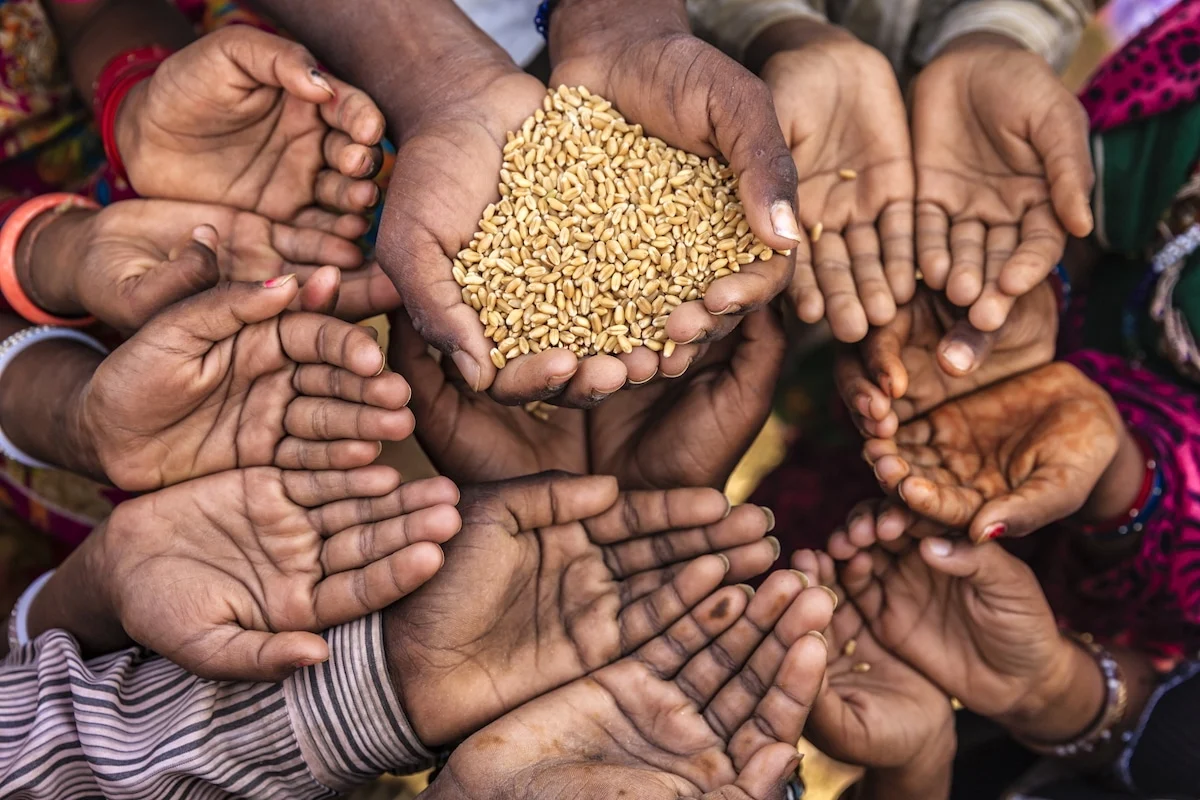
In conclusion, the 2025 State of Food Security and Nutrition in the World report serves as both a testament to human resilience and a warning of systemic failure. The marginal decline in global hunger proves that targeted interventions can work, as seen in parts of Asia and Latin America. However, the escalating crisis in Africa and Western Asia demands a renewed, coordinated international response that moves beyond short-term relief toward long-term, sustainable agricultural and economic transformation. Without a decisive shift in policy and funding, the goal of a world without hunger will remain an elusive aspiration for the hundreds of millions who still hold their hands out for food.