The convenience of modern food delivery has come at a staggering environmental cost, with the United States restaurant industry generating nearly 9 million tons of waste annually from disposable containers, cups, lids, and utensils. According to the "Reuse Wins" report by the nonprofit organization Upstream, this mountain of refuse—equivalent to the weight of approximately 25 Empire State Buildings—is largely driven by the takeout and delivery sector, which accounts for nearly four-fifths of the total volume. As the scale of this waste crisis becomes impossible to ignore, the market is shifting away from consumer-led rating systems and toward sophisticated "circular" infrastructure designed to replace single-use plastics with durable, returnable alternatives.
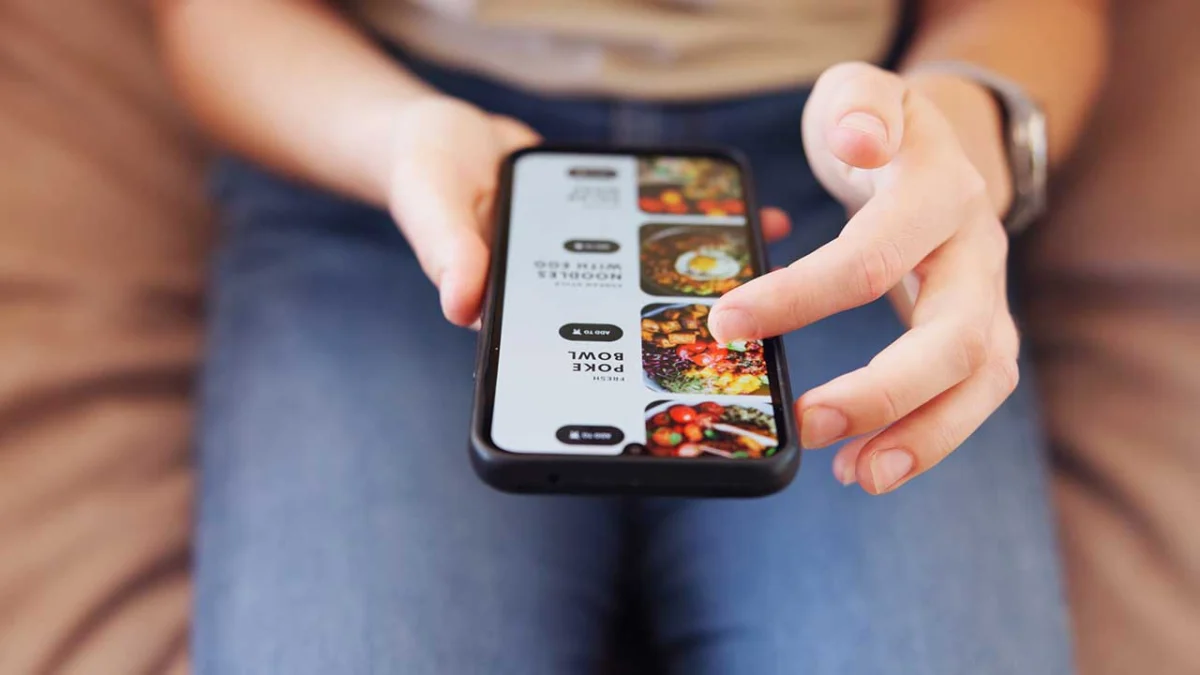
The evolution of sustainable takeout has seen significant trial and error. Just a few years ago, the primary strategy for addressing packaging waste relied on consumer transparency through mobile applications. Platforms like PlasticScore and Jybe attempted to harness the power of "crowdsourced accountability" by allowing diners to rate restaurants based on their packaging choices. These apps aimed to incentivize businesses to move away from polystyrene foam and single-use plastics by ranking them on eco-friendliness. However, the model faced a fundamental hurdle: the "critical mass" problem. For a rating system to influence consumer behavior or restaurant operations, it requires a high density of reviews within specific geographic areas. In most American cities, this level of engagement never materialized, leading to the eventual disappearance of these first-generation rating platforms.
In their place, a more direct and logistically integrated approach has emerged. Instead of merely grading the waste, new services are eliminating it at the source through "borrow-return-repeat" systems. These networks provide restaurants with high-quality, durable containers—often made from BPA-free polypropylene or stainless steel—that are designed to be used hundreds or even thousands of times. Customers "borrow" the packaging when they order food and return it to designated drop-off points, where it is collected, professionally sanitized, and redistributed to the food service network.
The Environmental Math: When Reuse Becomes a Net Positive
The transition to reusable packaging is not a guaranteed environmental win; its success is dictated by the rigorous mathematics of life-cycle assessments. A landmark 2023 study from the University of Michigan, published in the journal Resources, Conservation & Recycling, clarified the "break-even" points required for these systems to outperform their disposable counterparts.
According to the researchers, a reusable container must be used between 4 and 13 times to justify its higher manufacturing footprint. Specifically, it takes about 4 to 6 uses to offset the additional greenhouse gas emissions generated during the production of a more durable vessel. To offset the energy and water consumption involved in the professional washing and transportation process, the container generally needs to reach 8 to 13 uses.
However, the study also identified a critical vulnerability in the reuse model: consumer behavior. If even 5% of customers make a dedicated car trip solely to return a container, the carbon emissions from the vehicle can quickly exceed the savings gained from avoiding a single-use plastic bin. Consequently, the most successful reuse networks are those that integrate return points into existing high-traffic areas, such as grocery stores, transit hubs, or office lobbies, ensuring that returns occur as part of a "trip-chain" rather than a standalone errand.
Upstream’s broader analysis suggests that while plastic reusables break even quickly, materials like steel, glass, and ceramics require more cycles—sometimes over 100 uses—to reach environmental parity. However, because these materials can last for thousands of cycles, their long-term environmental and economic dividends are significantly higher than plastic alternatives.
A Chronology of Innovation and Market Consolidation
The landscape of the reuse industry has shifted rapidly over the last decade, moving from niche pilot programs to sophisticated corporate acquisitions.
2015–2018: The Early Innovators
Vessel Works launched in 2015, focusing on the "to-go" coffee cup crisis. Operating primarily in Boulder, Colorado, and Berkeley, California, Vessel established the early blueprint for tech-enabled reuse: a free service for consumers that tracks assets via QR codes and charges a fee only if the vessel is not returned. This period proved that "closed-loop" or "semi-closed-loop" environments were the most viable starting points for circular logistics.
2019–2022: The Integration Phase
In 2019, DeliverZero launched in New York City with a bold vision: integrating reusable packaging directly into third-party delivery apps like Uber Eats and DoorDash. For a nominal fee of around $1, customers could opt into the service. At its peak, DeliverZero achieved a remarkable 98% return rate across 300 participating restaurants in major hubs including Los Angeles and the San Francisco Bay Area. This era demonstrated that consumers were willing to pay a small premium for waste-free convenience if the return process was frictionless.
2023–2025: Expansion and Acquisition
As the viability of these systems became clear, the industry entered a phase of consolidation. In early 2025, Minnow Technologies, a leader in contact-free food pickup lockers, acquired DeliverZero. This acquisition signaled a shift toward automated logistics; by integrating reuse into smart lockers, the companies aimed to solve the "return friction" problem. While the DeliverZero platform was temporarily paused for a comprehensive rebuild, the partnership represents the next generation of the industry: "smart" infrastructure that manages both the delivery and the recovery of assets.
Simultaneously, Recirclable, based in Boston, expanded its footprint. Eschewing the per-order fee model, Recirclable operates like a public library. Users download an app and borrow containers for free, provided they return them within 14 days. This model has seen steady growth in the Northeast, expanding into Western Massachusetts in late 2025, suggesting that the "library model" may be more palatable for suburban and regional markets.
The Institutional Stronghold: Campuses and Corporations
While residential delivery remains a challenge, the reuse model has found its most successful application in institutional dining. Reusables.com, which recently raised $3.6 million in funding, has pioneered a "Tap-to-Reuse" system utilizing RFID (Radio Frequency Identification) and QR codes.
Institutions like Simon Fraser University have reported return rates as high as 99.6%. The success in these environments is attributed to the "captive audience" effect. On a university campus or a corporate headquarters, diners are likely to return to the same locations daily, making the "return" part of the cycle nearly effortless. Furthermore, Grubhub’s partnership with Topanga (via the ReusePass platform) has brought high-tech tracking to college campuses across the country, capitalizing on a demographic that is both environmentally conscious and technologically savvy.
The Role of Municipal Policy and Public Infrastructure
The transition to reuse is increasingly being viewed not just as a business opportunity, but as a public utility. Ann Arbor, Michigan, has become a national leader in this regard by implementing a city-backed reuse program. By supplying the containers and managing the logistics, the city removes the capital risk for small restaurants, allowing them to opt into a unified system. This prevents a "fragmented market" where a consumer might need five different apps to return containers to five different restaurants.
Policy experts argue that for reuse to truly scale, it will require "Extended Producer Responsibility" (EPR) laws. These regulations would shift the financial burden of waste management from municipalities and taxpayers to the companies producing the packaging. If restaurants and packaging manufacturers are held responsible for the "end-of-life" costs of their products, the economic incentive to switch to reusables becomes overwhelming.
The Looming Challenges: Sanitation and Perception
Despite the momentum, the industry faces significant hurdles. Public health regulations vary wildly by state and municipality, and the "wash-and-dry" logistics require significant energy and space. Ensuring that a container is not just "clean" but "sanitized" to industrial standards is a capital-intensive process that requires specialized facilities.
There is also the "compostable" distraction. Many restaurants have shifted to bioplastics or fiber-based "compostable" containers, believing them to be a sustainable middle ground. However, environmental advocates warn that most of these items require industrial composting facilities that are unavailable in most American cities. When placed in standard recycling bins, they contaminate the plastic stream; when sent to landfills, they fail to break down properly and can release methane. The industry’s consensus is shifting: true sustainability lies in the "R" of Reuse, not the "R" of Recycle.
Looking Ahead: The Future of the Takeout Box
As we move toward the late 2020s, the goal for the food service industry is to make the reusable container as ubiquitous and invisible as the cardboard pizza box. The "Reuse Wins" report suggests that as these networks mature, the cost per use for a durable container will drop below the cost of a single-use plastic one, especially as petroleum prices and plastic taxes fluctuate.
For the average consumer, the advice remains local: check for active networks like Recirclable or Vessel in your area, and utilize return bins at participating locations. More importantly, consumers are encouraged to "opt out" of the extras—requesting no plastic utensils or napkins in delivery apps—which alone could reduce the industry’s waste by hundreds of thousands of tons.
The death of the "rating app" and the birth of the "reuse network" marks a transition from passive observation to active participation. The 9 million tons of annual waste represents a massive logistical failure, but the rise of circular systems offers a roadmap to a future where convenience no longer requires a permanent environmental footprint. Through a combination of RFID tracking, professionalized sanitation, and municipal support, the "Empire State Buildings" of waste may finally begin to shrink.