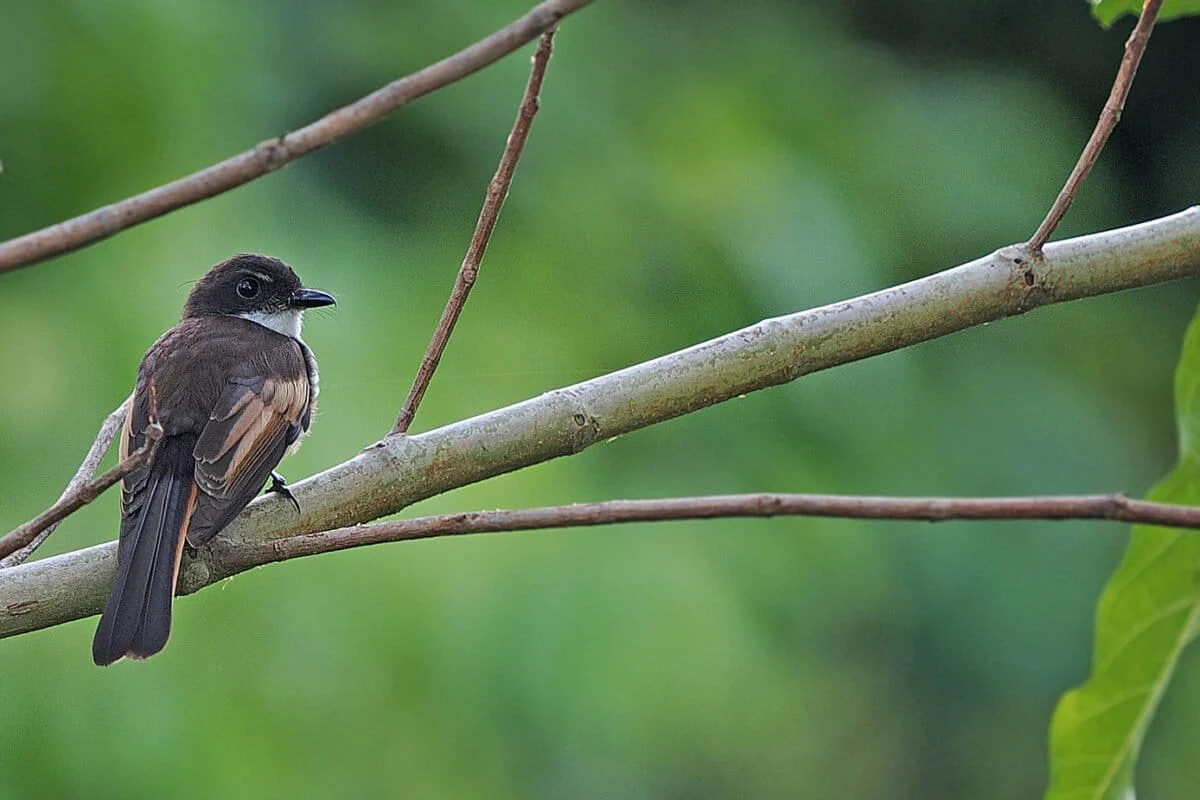
The dense, tropical archipelagos of Indonesia have long been celebrated as a crucible of evolution, a region where isolation across scattered islands fosters the emergence of unique life forms. In a significant development for avian taxonomy, a team of international researchers has recently announced the discovery of a new songbird species, the cheerful fantail (Rhipidura laguceria), hiding in plain sight for over a century. The discovery, detailed in a study published in the Bulletin of the British Ornithologists’ Club, reveals that what was once considered a single species spanning multiple island groups is, in fact, two distinct biological entities.
For more than 120 years, the scientific community operated under the assumption that the cinnamon-tailed fantail (Rhipidura fuscorufa) inhabited both the Tanimbar Islands and the Babar Islands in the eastern Banda Sea. However, the study led by James A. Eaton of Birdtour Asia Limited and Alex J. Berryman of BirdLife International has corrected this historical oversight. Through a combination of morphological analysis, bioacoustic evaluation, and field experiments, the researchers have confirmed that the population residing on the Babar Islands is a unique species, now formally christened the cheerful fantail.
The Geography of Isolation
The Babar Islands and the Tanimbar Islands are separated by approximately 135 kilometers (84 miles) of open water. While this distance may seem negligible for many migratory birds, for small, sedentary songbirds like the fantail, the deep waters of the Banda Sea act as a formidable barrier to gene flow. This geographic isolation is a primary driver of speciation in the Wallacea region—a biogeographical zone characterized by high levels of endemism.
The cinnamon-tailed fantail was first described by Western science in the late 19th century. Due to the superficial similarities between the birds found on Tanimbar and Babar, early taxonomists grouped them together. This classification remained unchallenged for decades, largely because the Babar Islands remained one of the most ornithologically neglected corners of Indonesia. Following an initial period of collection in the late 1800s and early 1900s, the islands were rarely visited by researchers for nearly a century, with significant field surveys only resuming around 2009.
Methodology: Bridging Museum Records and Field Observations
To unravel the mystery of the Babar populations, Eaton and Berryman employed a multi-disciplinary approach. The research began in the quiet halls of natural history museums, where the team examined 19 preserved specimens labeled as cinnamon-tailed fantails. These specimens, some over a century old, provided the baseline for morphological comparison.
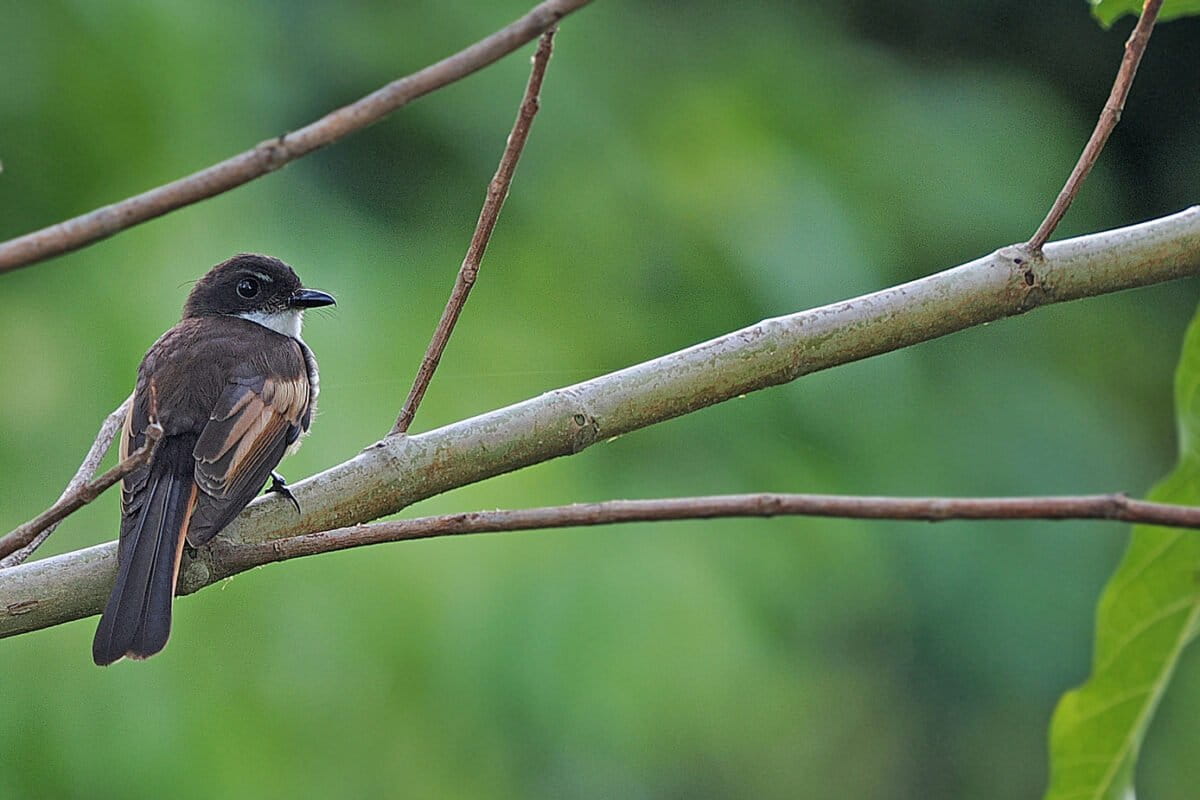
The researchers noted that the physical differences between the two populations were "cryptic"—meaning they are subtle and difficult to discern without close inspection. The newly identified cheerful fantail possesses slightly darker upperparts and a less extensive wash of cinnamon plumage on its underparts compared to its Tanimbar counterpart. While these visual cues were a starting point, they were not definitive enough on their own to warrant a species split under traditional taxonomic standards.
The "smoking gun" of the discovery lay in the birds’ vocalizations. In the world of avian biology, song is often more important than plumage for species recognition. To test this, the researchers recorded the songs of birds on both island groups and analyzed their acoustic structure. The cheerful fantail’s song is characterized by single whistles that rise sharply in pitch toward the end. In contrast, the cinnamon-tailed fantail of the Tanimbar Islands produces a more complex, rhythmic cadence consisting of alternating short and long whistles with fluctuating pitches.
The Behavioral Litmus Test: Playback Experiments
To confirm whether these vocal differences were biologically significant, the team conducted a series of playback experiments. Over several years, researchers played recordings of Tanimbar songs to Babar birds, and vice versa, a total of 132 times.
The results were definitive: the birds displayed a near-total lack of interest in the songs of the neighboring island’s population. While the birds would aggressively respond to recordings of their own "local" songs—perceiving them as a territorial challenge from a rival of the same species—they largely ignored the foreign recordings. This behavioral response suggests that the two groups no longer recognize each other as the same species. In the wild, this lack of recognition acts as a reproductive barrier; if a bird from Tanimbar were to reach Babar, it would likely fail to find a mate because its "language" would be unrecognizable to the local population.
A Chronology of Discovery
The path to identifying Rhipidura laguceria highlights the slow and often fragmented nature of island biogeography research:
- 1883–1900: Early naturalists collect specimens from the Tanimbar and Babar Islands, classifying them all under the umbrella of the cinnamon-tailed fantail.
- 1900–2008: A "century of silence" falls over the Babar Islands, with almost no formal ornithological data recorded.
- 2009: Modern expeditions to the "forgotten" islands of the Banda Sea begin, sparking renewed interest in the region’s unique biodiversity.
- 2010s: James A. Eaton and colleagues begin noticing vocal discrepancies during field tours and research trips.
- 2020–2023: Systematic data collection, including the 132 playback trials and museum specimen reviews, is completed.
- 2024: The study is published, officially introducing the cheerful fantail to the scientific record.
Conservation Implications and Habitat Resilience
The formal recognition of the cheerful fantail has immediate implications for conservation efforts in Indonesia. Previously, the cinnamon-tailed fantail was listed as a species of "Least Concern" on the IUCN Red List of Threatened Species, largely because its combined range across two island groups was considered stable.
However, by splitting the species, the geographical range for both the cinnamon-tailed fantail and the cheerful fantail has been effectively halved. The authors of the study note that both species now meet the initial geographical thresholds for being listed as "Threatened." When a species is restricted to a small island group, it becomes significantly more vulnerable to localized threats such as invasive species, disease, or extreme weather events.
Despite the reduced range, there is cause for cautious optimism. The researchers observed that both the cheerful and cinnamon-tailed fantails are remarkably resilient to human-driven environmental changes. Unlike many specialized tropical birds that require pristine, closed-canopy rainforests, these fantails appear to thrive in "heavily modified habitats." They are frequently found in edge habitats, forest glades, scrubland, and even areas with non-native vegetation like mango trees. This tolerance for habitat degradation suggests that while their range is small, their populations may remain stable even as land-use patterns change.
The Broader Impact on Indonesian Biodiversity
The discovery of the cheerful fantail underscores a broader trend in modern ornithology: the realization that Indonesia’s bird diversity is significantly higher than previously recorded. As researchers apply modern technology—such as high-fidelity audio recording and DNA sequencing—to "old" species, they are finding that many widely distributed birds are actually complexes of several distinct, range-restricted species.
"This discovery reminds us that we are still in an age of exploration," said a representative from the regional conservation community. "Even in places we thought we knew, nature still holds secrets. Every time we identify a new species like the cheerful fantail, it provides a stronger argument for the protection of these unique island ecosystems."
The naming of the bird itself, the "cheerful" fantail, reflects the researchers’ desire to bring a sense of positivity to the often-grim field of conservation biology. The scientific name Rhipidura laguceria is derived from the Indonesian words for "song" (lagu) and "cheerful" (ceria), a nod to the bird’s lively and uplifting vocalizations that eventually led to its identification.
Future Research and the Path Ahead
The study opens the door for further investigations into the avifauna of the Banda Sea. Ornithologists suggest that other species currently thought to inhabit multiple islands in the region may also be candidates for taxonomic splits. The use of bioacoustics, in particular, is proving to be a revolutionary tool in identifying "cryptic" species that look identical to the human eye but are distinct to the birds themselves.
For the cheerful fantail, the next steps involve more detailed population surveys to determine exactly how many individuals remain on the Babar Islands. While they are currently common in their limited range, a formal assessment by the IUCN will be necessary to ensure they receive the appropriate level of international protection.
As Indonesia continues to balance economic development with environmental stewardship, the story of the cheerful fantail serves as a vital reminder of the intricate and often hidden layers of life that exist within its borders. The recognition of this "new" species is not just a win for taxonomy; it is a testament to the importance of revisiting the past with new tools and an open ear to the songs of the forest.