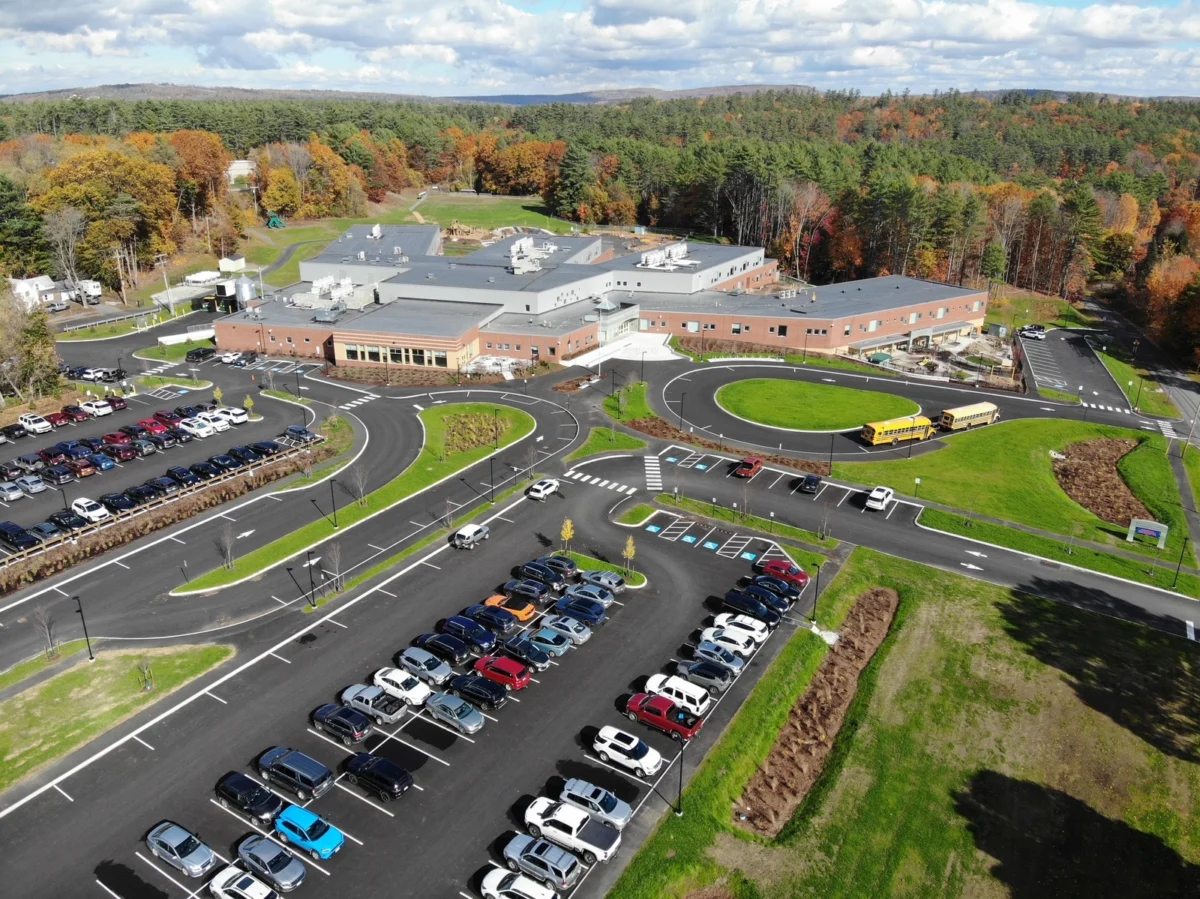
At the heart of this transformation is the Margaret Chase Smith Community School, a newly constructed facility that serves children from infancy through the fifth grade. By housing babies, toddlers, and elementary students on a single campus, the district is pioneering a "whole community" approach to public schooling. This initiative, driven by local leadership and supported by statewide policy shifts, aims to prove that high-quality early education is not just a private family matter but a public priority essential for community stability and economic growth.
The Challenge of Fragmentation in Early Education
The traditional early childhood landscape in the United States is often described by experts as a "patchwork quilt" that frequently fails the families it is meant to serve. In many rural areas like Somerset County, Maine, this fragmentation is exacerbated by geography. Parents may have to travel miles in one direction for infant care, another for a pre-K program, and a third for an elementary school, all while navigating a lack of reliable public transportation.
Structurally, the separation of these services means that the transition from early childhood care to formal kindergarten is often abrupt. Data from the National Institute for Early Education Research (NIEER) suggests that when children move between disconnected systems, they often lose the developmental momentum gained in their earliest years. Furthermore, the workforce in these sectors is equally divided; child care providers often earn significantly less than K-12 teachers, leading to high turnover and inconsistent quality in the critical years of brain development.
In Skowhegan, leaders recognized that simply "improving quality" or "expanding access" within the existing broken system would be insufficient. The goal was to fix the structural fragmentation itself. To do this, they looked to the national Educare model, which emphasizes evidence-based practices, professional development, and family engagement within a unified system.
Chronology of a Policy Shift: From Local Pilot to State Law
The journey toward the Margaret Chase Smith Community School was not an overnight achievement but the result of a decade-long strategy involving cross-sector partnerships and legislative advocacy.
The process began with the establishment of Educare Central Maine (now Educare Maine) in nearby Waterville. This facility served as a "lab school," testing how integrated services could improve outcomes for at-risk children. By 2020, the focus shifted toward Skowhegan, where local providers and district leaders began collaborating more closely.
Through the Educare Maine Lab School and Learning Hub, coaches worked directly with both home-based and center-based child care providers in the Skowhegan area. Rather than acting as outside consultants, these coaches embedded themselves in the community to stabilize existing programs and build a coherent ecosystem. This period of collaboration was essential for building trust among stakeholders who had previously competed for the same limited pool of state and federal funds.
In 2021, data collected in partnership with the University of Maine provided the empirical evidence needed to scale the project. The research, titled the "Elevate Maine Somerset Report," showed that when providers received coordinated support and shared infrastructure, they were significantly more likely to sustain their businesses and improve the quality of care.
This local success provided the blueprint for "First4ME," a landmark piece of statewide legislation in Maine. The First4ME model was designed to help communities collaborate across the early care and education sectors rather than compete. It established a framework for "community hubs" that could coordinate services, provide professional development, and ensure that families had a single point of entry into the educational system.
A Historic Construction Project
The most visible manifestation of this new philosophy is the Margaret Chase Smith Community School. When Maine School Administrative District 54 (MSAD 54) began planning a new elementary school, the superintendent and local board members made a radical proposal: the school should include dedicated space for infants and toddlers.
Historically, the Maine Department of Education (DOE) had never funded the construction of infant and toddler classrooms within a public elementary school project. State funding formulas typically focused strictly on the K-12 population. However, the district argued that because infant and toddler classrooms already existed on the campus in temporary or fragmented capacities, it was logical and fiscally responsible to integrate them into the permanent future of the school.

Persuaded by the district’s case and the success of the Educare model, the Maine DOE agreed to include infant-toddler spaces in the construction project. This marked a fundamental policy shift in the state, signaling that the "education" of a child begins at birth, not at age five.
Supporting Data: The Economic and Developmental Case
The decision to integrate early care into the public school system is supported by a wealth of economic and developmental data. According to the "Heckman Equation," developed by Nobel Prize-winning economist James Heckman, every dollar invested in high-quality early childhood education for disadvantaged children yields a 13% return on investment (ROI) per year through improved health, lower crime rates, and increased workforce productivity.
In rural Maine, the economic case is even more pressing. A 2023 report on Maine’s workforce noted that child care shortages are a primary barrier to employment for thousands of parents. By providing care and education on a single campus, Skowhegan is effectively lowering the barrier to entry for the local workforce.
Furthermore, the Margaret Chase Smith Community School model addresses the "kindergarten transition" gap. Research indicates that children who remain within the same educational ecosystem from birth to age ten experience less "summer melt" and fewer behavioral regressions. Teachers in the upper grades benefit from having access to years of developmental data and established relationships with families before a child even enters a first-grade classroom.
Reactions from Stakeholders and the Community
While the project has been hailed as a success, it required navigating complex administrative hurdles. Local leaders noted that the hardest part was not convincing parents of the school’s value, but aligning the "red tape" of different funding sources.
"Families do not experience policies and systems in pieces," noted Tracye Fortin, Chief Impact Officer for Educare Maine. "They experience them as either connected or disconnected."
Parents in the Skowhegan area have expressed relief at the new model. For a family with a three-year-old and an eight-year-old, the ability to have a single drop-off point and a single set of administrators to communicate with is transformative. Educators have also voiced support for the model, citing the benefits of professional collaboration between early childhood specialists and elementary school teachers.
State officials have signaled that the Skowhegan project will serve as a pilot for future school construction across Maine. By proving that the DOE can successfully fund and oversee birth-to-grade-five facilities, the state has opened the door for other rural districts to follow suit.
Broader Impact and National Implications
The Skowhegan model offers a scalable blueprint for a nation currently grappling with "child care deserts"—areas where there are more than three children for every one available licensed child care slot. As federal discussions regarding universal pre-K and child care subsidies continue to stall, the Maine approach suggests that local and state-level policy changes regarding school infrastructure may be the most effective way forward.
By integrating infant-to-grade-five care directly into public school infrastructure, Skowhegan has transformed child care from a private, often unaffordable family burden into a shared public asset. This shift recognizes that the early years are the most critical for brain development and that a child’s success in the K-12 system is inextricably linked to the care they receive in the first 1,000 days of life.
The Margaret Chase Smith Community School stands as a testament to what can be achieved when a community stops building systems in pieces and begins building them whole. As other states look for solutions to the child care crisis, the small town of Skowhegan provides a compelling argument: the future of public education must include our youngest learners from day one.