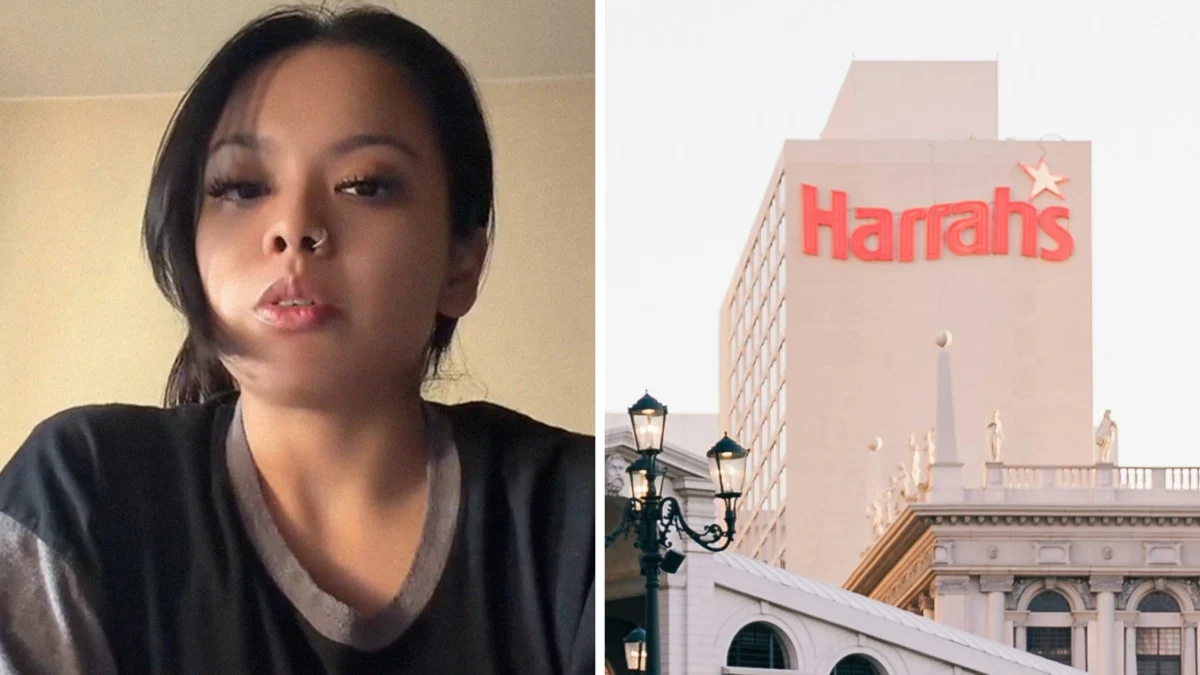
The hospitality industry in Atlantic City is under renewed scrutiny following a viral report from a New York traveler who documented a series of hygiene and service failures at Harrah’s Resort Atlantic City. The incident, which occurred during a high-demand festival weekend, has sparked a broader conversation regarding the gap between luxury pricing and service delivery in one of the East Coast’s premier gambling hubs. Mari, a social media content creator known as @mariiiiiii.w, shared her experience at the resort’s newly renovated Waterfront Tower, alleging that she discovered significant biohazards and remnants of previous guests in a room that cost her party more than $700.
The report highlights a growing tension between major casino-hotel operators and consumers who are increasingly using social media platforms to demand accountability. While Harrah’s, owned by Caesars Entertainment, markets its Waterfront Tower as a premium accommodation option featuring modern upgrades and expansive views, the reality described by the guest suggests a breakdown in housekeeping protocols and management response during peak occupancy periods.
A Detailed Account of the Incident
The dispute began when Mari and her party checked into a double queen room in the Waterfront Tower for an early birthday celebration. Due to a late arrival and an immediate departure for evening activities, the guests did not initially inspect the room. It was only upon returning late at night and preparing for bed that the severity of the situation became apparent. According to Mari’s testimony, one of her companions discovered a large, pungent stain on one of the beds.
"There was this huge stain on one of the beds that had a very strong odor coming out of it," Mari stated in her video, which has garnered nearly 100,000 views. "Upon inspection, it smelled a lot like urine. It looked like it had soaked down through the sheets into the bed."
Beyond the biohazard on the mattress, the guests reported finding personal belongings from previous occupants still inside the room’s drawers, suggesting that the housekeeping staff had failed to perform a basic sweep of the furniture. Additionally, a "weird streak stain" was noted on the bathroom floor near the sink. These findings led the party to conclude that the room had not been properly turned over or sanitized before their arrival, despite the premium price point of the stay.
Chronology of Service Failures and Management Response
The timeline of the incident reflects a series of communication breakdowns between the guests and the hotel staff. After discovering the unsanitary conditions, Mari contacted the front desk. While she described the initial desk clerks as "very lovely" and professional, the subsequent resolution process proved frustrating.
- Initial Report: The guests informed the front desk of the urine stain and the leftover belongings. A clerk promised that the room would be cleaned and that a housekeeping supervisor would be dispatched to speak with them directly.
- The Two-Hour Wait: The party returned to their room to wait for the supervisor. Despite having dinner reservations, they remained in the room for nearly two hours. According to Mari, the supervisor never arrived, and no update was provided by the hotel during this window.
- Escalation to Operations: Returning to the lobby, Mari spoke with the hotel’s manager of operations. The manager acknowledged the situation and apologized but stated that the hotel was completely sold out and could not move the party to a different room.
- Compensatory Offer: The manager offered a $100 dining and drink credit as restitution. Mari argued that this amount was "barely even a fraction" of the $700-plus total paid for the stay, particularly given the health concerns associated with a urine-soaked mattress.
- Resolution: The room was eventually cleaned later that night, but the guest expressed that the experience had already tarnished the celebratory nature of the trip.
The Context of Atlantic City’s High-Demand Weekends
The incident at Harrah’s occurred during the "Beach Road Trip" (BRT) Weekend, a popular Caribbean music festival that draws thousands of visitors to Atlantic City. During such marquee events, hotel occupancy across the city typically reaches 100%, leading to a significant tightening of room availability and a surge in nightly rates.
Data from the Atlantic City hospitality market indicates that during peak summer weekends and festival dates, even standard rooms can command prices upwards of $400 to $600 per night, with premium towers like Harrah’s Waterfront Tower reaching even higher. The Waterfront Tower, which opened in 2008, remains the tallest and most modern structure on the Harrah’s property. Caesars Entertainment has invested heavily in the resort’s infrastructure, including a $56 million renovation of the nearby Coastal Tower completed in 2019.

However, industry analysts note that high occupancy often puts a strain on labor resources. Darryl Henry, a frequent visitor and local sports official, noted that the back-to-back nature of summer tournaments and festivals often leaves housekeeping staff with very narrow windows to turn over thousands of rooms. "The question is whether these bigger hotels have the staff for the quick turnover required during these massive event weekends," Henry observed in response to the viral report.
Social Media Backlash and Brand Reputation
The digital response to Mari’s TikTok video reveals a polarized view of Atlantic City’s luxury hotel tier. The phrase "Ocean would never," referring to the Ocean Casino Resort, became a recurring sentiment among commenters, suggesting that Harrah’s competitors are perceived by some as maintaining higher standards of cleanliness and customer service.
While some commenters defended the hotel, noting that a $100 credit and a late-night cleaning were reasonable given the sold-out status, the majority of the feedback was critical. Former employees and frequent guests shared similar stories of hygiene issues, with one commenter claiming to be a former Harrah’s front-desk agent and describing the situation as "terrible."
The power of viral social media posts presents a significant challenge for legacy brands like Caesars Entertainment. In the hospitality sector, "cleanliness" is considered a non-negotiable baseline. When a guest pays a premium for a "newly remodeled" room in a flagship tower, the expectation for sanitization is absolute. A failure in this area, documented and shared with a large audience, can cause long-term damage to brand loyalty and the perceived value of loyalty programs like Caesars Rewards.
Consumer Rights and Industry Implications
For travelers who encounter similar issues, the New Jersey Division of Consumer Affairs provides a framework for recourse under the state’s Consumer Fraud Act. Legal experts suggest that when a paid service—such as a clean and habitable hotel room—is not delivered as advertised, consumers may have grounds for a formal complaint or a credit card chargeback.
The Harrah’s incident underscores several critical implications for the broader hospitality industry:
- The Labor-Quality Gap: As hotels struggle with labor shortages in the post-pandemic era, the ability to maintain rigorous cleaning standards during 100% occupancy periods is being tested.
- The Inadequacy of Traditional Recovery: Standard compensatory measures, such as small dining credits, are increasingly viewed as insufficient when the failure involves health and safety (biohazards).
- The Transparency of Renovations: Marketing rooms as "newly renovated" creates a high expectation of quality. When the physical condition of the room (stains, debris) contradicts the marketing narrative, it creates a "trust gap" that is difficult to bridge.
Mari has indicated that she has attempted to contact Caesars Rewards corporate offices via email to seek a more substantial resolution, including a potential refund. As of the time of this report, she claims to have received no response.
Conclusion
The experience of this New York traveler serves as a cautionary tale for both consumers and hotel operators. For travelers, it highlights the importance of immediate room inspections upon check-in, regardless of the time of day. For operators, it serves as a reminder that in the age of instant digital sharing, a single failure in housekeeping or a delayed management response can quickly escalate into a public relations crisis.
As Atlantic City continues to position itself as a premier destination for festivals and high-end tourism, the consistency of its hospitality standards will remain a focal point for visitors who are paying record-high prices for their stays. BoardingArea and other industry observers have reached out to Caesars Entertainment for an official statement regarding the incident and their protocols for room turnover during high-occupancy events. Updates will be provided as more information becomes available.