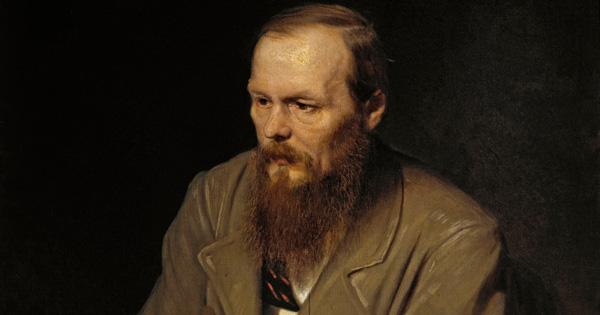
The trajectory of 19th-century Russian literature was irrevocably altered on April 23, 1849, when Fyodor Dostoyevsky, then a promising 27-year-old novelist, was arrested by the tsarist secret police. Accused of participating in the Petrashevsky Circle—a group of intellectuals who discussed prohibited Western social philosophies—Dostoyevsky was subjected to a traumatic mock execution before being exiled to Siberia. This period of state-imposed penance, characterized by hard labor and profound emotional isolation, would eventually provide the psychological foundation for his greatest works. However, it was during his post-imprisonment years in the Siberian town of Semipalatinsk that Dostoyevsky encountered a personal ordeal that rivaled his legal battles: a tumultuous and nearly catastrophic pursuit of Maria Dmitrievna Isaeva, the woman who would become his first wife.
The Semyonovsky Square Mock Execution: A Turning Point
Before the romantic entanglements of his exile, Dostoyevsky’s worldview was forged in the fire of an impending death sentence. On December 22, 1849, he and his fellow "conspirators" were led to Semyonovsky Square in St. Petersburg. The men were dressed in white shrouds and tied to stakes. As the firing squad raised their rifles, a messenger from Tsar Nicholas I arrived to announce that the sentence had been commuted to four years of hard labor followed by service as a private soldier.
The psychological impact of this event cannot be overstated. That evening, Dostoyevsky penned a letter to his brother Mikhail that reflected a newfound, ecstatic appreciation for existence—a theme that would permeate his later novels. He wrote of life being a "gift" and every minute a potential "age of happiness." This spiritual awakening, however, was immediately tested by the brutal reality of the Omsk fortress, where he served his four-year sentence alongside hardened criminals in conditions he later described as "the house of the dead."
The Semipalatinsk Exile and the Isaev Family
Upon his release from prison in 1854, Dostoyevsky was ordered to serve as a private in the Seventh Line Battalion in Semipalatinsk, a remote outpost in what is now Kazakhstan. Destitute, physically weakened by the onset of severe epilepsy, and socially marginalized, he struggled to reintegrate into a world that had largely forgotten him. It was here that he befriended Alexander Ivanovich Isaev, a minor official and a tragic figure consumed by alcoholism.
Despite his failings, Dostoyevsky described Isaev as a man of intellect and goodness. More significant, however, was Dostoyevsky’s introduction to Isaev’s wife, Maria Dmitrievna Isaeva. At 29, Maria was described as an educated, "chivalrous" woman of bright intelligence and passionate curiosity. She provided Dostoyevsky with a rare intellectual outlet and a sense of domestic stability. As her husband’s health and career collapsed due to his addiction, Maria faced the grim prospect of 19th-century Russian poverty. In an era where a woman’s social and economic standing was tied almost exclusively to her husband, Maria was, as contemporaries noted, a potential "victim of the world."

A Triangle of Despair: The Rivalry with Nikolay Vergunov
The dynamics of the relationship shifted dramatically in 1855 when Alexander Isaev was transferred to Kuznetsk and subsequently died, leaving Maria a widow with a young son and no means of support. Dostoyevsky, who had already realized he was deeply in love with her, began a fervent correspondence. However, a year after her husband’s death, Maria delivered a devastating blow: she intended to marry Nikolay Vergunov, a 24-year-old local schoolteacher.
Historical records and Dostoyevsky’s private letters reveal a man plunged into what he termed "unbearable bliss and torment." Vergunov was younger and more physically robust, but in Dostoyevsky’s eyes, he was intellectually inferior and incapable of providing for a woman of Maria’s sophistication. Despite his jealousy, Dostoyevsky exhibited an extraordinary degree of moral grandeur. Believing that Maria’s happiness was paramount, he leveraged his connections—specifically his friendship with Baron Alexander Wrangel—to petition for a salary increase for his rival, Vergunov. His reasoning was pragmatic yet heartbreaking: if Maria chose the schoolteacher, she must at least have the financial security to survive.
The Economics of Exile and the Path to Officerhood
Throughout 1856, Dostoyevsky’s letters to Baron Wrangel served as a diary of his psychological disintegration. He described his love as an "illness" and admitted to suicidal ideations. His situation was exacerbated by his lack of rank; as a common soldier, he could not offer Maria the social status or the income necessary to compete with even a lowly schoolteacher.

The turning point occurred in the final months of 1856. Following the death of Nicholas I and the coronation of Alexander II, the political climate began to thaw. Dostoyevsky was promoted to the rank of ensign (officer), a shift that fundamentally changed his economic prospects and social standing. With the authority of his new rank and the persistence of a man who had already faced death, he made a formal proposal to Maria.
By this time, Maria’s initial passion for the young Vergunov had begun to wane, likely under the pressure of the teacher’s own lack of ambition and the stark reality of their shared poverty. Recognizing Dostoyevsky’s unwavering devotion and his improved circumstances, she accepted his proposal.
Chronology of Key Events
To understand the scale of Dostoyevsky’s struggle, one must look at the timeline of these formative years:
- April 1849: Arrested for political subversion.
- December 1849: Mock execution and commutation of sentence.
- 1850–1854: Hard labor at the Omsk fortress.
- February 1854: Release from prison; relocation to Semipalatinsk.
- Spring 1854: Friendship with the Isaev family begins.
- August 1855: Death of Alexander Isaev; Maria becomes a widow.
- Summer 1856: Dostoyevsky discovers Maria’s intention to marry Vergunov; begins frantic efforts to assist her financially.
- October 1856: Promoted to officer rank.
- February 7, 1857: Marriage to Maria Dmitrievna Isaeva in Kuznetsk.
- 1859: Permission granted to return to European Russia and St. Petersburg.
- April 1864: Death of Maria Dmitrievna from tuberculosis.
Analysis: The Psychological Blueprint of a Master
The relationship between Fyodor and Maria was never one of simple domestic harmony. Historians and biographers, including Joseph Frank, have noted that their marriage was characterized by frequent conflict, exacerbated by Maria’s deteriorating health and Dostoyevsky’s frequent epileptic seizures. Yet, this period was essential to the development of Dostoyevsky’s "polyphonic" style of writing.
The themes of self-sacrifice, the "insulted and injured" protagonist, and the "eternal husband" all find their roots in the Semipalatinsk years. His 1861 novel, The Insulted and the Injured, directly transposes his experience of assisting a romantic rival for the sake of a beloved woman into fiction. Furthermore, Maria is often cited as a partial inspiration for several of his complex female characters, such as Katerina Ivanovna in Crime and Punishment and Grushenka in The Brothers Karamazov—women who possess a "chivalrous heart" but are driven to the brink by social and economic forces.
Broader Impact and Literary Legacy
The marriage lasted seven years until Maria’s death from tuberculosis in 1864. While it was a period of significant personal suffering, it was also the era of Dostoyevsky’s literary resurrection. Under the auspices of this complex love, he transitioned from the "sentimentalist" style of his early work, like Poor Folk, to the profound existentialism that would define his later career.

Dostoyevsky’s willingness to embrace "bliss and torment" as two sides of the same coin allowed him to explore the depths of the human psyche with an authenticity that few other writers have achieved. His letters from this period remain a vital resource for scholars, providing a raw, unfiltered look at the man behind the masterpieces. They reveal a figure who, having been stripped of his rights, his health, and his dignity by the state, found a reason to endure through a desperate, often irrational, but ultimately transformative love.
In the final analysis, the Siberian exile did more than just punish a political dissident; it created the conditions for a literary giant to emerge. The "unfortunate madman" who wandered the Siberian tundra in pursuit of a widow’s heart was the same man who would eventually give the world a definitive voice on the nature of suffering, redemption, and the human soul. Dostoyevsky’s life in Siberia proves that for the truly great artist, even the most crushing abasement can be transmuted into the "cathedral of literature."