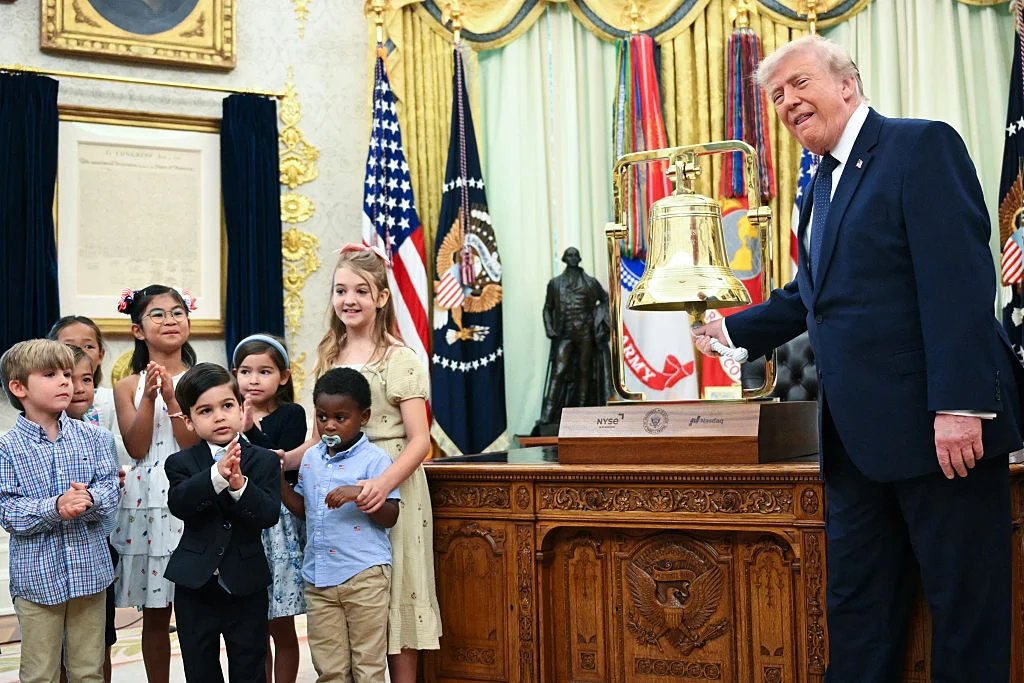
President Donald Trump’s much-touted "Trump accounts," a new federal investment and savings program designed for children, have quickly become a focal point of economic and political debate since their formal launch. While the administration champions these accounts as a revolutionary tool for intergenerational wealth creation, promising that they "could grow to hundreds of thousands of dollars" by the time children reach adulthood, financial experts and critics contend that such outcomes are largely contingent on significant annual contributions, a burden likely out of reach for the low-income families the program ostensibly aims to uplift. This discrepancy between the program’s ambitious promises and its practical realities forms the core of an ongoing discussion about its equity and effectiveness.
Genesis of the Program: The "One Big Beautiful Bill Act"
The foundation for Trump accounts was laid with the signing of the "One Big Beautiful Bill Act" by President Trump on July 4, 2025. This landmark legislation established the framework for these innovative child savings accounts, aiming to provide a financial head start for millions of American children. A cornerstone of the act is the federal government’s commitment to seed new accounts with an initial $1,000 contribution for children born between January 1, 2025, and December 31, 2028, provided they possess a valid Social Security number. While parents can open accounts for older children, they will not be eligible for this initial government contribution. This federal investment represents a substantial fiscal commitment, with the Committee for a Responsible Federal Budget estimating the cost to the government at $17 billion through 2028 for these initial $1,000 contributions.
Further bolstering the program’s initial capital, a significant philanthropic initiative was announced in December 2025. Michael and Susan Dell, through their foundation, committed a colossal $6.25 billion donation specifically to these investment accounts. This generous contribution enabled an additional $250 payment for the first 25 million children under the age of 10 residing in ZIP codes with a median income of $150,000 or less, effectively providing a total of $1,250 in initial seed money for a substantial segment of eligible children from moderate and lower-income areas. This combination of federal and private funding underscored the ambition behind the program, aiming to create a broad base of participation from its inception.
How Trump Accounts Work: Mechanics and Investment Strategy
Trump accounts are structured as child savings accounts that a parent or legal guardian can open for any child before their 18th birthday. Once established, various parties are permitted to contribute to these accounts, including parents, relatives, friends, employers, state governments, philanthropic organizations, and individuals. The program sets a combined annual contribution limit of $5,000 per account.
Operationally, the Treasury Department announced on July 1, 2026, that all Trump accounts would initially be invested in the State Street SPDR Portfolio S&P 500 ETF. This choice reflects a strategy to provide broad market exposure through a low-cost index fund, which passively tracks the performance of the 500 largest publicly traded companies in the U.S. The Treasury also indicated that additional stock index fund options would become available in "coming months," offering parents more choices for managing their children’s investments. These accounts are designed to grow on a tax-deferred basis, meaning that investment gains are not taxed until withdrawal, allowing for potentially greater compounding over time. Upon the child’s 18th birthday, the account transitions, essentially becoming a traditional individual retirement account (IRA), thereby integrating it into the broader landscape of American retirement savings vehicles.
However, the funds held within a Trump account are not accessible before the child reaches adulthood. Once the account holder turns 18, withdrawals can be made penalty-free for specific qualified expenses, mirroring traditional IRA rules. These include costs associated with higher education tuition and up to $10,000 for a first-time home purchase. Should withdrawals be made for non-qualified expenses before the age of 59 ½, a 10 percent tax penalty applies. Furthermore, all withdrawals, including any pre-tax contributions such as the government’s initial seed money or employer contributions, are subject to ordinary income tax rates, as clarified by the Tax Foundation. After-tax contributions, however, are exempt from these taxes. This structure emphasizes long-term savings and discourages early access to the funds, aligning with the goal of fostering financial stability into adulthood.
The President’s Bold Claims: "Hundreds of Thousands" and "Very Rich" Children
President Trump has consistently championed the Trump accounts with lofty projections, frequently asserting that these investments "could grow to hundreds of thousands of dollars by the time they [children] reach 18 or 21." During a launch event for the accounts in the Oval Office on July 6, 2026, he reiterated this vision, stating, "Think of it, children that are born without money, without any money… They can become very wealthy children at 18." He further elaborated on CNBC on July 2, "It’s a beautiful thing. It’s a child has had no money, and when that baby becomes a man or a woman, they can have hundreds of thousands of dollars, maybe more, but they can have hundreds of thousands of dollars, because we’re seeding it." These statements paint a picture of significant wealth accumulation, particularly for those starting with little to no financial resources.
On January 28, 2026, Trump emphasized the transformative potential of the program for disadvantaged youth, claiming, "It’s really an amazing thing because it gives young children that start out with really nothing and it gives them — boy, it’s more money than anybody could imagine." Such rhetoric underscores the administration’s narrative that these accounts offer an unprecedented pathway to financial prosperity for a broad spectrum of American children, irrespective of their socioeconomic background at birth.
Expert Scrutiny: Unpacking the Investment Growth Projections
While the President’s vision is compelling, financial experts quickly pointed out the caveats necessary for such substantial growth. Achieving "hundreds of thousands of dollars" by age 18 is indeed possible, but it hinges almost entirely on consistent, maximal annual contributions.
A report from the White House Council of Economic Advisers (CEA) provided detailed growth estimates under various scenarios. Its midrange scenario, which assumes an average annual return of 10.3 percent and incorporates the government’s $1,000 seed money, projects an account balance of $303,757 by the time a child turns 18. However, this impressive figure is predicated on parents or other donors supplementing the account with the maximum $5,000 annual contribution, adjusted for inflation starting the following year. The CEA also presented a high-range scenario, with an optimistic 18.5 percent average annual return, forecasting an account value of $730,395 by age 18 under the same maximum contribution conditions. Conversely, a low-end scenario, assuming a more conservative 5.4 percent average annual stock growth, still projects a substantial balance of $187,408 with continuous maximum contributions.
These figures sharply contrast with growth estimates for accounts receiving only the initial seed money. Without any additional contributions, the CEA’s mid-range scenario estimates the $1,000 seed money would grow to a modest $5,839 by the time the child turns 18. Joseph Rosenberg, a senior fellow at the Urban-Brookings Tax Policy Center, provided a slightly lower estimate in an interview, suggesting that the initial $1,000, without further contributions and assuming a 7 percent rate of return, would grow to a little more than $3,000 by age 18. These stark differences highlight the critical role of ongoing, substantial contributions in realizing the program’s most ambitious growth projections. For context, the State Street SPDR Portfolio S&P 500 ETF, the initial investment vehicle for these accounts, has averaged an annual return of 11.31 percent since its launch in late 2005, providing a real-world benchmark that sits above the CEA’s mid-range but below its high-range scenario. All these projections, as Rosenberg noted, are before taxes and inflation adjustments and are inherently dependent on the volatile performance of the stock market.
The Disparity Debate: Will Low-Income Children Truly Benefit?
President Trump’s assertions that children from homes with "essentially no money" could become "very rich" through Trump accounts have ignited a fierce debate among financial experts and policy analysts. The core of the contention lies in the fundamental economic realities facing low-income households.
Michelle Singletary, a respected personal finance columnist for The Washington Post, articulated this challenge succinctly in a July 11 column: "If you’re a family living paycheck to paycheck, finding an extra $400 a month to lock away is a fantasy. The issue has never been a lack of account types. The obstacle for many families is a lack of surplus cash." Her analysis underscores a critical point: the program, by relying on families to invest up to $5,000 annually for meaningful growth, does not address the underlying issue of poverty or the scarcity of disposable income in struggling households. Data on household savings rates consistently show that low-income families often struggle to meet basic needs, let alone set aside thousands of dollars annually for long-term investments.
An analysis by the Urban Institute echoed this sentiment, concluding that "Without additional deposits into the accounts of kids from families with low incomes, children of wealthy parents will primarily benefit" from the program. This suggests that without targeted mechanisms to ensure consistent contributions for disadvantaged children, the Trump accounts risk exacerbating, rather than alleviating, existing wealth disparities. The initial $1,000 or $1,250 seed money, while helpful, is unlikely on its own to transform a child’s financial future to the extent envisioned by the President. As the trumpaccounts.gov website estimates, if no additional contributions are made beyond the initial $1,000, that account could be worth approximately $243,000 by the time the child is 55 years old, not by age 18. This distinction in timelines is crucial and often overlooked in the program’s promotion.
Furthermore, Greg Leiserson, a former senior economist for the White House Council of Economic Advisers under Presidents Barack Obama and Joe Biden, writing for The Tax Law Center at New York University, raised concerns that the program might inadvertently exclude vulnerable children. He warned that those in "unstable or complex living situations" or "whose caregivers have very low incomes and do not file a tax return" might face barriers to accessing and benefiting from these accounts. These administrative hurdles could further limit the program’s reach among the very demographic it claims to serve most effectively.
Alternative Funding Streams: Philanthropy and Employer Contributions
Beyond individual and family contributions, the Trump accounts are unique in their explicit design to accept significant external funding. The $6.25 billion donation from Michael and Susan Dell, which funded the additional $250 contributions for eligible children, served as a prominent example of how philanthropic organizations can directly supercharge these accounts. This model suggests a potential pathway for non-profits and other charitable entities to contribute to children’s financial futures on a large scale.
Another significant feature is the allowance for employer contributions. The Trump administration announced that over 50 companies have already committed to making Trump account contributions for their employees’ children. Employers can contribute up to $2,500 per year on a tax-free basis to an employee’s child’s account, with this amount counting towards the overall $5,000 annual maximum contribution limit. This mechanism offers a novel employee benefit and a potential boon for families whose employers choose to participate, providing a substantial, consistent source of funding that does not come directly out of a family’s disposable income.
Adam N. Michel, the Cato Institute’s director of tax policy studies, highlighted the importance of these external contributions in his analysis. He noted, "The most attractive feature of a Trump Account is not its treatment of personal contributions but the ability to receive transfers from governments, employers, and nonprofit organizations." Michel argued that these contributions represent "direct government subsidies or tax-free contributions from employers or nonprofit organizations," implying that the financial advantage of the accounts derives primarily from these external sources rather than from improved tax treatment of contributions made by the beneficiary’s family or friends. In this context, he suggested, the accounts function less as a "neutrality-enhancing investment vehicle" for individual savers and "more as a welfare program" for channeling funds from institutions to children.
Tax Efficiency and Comparison to Existing Savings Vehicles
The tax structure of Trump accounts, while offering tax-deferred growth, has also drawn comparisons to other established savings vehicles, leading some experts to question their overall tax efficiency for personal contributions. Adam N. Michel’s analysis for the Cato Institute found that Trump accounts would yield the lowest after-tax value of savings compared to other popular options such as health savings accounts (HSAs), traditional IRAs, or Roth IRAs, when considering contributions made by families or friends.
For instance, 529 plans, widely used for college savings, offer tax-free growth and tax-free withdrawals when used for qualified educational expenses, a more robust tax benefit for specific goals than the Trump account’s tax-deferred growth and taxed withdrawals. HSAs offer a triple tax advantage: tax-deductible contributions, tax-free growth, and tax-free withdrawals for qualified medical expenses. Traditional IRAs allow for tax-deductible contributions and tax-deferred growth, with withdrawals taxed in retirement. Roth IRAs, while funded with after-tax dollars, offer tax-free growth and tax-free withdrawals in retirement. The Trump account’s structure of tax-deferred growth with withdrawals taxed at ordinary income rates (for pre-tax contributions and gains) means that for many families, especially those who anticipate being in a higher tax bracket in adulthood, other existing vehicles might offer more advantageous tax treatment for their personal savings efforts. This suggests that the primary financial draw of Trump accounts for individual families might lie less in their unique tax structure for personal contributions and more in the potential for receiving the initial government seed money and subsequent employer or philanthropic contributions.
Political Reactions and Public Reception
The introduction of Trump accounts has been met with a predictably polarized political response. While the administration and its supporters hail it as a groundbreaking initiative to empower the next generation financially, Democratic lawmakers have expressed significant skepticism. Democratic Representative Bennie Thompson of Mississippi notably posted on X on July 6, "It’s safe to say, I would pass on a Trump account." He added a stinging critique, stating, "Trump University already taught us what happens when his name is on the brochure," referencing the controversial for-profit education venture that faced lawsuits and allegations of fraud. This reaction highlights the deep partisan divide and the challenge the program faces in garnering bipartisan support, particularly given its branding.
Despite the political criticism, initial public uptake of the program appears substantial. President Trump announced on July 6, 2026, that "6 million American children have signed up" for the accounts. Of these, 1.4 million met the specific birth date requirement making them eligible for the federal government’s $1,000 seed money. The Treasury Department confirmed progress in disbursing these funds, reporting that by July 4, 2026, it had already deposited the $1,000 into over 500,000 accounts. These enrollment figures suggest a significant level of public interest and participation, at least in the initial stages, indicating that many families are eager to take advantage of the government and philanthropic seed money, regardless of broader debates about the program’s long-term efficacy or equity.
Broader Economic and Social Implications
The Trump accounts, beyond their immediate financial mechanics, carry significant broader economic and social implications. On one hand, the program has the potential to foster greater financial literacy among parents and children, introducing concepts of investing, compounding, and long-term savings at an earlier age. The establishment of these accounts for millions of children could also facilitate intergenerational wealth transfer, providing a tangible asset that can grow over decades. The very existence of a dedicated investment account for children, particularly with an initial government contribution, could shift cultural attitudes towards saving and investing for future generations.
However, the program also raises critical questions about its long-term societal impact and whether it truly addresses wealth inequality. While the initial seed money is universal for eligible age groups, the dramatic growth promised by the administration is, as experts have shown, disproportionately reliant on ongoing contributions that are more feasible for affluent families. This could lead to a scenario where children from wealthier backgrounds, whose families can afford to contribute the maximum $5,000 annually, accumulate substantial sums, while children from low-income families, despite the initial federal boost, see only modest growth. This outcome could inadvertently widen the wealth gap rather than narrow it, benefiting those already financially secure more than those struggling.
Furthermore, the fiscal cost to the government, estimated at $17 billion through 2028 for the initial seed money alone, invites scrutiny. Policy analysts will continue to debate whether this substantial public investment is optimally allocated to achieve its stated goals, or if alternative programs, perhaps with more direct support for low-income families or more progressive contribution matching schemes, could yield greater equitable impact. The "welfare program" aspect highlighted by Michel, where external contributions drive much of the benefit, also prompts discussions about the role of government and philanthropy in addressing systemic economic disparities.
In conclusion, the Trump accounts represent a significant federal initiative with the potential to instill a culture of saving and investing in American families. Their design, which combines federal seeding with opportunities for philanthropic, employer, and individual contributions, offers multiple pathways for capital accumulation. However, the program’s ambitious claims of making children "very rich" by adulthood are heavily qualified by the necessity of substantial, ongoing private contributions. This fundamental reliance creates a dichotomy where the greatest benefits are likely to accrue to children from economically secure households, prompting ongoing debate about the program’s true efficacy in bridging wealth disparities and its long-term social and economic legacy.