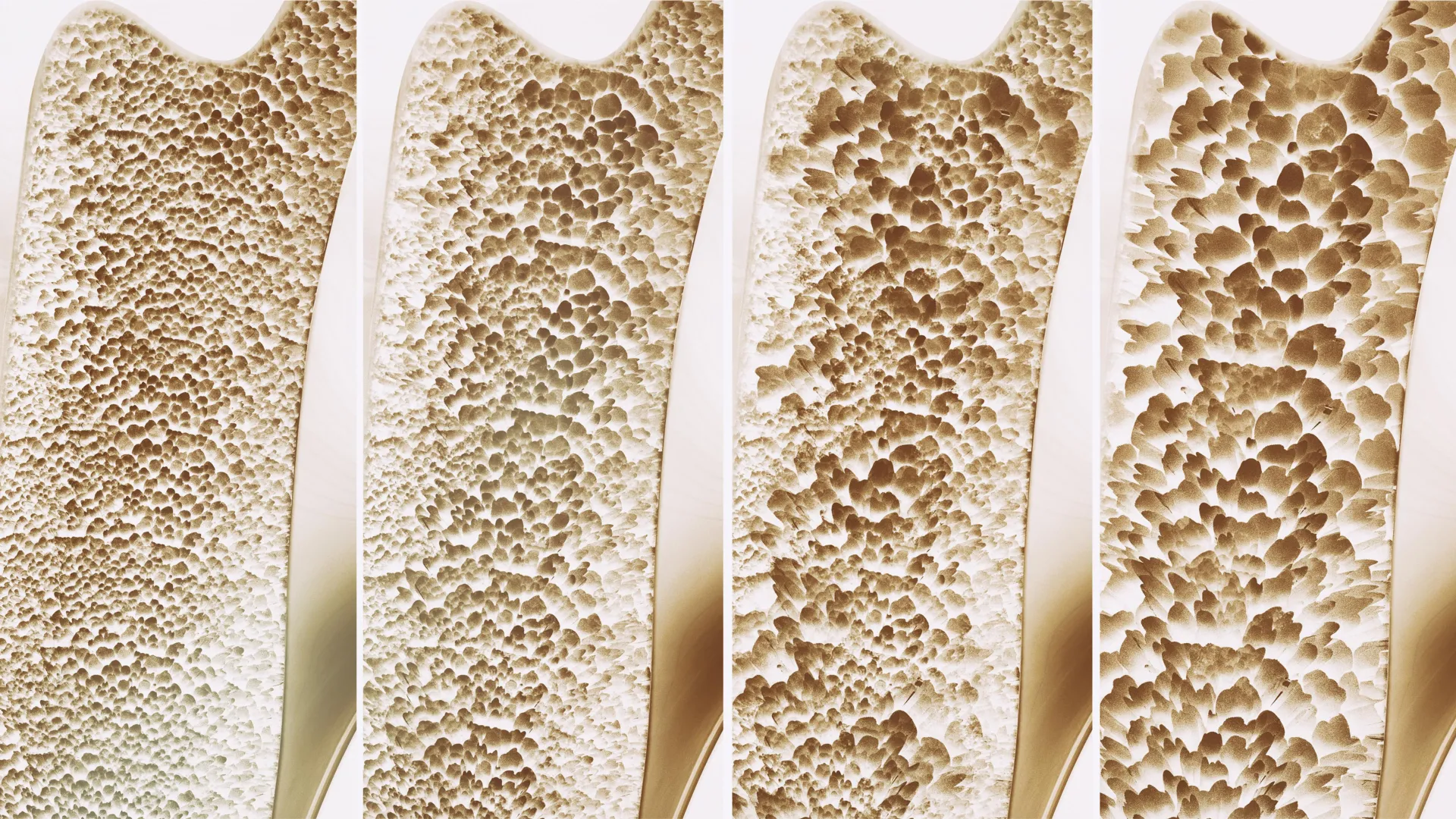
Osteoporosis remains one of the most pressing public health challenges in the modern era, particularly as global populations continue to age. Characterized by a systemic reduction in bone mass and the deterioration of bone microarchitecture, the condition leaves millions of individuals highly susceptible to fragility fractures. In Germany alone, an estimated six million people suffer from the disease, with a significant majority being women. While existing pharmacological interventions—such as bisphosphonates and denosumab—have helped mitigate fracture risks, they are often associated with long-term side effects or limited efficacy in certain patient demographics. Consequently, the medical community has been in a persistent search for novel biological targets capable of preserving or regenerating bone tissue.
A major breakthrough has emerged from Leipzig University, where researchers at the Rudolf Schönheimer Institute of Biochemistry have identified a promising receptor, GPR133, as a critical regulator of bone density. This discovery, rooted in years of structural research into G protein-coupled receptors (GPCRs), offers a dual-action potential that could revolutionize the management of skeletal degradation.
The Mechanism of GPR133 in Skeletal Homeostasis
GPR133 belongs to the enigmatic family of adhesion G protein-coupled receptors. Unlike traditional receptors that are activated by small molecules floating in the extracellular space, adhesion GPCRs are tethered to the cell surface and act as mechanical sensors, responding to physical forces and the microenvironment surrounding the cell. Despite their ubiquity, these receptors have long remained a "black box" in pharmacology due to their complex activation mechanisms.
The research team, led by Professor Ines Liebscher, identified that GPR133 functions as a key mediator in bone remodeling. Bone tissue is a dynamic, living organ that undergoes constant turnover through the interplay of two primary cell types: osteoblasts, which synthesize and mineralize new bone matrix, and osteoclasts, which break down and resorb old bone. In a healthy adult skeleton, these processes are tightly coupled. However, in osteoporotic patients, this equilibrium is disrupted, typically shifting toward accelerated bone resorption.
The study revealed that GPR133 acts as a molecular "rheostat" for this balance. When activated, the receptor initiates signaling pathways that concurrently stimulate the differentiation and activity of osteoblasts while suppressing the activity of osteoclasts. By modulating this pathway, researchers can theoretically tip the balance back toward bone accrual, providing a pathway to not just stop bone loss, but potentially rebuild compromised structural integrity.
Chronology of Discovery and Experimental Validation
The journey to identifying GPR133 as a therapeutic target began with a decade-long focus on GPCR structural dynamics at Leipzig University, spearheaded by the Collaborative Research Center (CRC) 1423. The center has consistently pushed the boundaries of understanding how these receptors undergo conformational changes to transmit signals across cellular membranes.
The validation process for GPR133 involved a multi-stage experimental approach:
- Genetic Mapping: Researchers observed that mice lacking a functional GPR133 receptor exhibited signs of early-onset bone density loss, closely mirroring human osteoporosis. This established a direct correlation between the receptor’s presence and skeletal health.
- In Silico Screening: Utilizing advanced computer-assisted screening techniques, the team identified AP503, a small molecule compound capable of acting as a pharmacological agonist (stimulator) for GPR133.
- In Vivo Efficacy Testing: In controlled experiments, the administration of AP503 was found to significantly increase bone strength in both healthy and osteoporotic murine models. This confirmed that the receptor could be "switched on" to promote bone density even in the presence of existing disease.
Statistical Context and the Burden of Disease
The urgency for such research is underscored by global health data. The International Osteoporosis Foundation (IOF) estimates that worldwide, one in three women over the age of 50 will experience an osteoporotic fracture, as will one in five men. These injuries—most commonly involving the hip, wrist, or spine—are not merely orthopedic incidents; they are often precursors to a severe decline in overall health. Hip fractures, in particular, are associated with high mortality rates, with nearly 20% to 25% of patients dying within a year of the fracture due to secondary complications.
The economic impact is equally staggering. The direct medical costs associated with osteoporotic fractures in the European Union are estimated to exceed €37 billion annually. As the global demographic profile shifts toward an older median age, these costs are projected to rise, placing an immense strain on national healthcare systems. If the Leipzig team’s findings translate successfully from the laboratory to clinical practice, they could represent a significant reduction in the socioeconomic burden of age-related disability.
Implications Beyond the Skeleton: The Muscle-Bone Crosstalk
Perhaps the most compelling aspect of the Leipzig study is the potential for systemic benefits. In a previous study, the same research group demonstrated that AP503 also plays a role in strengthening skeletal muscle. This finding is critical because osteoporosis rarely occurs in a vacuum; it is frequently accompanied by sarcopenia, the age-related loss of muscle mass and function.
"The newly demonstrated parallel strengthening of bone once again highlights the great potential this receptor holds for medical applications in an aging population," noted Dr. Juliane Lehmann, the lead author of the study.
The convergence of bone and muscle health is a significant focus of current gerontological research. Stronger muscles improve balance and mobility, which in turn reduces the risk of falls—the primary cause of fractures in the elderly. A therapeutic agent that addresses both skeletal integrity and muscular strength would be a game-changer for geriatric medicine, offering a holistic approach to preventing frailty.
Future Research Directions and Clinical Hurdles
While the results are undeniably positive, the researchers are careful to maintain a measured, objective perspective regarding the path forward. Moving from mice models to human clinical trials is a complex process that involves rigorous safety testing and pharmacokinetic analysis.
The Leipzig team is currently engaged in several follow-up projects, including:
- Safety and Toxicity Profiles: Determining the long-term impact of AP503 stimulation on other bodily systems, as GPR133 may have expression patterns outside of bone and muscle.
- Mechanistic Mapping: Investigating exactly how AP503 mimics the body’s natural activation of the receptor and whether this can be optimized for higher bioavailability.
- Expanded Disease Scope: Exploring whether the GPR133 pathway is implicated in other conditions characterized by tissue degradation or metabolic imbalances.
The ongoing work of the Collaborative Research Center 1423 continues to provide the structural foundation for this research. By mapping the exact shape-shifting movements of the GPR133 receptor, the scientists hope to develop "next-generation" agonists that are even more selective and potent than AP503.
Analysis of Clinical Implications
The identification of GPR133 as a bone-regulatory target offers a departure from traditional osteoporosis treatments. Most current therapies, such as bisphosphonates, function by inhibiting bone resorption (anti-resorptive agents). While these are effective, they do not necessarily stimulate new bone formation. Anabolic agents—those that build bone—are generally more limited in their long-term use due to safety constraints.
If GPR133 stimulation can achieve a balance of inhibiting resorption while simultaneously promoting formation, it could occupy a unique space in the treatment hierarchy. It may provide a more "physiological" approach to bone management, effectively mimicking the natural remodeling signals that the body uses during youth. Furthermore, the prospect of treating sarcopenia concurrently with osteoporosis addresses the "syndemic" nature of aging, where multiple chronic conditions exacerbate one another.
Conclusion
The findings from Leipzig University represent a significant milestone in the field of molecular endocrinology and skeletal biology. By identifying the role of GPR133, researchers have opened a new pathway for potential therapeutic intervention that targets the mechanical sensing capabilities of bone cells. While clinical implementation remains on the horizon, the evidence suggests that the focus on adhesion GPCRs could hold the key to addressing the dual challenges of bone fragility and muscle wasting. As the global population continues to age, the translation of such research from the bench to the bedside will be vital in ensuring that later life is characterized by mobility, independence, and structural resilience. The ongoing commitment of the Leipzig research community to unraveling the complexities of these receptors ensures that this remains a high-priority area for medical innovation in the years to come.