
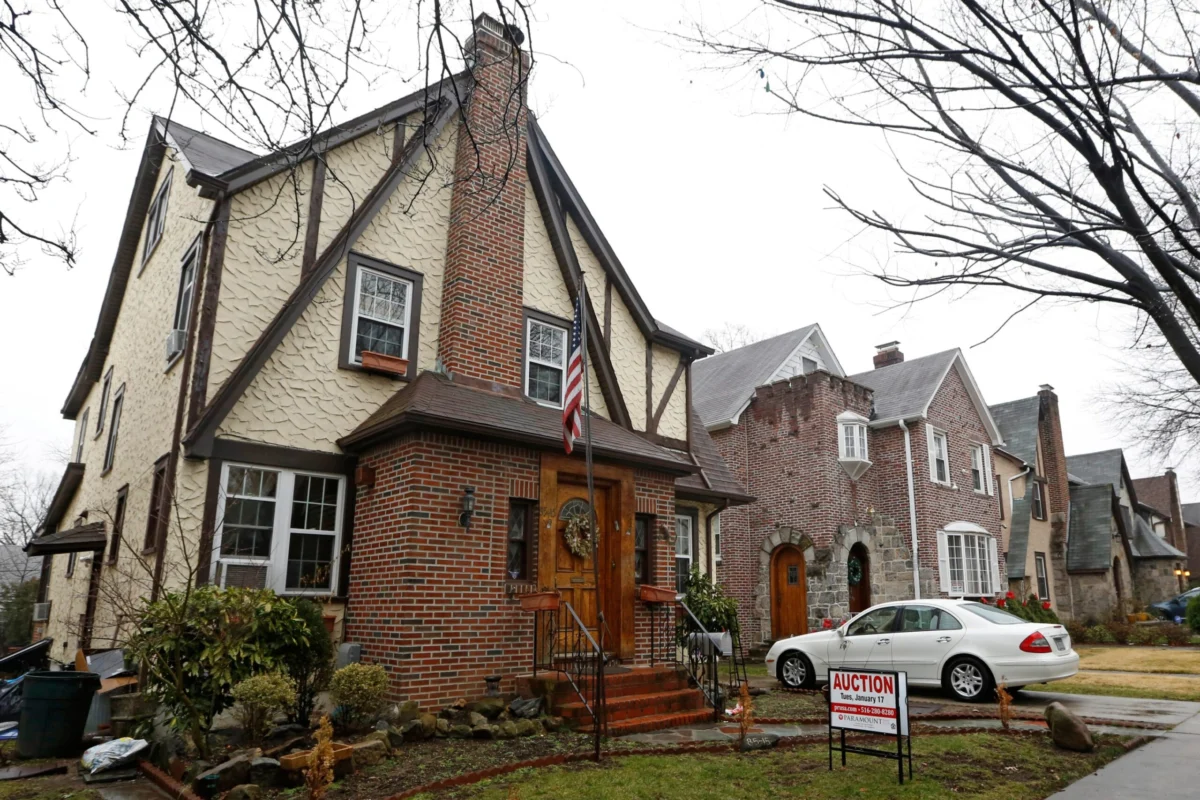
The Tudor-style residential property in the affluent Jamaica Estates neighborhood of Queens, New York, where Donald Trump spent the earliest years of his life, has officially changed hands once again. The historic home fetched $1.93 million following a comprehensive, eight-month interior overhaul that converted the neglected structure—which had previously suffered severe water damage and served as a shelter for feral cats—into a thoroughly modernized luxury residence.
Public real estate records confirmed the transaction value after an unidentified buyer entered into a formal contract for the property. This latest sale marks another chapter in the turbulent modern history of the five-bedroom, three-bathroom home, which has transitioned from a modest family dwelling built by a prominent post-war developer into a political novelty, a short-term rental curiosity, and finally, a high-end suburban investment.
The Genesis of a Presidential Childhood Home
The property’s history is inextricably linked to the early foundations of the Trump family real estate empire. Located in the desirable Jamaica Estates section of Queens, the home was constructed in 1940 by Fred Trump, the patriarch of the family and a prolific residential developer who shaped large swaths of New York City’s outer-borough housing landscape during the mid-20th century.
Fred Trump designed and built the English Tudor-style home for his growing family, featuring classic architectural hallmarks of the era, including a pitched slate roof, brick-and-stucco exterior detailing, and a spacious layout capable of accommodating a burgeoning household. Donald Trump, born in June 1946, lived at the address until approximately the age of four, when the family relocated to a much larger, custom-built mansion nearby within the same upscale neighborhood.
Although the Trump family divested from the property decades ago, the house retained a quiet suburban obscurity until Donald Trump’s ascent to the American presidency in 2017. Suddenly, the modest Queens address transformed from an anonymous suburban house into an international point of interest for tourists, media outlets, and real estate speculators alike.
A Rollercoaster Timeline of Recent Real Estate Transactions
The trajectory of the Jamaica Estates home over the past decade reflects the broader financial and cultural fascination surrounding the Trump name. Following years of relatively quiet private ownership, the property became the subject of intense market speculation immediately after the 2016 presidential election.
In March 2017—just months after Donald Trump was sworn into office—an LLC named Trump Birth Home purchased the property for $2.14 million. The acquisition price represented a significant markup over standard comparable homes in the immediate neighborhood, driven entirely by the property’s historical association with the sitting commander-in-chief.
Recognizing a unique marketing opportunity, the new owners briefly converted the residence into a short-term rental offering on Airbnb. Guests who booked a stay at the historic childhood home were greeted by interior decorations explicitly tailored to celebrate the property’s famous occupant. These included a life-sized cardboard cutout of Donald Trump, copies of his bestselling memoir and business guide The Art of the Deal, and a framed replica of a People magazine cover featuring his likeness.
However, the novelty of the enterprise proved unsustainable as a long-term business model. By 2019, the property was returned to the traditional real estate market with an ambitious asking price of $2.9 million. Despite the high-profile listing, prospective buyers failed to materialize at that valuation, and the property languished on the market, eventually entering a phase of deep neglect.
From Feral Cat Den to Luxury Modern Abode
By the time the property caught the attention of real estate investor and developer Tommy Lin, the house had fallen into a state of severe disrepair. Years of vacancy, combined with structural neglect, took a heavy toll on the historic structure. According to local reports and real estate disclosures, a major pipe burst went unnoticed for an extended period, leading to extensive interior water damage and pervasive mold growth throughout the living spaces. Compounding the structural decay, a colony of feral cats had taken up residence inside the vacant house, leaving the interior largely uninhabitable and requiring intensive remediation.
Recognizing the underlying value of the land and the unique historical cachet of the address, Lin purchased the neglected property in the previous year for $835,000—a steep discount from its previous peak asking prices.
Rather than attempting to flip the home in its distressed state, Lin committed an additional $500,000 toward an exhaustive, eight-month interior renovation. The modernization effort stripped away the water-damaged and deteriorated elements, replacing them with high-end contemporary finishes designed to appeal to luxury homebuyers. The overhauled interior now features a state-of-the-art chef’s kitchen equipped with premium appliances, classic herringbone hardwood flooring throughout the main levels, and spa-inspired bathrooms outfitted with modern marble and high-end fixtures.
Following the completion of the extensive rehabilitation, the property was listed once again, ultimately attracting a buyer who signed a contract in July before the final $1.93 million sale was recorded on real estate registries. While the buyer’s identity has been kept confidential through corporate entity structures, the successful transaction underscores the enduring market appeal of a thoroughly modernized home backed by a unique pop-culture provenance.
Broader Economic and Cultural Implications
The sale of the Queens property highlights a broader phenomenon in real estate markets: the monetization and financialization of presidential history. Properties associated with prominent political figures frequently experience wild market fluctuations driven not by standard square-footage metrics or neighborhood appreciation rates, but by the ebb and flow of political sentiment and media attention.
For Jamaica Estates, the presence of the Trump childhood home has long been a minor local curiosity, occasionally drawing curious onlookers and media crews to an otherwise peaceful residential enclave characterized by winding, tree-lined streets and stately detached homes. While some neighbors have historically expressed frustration with the periodic influx of tourist traffic and media scrutiny, real estate analysts note that properties with unique historical or political narratives almost always command a distinct pricing tier compared to neighboring equivalents, provided they are properly maintained.
Furthermore, the transformation of the property from a mold-infested eyesore into a luxury suburban asset illustrates the resilience of New York City’s outer-borough housing markets. Even in neighborhoods far removed from the commercial and cultural hubs of Manhattan, significant capital investment in residential rehabilitation can successfully revitalize distressed historical stock.
A Lifelong Architectural and Aesthetic Preoccupation
The sale of his first childhood home occurs as Donald Trump continues to oversee his own high-profile residential and interior design projects at the highest levels of government and private life. Throughout his decades as a Manhattan real estate mogul, Trump built his personal brand around opulent architectural statements, most notably the glittering, brass-and-marble interior of Trump Tower on Fifth Avenue, which served as his primary residence and corporate headquarters for decades before his presidency.
Since entering national politics, Trump’s distinct design aesthetic has frequently intersected with public federal spaces. During his administration, architectural and interior modifications to the White House mirrored the lavish, gold-plated detailing that has long defined his private properties and commercial developments. Observers frequently draw a direct line between the modest Tudor-style beginnings in Queens, the towering commercial ambitions of Manhattan, and the gilded transformations of executive federal spaces.
As the newly renovated Queens residence enters its next chapter under anonymous ownership, it remains a physical monument to the humble origins of one of the most polarizing and influential figures in modern American history—a suburban house that has traveled a remarkably circuitous route from family homestead to tourist novelty, through neglect and decay, and finally into the realm of modern luxury real estate.






Leave a Reply