The Mechanics of the Hunter’s Moon
The term "Hunter’s Moon" is deeply rooted in the agricultural and survivalist history of the Northern Hemisphere. Following the Harvest Moon—the full moon closest to the autumnal equinox—the Hunter’s Moon traditionally signaled a critical time for preparation. With summer crops harvested and fields cleared of stalks and debris, the moon provided ample light for hunters to track game, ensuring a store of food for the impending winter months.
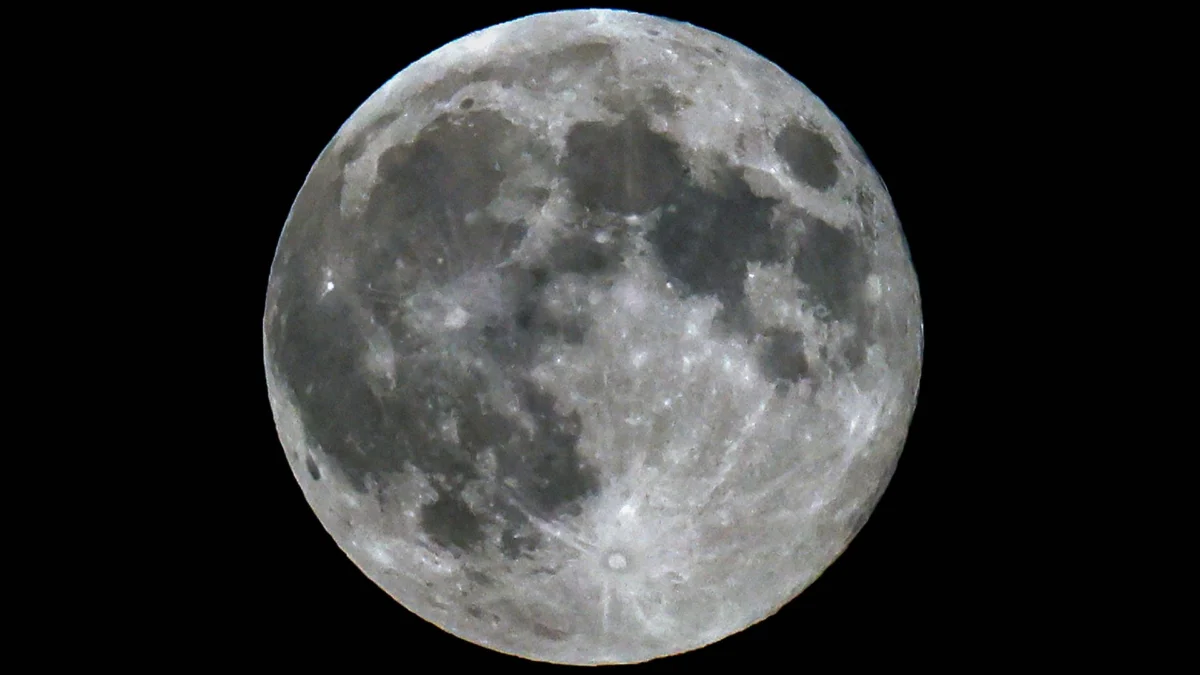
From an astronomical standpoint, this full moon occurs when the moon is situated directly opposite the sun in the sky. During this phase, the line of separation between the illuminated day side and the shadowed night side—the terminator—is essentially invisible from Earth. While this lack of shadow makes the moon appear "flat" to the naked eye, it provides an ideal, high-contrast environment for amateur astronomers to study the moon’s albedo features. Specifically, the absence of harsh crater shadows allows for clearer identification of the lunar maria, or "seas," which are vast, ancient volcanic plains formed by basaltic lava flows billions of years ago. Observers equipped with telescopes or binoculars may also notice bright, radiating streaks emanating from younger impact craters. These features, known as "rays," consist of reflective material ejected from the lunar subsurface during high-velocity asteroid impacts.
Chronology of the October Lunar Event
For observers in the United States, the window for optimal viewing begins on the evening of October 25. As the sun dips below the horizon, the moon will rise in the eastern sky. Because the timing of moonrise depends significantly on longitude and latitude, astronomers recommend using localized trackers provided by organizations like Time and Date to determine the precise minute the moon crests the horizon in their specific area.
The transition from the evening of October 25 to the early morning hours of October 26 represents the crescendo of this lunar cycle. By 12:12 a.m. EDT on the 26th, the moon will be at its peak luminosity. Throughout the remainder of the night, it will traverse the sky, offering extended viewing windows for those in various time zones. While the "full" phase is technically a singular moment, the moon will appear nearly 100% illuminated to the human eye for approximately 24 to 48 hours surrounding this peak, providing a margin of error for those who may face cloudy weather on the night of the 25th.
Psychological and Atmospheric Factors
Observers frequently report that the moon appears significantly larger when it is positioned near the horizon compared to when it is high overhead. This phenomenon, known as the "Moon Illusion," is a psychological effect rather than an astronomical one. While the moon’s angular size remains constant regardless of its altitude, the human brain interprets objects near the horizon—such as trees, buildings, or mountains—as being further away. When the moon is placed within this context, the brain adjusts its perception, incorrectly scaling the moon as larger than it truly is.
Simultaneously, the moon often exhibits a distinct yellow, orange, or even reddish hue shortly after it rises. This color shift is an atmospheric byproduct. When the moon is near the horizon, its light must pass through a much thicker layer of Earth’s atmosphere to reach the observer. The atmosphere acts as a filter, scattering shorter-wavelength light—specifically blue and violet light—more effectively than longer-wavelength light like red and orange. The remaining light that reaches the eye is skewed toward the warmer end of the spectrum, creating the "spectacular" orange glow often associated with autumn moons.
Cultural and Indigenous Perspectives
The name "Hunter’s Moon" is the most widely recognized designation in contemporary Western culture, yet it is only one of many ways the October full moon has been interpreted throughout history. Indigenous North American traditions offer a diverse array of nomenclature that highlights the ecological shifts occurring during this time of year.
The Cree people refer to this event as the "Migrating Moon," reflecting the observation of migratory birds departing for warmer southern climates as temperatures begin to plummet. Similarly, the Ojibwe and Haida traditions categorize it as the "Freezing Moon," a direct acknowledgment of the first significant frosts of the season. These cultural labels serve as ancient, reliable calendars that align with the cyclical nature of the environment, reminding modern society of the moon’s role as a chronological marker for natural history.
Implications for Astrophotography and Research
The October full moon serves as a gateway event for many individuals entering the field of astrophotography. Because the moon is the brightest object in the night sky, it requires less sophisticated equipment than deep-sky photography of nebulae or galaxies. Experts in the field of optics suggest that even entry-level DSLR or mirrorless cameras, when paired with a telephoto lens (ideally 200mm or greater), can capture high-resolution imagery of the lunar surface.
For those interested in contributing to scientific data, the transition from the waxing phase to the full moon provides a unique dataset. While professional observatories use space-based telescopes to study lunar composition, amateur observations of surface features, such as crater ray patterns, can help track the long-term effects of micrometeoroid impacts. Organizations like the American Astronomical Society (AAS) encourage the public to engage with these events through structured observation, noting that consistent public interest in celestial events often correlates with increased funding and support for space exploration initiatives.
Broader Impact and Scientific Engagement
The visibility of the October full moon acts as an informal educational catalyst. When the moon reaches peak illumination, it draws public attention upward, often leading to increased traffic on astronomy-related platforms and higher attendance at public observatory nights. This "astronomical engagement" is a vital component of science communication. By understanding the physics behind the moon’s light, the chemistry of its basaltic plains, and the history of its nomenclature, the public gains a deeper appreciation for the Earth-Moon relationship.
Furthermore, the study of the moon’s orbit and its interaction with the Earth’s atmosphere provides a practical lesson in planetary science. The scattering of light that creates the orange moonrise is the same fundamental process that gives Earth its blue sky and red sunsets. By observing the moon, the public is effectively observing the physical laws that govern our own atmosphere.
As with all major lunar events, experts stress the importance of safety and preparation. Those attempting to photograph the moon should prioritize stability; a tripod is essential to mitigate the effects of hand-held camera shake, which can obscure the finer details of lunar craters. Additionally, using a remote shutter release or a self-timer can further ensure image sharpness.
The October full moon is not merely a static light in the sky, but a dynamic, multifaceted event that bridges the gap between ancient survival practices and modern scientific inquiry. Whether viewed as a navigational tool for early hunters, a subject for astronomical research, or simply a beautiful display of physics, the Hunter’s Moon remains a cornerstone of the annual stargazing calendar. As the moon rises this week, it serves as a reminder of the consistent, rhythmic cycles that have defined human observation of the cosmos for millennia. Readers interested in participating in the documentation of this event are encouraged to capture their own observations, as public participation in documenting lunar phenomena continues to provide valuable records for the global community of skywatchers.