

For over a century, the prevailing scientific paradigm has localized human consciousness, intelligence, and emotion strictly within the confines of the cranium. Since the late 19th-century breakthroughs by Santiago Ramón y Cajal, who mapped the intricate neural architecture of the brain, neuroscience has experienced a period of explosive growth. However, this progress has often come at the cost of reductionism. By attempting to isolate complex human capacities—such as imagination, grief, and abstract reasoning—to specific neural firing patterns or anatomical regions, science has inadvertently fostered a "neo-phrenology." This narrow focus often ignores the broader, systemic nature of consciousness.
In her seminal work, The Extended Mind: The Power of Thinking Outside the Brain, science writer Annie Murphy Paul challenges this "brain-bound" view of intelligence. Paul argues that human cognition is not a solitary internal process but a dynamic system that extends into the body, the physical environment, and the social collective.

A Historical Divergence: From Dualism to Embodiment
The modern obsession with the brain as the sole seat of intelligence can be traced back to the Cartesian dualism that cleaved the mind from the body in the 17th century. Following René Descartes, Western thought became increasingly atomized. As the Industrial Revolution took hold, metaphors for the mind shifted to match the technological marvels of the era: the brain was likened to a loom, then a telegraph, and finally, a computer.
This reductionist trajectory reached a peak in the late 20th century, as neuroimaging technology—such as fMRI and PET scans—allowed researchers to visualize localized brain activity with unprecedented clarity. While these tools revolutionized medicine and cognitive science, they reinforced the cultural belief that to understand a human being is to understand their neural circuitry.
However, a growing body of research is now challenging this framework. Scientists are beginning to recognize that consciousness is a full-body phenomenon, rooted in interoception—the sense of the internal state of the body. This shift marks a return to the intuitive insights of early thinkers like Virginia Woolf, who once noted, "Our minds are all threaded together, and all the world is mind."

The Magpie Model: Thinking as Assembly
Annie Murphy Paul introduces a compelling metaphor to replace the "computer" model of the brain: the magpie. Known for its high intelligence and habit of constructing complex, elaborate nests from disparate materials in its environment, the magpie serves as a proxy for the human mind. According to Paul, thought is an act of "continuous assembly and reassembly."
This "Extended Mind" theory rests on three pillars of cognition that move beyond the skull:
- Embodied Cognition: This posits that our physical movements, gestures, and physiological states are not merely byproducts of thought but active components of the thinking process. The Austrian poet Thomas Bernhard famously observed that "there is nothing more revealing than to see a thinking person walking," a sentiment now supported by studies showing that rhythmic movement facilitates associative thinking.
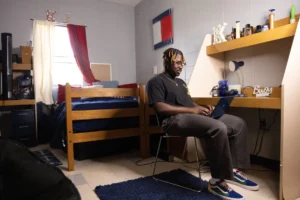
- Situated Cognition: This concept suggests that our physical environment—the layout of a room, the presence of nature, or the specific tools we use—directly impacts the quality of our cognitive performance. Scottish poet Nan Shepherd noted that "place and a mind may interpenetrate," an observation now validated by research into how natural environments improve focus and creative problem-solving.
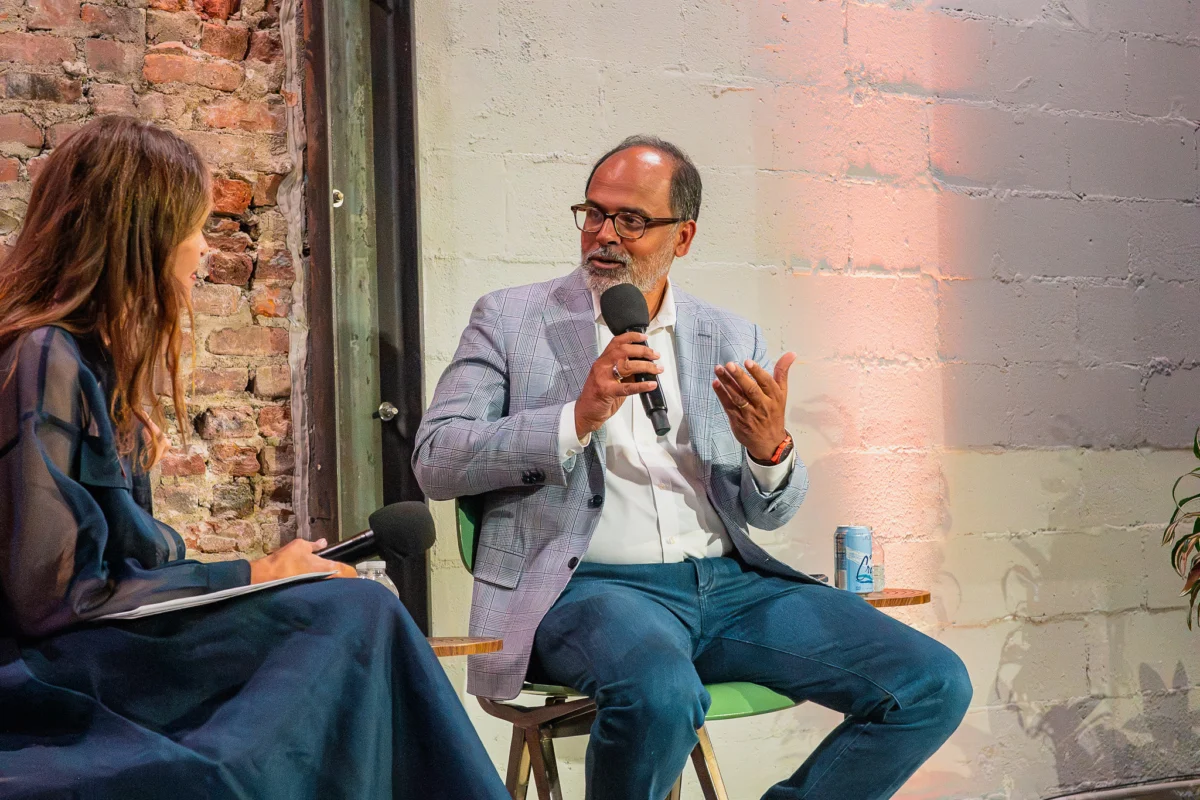
- Distributed Cognition: This refers to the capacity to outsource cognitive labor to other people and digital systems. It challenges the individualistic notion of intelligence, suggesting that our intellectual reach is defined by our ability to integrate external minds and information systems into our own mental network.
Supporting Data and Scientific Implications
The empirical basis for the Extended Mind is rooted in decades of psychological and physiological research. A key area of study is the "somatic rudder"—the role of the body in guiding decision-making. Interoception allows the body to signal the brain through subtle physiological shifts, such as changes in heart rate, muscle tension, or respiration, often before the conscious mind has fully processed the information.

For example, researchers have demonstrated that people often show physiological stress markers when presented with disadvantageous choices in a decision-making task, long before they can consciously explain why those choices are bad. This suggests that the body performs a form of "somatic pattern recognition" that the brain alone cannot replicate.
Furthermore, studies on gesture have shown that children use hand movements as a "sensemaking" tool long before they possess the vocabulary to express complex concepts. By moving our hands, we effectively offload cognitive effort from the brain, allowing for deeper processing and faster concept acquisition.
Broader Context and Societal Impact
The implications of this shift are profound for education, urban planning, and corporate management. If intelligence is not a fixed internal property but a "shifting state" dependent on access to external resources, then the traditional "classroom" or "cubicle" model may be fundamentally flawed.

Current pedagogical models are beginning to integrate these findings by encouraging "movement-based learning" and "situated learning," where the physical context of the lesson is treated as a component of the curriculum. In the corporate world, there is a growing trend toward "distributed teams" and collaborative workspaces that treat the social network as an extension of the individual’s cognitive capacity.
However, critics of the Extended Mind theory argue that it risks diluting the importance of neurological health. While the brain is undeniably the central processing unit, proponents of the theory emphasize that they are not denying the brain’s importance; rather, they are expanding the definition of the "cognitive system." As physicist Erwin Schrödinger famously posited, "the over-all number of minds is just one," a statement that aligns with the growing scientific understanding of the interconnectedness of all living systems.
A New Framework for the Future
As we navigate an increasingly digitized world, the necessity of understanding our "extra-neural" resources becomes more urgent. We are currently experiencing a period where we rely heavily on digital devices as "external brains," yet we often fail to intentionally design these interactions to support deep, imaginative, or critical thinking.

The work of Annie Murphy Paul provides a necessary framework for navigating this technological landscape. By recognizing that we are "inhabitants" of our bodies rather than merely drivers of them, we can learn to "strew our world with rich materials" and weave them into our thoughts.
The transition from a machine-centric view of the brain to a magpie-centric view of the mind requires a cultural reorientation. It demands that we honor the "deeply seated response to the natural universe" that Rachel Carson once championed. It also requires a reassessment of what it means to be "intelligent." If intelligence is a function of our access to and skillful use of external resources, then equity in education and access to stimulating, supportive environments becomes a matter of cognitive justice.
As society continues to grapple with the limitations of the brain-centric model, the "Extended Mind" thesis stands as a significant milestone in our quest to understand human consciousness. It serves as a reminder that to think more clearly, more creatively, and more deeply, we must learn to look not only inward, but outward—to our bodies, our places, and each other. The "fathomless human brain," as Walt Whitman once pondered, may be the engine, but the world around us is the fuel, the architecture, and the collaborator in the act of being human.








Leave a Reply