
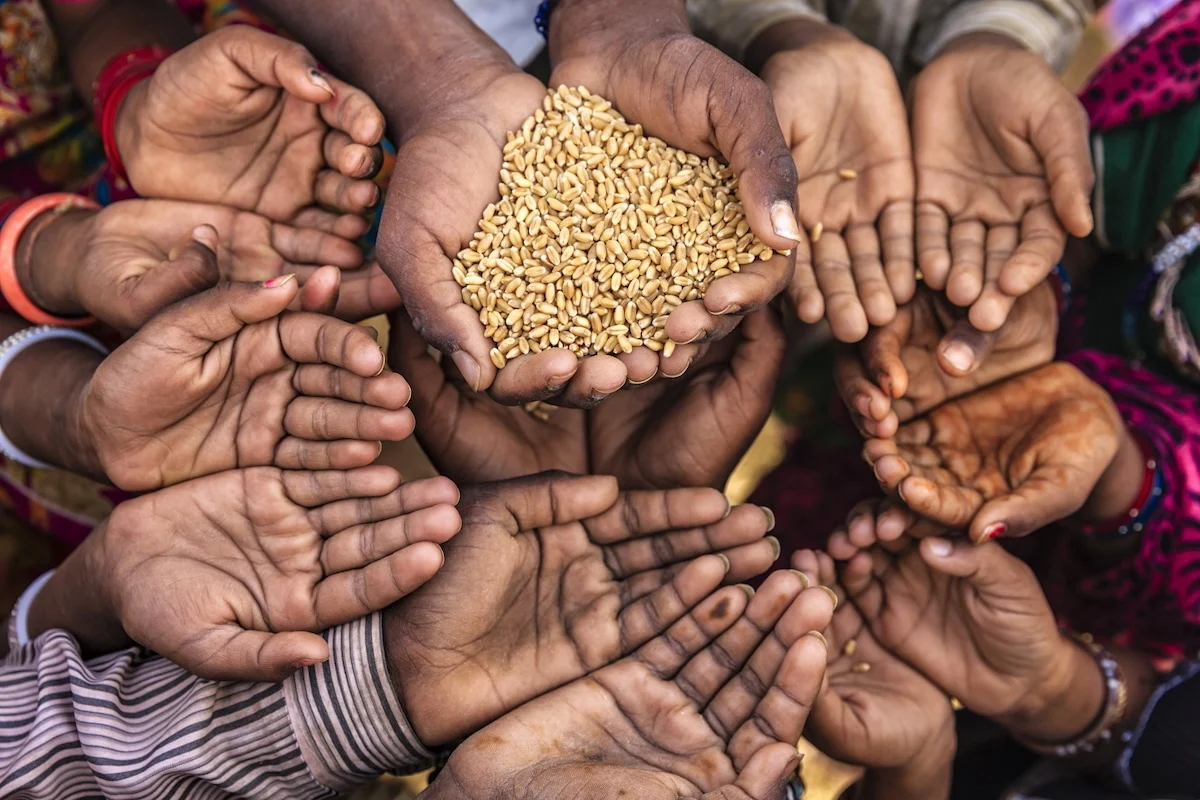
The global battle against hunger achieved marginal overall progress last year, yet a persistent and dangerous geographic divide continues to deepen, according to a landmark international assessment. Published jointly by five specialized agencies of the United Nations, the report titled The State of Food Security and Nutrition in the World (SOFI) reveals that while worldwide hunger rates have experienced a modest downward trajectory, nations across Africa and western Asia are moving rapidly in the opposite direction.
Released by the Food and Agriculture Organization of the United Nations (FAO), the comprehensive study indicates that approximately 8.2 percent of the global population—representing roughly 673 million people—faced hunger in 2024. This figure marks a measurable improvement from previous years, falling from 8.7 percent in 2022 and 8.5 percent in 2023. Statistically, the total population experiencing hunger ranged between 638 million and 720 million individuals last year, reflecting a reduction of roughly 15 million people compared to 2023 and 22 million compared to 2022.
Despite these aggregate global gains, international leaders and humanitarian organizations emphasize that the broader picture masks severe regional inequalities, escalating food price inflation, and structural economic barriers that threaten to derail the United Nations’ Sustainable Development Goal of achieving Zero Hunger by 2030.
A Diverging Landscape: Regional Progress Versus Escalating Crises
The 2025 SOFI report paints a fractured portrait of global food security, characterized by notable recoveries in certain hemispheres contrasted against unrelenting deterioration in others.
In Asia, the proportion of undernourished individuals declined significantly to 6.7 percent, down from 7.9 percent two years prior. Latin America and the Caribbean likewise demonstrated encouraging recovery, pushing undernourishment down to 5.1 percent of the regional population—totaling approximately 34 million people—in 2024. This rebound follows a pandemic-era peak of 6.1 percent recorded in 2020.
However, these positive trends stand in stark contrast to the unfolding humanitarian emergencies in Africa and western Asia. In Africa, the proportion of the population confronting chronic hunger surpassed 20 percent in 2024, impacting a staggering 307 million people. Meanwhile, western Asia witnessed its estimated undernourishment rate climb to 12.7 percent, leaving more than 39 million individuals struggling to secure daily sustenance. Many of the hardest-hit areas are trapped in protracted cycles of conflict, economic instability, and acute climate vulnerabilities.
Beyond absolute hunger, the report tracked broader metrics of dietary deprivation. Moderate or severe food insecurity—affecting individuals who lack consistent access to adequate food throughout the year—decreased slightly to 28 percent globally in 2024. This translates to roughly 2.3 billion people, a marginal improvement from 28.4 percent in 2023, though still unacceptably high by historical standards.
The Lingering Aftershocks of the 2021–2023 Food Price Surge
The fragile state of global nutrition is deeply intertwined with the unprecedented economic shocks that roiled international markets between 2021 and 2023. The SOFI report offers an in-depth examination of the causes and consequences of the recent global food price surge, identifying it as a primary obstacle to post-pandemic recovery.
Food price inflation, driven by a volatile combination of pandemic-era monetary policies, supply chain disruptions, the war in Ukraine, and increasingly severe extreme weather events worldwide, severely penalized developing economies. While median global food price inflation rose from a modest 2.3 percent in December 2020 to a peak of 13.6 percent in early 2023, low-income nations suffered exponentially worse. In those vulnerable countries, food inflation skyrocketed to an average peak of 30 percent in May 2023.

These inflationary pressures fundamentally altered the purchasing power of households globally. While the total number of people worldwide unable to afford a healthy diet declined to 2.6 billion last year—down from a high of 2.76 billion in 2019—the burden shifted dramatically onto low-income nations. In low-income countries, the number of individuals locked out of healthy, nutritious diets surged to 544.7 million in 2024, representing 72 percent of their total population and an increase from 464 million five years earlier. Similarly, in lower-middle-income nations excluding India, that figure climbed from 791 million to 869 million over the same timeframe.
Official Responses and Strategic Policy Recommendations
Reacting to the release of the report, heads of the major UN agencies underscored the urgency of coordinated, multi-sectoral interventions to stabilize global food systems.
"While it is encouraging to see a decrease in the global hunger rate, we must recognize that progress is uneven," stated FAO Director-General QU Dongyu. "SOFI 2025 serves as a critical reminder that we need to intensify efforts to ensure that everyone has access to sufficient, safe, and nutritious food. To achieve this, we must work collaboratively and innovatively with governments, organizations, and communities to address the specific challenges faced by vulnerable populations, especially in regions where hunger remains persistent."
The human toll of these macroeconomic failures falls disproportionately on the youngest populations. UNICEF Executive Director Catherine Russell highlighted the alarming prevalence of childhood undernutrition, noting its lifelong repercussions.
"Every child deserves the chance to grow and thrive. Yet over 190 million children under the age of 5 are affected by undernutrition, which can have negative consequences for their physical and mental development. This robs them of the chance to live to their fullest potential," Russell said. She stressed the necessity of strengthening social protection safety nets, educating caregivers on locally available nutritious foods, and promoting exclusive breastfeeding as a vital foundational intervention.
World Health Organization Director-General Dr. Tedros Adhanom Ghebreyesus acknowledged tangible strides in reducing childhood stunting and supporting breastfeeding in recent years, but cautioned that millions remain trapped in cycles of food insecurity and malnutrition.
Echoing the call for structural economic reform, International Fund for Agricultural Development (IFAD) President Alvaro Lario emphasized the necessity of targeted investments. "In times of rising food prices and disrupted global value chains, we must step up our investments in rural and agricultural transformation. These investments are not only essential for ensuring food and nutrition security—they are also critical for global stability," Lario noted.
To reverse these negative trends, the SOFI report outlines a comprehensive policy framework aimed at mitigating future price shocks and building resilient agricultural economies. Key recommendations include:
- Transparent Monetary Policies: Implementation of credible monetary strategies designed to contain macroeconomic inflationary pressures before they cascade into localized food markets.
- Targeted Fiscal Interventions: Deployment of time-bound, precision-targeted social protection programs and safety nets to shield low-income and vulnerable households from sudden price spikes.
- Strategic Agricultural Investments: Directing robust public and private capital into agrifood research and development, enhanced market information systems, and foundational rural infrastructure, including efficient transportation and production networks.
Implications for the 2030 Sustainable Development Goals
The projections contained within the latest UN assessment underscore a sobering reality regarding the international community’s development agenda. Current trajectories suggest that approximately 512 million people will likely experience chronic undernourishment by the year 2030. Alarmingly, nearly 60 percent of those individuals will reside on the African continent.
Authored jointly by the FAO, IFAD, the World Food Programme (WFP), UNICEF, and the WHO, the report concludes that maintaining business-as-usual approaches will render the Sustainable Development Goal of Zero Hunger entirely unachievable. Without aggressive adaptation to climate change, structural debt relief for developing nations, and sustained financial commitments to smallholder agriculture, millions of the world’s most vulnerable citizens will remain indefinitely exposed to the devastating impacts of food insecurity and malnutrition.










Leave a Reply