
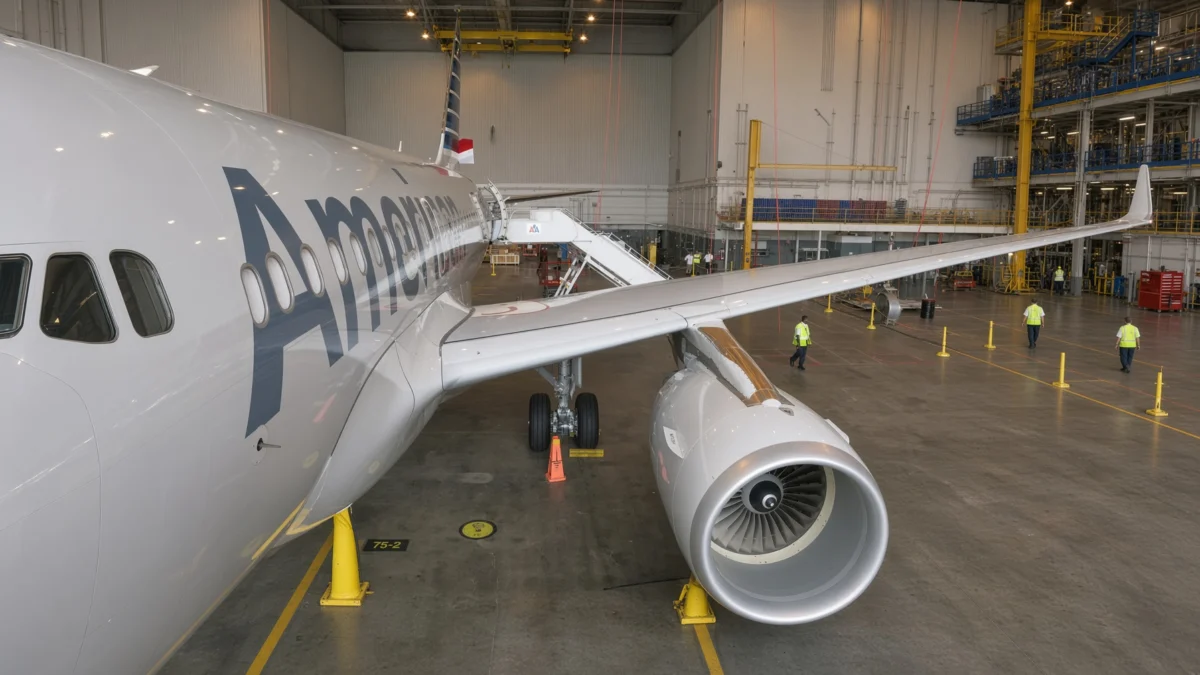
A routine departure sequence at Hartsfield-Jackson Atlanta International Airport on Sunday, September 13, devolved into an uncharacteristic and heated verbal confrontation between an American Airlines flight crew and a local air traffic controller. The incident, which centered on concerns regarding wake turbulence spacing behind a departing Boeing 757, resulted in a formal "possible pilot deviation" notification issued by the tower. While the controller maintained that standard separation requirements were met, the exchange has reignited industry discussions regarding the limits of pilot discretion versus the authority of air traffic control in the cockpit-tower dynamic.
The Sequence of Events
The incident involved American Airlines Flight 1428, an Airbus A319 bound for Philadelphia. As the aircraft reached the threshold of runway 27 Right, the flight crew received takeoff clearance. However, observing the position of a preceding Boeing 757, the crew determined that the remaining separation was insufficient for their comfort, citing concerns over potential wake turbulence.
The cockpit crew communicated their intent to delay their departure, stating, "Yeah, we need a little bit more time for that separation." In response, the tower controller immediately revoked the takeoff clearance and instructed the crew to exit the runway via taxiway Mike 20. The pilot acknowledged the instruction to exit, though the controller found it necessary to repeat the cancellation of the takeoff clearance twice before the crew formally acknowledged that specific directive.
Following the instruction to vacate the runway, the aircraft was held on a taxiway while other departures proceeded. It was during this delay that the professional tone of the communication deteriorated. The controller admonished the crew, stating, "American 1428, next time you need more than standard separation, you need to notify us prior to taking the runway."
The pilot of Flight 1428 subsequently challenged the controller’s assessment, noting that they did not have access to the specific air traffic control manuals on the flight deck and asserting that the clearance provided behind the 757 in calm wind conditions was inappropriate. The controller countered by stating there was no wake turbulence separation required for that specific configuration. The tension culminated when the pilot remarked, "Okay, let us fly the airplane. You guys can, uh, do your job," prompting the controller to issue a "possible pilot deviation" notification and provide a contact number for follow-up.
Understanding Wake Turbulence and Separation Standards
The core of the disagreement lies in the technical interpretation of wake turbulence separation categories. Wake turbulence is an invisible, rotating air mass shed by an aircraft’s wings, which can cause severe instability or structural stress to a following aircraft. The risk is particularly acute during takeoff and landing, especially in calm wind conditions where the turbulence can linger over the runway surface for an extended period.
According to Federal Aviation Administration (FAA) guidelines, aircraft are categorized by weight and performance characteristics. The Boeing 757, a heavy-category aircraft, carries specific wake turbulence requirements for lighter trailing aircraft. However, the Airbus A319 is classified under the FAA’s current wake turbulence categories as a medium-to-large aircraft. Under standard ATC separation rules, the controller was technically correct that no "additional" wake turbulence interval was mandated by the book for this specific pairing under the current operational rules.

Air traffic control is authorized to issue takeoff clearances if they can reasonably anticipate that the required separation—usually 6,000 feet of runway distance or specific time-based intervals—will be established by the time the following aircraft begins its takeoff roll. The controller’s frustration likely stemmed from the perception that the pilot was questioning their adherence to these established safety parameters.
The Role of Pilot Authority
A fundamental principle of aviation safety is the "Pilot in Command" (PIC) authority. The FAA explicitly states that while pilots must comply with air traffic control clearances, the pilot is ultimately responsible for the safety of the aircraft. If a pilot perceives that a clearance—even one that meets minimum separation requirements—poses an unacceptable risk to their flight, they are empowered to refuse the clearance and request an alternative.
In this instance, the American Airlines crew was not in violation of any regulation by requesting additional time. While the controller’s instructions to exit the runway were appropriate for the flow of traffic, the subsequent labeling of the refusal as a "possible pilot deviation" has been viewed by many industry observers as an overreach. A pilot deviation is a formal notification that a flight crew may have violated an FAR (Federal Aviation Regulation). By issuing this tag immediately after the pilot questioned his professional judgment, the controller appears to have personalized a safety-based disagreement.
Broader Implications for Aviation Safety Culture
The interaction at Atlanta serves as a high-profile example of the stresses inherent in modern air traffic management. Hartsfield-Jackson is one of the busiest airports in the world, and controllers operate under constant pressure to maximize runway throughput. The incident highlights the friction that can occur when the efficiency goals of the tower intersect with the risk-aversion protocols of the flight deck.
Following the interaction with American 1428, the atmosphere on the radio frequency remained strained. Later in the recording, a crew from a Frontier Airlines flight offered a compliment to the controller, to which the controller replied, "I appreciate it. I’ve been doing it for 26 years. I don’t need some pilot telling me how to do my job. You guys rock." This exchange suggests that the controller felt a sense of professional indignation that spilled over into their interactions with other pilots, potentially compromising the professional standard of the air traffic control environment.
Professional Standards and Regulatory Review
The FAA’s process for "pilot deviation" reports is designed to ensure safety, not to punish dissent. When a controller issues such a notice, it triggers an administrative review process. This process allows for the investigation of whether a regulation was truly breached or if the pilot was merely exercising sound judgment. In cases where a pilot declines a clearance, the incident is generally documented, but it is rarely sustained as a violation if the pilot can demonstrate that they acted out of an abundance of caution regarding the safety of the flight.
Industry experts argue that such public verbal clashes are detrimental to the "sterile cockpit" and collaborative safety environment required in aviation. When communication breaks down into personal defensiveness, it can distract both the pilot and the controller from their primary mission: the safe and orderly flow of air traffic.
Conclusion
The incident involving American Airlines Flight 1428 will likely remain a subject of analysis for aviation safety boards and training departments. While the controller maintained adherence to the letter of the law regarding separation, the pilot’s insistence on a safety buffer—even one exceeding minimum requirements—is a protected aspect of the pilot-in-command role. The subsequent use of the "pilot deviation" notice as a tool of professional frustration highlights a potential need for renewed focus on conflict resolution training within the ATC system. As air traffic volumes continue to rise, maintaining a culture of mutual respect and objective safety communication between the cockpit and the tower remains as critical as the technical separation of the aircraft themselves.







Leave a Reply