
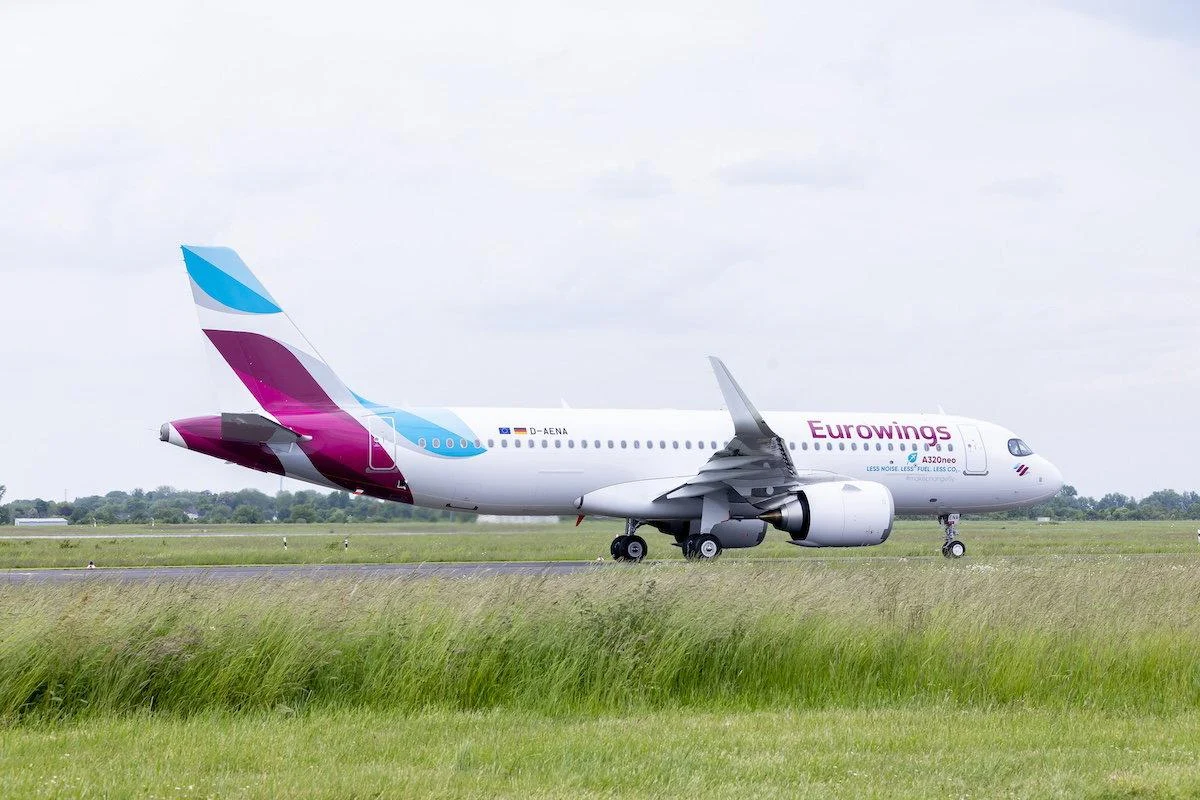
The aviation industry operates under a dense and unyielding web of safety regulations designed to protect passengers, crew, and aircraft from catastrophic security breaches. While these protocols are vital to modern commercial aviation, strict adherence to them can occasionally result in extraordinary logistical complications. This reality was demonstrated vividly on Wednesday, September 9, 2026, when a routine evening flight operated by German carrier Eurowings was forced to execute two separate diversions due to a single piece of luggage that had been loaded onto the aircraft in error.
The incident transformed a standard 896-mile journey from the Balearic Island of Ibiza to Dusseldorf into an arduous overnight ordeal for 156 passengers. The sequence of events highlights the rigid nature of aviation security laws enacted in the wake of historical tragedies, the vulnerabilities inherent in ground-handling operations, and the cascading effects of strict airport curfews across European hubs.
Main Facts of the Incident
Eurowings flight EW9503 was scheduled to depart Ibiza Airport (IBZ) on the evening of September 9, 2026, bound for Dusseldorf Airport (DUS). The service was operated using an Airbus A320, bearing the registration code D-ABZN. On board were 156 passengers and a full complement of flight and cabin crew members.
Shortly after the aircraft became airborne and climbed toward its cruising altitude, flight deck crew and operational personnel on the ground identified a critical discrepancy: a piece of checked luggage located in the aircraft’s cargo hold did not correspond to any passenger currently on board the flight. This oversight, later described by a Lufthansa Group spokesperson as a straightforward "loading error," triggered immediate security protocols that would dictate the remainder of the evening’s flight path.
Chronology of the Flight and Subsequent Diversions
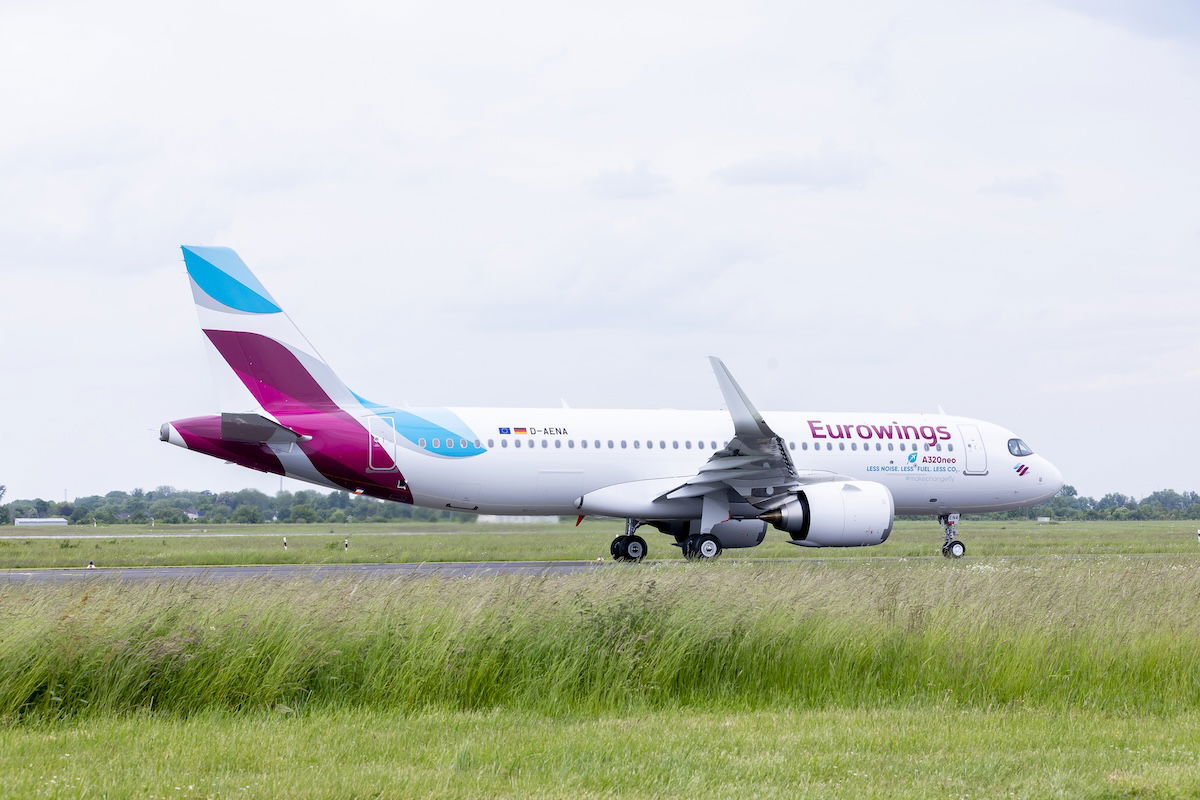
The operational timeline of flight EW9503 illustrates how a minor ground-handling mistake can rapidly escalate into a multi-hour operational disruption:
- 6:10 PM: The flight was originally scheduled to push back and depart from Ibiza Airport.
- 7:35 PM: Following a minor initial departure delay, flight EW9503 finally took off from Ibiza, heading north toward Germany.
- 8:37 PM (Local Time): Exactly one hour and two minutes after departure, the aircraft touched down at its first unscheduled stop: Toulouse-Blagnac Airport (TLS) in France. The diversion was executed in accordance with security mandates requiring the aircraft to land at the nearest practical airport once an unaccompanied bag is discovered.
- 8:37 PM to 11:20 PM: The aircraft remained on the ground in Toulouse for nearly three hours. During this period, security personnel conducted mandatory inspections of the aircraft and its cargo hold to ensure the integrity of the flight and to locate and offload the erroneous piece of luggage.
- 11:20 PM: Flight EW9503 successfully departed from Toulouse, resuming its journey toward Germany. However, the lengthy security delay had significantly altered the operational window for the remainder of the trip.
- 12:53 AM (Following Day): Rather than landing at its intended destination of Dusseldorf—which by this time had entered its strict night-time curfew hours—the aircraft touched down at Cologne Bonn Airport (CGN), a facility capable of handling 24-hour commercial operations.
- Early Morning Hours: Ground transportation was arranged by Eurowings to ferry all 156 affected passengers from Cologne to Dusseldorf, bringing the total duration of the delay to well over six hours.
Background Context: The Baggage Reconciliation Mandate
The strict protocol that forced flight EW9503 to divert twice is rooted in decades-old international aviation security standards. The requirement that every piece of checked baggage must be accompanied by a passenger on the same aircraft—commonly known as Positive Bag Match (PBM) or baggage reconciliation—became a cornerstone of global civil aviation security following the December 21, 1988, bombing of Pan Am Flight 103 over Lockerbie, Scotland.
In that tragedy, an unaccompanied suitcase containing an explosive device was transferred through multiple flights before detonating in the cargo hold, resulting in the deaths of 270 people. Subsequent investigations revealed that international security systems failed to ensure that the passenger who checked the bag had actually boarded the aircraft.
Under contemporary European Union aviation regulations, as well as guidelines established by the International Civil Aviation Organization (ICAO), if a passenger fails to board an aircraft or disembarks before departure, any checked baggage assigned to their boarding pass is classified as "unaccompanied." Such baggage is legally prohibited from traveling on the aircraft. If an unaccompanied bag is discovered only after the aircraft has pushed back from the gate or taken off, airlines are legally bound to mitigate the security risk. This typically involves landing the aircraft at the nearest suitable airport to offload the item, regardless of the inconvenience caused to the passengers on board.
Official Responses and Industry Implications
Representatives for Eurowings and its parent organization, the Lufthansa Group, confirmed the nature of the incident, attributing the initial disruption to a human error during the ground-handling process at Ibiza Airport. Ground-handling agents are tasked with scanning every bag as it enters the sorting system and matches the manifest against passengers who have cleared security and scanned their boarding passes at the gate. While automated systems have drastically reduced the frequency of such occurrences, high-volume seasonal stations like Ibiza during peak travel periods remain vulnerable to occasional administrative oversights.

Aviation analysts note that while the diversion may seem disproportionate to the casual observer—given that the bag was subsequently verified as posing no malicious threat—airlines and regulatory bodies have zero tolerance for deviations from security protocols. In the event of an audit or an incident, failing to divert upon discovering an unaccompanied bag would constitute a severe regulatory violation, exposing the airline to heavy fines and potential safety sanctions.
The cascading effect experienced by flight EW9503 also underscores the growing operational friction caused by strict airport curfews across Europe. Major hubs such as Dusseldorf enforce strict night-flight restrictions to mitigate noise pollution for surrounding residential communities. When unexpected maintenance, weather, or security incidents push flights past these local curfew deadlines, airlines face severe restrictions, forcing them to divert to 24-hour alternate airports like Cologne Bonn, Frankfurt, or Leipzig, and subsequently shoulder the burden of organizing alternative ground transport for hundreds of displaced travelers.
Broader Impact on Passengers and Crew
The human cost of the logistical breakdown fell squarely on the 156 passengers aboard the Airbus A320 and the operating flight crew. Passengers who had anticipated arriving in Dusseldorf in time for dinner instead found themselves landing in a different city deep in the middle of the night. Following the secondary landing in Cologne, travelers were required to disembark, collect their belongings, and board charter buses for an additional overland journey to Dusseldorf, ultimately arriving at their final destination in the pre-dawn hours of the morning.
Industry observers have praised the patience of the passengers, who faced an ordeal entirely outside of their control, as well as the professionalism of the cabin crew. Flight crews navigating such disruptions are often forced to manage high-stress environments while dealing with fatigued and frustrated travelers, all while managing their own strict regulatory flight-time limitations.
Conclusion and Future Outlook
While occurrences of double diversions stemming solely from a loading error are exceptionally rare, the incident involving Eurowings flight EW9503 serves as a stark reminder of the complexities governing modern commercial flight. It illustrates the absolute supremacy of aviation safety and security protocols over commercial convenience, demonstrating that even a benign administrative oversight on the tarmac can ripple outward to affect hundreds of schedules, incur significant financial costs for the airline, and transform a simple Mediterranean holiday return into an unforgettable logistical marathon.







Leave a Reply