
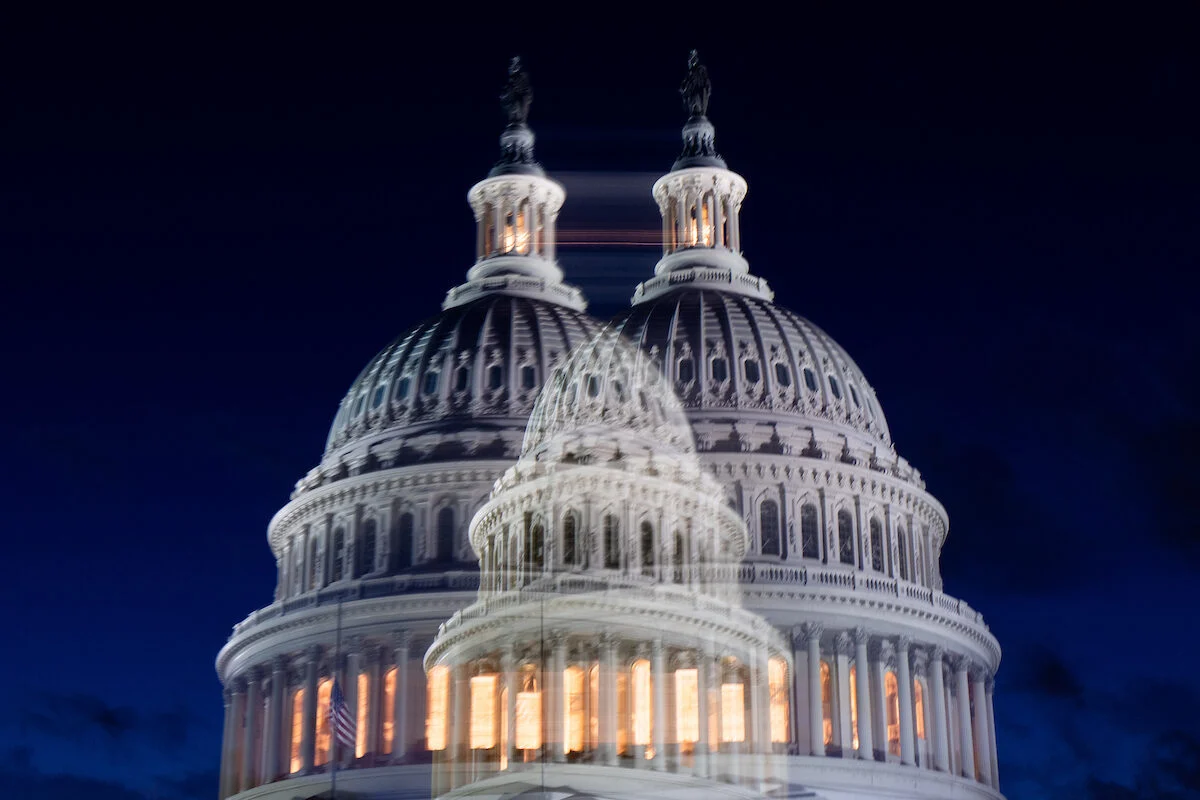
As the autumn leaves begin to turn and the college football season captures the national consciousness, the halls of Congress are experiencing a profound sense of legislative inertia. With the November 3 midterm elections fast approaching, the House and Senate appear poised to conclude their work for the year with a list of unfinished business that includes cryptocurrency regulation, college athlete compensation, and essential surveillance reforms. Despite the urgent rhetoric emanating from leadership offices, the reality of the political calendar suggests that substantive legislative progress will be minimal, as lawmakers prioritize campaign trails over committee hearings.
The legislative atmosphere in Washington is currently defined by a "wait and see" approach. Because President Donald Trump has already signed a continuing resolution to fund the federal government through December 11, there is no immediate threat of a government shutdown to force compromise. This financial stability has effectively removed the primary engine that usually drives bipartisan cooperation during the final weeks of an election year.
A Compressed Calendar and the Lame Duck Looming
The House of Representatives is expected to be in session for only a single week before members depart for their home districts to focus on re-election efforts. If the House adjourns by mid-September, it will set a modern record for the earliest departure in a federal election year, eclipsing the previous mark of September 18, 2014. This truncation of the schedule has left little room for complex negotiations. Even traditional social fixtures, such as the Congressional Women’s Softball Game—a bipartisan staple scheduled for September 23—will now occur during a recess, underscoring the shift from governance to campaigning.
The political landscape is further complicated by the looming "lame-duck" session. If the balance of power shifts in the midterms, the dynamics of the post-election period will be volatile. Should the Democrats reclaim the House or Senate, they will likely have little incentive to assist the Trump administration in confirming judicial nominees or finalizing contentious fiscal 2027 appropriations. Conversely, if Republicans maintain their majorities, they will face immense pressure to accelerate the confirmation process for a backlog of executive and judicial appointments before the new Congress is seated in January 2027.
Cryptocurrency and the Fight for Market Structure
At the center of the Senate’s immediate agenda is a pivotal test vote on a bipartisan cryptocurrency market structure bill. Senate Republicans, led by the efforts of Senator Cynthia Lummis (R-Wyo.), have introduced a revised version of the legislation. This new iteration incorporates rigorous ethics requirements, specifically designed to address concerns raised by Democratic colleagues. The strategy is to move the bill beyond a procedural blockade, but the path forward remains treacherous.
Senate Majority Leader John Thune (R-S.D.) has been candid about the challenges. In recent remarks, he highlighted the unprecedented nature of the partisan divide, describing a "constant, constant blockade" of the administration’s priorities. Treasury Secretary Scott Bessent has added his voice to the urgency, warning that failure to act on digital asset regulation sends a signal of weakness to both allies and adversaries. Bessent argues that failing to establish a regulatory framework prevents the United States from leading on the future of global finance and limits the government’s capacity to prevent the misuse of digital assets for illicit activities.
NIL Legislation and Permitting Reform
Beyond the digital currency debate, the Senate remains focused on the Name, Image, and Likeness (NIL) issues that have transformed collegiate athletics. Commerce, Science and Transportation Committee Chairman Ted Cruz (R-Texas) and Ranking Member Maria Cantwell (D-Wash.) have invested significant time in crafting a legislative solution to the patchwork of state laws currently governing athlete compensation. While the bill was prioritized before the August recess, it remains stalled. Leader Thune has indicated that this will be the second priority after the cryptocurrency measure, yet the time remaining is insufficient to guarantee passage.
Equally significant is the ongoing struggle for permitting reform. Industry groups have warned that if a bipartisan deal is not reached before the midterms, the window for passing such a complex bill will likely close for the remainder of the session. Permitting reform is viewed not merely as an environmental or energy issue, but as a core economic imperative. The stalemate reflects years of entrenched disagreements over the balance between rapid infrastructure development and federal regulatory oversight.
The Russia Sanctions Bill and Executive Oversight
In the House, the focus has shifted toward a bipartisan Russia sanctions bill, a measure that carries the legacy of the late Senator Lindsey Graham (R-S.C.). The bill, which passed the Senate with an overwhelming 86-11 majority in August, is intended to impose five-year penalties on the Kremlin and entities conducting business with it, while simultaneously extending existing sanctions on Iran.
The House Rules Committee is set to consider the floor procedure for this bill, which has been attached to a previously passed childhood education measure. While the bipartisan support in the Senate was robust, some House Democrats have expressed reservations, citing concerns that the bill grants excessive discretionary authority to the executive branch. However, lead Democratic proponents like Senator Richard Blumenthal (D-Conn.) have defended the legislation as a product of "painful negotiations" that were necessary to ensure the administration’s cooperation and the bill’s eventual enactment.
Health, Stability, and the Appropriations Committee
The functionality of the Senate has also been hampered by the health status of key members. Senator Mitch McConnell (R-Ky.), the former Republican leader, has been absent from the Capitol for three months following a fall and a subsequent battle with pneumonia. His absence has created a ripple effect, particularly on the Appropriations Committee, where he holds a critical seat and chairs the Defense Appropriations Subcommittee.
With the committee operating on a razor-thin one-vote majority, the absence of a single member—or the distraction of an election cycle—has prevented Chair Susan Collins (R-Maine) from advancing the 12 regular spending bills. Senator Collins, who maintains the longest consecutive voting streak in Senate history, faces a difficult balancing act: managing her own re-election campaign in Maine while attempting to maintain the committee’s output. The inability to move the farm bill before the August recess, attributed partly to these attendance issues, further underscores the fragility of the current legislative process.
Analytical Perspective: The Cost of Inaction
The current legislative gridlock is a symptom of a broader trend in American politics where the election cycle effectively begins months before the actual voting. By prioritizing "show votes"—such as the ongoing attempts by Democrats to force disapproval resolutions on foreign policy—both parties are opting for electoral messaging over substantive lawmaking.
The implications of this inaction are non-trivial. When Congress fails to address long-standing issues like cryptocurrency regulation, it creates a "regulatory vacuum" that the judicial branch and executive agencies are forced to fill, often without clear congressional mandate. Similarly, the delay in NIL legislation leaves student athletes in a state of legal uncertainty, while the lack of permitting reform acts as a drag on national infrastructure investment.
As the 119th Congress winds down, the historical record will likely reflect a body that was capable of managing the bare minimum of federal funding but struggled to address the complex, evolving challenges of the digital and globalized economy. Whether the post-election period results in a productive lame-duck session or a complete cessation of activity will depend entirely on the electoral outcomes on November 3. Until then, the Capitol remains a place where the political temperature is rising, even as the legislative output approaches freezing.








Leave a Reply