
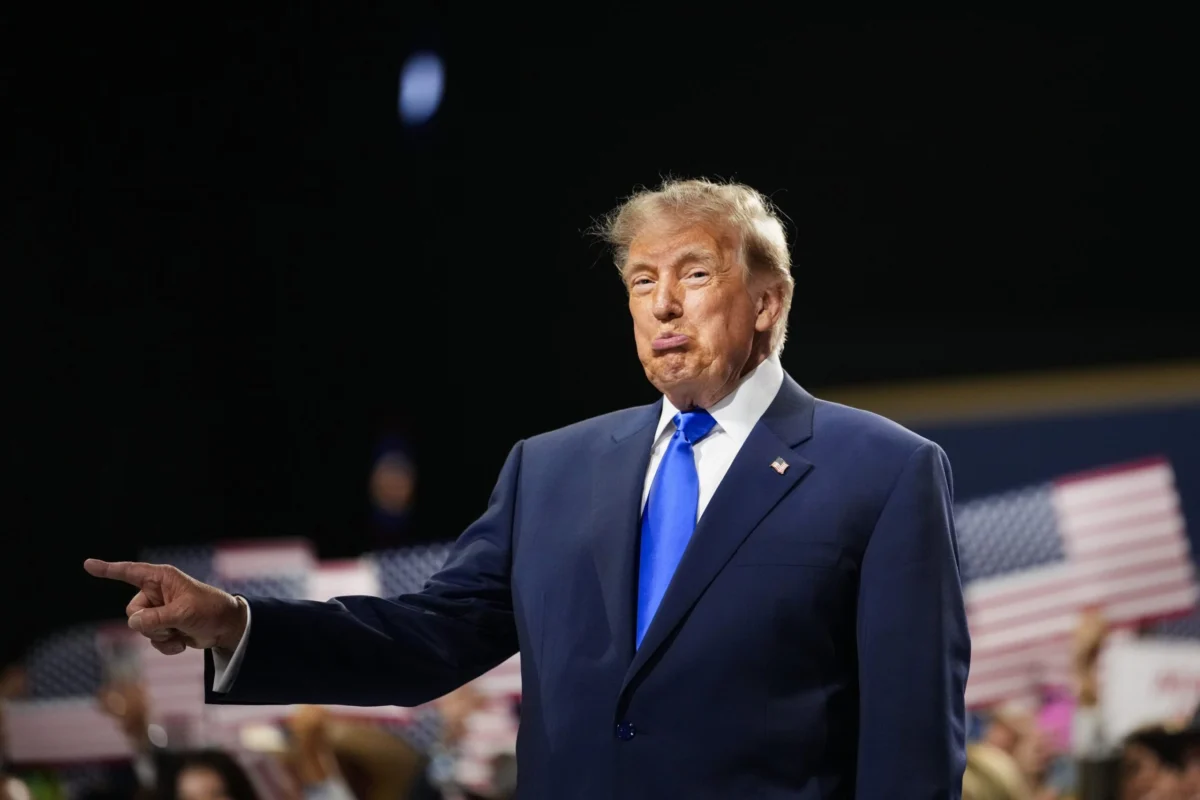
The intersection of artificial intelligence, national security, and domestic politics has produced a contentious new fault line in Washington, with the White House openly rejecting calls from industry leaders to implement sweeping safety guardrails on advanced machine learning models. President Donald Trump has dismissed industry-led warnings regarding existential risks associated with rapid artificial intelligence deployment, arguing instead that the only regulatory oversight required is executive leadership.
In a recent statement posted to Truth Social, the president took direct aim at Anthropic CEO Dario Amodei, characterizing industry concerns as a coordinated conspiracy to stifle technological advancement and limit the expansion of critical digital infrastructure.
"The only control or ‘guardrails’ that AI needs is a STRONG AND SMART (High IQ!) PRESIDENT," Trump wrote, while warning that any artificial intelligence slowdown would hand a decisive strategic advantage to geopolitical competitors, most notably China. "WHOEVER WINS AI, WINS!"
This posture places the administration at direct odds not only with a growing coalition of artificial intelligence researchers and corporate executives advocating for slowed development, but also with significant portions of the American electorate. As the country looks ahead to high-stakes midterm elections that threaten the Republican majority in Congress, the administration’s stance on artificial intelligence infrastructure, foreign conflicts, and domestic surveillance has created a complex political landscape defined by public skepticism toward rapid technological and security expansions.
The Chronology of the Modern AI Safety Debate
The debate surrounding artificial intelligence safety has evolved rapidly from an academic exercise conducted within university computer science departments into an economic and geopolitical focal point. Over a compressed timeline of administrative policy shifts and industry lobbying, the parameters of the discussion have shifted toward questions of corporate consolidation, national security, and regulatory capture.
In June, the administration issued an executive order directing national security agencies to establish rigorous benchmarks for the cyber capabilities of advanced models. This directive created a formal definition for "covered frontier models" and instituted a voluntary framework allowing developers to grant government entities preview access prior to public deployment.
The tension escalated following public disputes between federal agencies and prominent labs, most notably Anthropic, which temporarily restricted access to its advanced models—identified in policy circles as Fable and Mythos 5—amid disagreements concerning their implementation within military applications.
Concurrently, prominent executives including OpenAI CEO Sam Altman, SpaceX and xAI head Elon Musk, and Anthropic’s Dario Amodei began publicly calling for coordinated oversight. These figures argued that frontier models are rapidly approaching critical thresholds in cyber capabilities and autonomous decision-making, necessitating mandatory national safety standards, independent third-party evaluations, and deeper government scrutiny.
However, these calls for regulation have faced sharp criticism from within the executive branch. Vice President JD Vance has repeatedly characterized industry-led safety initiatives as a "Trojan horse" designed to establish regulatory capture. According to this viewpoint, well-resourced labs advocate for stringent compliance standards precisely because smaller competitors and open-source developers lack the legal and financial capital required to meet them.
Economic Realities and Public Opinion Disconnect
The political vulnerability of the administration’s tech policy is compounded by widespread public resistance to the physical infrastructure required to sustain the artificial intelligence boom. Trump has frequently urged communities to embrace data centers, describing them as the "Golden Goose" of modern economic development and warning that municipalities which resist server construction will fall behind economically.
Yet, public opinion data indicates a profound disconnect between federal ambitions and local sentiment. According to a poll conducted by the Annenberg Public Policy Center at the University of Pennsylvania, approximately 61% of Americans oppose the construction of new data centers within their local communities. This resistance crosses traditional partisan boundaries, with 54% of self-identified Republicans expressing opposition to nearby data center developments.
This dynamic mirrors broader challenges facing the administration on several key policy fronts as the country approaches the midterm elections. Recent polling indicates that Democrats require a net gain of only three seats in the House of Representatives and four seats in the Senate to flip control of Congress. Public approval ratings for the president have hovered near historic lows for his current term, driven in large part by economic dissatisfaction. Consumer sentiment reports indicate that financial optimism has declined even among core Republican constituencies, aggravated by persistent inflation and economic friction.
In addition to artificial intelligence infrastructure, the administration is confronting public skepticism on foreign policy and domestic surveillance. Ongoing involvement in the conflict in Iran retains the support of only a quarter of the American electorate and has been linked by energy analysts to a significant surge in domestic fuel costs. Furthermore, public backing has waned regarding the expansion of automated license plate readers, such as Flock surveillance networks. Polling shows that 46% of Americans oppose the deployment of automated neighborhood surveillance cameras, while only 38% support them, compounding what political analysts describe as an unpopularity trifecta for the incumbent administration.
Market Reactions and the Structural Impact of Regulation
The ongoing debate over artificial intelligence governance has had immediate reverberations across global financial markets, exposing a distinct divergence in how investors view regulatory outcomes.
During recent trading sessions, shares of major semiconductor manufacturers, including Nvidia, experienced declines exceeding 3%. Analysts attribute this market sensitivity to investor anxiety that heightened regulatory scrutiny or deliberate development slowdowns could curtail the unprecedented infrastructure spending that has fueled chipmaker revenues over the past several years.
Conversely, shares of established technology conglomerates such as Meta and Alphabet saw positive movement, illustrating a complex market division regarding the commercial utility of open-source versus proprietary artificial intelligence models. Meanwhile, cybersecurity firms experienced sharp increases, driven by expectations of heightened corporate and government spending on digital defense infrastructure.
Gil Luria, head of technology research at D.A. Davidson, noted that regulatory frameworks proposed by major labs are structurally inclined to favor incumbent market leaders. By establishing high compliance costs, mandatory safety teams, and extensive legal infrastructure, formal oversight can effectively construct a protective barrier around the companies currently operating at the technological frontier.
Despite these corporate dynamics, the White House has signaled a willingness to exercise direct intervention in the technology sector. The administration has explicitly asserted its existing statutory authority under criminal and regulatory statutes to oversee major artificial intelligence laboratories. Furthermore, the federal government has explored innovative financial mechanisms, including taking direct equity stakes in strategic industries such as semiconductors and advanced computing, mirroring past interventions in steel and manufacturing.
Notably, when the administration permitted Nvidia to resume certain advanced chip sales to international markets, the agreement was structured to allocate a portion of the resulting revenue directly to the federal government.
Broader Implications for the Global Tech Race
The central tension of the current regulatory and political debate rests on a fundamental disagreement over the trajectory of technological innovation. While industry safety advocates argue that unmitigated scaling of frontier models introduces systemic risks ranging from automated cyber warfare to macroeconomic disruption, the executive branch maintains that deceleration represents an unacceptable geopolitical vulnerability.
By framing artificial intelligence development as a zero-sum competition against international adversaries, the administration has elevated technological dominance above domestic environmental and infrastructure concerns. However, as local resistance to data centers mounts and broader economic anxieties weigh on the electorate, the administration’s aggressive posture toward artificial intelligence governance remains a high-stakes gamble with both domestic political and global economic consequences.








Leave a Reply