
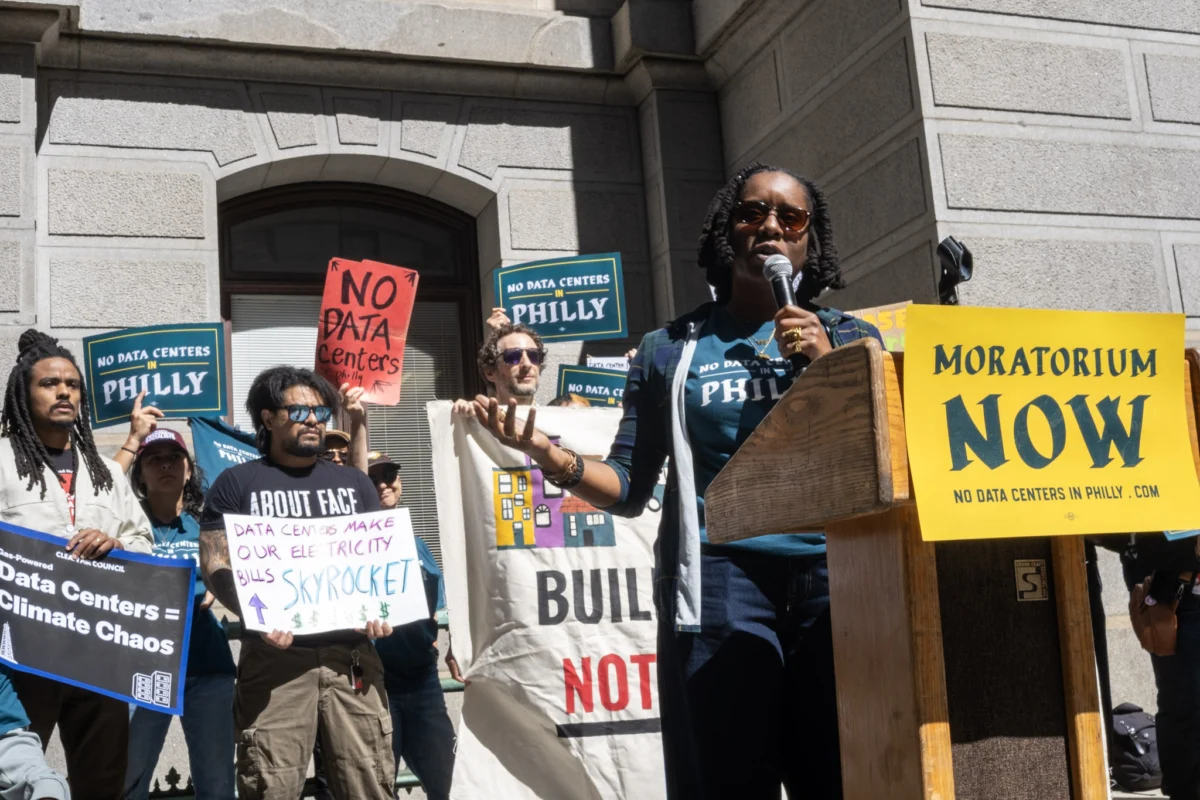
Across the United States, a quiet but profound battle is unfolding over the physical footprint of the digital revolution. As artificial intelligence continues its meteoric rise, tech giants and data center developers are scrambling to secure land and power for the massive server farms required to fuel large language models. However, this infrastructure expansion is meeting fierce resistance from local residents, who are increasingly vocal about the environmental, social, and economic costs of hosting these industrial-scale facilities in their backyards. While proponents cite job creation and tax revenue as benefits, public opinion, as indicated by recent Gallup polling, reflects a growing skepticism, with a majority of Americans opposing the construction of these facilities in their immediate vicinity due to profound concerns regarding energy consumption, water usage, and localized pollution.
For activists like Shawmar Pitts, a resident of the Grays Ferry neighborhood in Southwest Philadelphia, the debate is far from abstract. For decades, the community of Grays Ferry has lived in the literal shadow of heavy industry. The neighborhood was home to the Philadelphia Energy Solutions (PES) oil refinery, a facility that served as the largest of its kind on the East Coast until a catastrophic explosion in 2019 shuttered its operations. For residents like Pitts, the refinery was not merely an employer; it was a source of chronic illness, a constant hum of noise, and a persistent environmental hazard.
The realization of the link between his community’s health struggles and the industrial site came in 2018, when he encountered members of Philly Thrive, an environmental justice organization tabling in his neighborhood. Upon reviewing the health data associated with proximity to the refinery, Pitts recognized a grim pattern: his mother, his sister, his neighbors—everyone he knew seemed to be suffering from illnesses documented on the list. That encounter served as a catalyst, transforming Pitts into an activist. Today, as a managing co-director of Philly Thrive, he is leading the "No Data Centers in Philly" campaign, a movement designed to prevent the city from becoming the next frontier for massive AI infrastructure.

A Chronology of Growing Tensions
The friction between tech infrastructure and local communities has been building for years, but the intensity of the pushback has reached a new threshold as the AI boom drives an unprecedented demand for electricity.
- 2019: The PES refinery in Philadelphia suffers a massive explosion, leading to its permanent closure and leaving behind a large, contaminated site ripe for redevelopment.
- 2023: Global investment in generative AI causes a massive spike in data center construction projections, leading energy analysts to sound the alarm on grid capacity.
- 2024: Multiple cities across the U.S., including Denver and Indianapolis, begin implementing zoning moratoriums as a direct response to resident protests regarding noise and water use.
- 2026 (July): Philadelphia officials identify two sites for potential data center development, prompting immediate pushback from community activists.
- 2026 (September): New York Governor Kathy Hochul issues an executive order halting new large-scale data center permits, signaling a major policy shift at the state level.
The proposed sites in Philadelphia—one in the Northeast and another in the Grays Ferry area—have become flashpoints for the city’s civic discourse. While no formal construction permits have been finalized, the mere suggestion of these developments has galvanized local organizations. On a Monday in September, more than 100 residents gathered at City Hall to protest the potential for data centers to replace the heavy industrial burdens they have spent years fighting to dismantle.
The Energy Crisis: Data Centers vs. The Grid
The core of the opposition rests on the sheer scale of energy required to power the next generation of AI. According to data from BloombergNEF, the trajectory of U.S. data center energy consumption is staggering. By 2035, these facilities are projected to consume more natural gas than the total annual demand of Germany and Japan combined. This estimate represents a significant upward revision from projections made just nine months prior, underscoring the velocity at which the industry is scaling.
This energy demand poses a two-fold threat: it strains the electrical grid and increases reliance on fossil fuels. Even in instances where data centers claim to be "green," the reality of baseload power requirements often necessitates the use of natural gas. Furthermore, to guard against power outages during periods of high demand, these facilities are often equipped with hundreds of diesel-powered backup generators.

Annie Fox, an attorney with the Clean Air Council, argues that these generators are not merely "emergency" equipment. "A typical data center planned in Pennsylvania has hundreds of diesel engines that spew air pollution," Fox stated during the Philadelphia rally. "Even if they are supposedly reserved for emergencies, the government has already indicated that these facilities may be required to utilize these generators rather than drawing from an overstressed electrical grid during peak heat waves." As climate change accelerates, the irony of using carbon-intensive power to support technologies that might address—but also exacerbate—the crisis is not lost on activists.
The Human Cost: A Legacy of Industry
The emotional weight of this movement is rooted in personal loss. Sonya Sanders, board president of Philly Thrive, remains a central figure in the resistance. Her husband, a longtime resident of Grays Ferry, passed away from a rare bone cancer in 2020. Sanders, who emphasizes that her husband was neither a smoker nor a heavy drinker, attributes his death to the legacy of toxic emissions from the neighboring refinery.
"The pollution killed him," Sanders declared to a crowd of protesters at City Hall. "I believe he would be here today if he wasn’t silently murdered, because it was the pursuit of profit that killed him." For residents who have already paid the price of industrial development with their health, the promise of "economic growth" offered by tech companies carries little weight. They view the influx of data centers as a continuation of a pattern that prioritizes corporate infrastructure over the well-being of the local population.
Regulatory Responses and the "Right to Say No"
The concerns voiced in Philadelphia are mirrored in cities across the nation. In response to the growing public pressure, local and state governments have begun to exercise their regulatory authority to slow down the pace of development. The moratoriums enacted in Denver, Indianapolis, Asheville, Charlotte, and Reno share a common goal: to pause development long enough to allow city planners to fully assess the long-term impact on local infrastructure, water tables, and air quality.

New York’s recent legislative action, spearheaded by Governor Kathy Hochul, represents perhaps the most significant challenge to the industry to date. By placing a temporary hold on new permits, the state is signaling that the rapid expansion of AI infrastructure cannot come at the expense of local communities. "Progress shouldn’t arrive with a higher utility bill, deleted water supply, or noise pollution," Hochul stated. "These data centers can only be built—should only be built—in places that want them."
Broader Implications for the AI Economy
The standoff between tech developers and local residents represents a fundamental tension in the modern economy. AI is touted as a transformative technology with the potential to revolutionize everything from medicine to climate modeling. Yet, the physical infrastructure required to sustain it is creating a "Not In My Backyard" (NIMBY) dynamic that is increasingly sophisticated and well-organized.
If developers fail to address these concerns through transparency and radical improvements in energy efficiency, the legal and regulatory hurdles for data center construction will likely increase. Analysts suggest that the industry must move toward more sustainable cooling technologies, on-site renewable energy integration, and transparent reporting on resource usage to regain the social license to operate in urban environments.
For the people of Philadelphia, however, the focus remains on local autonomy. As the "No Data Centers in Philly" campaign gains momentum, the message to city council members is clear: the era of allowing industrial development to occur without stringent, community-led oversight is over. For Shawmar Pitts and his fellow residents, the fight is not just about a specific building or a specific server rack; it is about reclaiming the right to a healthy environment and ensuring that the future of technology does not come at the cost of the communities it is built upon. As the nation watches, Philadelphia has become a bellwether for a larger, national debate on whether the benefits of the AI revolution can ever be reconciled with the immediate needs of the neighborhoods tasked with powering it.








Leave a Reply