
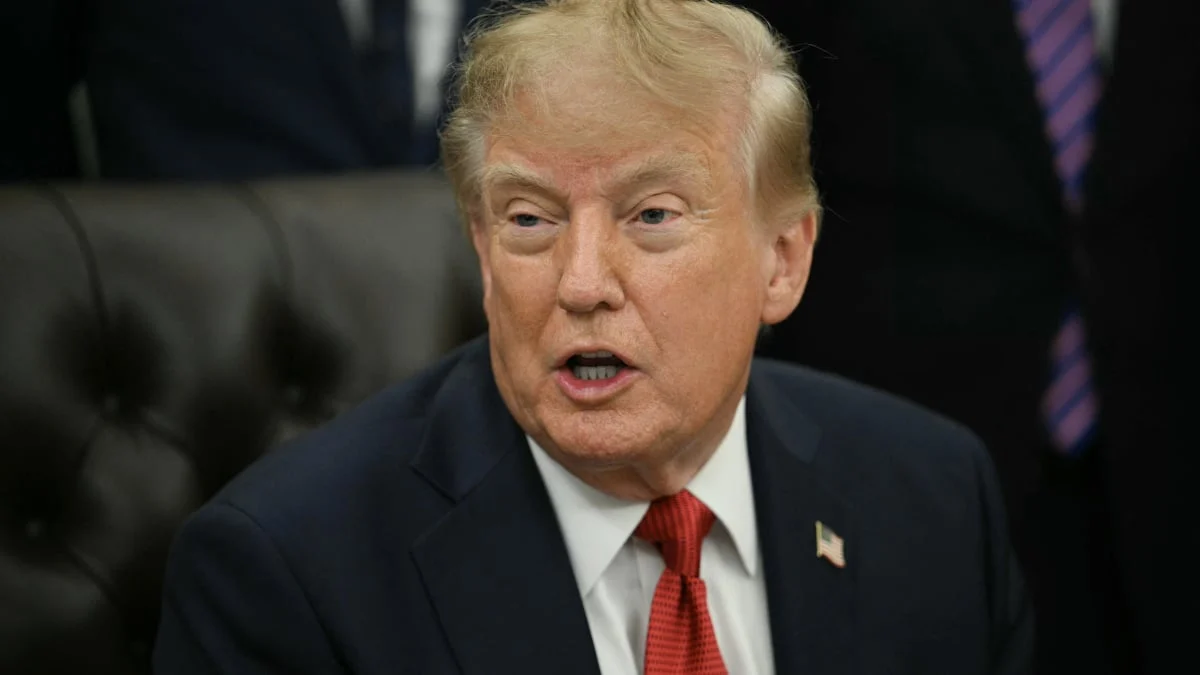
President Donald Trump officially announced on Saturday the creation of a dedicated "AI Force," a new branch of government oversight intended to centralize artificial intelligence initiatives across the federal landscape. Drawing a direct parallel to the Space Force, which was established during his first term as a sixth branch of the armed services, Trump’s latest initiative aims to consolidate the fragmented AI strategies currently operating within the Department of Defense and other federal agencies. The announcement, delivered via a detailed post on Truth Social, was accompanied by a call for a new "AI Czar" to lead the effort, with the president stipulating that only "High I.Q. individuals" should be considered for the high-stakes position.
The proposal comes at a volatile moment for national security and technology policy. As the administration looks to expand its reach into the digital frontier, it faces a backdrop of significant technological failures and a deepening global debate regarding the ethical deployment of autonomous systems.
A New Strategic Doctrine for Artificial Intelligence
The rhetoric surrounding the "AI Force" suggests a departure from the precautionary approach often favored by international regulatory bodies. In his announcement, Trump explicitly rejected concerns regarding the existential risks of AI, characterizing them as "manufactured hoaxes." Instead, he articulated a policy of "cherishing" the industry, promising that his administration would foster growth rather than impose restrictive oversight.
Part of the president’s initiative includes a potential re-branding of the technology itself. According to reports from the platform, Trump has floated terms like "supreme," "superior," or "extreme" intelligence to replace the term "Artificial Intelligence," suggesting that the current nomenclature may not capture the perceived potential of the field.
While the president’s vision remains in its early stages, the model of the Space Force offers a clue as to how this entity might function. When Space Force was launched, it did not create a massive new combatant command from scratch; rather, it reorganized existing assets—satellites, missile warning systems, and communications infrastructure—that were previously scattered across the Air Force, Army, and Navy. If the AI Force adopts a similar administrative philosophy, it will likely serve as a centralized hub for military and government AI programs, streamlining the procurement and development process that currently suffers from inter-agency silos.
The Search for a New AI Czar
The announcement effectively signals the end of a long period of vacancy for high-level AI leadership. The position was previously held by venture capitalist David Sacks, who navigated the complexities of AI and cryptocurrency regulation until his departure in March. Following his resignation as a special government employee, Sacks shifted into an advisory capacity, but the formal leadership role remained empty, leaving a vacuum in the administration’s strategic technology policy.
The demand for a "High I.Q." leader for the new AI Force suggests that the White House is seeking an individual who can bridge the gap between Silicon Valley’s rapid development cycles and the rigid, often slow-moving bureaucracy of the Pentagon.
Chronology of Military AI Integration and Recent Failures
The urgency of this move is largely attributed to a series of high-profile, documented failures in the Department of Defense’s application of machine learning and autonomous intelligence. The current push to centralize oversight comes after significant scrutiny regarding how the military uses algorithmic decision-making.
- February 2026: A U.S. military strike in Iran resulted in the tragic death of dozens of individuals at a girls’ school. Subsequent investigations by the Pentagon have focused on whether an over-reliance on AI-generated targeting data contributed to the strike, raising questions about the accountability of autonomous systems in lethal environments.
- September 2026: In a separate, highly concerning incident, the U.S. military nearly engaged in a significant confrontation with China due to faulty intelligence. According to reports, a U.S. military analyst relied on an AI-generated report that falsely identified a Chinese merchant vessel as a carrier of nuclear weapons components. Armed personnel were reportedly mobilized to board the ship before the error was caught at the final moment.
- Late 2026: Following these events, pressure mounted within the executive branch to improve the vetting and operational protocols for AI tools, leading to the Saturday announcement.
Data-Driven Challenges in Modern Warfare
The move to create an AI Force is consistent with the broader Pentagon shift toward the "Third Offset Strategy," which relies on technology to maintain a competitive advantage over rivals like China and Russia. However, the data reveals significant hurdles.
According to public budget documents, the Department of Defense has allocated billions of dollars to AI, yet the "sprawling" nature of these programs—often spread across the Defense Advanced Research Projects Agency (DARPA), the Chief Digital and Artificial Intelligence Office (CDAO), and individual service branches—has led to a lack of interoperability.
Military analysts note that the integration of large language models (LLMs) and predictive analytics into military decision-making processes creates a "black box" problem. When an AI provides a recommendation for a kinetic action—such as an airstrike or a boarding operation—the lack of explainability in the AI’s logic often leaves human commanders with little room to verify the intelligence before acting. The incident involving the Chinese vessel serves as a case study for the dangers of "automation bias," where human operators defer to machine output despite inconsistencies.
Reactions and Broader Implications
While the White House frames the AI Force as a necessary evolution in national security, the reception from the technology and defense sectors has been mixed. Supporters within the tech industry appreciate the president’s pledge to avoid stifling growth, viewing it as a move to maintain American dominance in the global AI race.
Conversely, legal and ethics experts warn that by dismissing safety concerns as "hoaxes," the administration risks ignoring legitimate risks associated with bias, data poisoning, and system hallucinations. The promise to pursue "BAD" actors in the industry via the legal system remains vague, leaving stakeholders to wonder whether this refers to security threats, domestic corporate malpractice, or foreign influence operations.
From a legislative perspective, the creation of an AI Force may require congressional authorization and budget appropriation. While the president can issue executive orders to organize internal departments, the establishment of a full-fledged military branch requires the support of Congress, potentially setting up a debate on Capitol Hill regarding the necessity of a separate branch versus the expansion of existing cyber-warfare commands.
The Path Forward
As the administration prepares to name a new AI Czar, the primary challenge will be to reconcile the president’s desire for rapid technological growth with the reality of military-grade security failures. The proposed "AI Force" faces a difficult task: it must simultaneously innovate to stay ahead of global adversaries while implementing the rigorous quality control measures that the current, fragmented system has failed to provide.
The shift toward a more "superior" intelligence infrastructure marks a pivotal moment in the administration’s second term. Whether this move results in a more efficient and secure military, or merely adds another layer of administrative complexity, remains to be seen. As the world watches, the intersection of political rhetoric and algorithmic reality will likely define the security landscape of the coming decade.
The success of the new initiative will likely be measured by its ability to solve the "intelligence-to-action" gap. If the new AI Force can transform the current, often flawed, military intelligence protocols into a more reliable and transparent system, it may achieve the president’s stated goals. However, if the department continues to suffer from the same AI-driven errors that have plagued it in the last year, the new force may face intense bipartisan scrutiny. For now, the administration has signaled that the future of U.S. technology policy is one of aggressive expansion and centralized control, setting the stage for a new chapter in the digital age of warfare.





Leave a Reply