
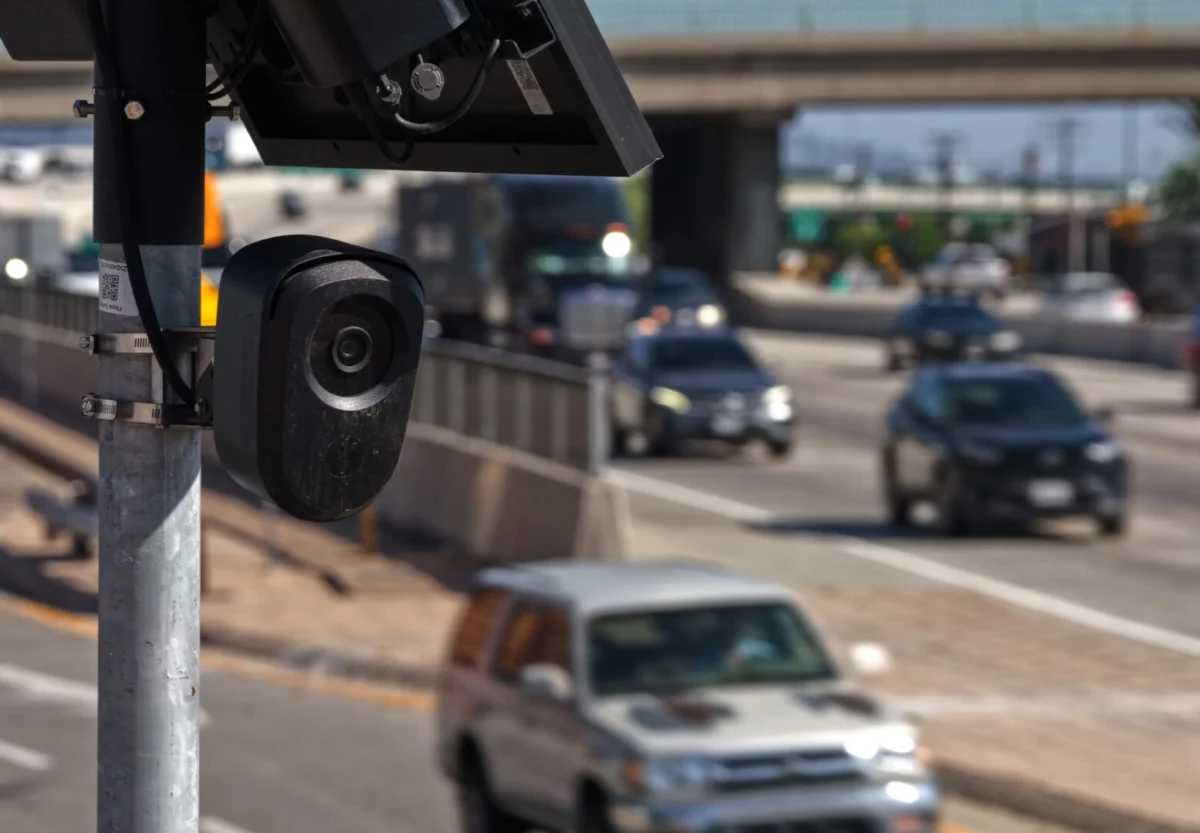
The rapid expansion of artificial intelligence-powered surveillance networks has officially reached a legislative breaking point, as the Senate Judiciary Committee’s Subcommittee on Crime and Counterterrorism prepares to convene a high-profile hearing this Wednesday. Subcommittee Chairman Josh Hawley (R-Mo.) announced on Friday that the hearing will focus on the deployment of automated license plate readers (ALPRs) and the broader implications of private surveillance firms maintaining massive databases of American citizens. This move marks a significant escalation in the federal government’s oversight of companies like Flock Safety, whose technology has become a staple for local law enforcement agencies across the United States.
Hawley has formally invited the chief executive officers of four prominent firms—Garrett Langley of Flock Safety, Rick Smith of Axon Enterprise, Greg Brown of Motorola Solutions, and Filip Kaliszan of Verkada—to testify regarding their data collection, retention, and dissemination policies. While the subcommittee has not confirmed the attendance of these executives, the summons signals a rigorous shift in how Congress intends to regulate the intersection of public safety and personal privacy.
The Rise of the Automated Surveillance State
The technology in question—AI-enabled cameras that capture and analyze vehicle license plates and physical descriptors in real-time—has transformed modern policing. Unlike traditional, static security cameras, these modern systems function as a dynamic, interconnected grid. When a vehicle passes a Flock camera, the software records the plate number, vehicle make, model, color, and even unique identifiers like bumper stickers or roof racks. This data is then cross-referenced against criminal databases, such as the National Crime Information Center (NCIC), to alert authorities to stolen vehicles or individuals with active warrants.
However, the efficacy of this technology is precisely what has drawn the ire of privacy advocates and, more recently, skeptical lawmakers. Critics argue that the aggregation of this data creates a "national dragnet" that effectively tracks the movements of millions of law-abiding citizens who are never suspected of a crime.
Chronology of the Congressional Scrutiny
The path to this week’s hearing began in earnest earlier this summer as concerns regarding data misuse surfaced in local news reports.
- August 2024: Senator Hawley formally launched an investigation into Flock Safety’s business model, specifically questioning how the company manages the "collection, retention, and dissemination" of AI-generated surveillance data.
- August 2024: A poll conducted by Data for Progress revealed that approximately 41 percent of Americans hold an unfavorable view of these surveillance networks, with partisan lines showing little difference in public skepticism—40 percent of Democrats and 39 percent of Republicans expressed concern.
- September 2024: FBI Director Kash Patel testified before the Senate Judiciary Committee, providing a glimpse into how federal agencies interact with private camera networks.
- Late September 2024: Senators Adam B. Schiff (D-Calif.) and Ron Wyden (D-Ore.) sent a joint letter to Flock Safety leadership, demanding transparency regarding the internal protocols designed to prevent system misuse.
- October 2024: The Senate Judiciary Subcommittee scheduled its October hearing, formally elevating the issue to a national legislative priority.
The Debate Over Privacy and Public Safety
The central tension in this debate lies in the definition of "publicly available information." During his testimony, FBI Director Kash Patel defended the use of ALPR data by emphasizing that the cameras are installed by local jurisdictions and capture information in public spaces where, legally, there is no reasonable expectation of privacy.
"They collect information, not the FBI," Patel stated. "Where the FBI partners with these individuals is on a case-by-case basis and not a rolling-access basis." Patel cited successful interventions, such as the apprehension of suspects involved in a shooting at Brown University and the identification of child predators, as evidence that the technology is a vital tool for modern law enforcement.
Conversely, Senator Hawley and other critics view the integration of these systems through a different lens. In his statement announcing the investigation, Hawley argued that the technology has far exceeded the scope of traditional investigations. "The overwhelming majority of the Americans captured in those records did nothing wrong," Hawley noted. "Instead of serving discrete local investigations, as contemplated by our constitutional processes and safeguards, these camera networks harness artificial intelligence to pool what they capture into a national database that customers can search."
Industry Response and Corporate Governance
The companies invited to testify have responded with varying degrees of transparency. A spokesperson for Verkada confirmed that while CEO Filip Kaliszan could not attend the hearing due to scheduling conflicts, the company is cooperating by providing documentation to the subcommittee. Crucially, the spokesperson emphasized that Verkada does not operate a national, centralized network, asserting that customers maintain exclusive control over their own data—a common defense among surveillance firms aiming to distance themselves from the concept of a "Big Brother" database.
Flock Safety, Motorola Solutions, and Axon Enterprise have remained largely quiet regarding the specific inquiries into their data retention policies. However, the pressure on these firms is mounting. Beyond the Senate, at least four separate bills have been introduced in the House of Representatives aimed at establishing federal guidelines for the use of ALPR technology. These legislative efforts, which span both sides of the aisle, suggest that the status quo of rapid, unregulated expansion is likely coming to an end.
Implications of AI-Driven Surveillance
The potential for abuse remains a significant hurdle for the industry. Reports of individual police officers misusing database access to stalk ex-partners or gather information on political opponents have fueled public distrust. When these systems are powered by AI, the potential for "surveillance creep"—where data collected for one purpose is repurposed for another without public consent—becomes a structural risk.
Furthermore, the legal implications are profound. If courts eventually determine that the aggregation of "public" data over long periods constitutes a search under the Fourth Amendment, the entire business model of private surveillance companies could be upended. Current constitutional jurisprudence, such as the Supreme Court’s decision in Carpenter v. United States, suggests that the continuous tracking of an individual’s location over time requires a higher standard of legal protection than isolated, point-in-time observations.
Future Legislative Outlook
As the Subcommittee on Crime and Counterterrorism prepares for its Wednesday session, the primary goal appears to be the establishment of a "code of conduct" for private surveillance firms. Hawley’s focus on "surveillance pricing"—the practice of using personal data to determine commercial outcomes—indicates that he is looking at the broader ecosystem of data harvesting, not just the cameras themselves.
The hearing will likely serve as a litmus test for how much control Congress is willing to exert over the private sector when that sector provides essential services to law enforcement. If the testimony reveals significant gaps in data security or evidence of widespread misuse, lawmakers are expected to push for federal mandates requiring mandatory audit trails, strict data deletion timelines, and limits on how long private companies can retain information on individuals who are not under active investigation.
For the American public, the hearing represents a rare opportunity to peek behind the curtain of a technology that has quietly integrated itself into the fabric of daily life. Whether this leads to a new era of transparency or a more restrictive regulatory environment remains to be seen. What is clear, however, is that the era of unfettered, private-sector surveillance is facing its most significant legislative challenge to date, marking a turning point in the ongoing struggle to balance technological innovation with the fundamental right to privacy in the digital age.





Leave a Reply